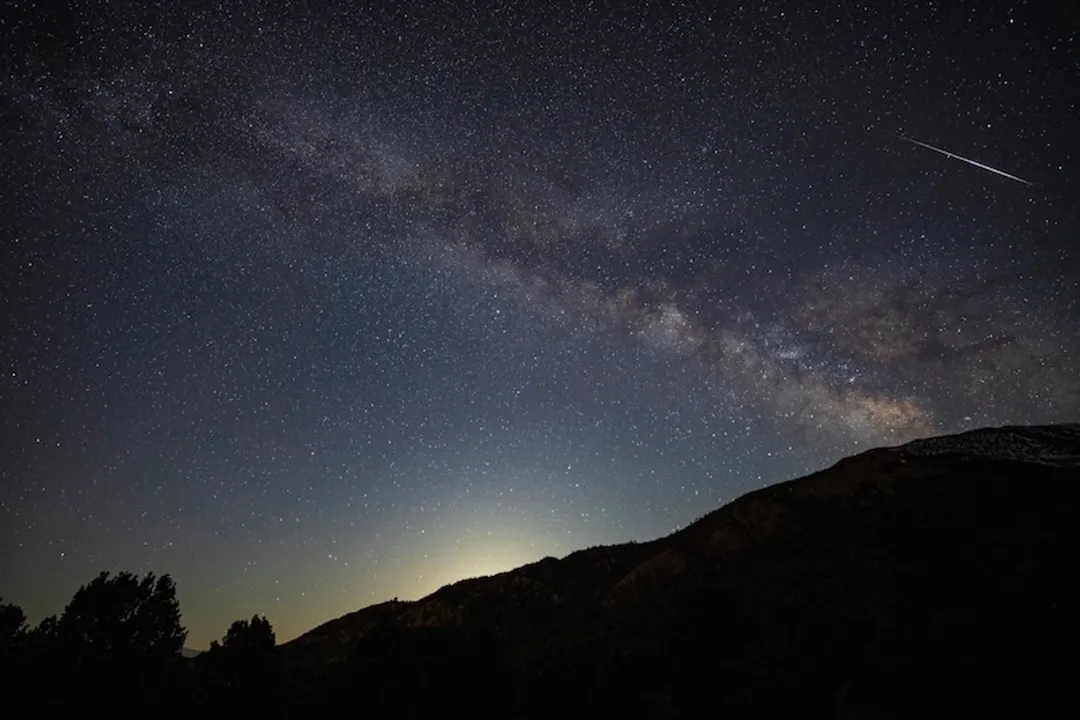
Which element primarily causes a prominent red glow during a meteor streak?
Nitrogen in the Earth’s atmosphere
The distinct red hue observed in a meteor flash is a strong indicator of chemical interactions occurring within Earth's upper atmosphere, specifically involving nitrogen molecules. When a meteoroid enters the atmosphere at high velocity, the resulting friction creates intense heat, leading to ablation. This process excites the surrounding air molecules. Unlike colors derived from the meteoroid's own composition, such as magnesium producing blue-green or iron/sodium producing yellow/orange, the prominent red glow is overwhelmingly attributed to the excitation of atmospheric nitrogen molecules. As these nitrogen molecules absorb the energy from the passage of the superheated plume, they release photons corresponding to the red wavelength of the visible spectrum. Therefore, a deep and pervasive red streak signifies that the energizing of atmospheric nitrogen is the dominant source dictating the observed color signature for that specific segment of the meteor's path.