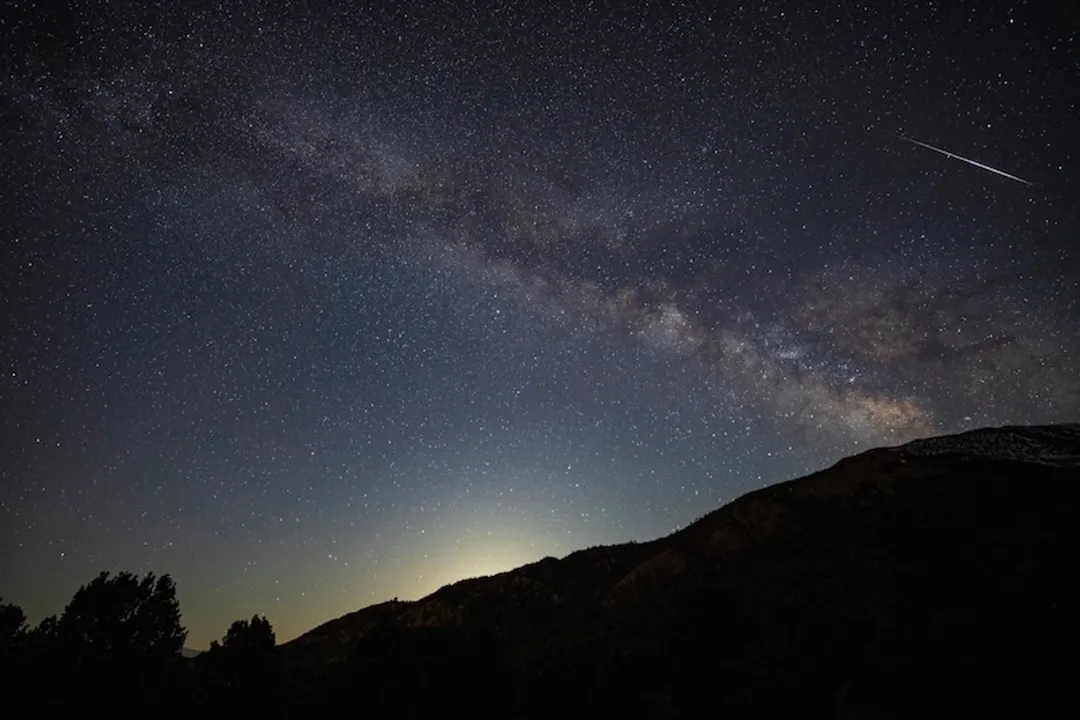
What might a very fast meteor's brief light emission suggest about its color?
The light is often white or blue due to extremely high temperatures masking subtle red emissions
The speed at which a meteoroid enters the atmosphere directly influences its heating rate and the duration of its visible flight. A very fast meteor experiences rapid thermal increases, leading to extremely high temperatures in a very short time frame. These intense temperatures shift the resulting light emission towards the hotter end of the spectrum, frequently appearing white or blue. Furthermore, this rapid heating causes the object to burn out quickly, creating a brief light event. This swift, high-temperature emission can sometimes be so dominant that it effectively masks or overpowers the subtler, cooler red emissions that stem specifically from nitrogen excitation in the surrounding atmosphere.