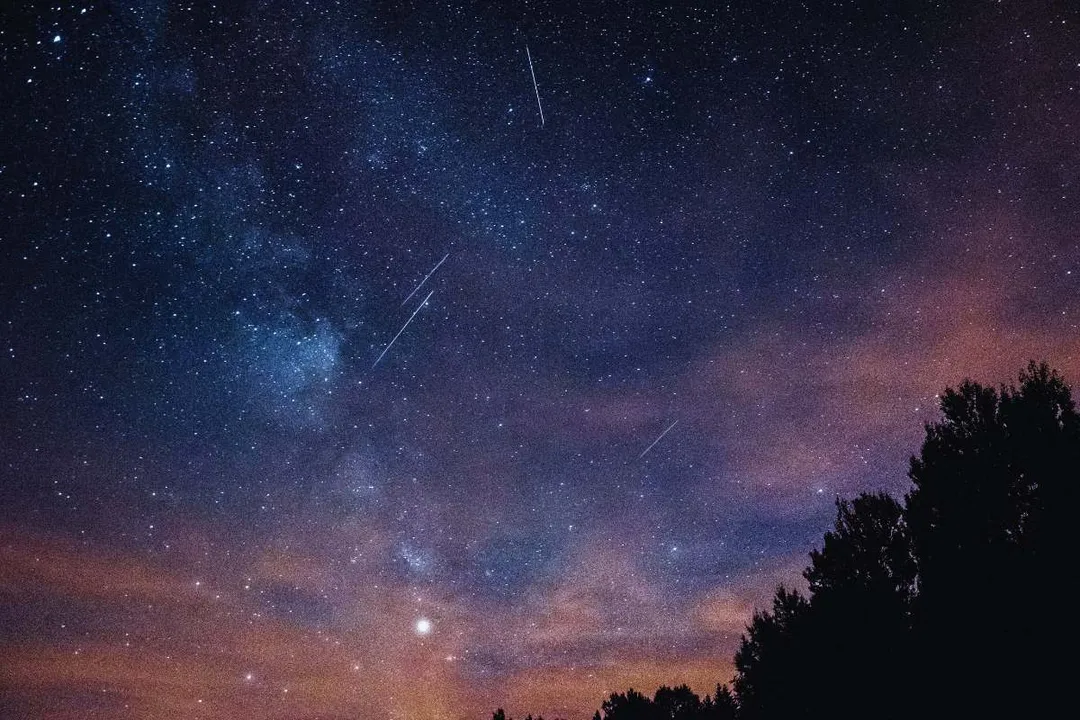
Why is the true hourly rate for the Taurids often lower than the advertised ZHR for northern viewers?
The radiant stays quite low to the horizon for many northern viewers.
When comparing annual meteor showers, discrepancies can arise between the advertised Zenithal Hourly Rate (ZHR)—a measure based on ideal conditions with the radiant at the zenith—and what an actual observer sees. For the Taurids, which span a long viewing period, the issue for many observers in northern latitudes is that their radiant remains relatively close to the horizon during the primary viewing hours. This low elevation means that geometric limitations, where the Earth's curvature cuts off trajectories beneath the horizon, cause the actual, visible rate to fall significantly below the theoretical ZHR calculated for an overhead radiant. This contrasts with the Geminids, which often peak with a high radiant for mid-northern latitudes.