How long will a Geminid meteor shower last?
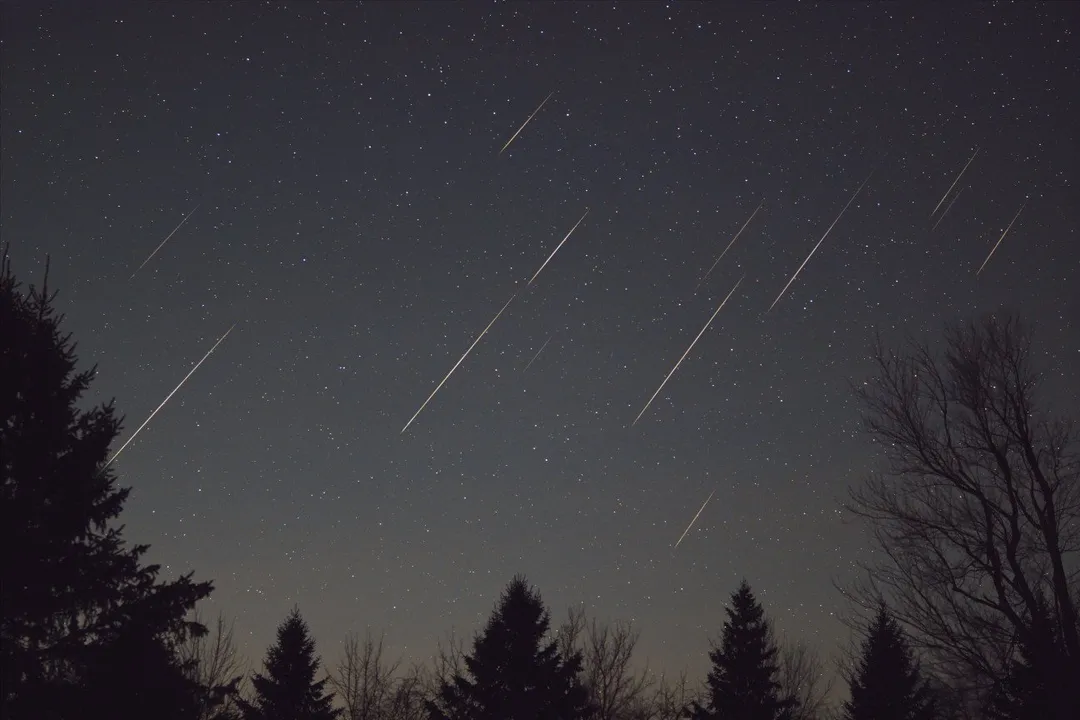
The Geminid meteor shower is one of the year’s celestial highlights, famous for its reliability and the sheer number of visible streaks, which often rival or surpass other major showers. When people ask how long the Geminids last, the answer splits into two parts: the official span of Earth passing through the debris stream, and the narrow window when the actual show is most spectacular. Officially, the Geminids are active for several weeks, typically starting around the beginning of December and continuing through to about December 20th or sometimes even as late as December 24th. [4] However, that extended period represents the entire debris field; the true astronomical event—the peak—is much more concise. [4][8]
# Active Span
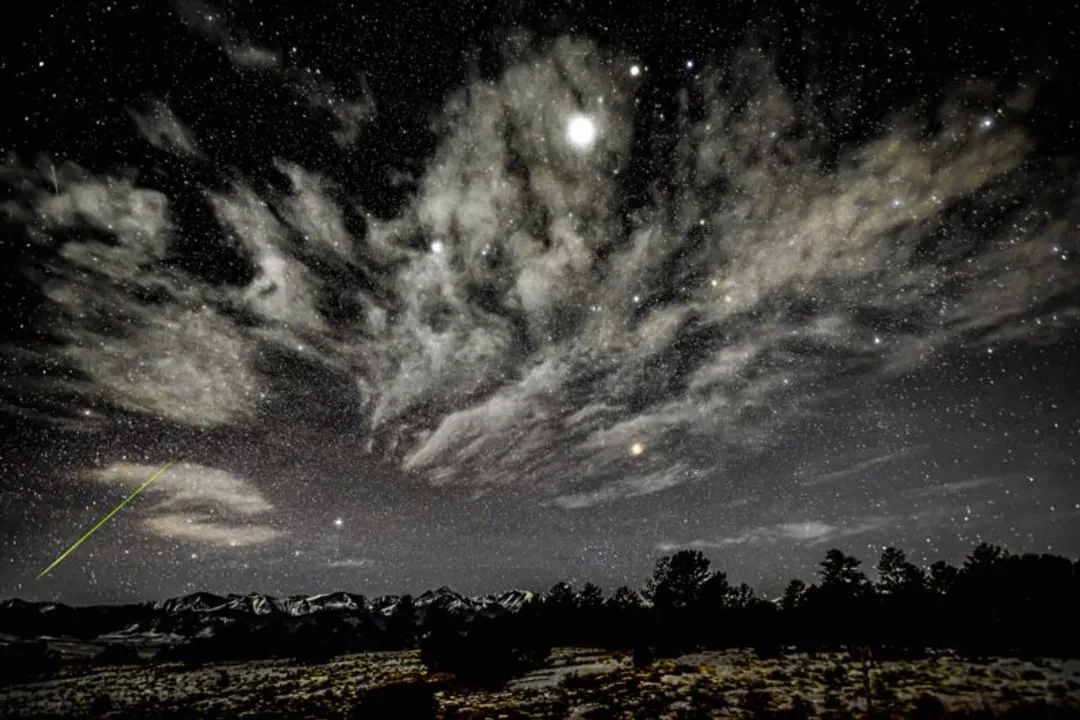
To truly appreciate the duration, it helps to distinguish between the active period and the peak. The active period is the duration during which Earth is moving through the stream of meteoroids left behind by the parent body. [4] For the Geminids, this annual crossing generally runs from early December into the third week of the month. [3] While you might catch a stray, faint meteor on the edges of this date range, the vast majority of debris concentrations, the ones producing dozens of meteors per hour, cluster around the maximum activity dates. [2] It has even been noted that stray Geminids can sometimes be seen trickling through the atmosphere through December 25th in very dark skies. [4]
# Peak Display
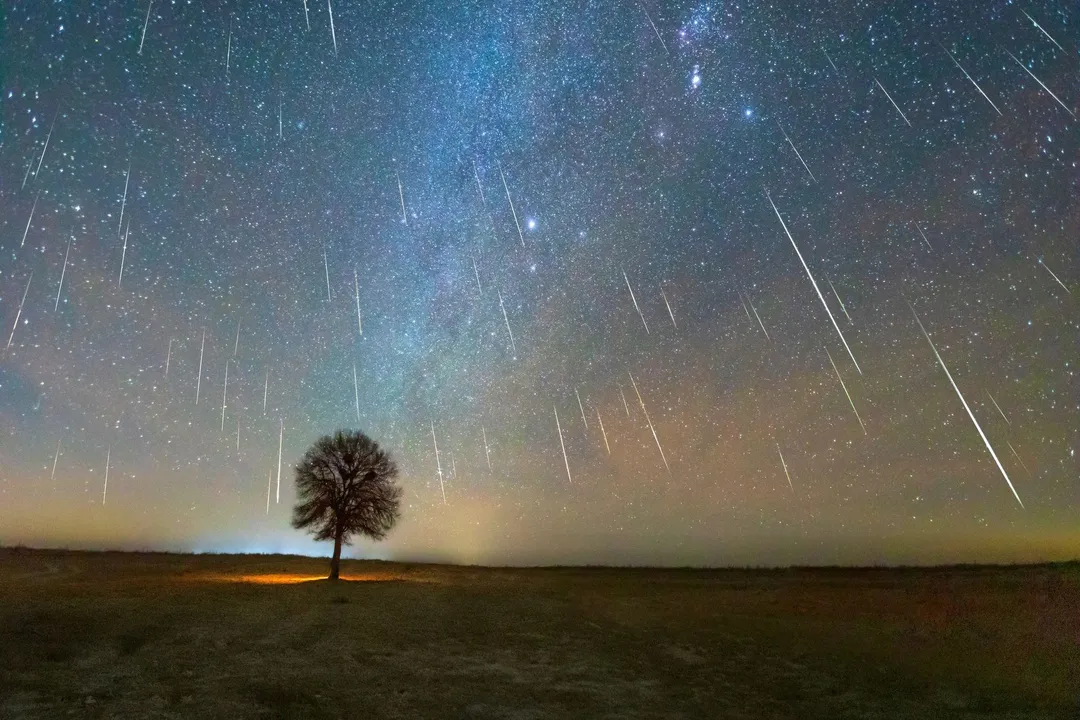
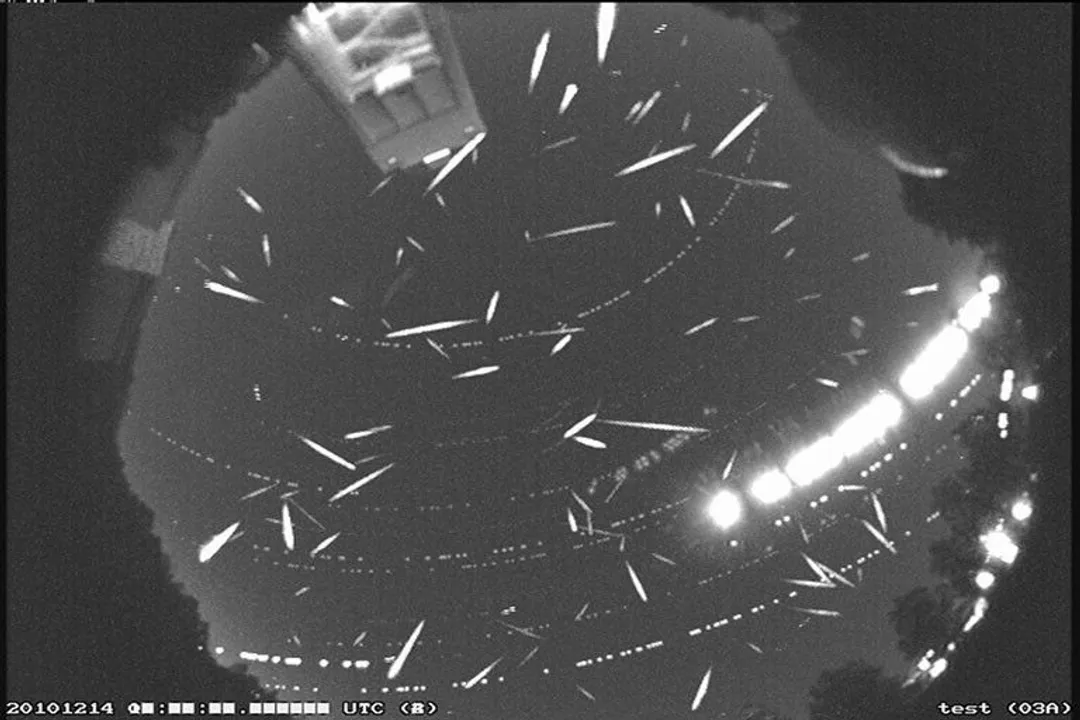
Meteor showers are named for their radiant—the point in the sky from which the meteors appear to originate—but the actual shower intensity revolves around the date of maximum activity. [3] For the Geminids, this almost always falls on the night between December 13th and 14th. [4][8] This event is renowned because it is one of the last major showers of the calendar year and consistently delivers high rates. [2] Under absolutely perfect, dark-sky conditions, the Zenithal Hourly Rate (ZHR) can be as high as 120 to 150 meteors per hour. [2][8][5] This makes it one of the strongest annual displays available to skywatchers. [5][8] Even if you are in a moderately light-polluted area, catching 50 or more meteors an hour near the peak is highly achievable, which is a fantastic return for your time invested. [4]
# Viewing Timing
Unlike many other prominent showers that require staying up until the pre-dawn hours for the best views, the Geminids have a unique advantage: their radiant, located near the bright star Castor in the constellation Gemini, rises relatively early. [2] This means that you can start observing before midnight local time, which is a bonus for those who cannot stay up until 2 a.m.. The radiant reaches its highest point in the sky—its culmination—around 2 a.m. for observers globally, which is usually when the highest hourly rates are recorded. [4]
While the overall activity lasts over two weeks, the effective viewing window is concentrated around the peak night. If the radiant is low in the east around 9 PM local time, those initial hours are often the best opportunity to spot earthgrazers—slow-moving, long-lasting meteors that skim the upper atmosphere close to the horizon. [4] True peak activity, yielding the highest count rates, only becomes apparent once the radiant climbs significantly higher in the sky, often after 1 AM, providing a concentrated, intense burst of activity compared to the drawn-out initial hours of observation. [4] This early evening visibility, though yielding fewer meteors, still provides memorable views and is one reason the Geminids are so popular. [5]
# Celestial Origin
The Geminids earn their reputation not just for their number, but for their unusual parent. [5] While the vast majority of meteor showers stem from dust shed by comets, the Geminids are debris from the asteroid 3200 Phaethon. [2][5][6][8] Phaethon orbits the Sun in a highly elliptical path, much like a comet, leading some scientists to debate whether it represents a completely new class of object sometimes called a "rock comet". [2][6] Because Phaethon’s debris is thought to be denser than typical cometary dust, the resulting meteors are often very bright. [5][6] Furthermore, these particles are rich in metals such as calcium and sodium, which explains why Geminid streaks are frequently observed in multiple colors—white, yellow, and even tinges of green or blue—a feature similar to fireworks. [2]
# Making the Most Of It
To maximize your chances during this relatively short, albeit intense, annual event, planning is key, especially given the frequent winter chill associated with December viewing. [4][2] You need no special equipment; the naked eye is the perfect tool. [4] The first step is finding the darkest location possible, away from city glow. [4][8] Next, remember that your eyes require time to fully adapt to the darkness—plan for at least 20 minutes of sitting still before you start counting seriously. [4] A comfortable chair or lying on a blanket is essential, as patience is needed between the sporadic bursts of activity. [4][8] Avoid looking directly at the radiant point, as meteors near the radiant have short paths; instead, look slightly to the side to catch the longest, most dramatic streaks visible across the entire dome of the sky. [2][4]
To make the most of the concentrated peak window, which often favors the hours just before dawn when the radiant is highest, consider a multi-stage preparation. Instead of simply waiting for your eyes to adapt, try a five-minute "re-acclimation sprint" around the predicted peak time. If you must use a device, such as checking a sky map app, step away from your primary viewing area, cover your eyes with your hands (blocking all light), and then quickly check the device using its lowest brightness red-light setting for no more than 15 seconds. This limits the damaging white/blue light exposure while maximizing the time spent fully dark-adapted during that best 60-minute window of peak activity. [4]
The Geminids are celebrated because they are so dependable, presenting one of the best shows even when the Moon is present, provided the phase is right—a waning crescent in recent years has made for favorable conditions by rising late and leaving the early evening moon-free. [2][4] For anyone seeking a high-quality, reliable celestial event, the Geminid meteor shower offers a multi-week opportunity culminating in one spectacular multi-day climax.
Related Questions
#Citations
Geminid meteor shower peaks December 13-14 - EarthSky
Geminid meteor shower 2025 — When, where and how to see it
Meteor Shower Calendar 2025-2026
Geminid meteor shower 2025: when and where to see it in the UK
Geminids - NASA Science
Geminids meteor shower - how was your experience? : r/Astronomy
Geminids Meteor Shower 2025 - Time and Date
The 2025 Geminid Meteor Shower - Cloudy Nights