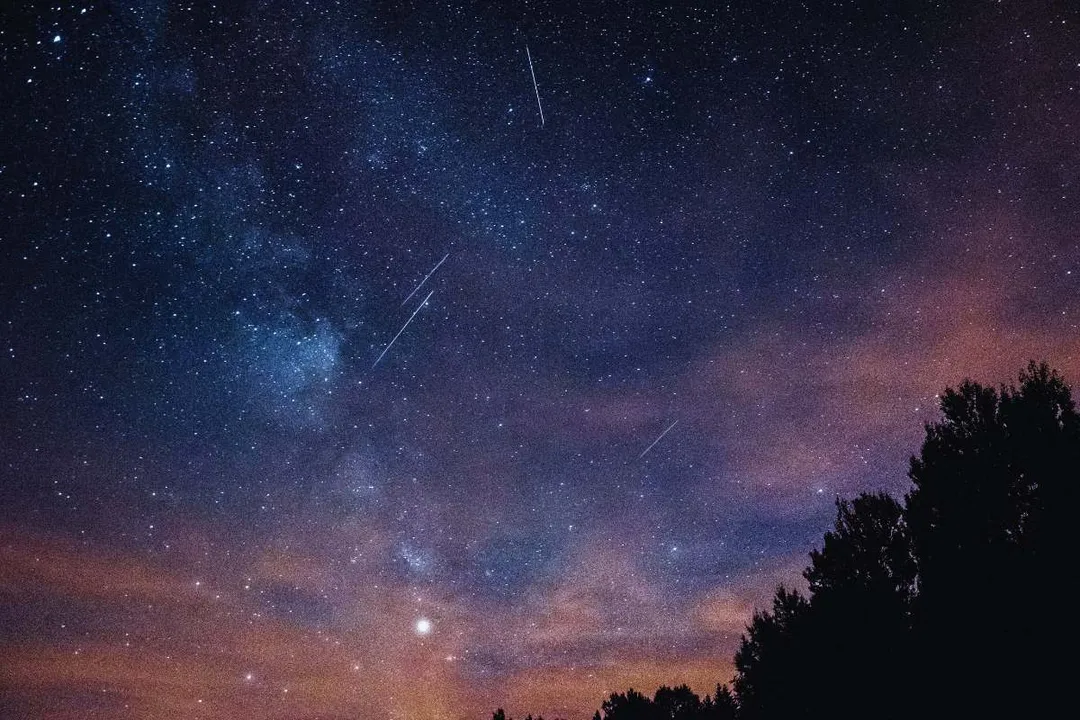
If a shower’s radiant has a declination of +60 degrees, what happens for an observer at +30 degrees latitude?
They will never see the radiant higher than 30 degrees above the northern horizon.
The visibility of a meteor shower is intrinsically linked to the declination of its radiant relative to the observer's latitude. If a radiant has a northern declination of +60 degrees, an observer situated at a latitude of +30 degrees (like central Florida or parts of the Mediterranean) can calculate the maximum altitude achieved. The maximum altitude a northern radiant can reach above the northern horizon for any observer in the Northern Hemisphere is calculated by subtracting the observer's latitude from the radiant's declination (60 - 30 = 30 degrees). This results in a radiant that stays relatively low in the sky, drastically limiting the visible streaks compared to observers located at higher northern latitudes, such as Canada at +50 degrees, who can position themselves closer to the radiant's higher paths.