What is a meteor that has landed on the ground?
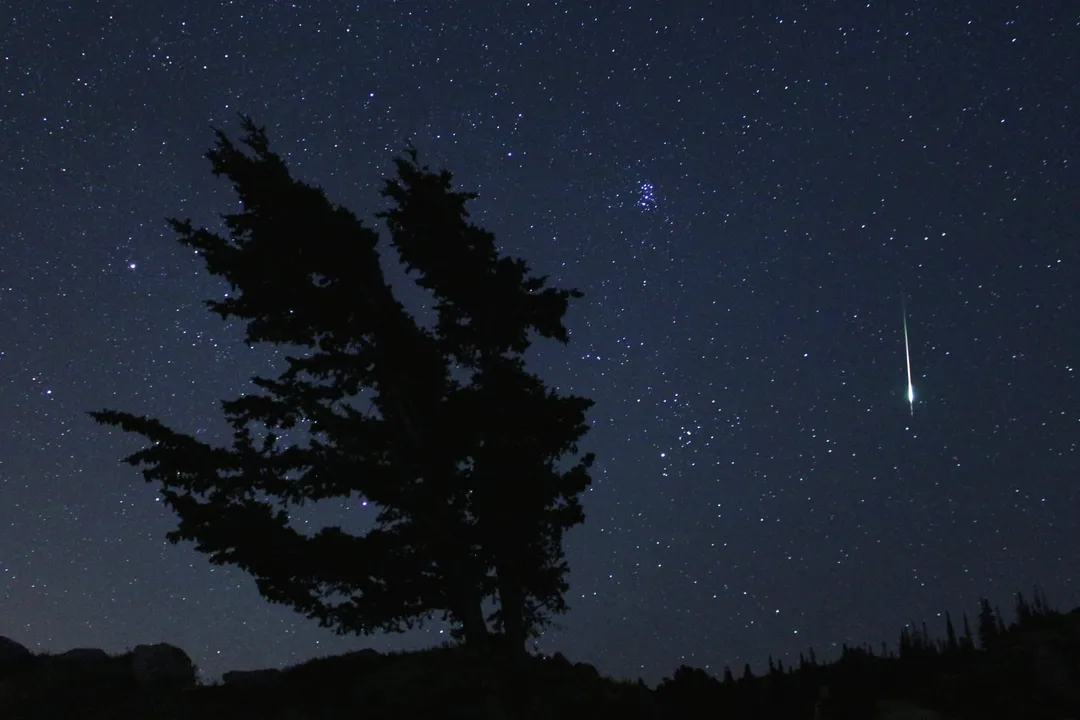
The object that completes a fiery passage through the atmosphere and actually comes to rest on the ground is officially called a meteorite, but understanding how it got there requires tracing its history through the cosmos and our own sky. [4][10] To the naked eye, what we see streaking overhead is a bright flash of light, an event we commonly refer to as a meteor, but that light is merely the result of a smaller body, perhaps no bigger than a pebble, burning up due to intense friction. [1] This distinction between the object in space, the streak in the air, and the rock on the ground is fundamental to understanding these visitors from outer space. [2]
# Space Debris Defined
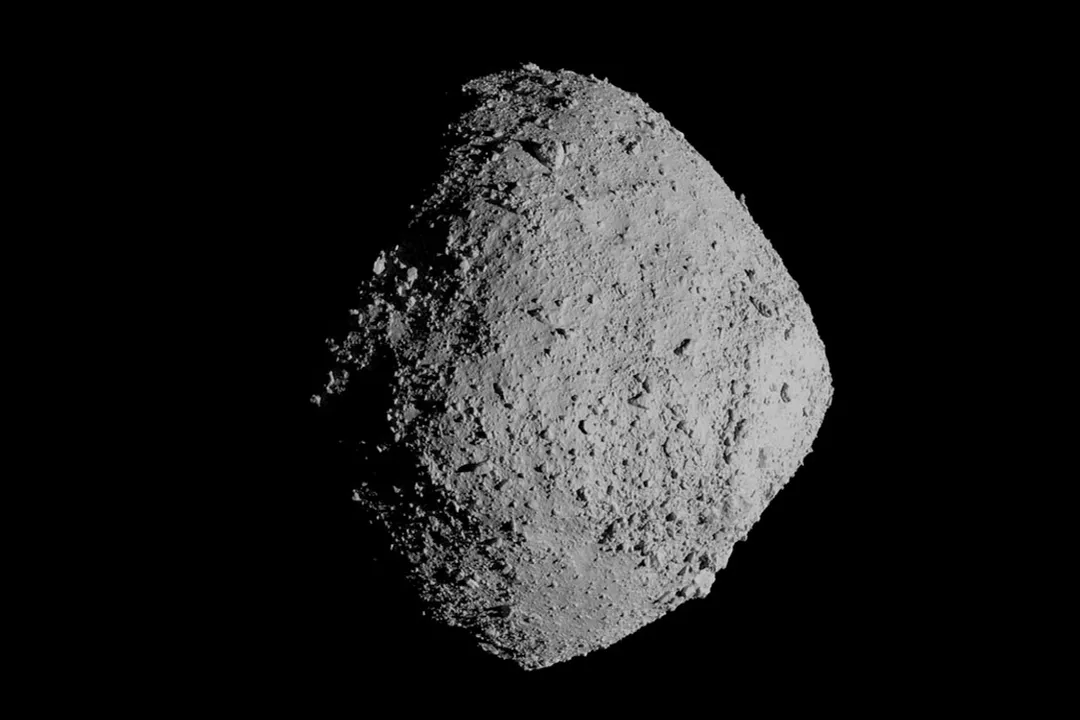
The terminology surrounding these extraterrestrial visitors is precise, even though casual conversation often mixes the terms up. [4] Before anything enters our atmosphere, the small piece of rock or metal is classified as a meteoroid. [2][6] Meteoroids are essentially fragments originating from larger bodies like asteroids or comets. [1][5][9] They vary wildly in size, from fine dust particles up to about one meter across, though objects larger than that are usually classified as asteroids. [1][2] It is the environment that defines the name: the object in space is a meteoroid; the streak of light in the atmosphere is a meteor; and the piece that survives to land is a meteorite. [2][4]
A common point of confusion arises because many meteoroids are quite small. Think about the sheer number of tiny particles constantly bombarding Earth. While an object the size of a basketball might create a spectacular, long-lasting fireball, many meteoroids are minuscule, burning up completely high in the atmosphere, causing brief, faint streaks that go largely unnoticed. [1] If we consider that even a small pebble-sized meteoroid entering the atmosphere at tens of thousands of miles per hour carries immense kinetic energy, it becomes apparent that the atmospheric braking effect is what saves us from constant impacts; the friction alone generates the brilliant light we see. [1] To put this energy release into perspective, an object that produces a visible, brief meteor might release energy equivalent to a small conventional explosion, yet because this energy is dissipated over many miles of atmosphere, the resulting ground impact energy is negligible for anything other than the largest entries.
# Atmospheric Entry
When a meteoroid survives its fiery passage through Earth's atmosphere, the object that strikes the surface is the meteorite. [4][10] The atmospheric journey is dramatic. As the meteoroid slams into the upper atmosphere at extreme speeds—often between 25,000 and 160,000 miles per hour—the air in front of it compresses so rapidly that it heats up intensely. [1] This superheated air, rather than the rock itself scraping away the material, causes ablation, which vaporizes much of the outer layer. [1] This vaporization is what creates the visible meteor streak. [1]
The process of slowing down is so violent that most meteoroids disintegrate before reaching the ground. [4] Even if an object is initially several meters wide, very little of the original mass may remain by the time it reaches the surface. [4] The intense heat often leaves a characteristic dark, glassy coating on the exterior of the surviving rock, known as the fusion crust. [10]
One of the most intensely documented modern examples of atmospheric entry involved the Chelyabinsk meteor in Russia in 2013. [3] This object was an asteroid fragment, estimated to be about 20 meters across when it entered the atmosphere. [3] It did not survive intact; instead, it exploded high above the ground in an airburst. [3] While the object itself did not land as a single, large meteorite, the resulting explosion generated a powerful shockwave that shattered windows for miles, injuring over a thousand people. [3] This event served as a stark reminder of the destructive power even smaller, unmonitored Near-Earth Objects can possess when they interact with our planet’s atmosphere. [3] The fragments that did eventually hit the ground were classified as meteorites, though the main event was the airburst itself. [3]
# Meteorite Types
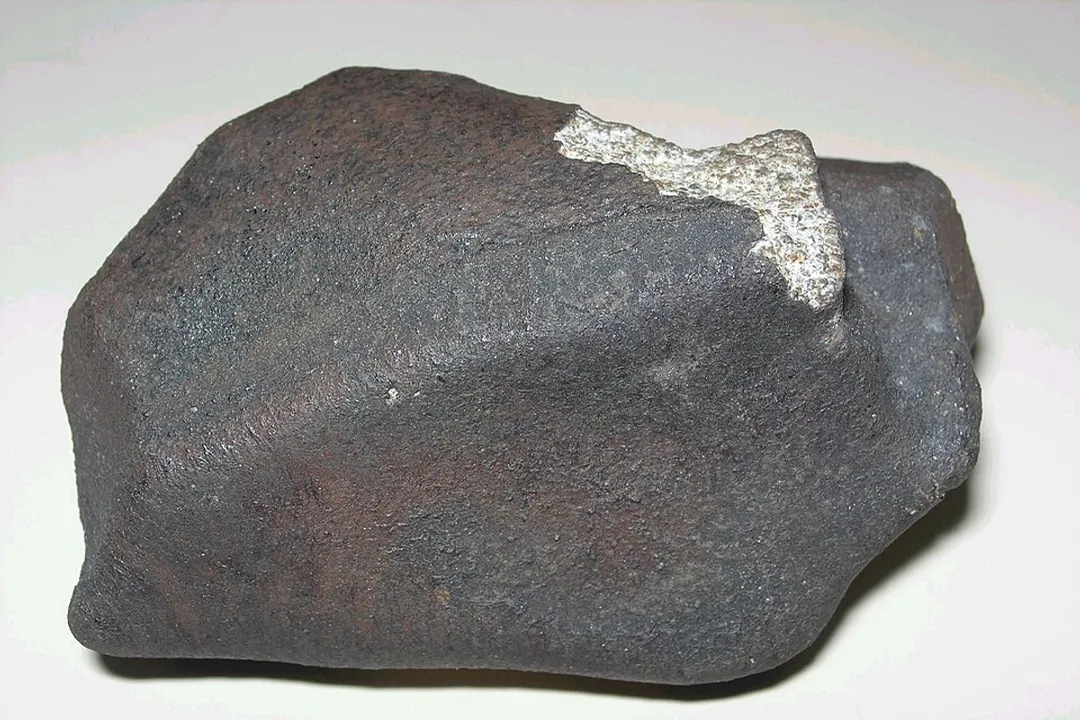
Once recovered, meteorites are categorized based on their elemental makeup, which in turn tells scientists about their parent bodies in the solar system. [4] There are three main groups into which meteorites fall: Stony, Iron, and Stony-Iron. [4][10]
# Stony Meteorites
These are by far the most common type recovered, accounting for about 94% of falls. [4] They are primarily composed of silicate minerals, much like the rocks found on Earth. [4][10] Within the stony category, there are further classifications, most notably chondrites and achondrites. [4] Chondrites are considered the most primitive materials in the solar system, often containing tiny, spherical inclusions called chondrules. [4] Because they formed very early on, they offer direct insight into the conditions and composition of the solar nebula before the planets fully formed. [4] Achondrites, conversely, are more differentiated, meaning they have experienced melting and separation of materials, suggesting they came from larger, geologically active parent bodies like asteroids. [4]
# Iron Meteorites
As their name suggests, these are predominantly composed of iron and nickel alloys. [10] These are denser and heavier than the stony varieties. [4] Scientists study the crystal structure of the iron-nickel matrix, often revealing patterns called Widmanstätten figures when the sample is etched with acid—patterns that can only form through extremely slow cooling over millions of years deep inside a molten parent body. [10] Because they are much more durable than stony types, iron meteorites often survive the atmospheric passage more readily, though they are less commonly found than stony meteorites because they weather differently on Earth's surface. [4]
# Stony-Iron Meteorites
These are the rarest group, making up less than 1% of finds, and represent a fascinating mix of the other two types. [4][10] They consist of an intergrowth of silicate minerals and metal. [10] The two main types are pallasites, which feature translucent, amber-colored olivine crystals embedded in a metal matrix, and mesosiderites, which are breccias—fragmented rocks cemented together. [4] The composition of stony-irons suggests they originated from the transitional boundary zone between the metallic core and the rocky mantle of a larger asteroid. [4]
| Meteorite Type | Primary Composition | Approximate Rarity (Falls) | Implied Origin |
|---|---|---|---|
| Stony | Silicate Minerals | ~94% [4] | Primitive solar nebula or planetary crusts [4] |
| Iron | Iron and Nickel Alloy | ~5% [4] | Differentiated planetary/asteroidal cores [10] |
| Stony-Iron | Silicates and Metal | <1% [4] | Core-mantle boundary of large asteroids [4] |
# Seeking the Genuine Rock
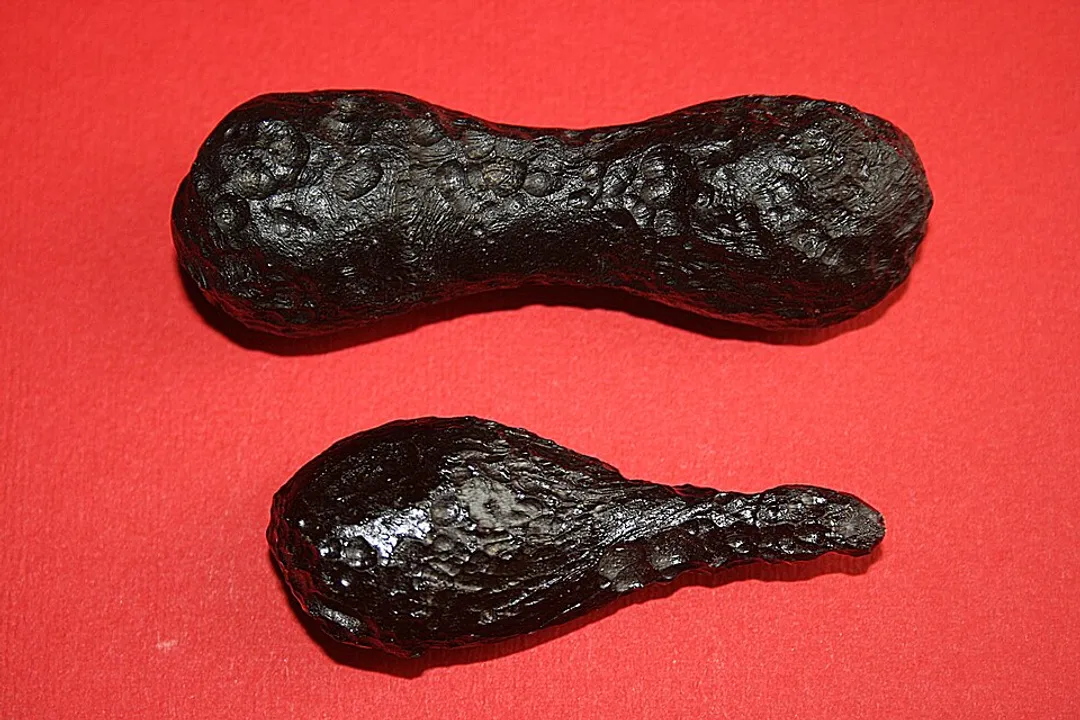
One challenge for anyone discovering a strange rock in a field or desert is determining if they have actually found a genuine piece of space, or if it is what experts often call a meteor-wrong. [7] Meteorites have several distinguishing features that set them apart from terrestrial rocks. [7][10]
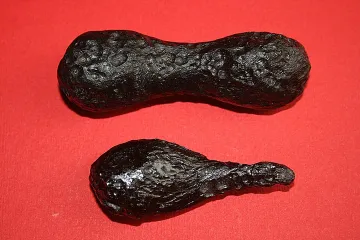
The most immediate giveaway for a freshly fallen meteorite is often the fusion crust. [10] This is the thin, dark, often black or brown glassy coating formed by the intense heat of atmospheric entry. [10] Terrestrial rocks rarely develop this uniform, glassy exterior.
Another key characteristic is magnetism. [10] Since most meteorites, especially irons and chondrites, contain iron, they are attracted to a magnet. [10] While some Earth rocks contain magnetic minerals, the consistent, sometimes strong magnetic attraction is a strong indicator of a meteorite. Furthermore, meteorites often possess a higher density than typical Earth rocks because of the significant iron and nickel content. [10]
Finally, look for regmaglypts. [10] These are shallow, thumbprint-like depressions on the surface of the rock. [10] They are formed by the swirling passage of air over the molten surface during descent, somewhat like pressing a thumb into soft clay. [10] While terrestrial weathering can mimic some pitting, regmaglypts are distinctly aerodynamic in shape.
However, many common Earth materials can be easily mistaken for meteorites. [7] These "meteor-wrongs" include slag from industrial processes, hematite, or even common basaltic rocks. [7] Slag often looks metallic and can be magnetic but typically lacks a true fusion crust and may have gas bubbles (vesicles) from its molten origin, which are not found in meteorites due to the vacuum-like conditions of space. [7] A good tip for the amateur collector, when in doubt, is to look for a stone that is both magnetic and displays a remnant of a thin fusion crust, rather than just one or the other. If the rock is very light for its size or is highly porous with large holes, it is almost certainly terrestrial. [7]
# Scientific Value
The value of meteorites extends far beyond their curiosity factor or the potential monetary worth of large specimens. [4] They are physical remnants of the early solar system, essentially pristine building blocks that predate the formation of our planet. [4] They allow geologists and planetary scientists to study materials that are otherwise inaccessible, as drilling into the Earth's core or traveling to distant planetary bodies is incredibly difficult. [4] By analyzing their chemical composition and isotopic signatures, scientists can piece together the history of dust clouds, planetary accretion, and the processes that led to the formation of Earth and the other worlds around us. [4] The study of these fallen messengers provides a direct, tangible link to the origin story of our solar neighborhood. [6]
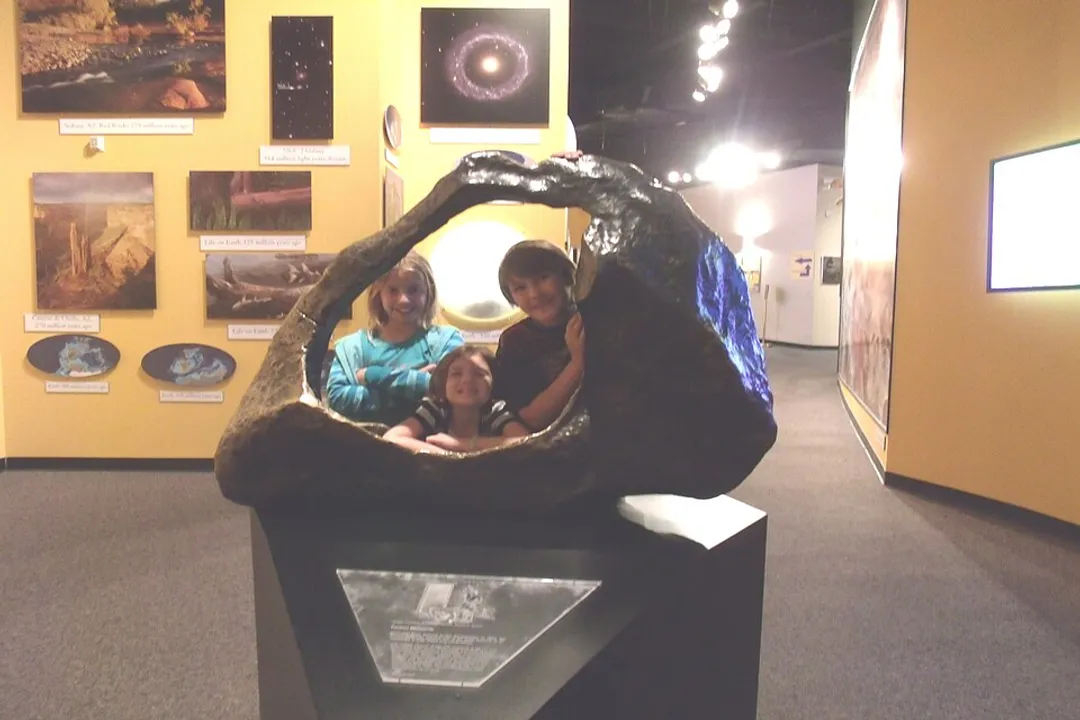
If you are interested in exploring genuine meteorites, many major natural history museums house significant collections, often displaying spectacular iron specimens and rare finds. [4] Seeing one in person often conveys its density and alien character far better than any photograph can, demonstrating the sheer tenacity required for a piece of space to survive its arrival. [4]
#Videos
Watch a meteor land on Earth - BBC - YouTube
Related Questions
#Citations
Asteroid or Meteor: What's the Difference? - NASA Space Place
Meteoroid - Wikipedia
Falling to earth: The Chelyabinsk Meteorite
Meteorites: Messengers From Outer Space
Asteroids, Comets, Meteors, and Meteorites | NISE Network
Meteorites on Earth: how many fall per year and why don't we see ...
Watch a meteor land on Earth - BBC - YouTube
Meteorites and meteor-wrongs - Natural History Museum
Meteors | Some Meteorite Information | Washington University in St ...
What Are Meteorites? Ancient Clues to Our Solar System | AMNH