Has the ISS ever been hit by a meteor?
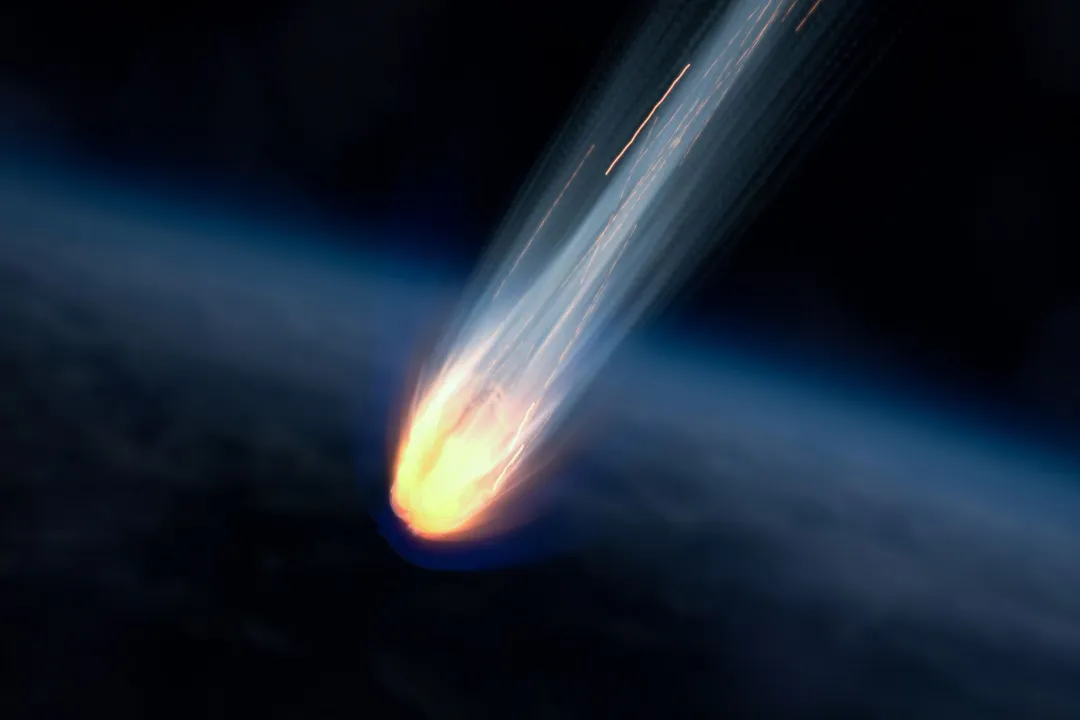
The International Space Station (ISS) is constantly traversing a hazardous environment, a region populated by countless tiny specks of rock and human-made fragments moving at incredible speeds. Given its vast surface area and prolonged exposure, the idea that it has never been struck by anything seems highly improbable. While a large, cinema-style meteor—a chunk of rock blazing through the atmosphere—will never reach the altitude of the ISS, the station regularly contends with much smaller, yet still dangerous, objects: meteoroids and orbital debris. [7]
# Orbital Hazards Defined
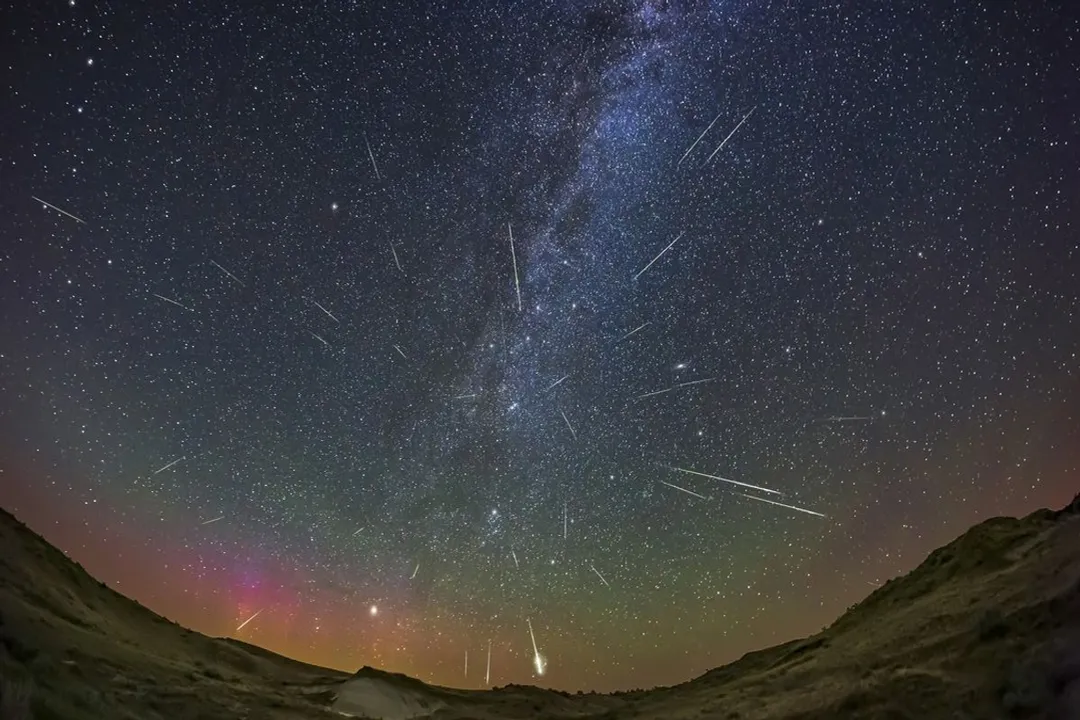
To understand the risk, we must first clarify the terminology. A meteor is the streak of light we see when a space rock enters Earth's atmosphere and burns up. [2] Since the ISS orbits far above this atmospheric boundary, a true meteor cannot strike it. What can strike the station are meteoroids, which are the original rocky bodies still in space, or micrometeoroids, which are the very small versions of these objects. [2] The threat profile, however, is not limited to nature's remnants. A significant portion, often considered the greater concern, comes from space junk or orbital debris—shards of defunct satellites, spent rocket stages, and flecks of paint knocked loose from previous impacts. [7][8]
Spacecraft designers and mission controllers often categorize these threats together as MMOD (Micrometeoroids and Orbital Debris). [6] For an object traveling at orbital velocities—which can exceed 17,500 miles per hour—even a particle the size of a grain of sand carries enough kinetic energy to cause significant damage. [2]
# The Real Danger Space
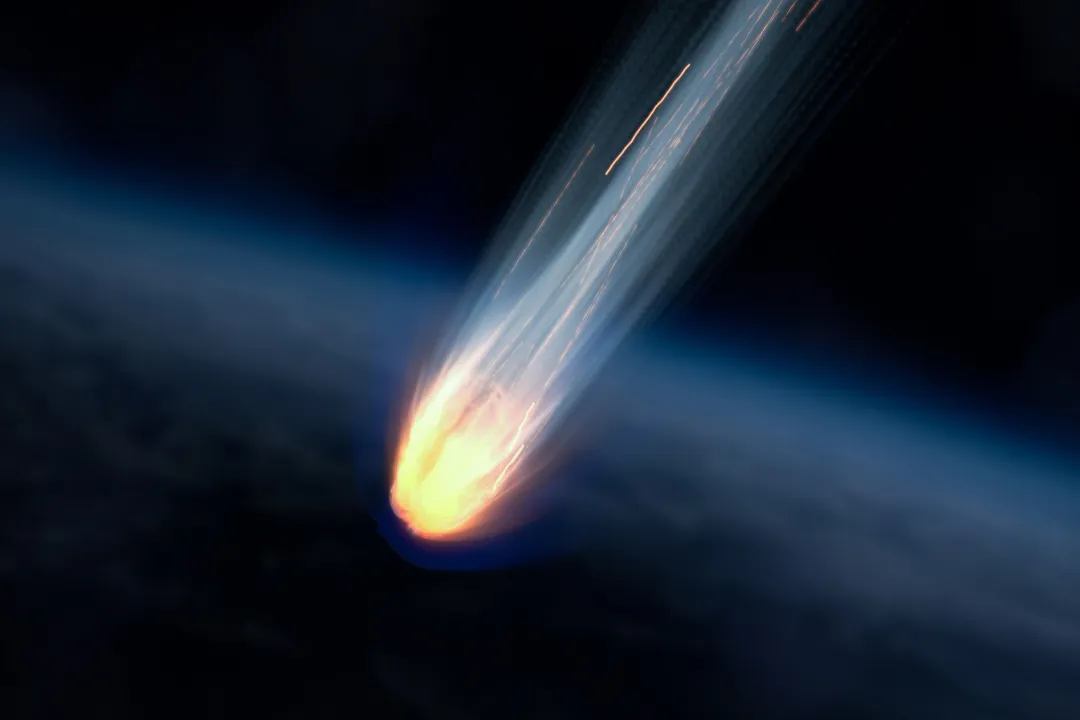
Astronauts and mission control acknowledge the constant threat, but there is a general consensus on which type of projectile poses the more manageable risk. Reports suggest that spacecraft operating in orbit tend to fear space junk more than natural meteorites. [8] This is a crucial distinction because the influx of natural meteoroids, particularly during predictable meteor showers, is somewhat observable and sometimes can be planned around. [7] Conversely, space debris is unpredictable, often too small to track effectively, yet moving at the same lethally high speeds. [8]
One perspective suggests that, statistically speaking, the ISS presents a very small target relative to the vastness of space, which helps it avoid larger natural impacts. [3] However, this statistical luck runs out when considering the sheer volume of microscopic material encountered continuously. While avoiding a large impact is statistically favorable over the short term of any single mission, the certainty of some impacts over the station’s multi-decade lifespan is a given. [6]
# Impact Events Known

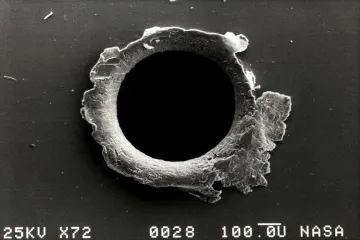
While specific documentation of every micrometeoroid strike might be internal operational data, the record shows that impacts leading to breaches have occurred. The consequences of such a hit are severe, ranging from superficial pitting to more serious events involving a breach of the station's pressurized volume. [2]
One well-documented incident, though not explicitly attributed to a natural meteoroid in all accounts, involved a leak that an astronaut had to plug. An astronaut reportedly used his finger to temporarily stop a leak in the cooling system of the ISS, illustrating the immediate, hands-on crisis management required when a breach occurs. [5] Such events underscore that the protective measures are occasionally bypassed by high-velocity projectiles, forcing emergency repairs. [5][6] Minor strikes are expected wear and tear, but any penetration of the hull necessitates an immediate response to prevent gradual or catastrophic depressurization. [2]
# Shielding Systems Active
Protecting the station and its crew is a primary engineering concern, resulting in layered defense strategies. The primary defense against typical MMOD threats is the use of shielding, often called Whipple shields. [2] These are not single, thick plates of metal. Instead, they are designed as multi-layer systems meant to break up or disperse the incoming particle's energy before it can penetrate the critical inner hull containing the atmosphere. [2]
The outer layer of the shield is sacrificial. When a projectile hits this layer, the impact energy vaporizes or shatters the projectile into a less energetic cloud of plasma and fragments. [2] The subsequent layers are designed to absorb the remaining energy of this dispersed cloud, preventing it from breaching the cabin wall.
Beyond passive shielding, the ISS uses orbital mechanics for active avoidance. Mission controllers track larger pieces of debris that pose a significant risk and can execute Debris Avoidance Maneuvers (DAMs). [1] These small, precisely timed burns adjust the station's trajectory just enough to miss an object that would otherwise intersect its path. [1] This is essential when planning for known conjunctions, though it cannot account for the millions of smaller, untrackable particles.
# Damage Protocols Followed
When a collision with a particle—be it a micrometeoroid or debris—occurs, the operational response depends entirely on the severity of the resulting damage. A small impact might only leave a tiny pit on an exterior panel, requiring only documentation during routine external inspections. [6] However, if a strike penetrates the pressure hull, the situation becomes immediately critical. [2]
If a breach occurs, the immediate protocol involves identifying the location, isolating the affected module if possible, and plugging the hole to stop air loss. [2][5] A dust cloud of debris is often generated upon impact, which itself presents a secondary hazard. [2] Astronauts are trained to identify the signs of a depressurization event, which could include alarms, a hissing sound, or pressure drops. [2] The ability to enact quick, improvised fixes, like using a finger to seal a leak until a permanent patch can be applied, speaks to the hands-on expertise required in orbit. [5]
# Statistical Odds Analysis
When considering why the ISS hasn't suffered a major, catastrophic failure from a single, large impact, we can look beyond just the shielding. The ISS orbits in Low Earth Orbit (LEO), primarily between 250 and 254 miles up. [1] While this altitude places it squarely in the densest band of orbital debris created by past human activity, it is also slightly lower than the altitudes where many long-lived, larger pieces of debris reside, which tend to be in higher orbits that take decades to decay. [3] Therefore, the station is subject to a high flux of small, recently created debris and natural micrometeoroids, but it might avoid the largest, longest-lived legacy objects that plague higher orbits. This creates an interesting risk profile: high certainty of minor, cumulative damage versus a lower, though non-zero, risk of a single, catastrophic event from a piece of debris that has survived long enough to cross the station's path. [6][8]
# Wear and Tear Reality
The engineering analysis of spacecraft durability must account for cumulative damage, not just single failure points. While a major blow is the primary focus of safety briefings, the reality of long-term exposure is the steady erosion caused by countless sub-millimeter impacts. Over years, these tiny strikes effectively sandblast sensitive surfaces, degrade thermal blankets, and slightly compromise the integrity of radiator panels and exterior instruments. [6] This phenomenon is less about sudden disaster and more about planned obsolescence and maintenance scheduling. Every replacement of an external component, like a battery unit or a radiator panel, must factor in the material loss from this continuous bombardment. This means that the replacement schedule for external hardware is likely accelerated due to MMOD exposure than it would be in a completely vacuum environment, representing a constant, non-emergency drain on resources and crew EVA time. [5] The necessity of EVA, the most physically demanding and risky operation for the crew, is thus indirectly increased by these incessant, unavoidable hits. [5]
The ISS, despite being a marvel of engineering, is not immune to the physics of space. It is not a matter of if it has been hit, but rather how many times and by what. The station survives because designers anticipated this reality, providing redundant systems and layered protection against the microscopic hail that constantly peppers its exterior. [1][7] The cumulative evidence points to a history of minor strikes and successful hazard mitigation, keeping the crew safe from the inevitable collision with the small debris that populates their orbital neighborhood.
#Videos
Meteor burns up over Earth in amazing footage from space station
The Asteroid That Almost Hit The International Space Station!
Related Questions
#Citations
How does the ISS avoid meteors during heavy meteor shower ...
Q&A: What Happens When a Meteor Hits the ISS - SKY LIGHTS
Why don't meteors hit the International Space Station and ... - Quora
Meteor burns up over Earth in amazing footage from space station
A Meteorite Hit The International Space Station And An Astronaut ...
Has any spacecraft ever been severely damaged by a micrometeorite?
Could the Geminid meteor shower threaten satellites and astronauts ...
Spacecraft Fear "Space Junk" More Than Meteorites - VOA Africa