How do satellites not hit each other in orbit?
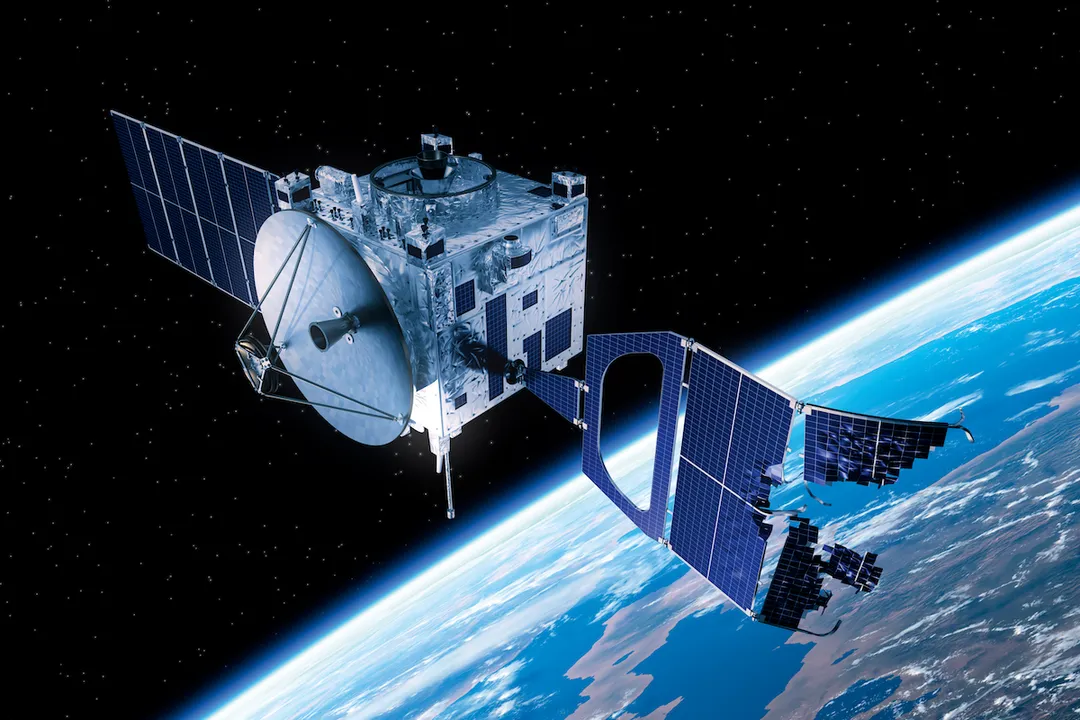
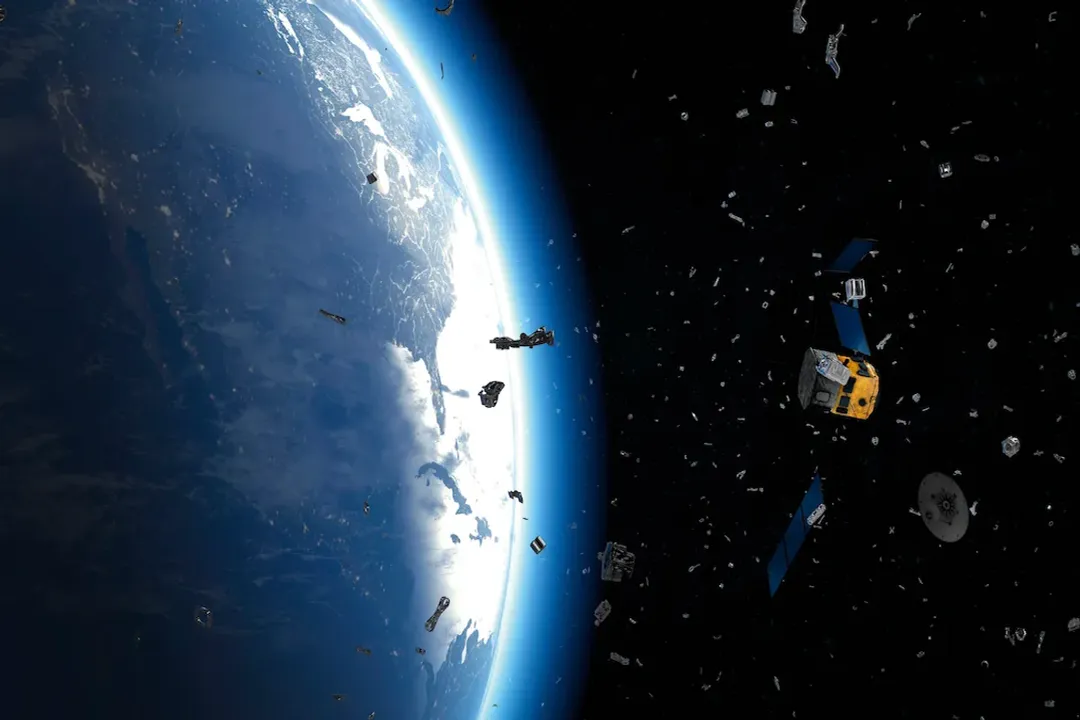
Space is immense, yet the pathways around Earth are becoming surprisingly congested. With thousands of active satellites, along with countless pieces of defunct hardware and debris, the question of how these objects manage to coexist without constant catastrophic encounters is a pressing one. The reality is that preventing collisions is an active, calculated process relying on prediction, tracking, and timely physical adjustments. [9] It isn't a matter of luck; it’s a complex exercise in orbital mechanics and communication.
# Orbital Mechanics
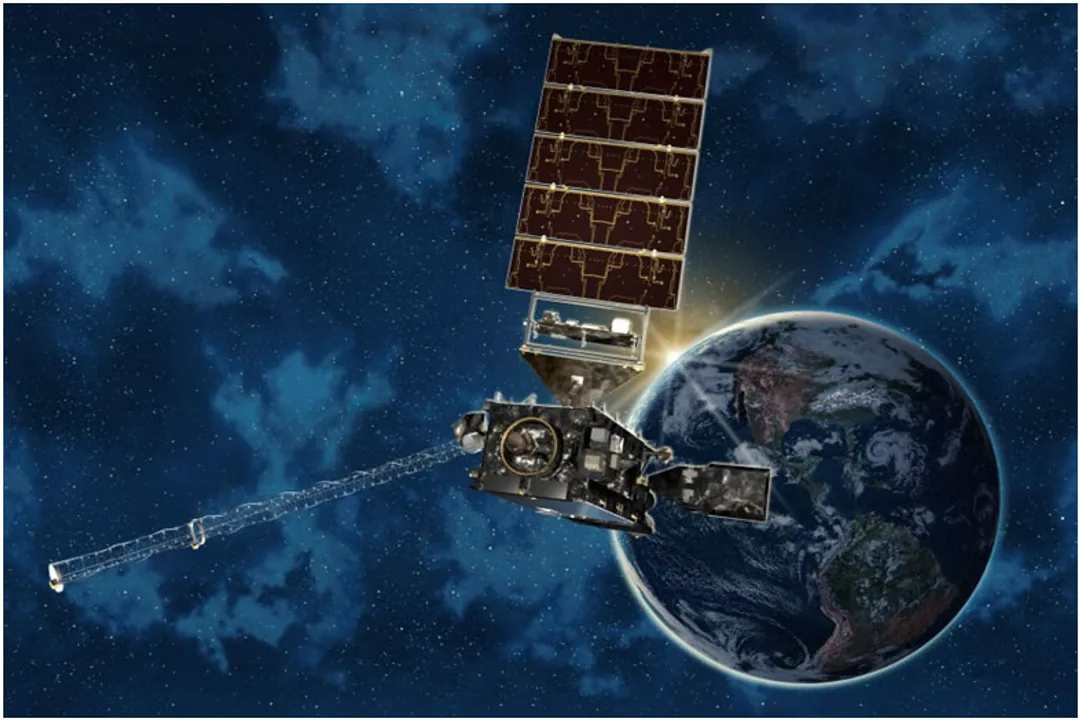
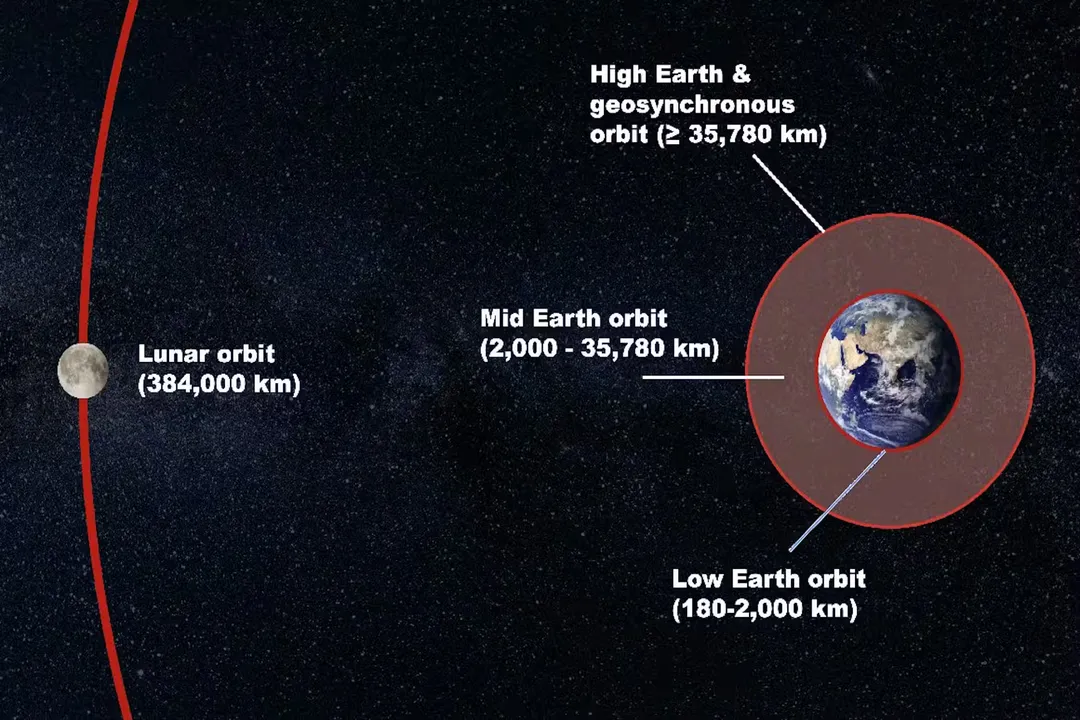
For a satellite to remain in orbit, it must continuously fall toward Earth while simultaneously moving fast enough sideways to perpetually miss it. This balance is dictated by its altitude and velocity. [7] Satellites in Low Earth Orbit (LEO), generally below about 2,000 kilometers, experience some atmospheric drag because the atmosphere, though extremely thin, is still present. [7] This drag causes their orbits to slowly decay, meaning they gradually spiral inward unless they actively correct their path. [7] Higher-altitude satellites, like those in Geosynchronous Orbit (GEO), are much less affected by drag and can maintain their paths for much longer, though gravitational pulls from the Sun and Moon can still cause subtle shifts over time. [7]
When considering potential collisions, it's important to remember that orbits are not fixed lines; they are ellipses defined by physics. Two objects might have orbits that cross at a specific point in space, but if they arrive at that intersection point at different times, they will simply pass by each other safely. [3] The danger arises when two objects are predicted to be in the same vicinity—perhaps within a few hundred meters—at nearly the exact same moment. [3] Even if orbits cross, if the crossing time differential is significant, the risk is negligible. [3]
# Tracking Traffic
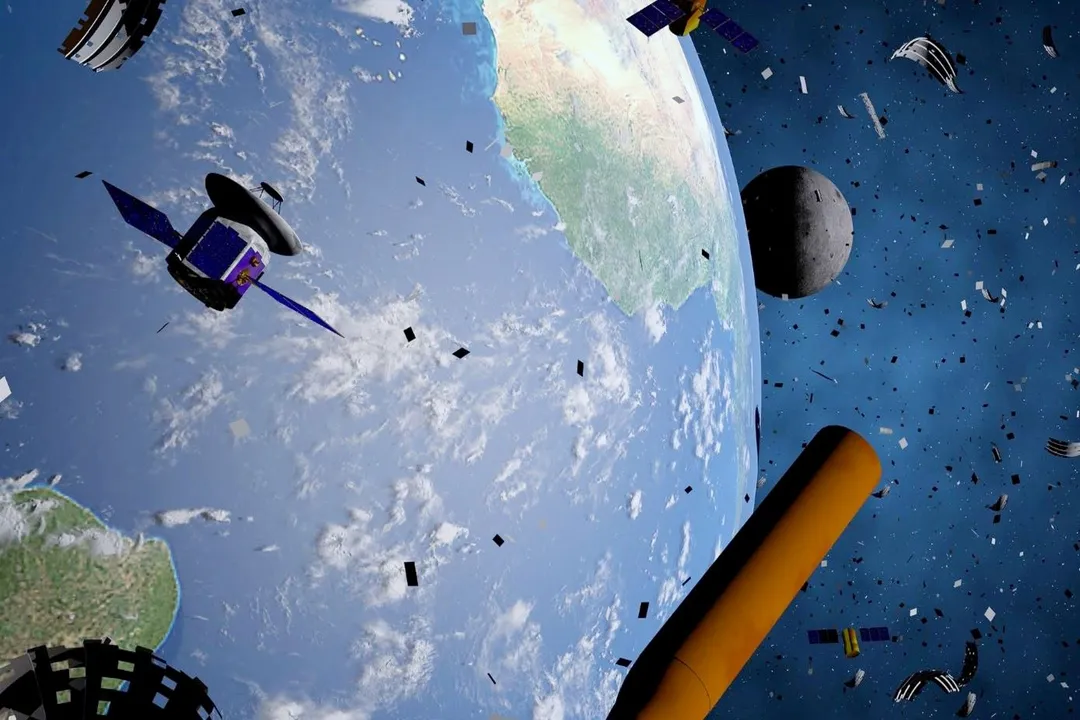
The entire safety system begins with knowing where everything is. Tracking objects in orbit is the foundational activity that makes collision avoidance possible. [1] Space agencies and defense organizations maintain detailed catalogs of objects orbiting Earth. [1] These systems constantly monitor known objects, predicting their future positions based on established orbital mechanics. [1] The number of tracked objects is substantial, encompassing operational satellites, spent rocket stages, and debris fragments. [9]
If an object is massive enough, it can be tracked, and if it's large enough to pose a threat—typically objects larger than 10 centimeters—it will be cataloged, though smaller pieces pose significant risk too. [9][8] The precision required for this task is extraordinary. Think of it this way: you are trying to predict the location of a small object moving at thousands of miles per hour, subjected to minor, unpredictable forces like solar radiation pressure, across a three-dimensional space the size of our planet’s neighborhood. [5] Despite the vastness, the current system successfully catalogs and predicts the motion of tens of thousands of tracked items. [1][5] This established catalog forms the baseline against which all potential threats are compared. [5]
# Predicting Encounters
The core of collision prevention revolves around predicting future close approaches, officially called conjunctions. [5] Tracking data is fed into sophisticated computer models that calculate the probability of two objects coming too close at a future time point. [5][4]
These calculations generate what are known as Conjunction Data Messages (CDMs). [5] A CDM is essentially a formal warning issued when the predicted closest approach between two cataloged objects falls below a specific safety threshold, often cited as being within one kilometer or less. [5] This message contains precise information about the expected miss distance and time of closest approach (TCA). [5]
The process involves constant refinement. Initial predictions, often made weeks in advance, carry a high degree of uncertainty because small initial errors grow exponentially over time, especially for objects in LEO. [5] As the projected encounter time nears, tracking updates become more frequent, the error ellipses shrink, and the probability calculation sharpens. [5] This cycle of prediction, notification, and refinement allows satellite operators to decide on necessary actions well before a crisis point. [5] It’s a continuous risk assessment where the uncertainty in position needs to be managed far more effectively than the actual physical size of the satellite itself. [1]
# Executing Moves
Once a high-probability conjunction is flagged via a CDM, the operator of the endangered satellite must decide whether a maneuver is necessary. [5] Deciding to move is not trivial. Any orbital adjustment requires the use of precious onboard propellant, which limits the operational lifespan of the satellite. [1] Fuel is the ultimate resource in space; every burn brings the satellite one step closer to its demise once the maneuvering capability is exhausted. [1]
The decision to maneuver involves a critical cost-benefit analysis. Operators weigh the calculated probability of collision against the cost of the maneuver. [1] For instance, if a solar storm has recently perturbed the atmosphere, the atmospheric drag might be slightly higher than predicted, altering the path of debris, thereby increasing the risk of a conjunction prediction. [6] If the probability is deemed too high—perhaps exceeding a threshold like 1 in 10,000, though specific thresholds vary by operator—a Collision Avoidance Maneuver (CAM) is scheduled. [5]
This maneuver typically involves firing thrusters briefly to change the satellite's velocity vector, which subtly alters its orbit and ensures it passes safely by the predicted path of the threatening object. [5] The timing is crucial; maneuvers are often performed days before the predicted conjunction to allow time for the new orbit to stabilize and for post-maneuver tracking passes to confirm the safety of the new trajectory. [5]
An interesting trade-off often occurs in orbital planning that operators must balance: the fuel spent on an avoidance maneuver might slightly alter the satellite's timing in a way that makes it more likely to encounter another piece of debris in a subsequent pass, perhaps weeks later. Operators must use complex modeling to ensure they are not solving one problem by creating a slightly different, harder-to-solve one down the line. This iterative management of risk across the operational lifetime is a key element of expertise in satellite operations. [1]
# Rocket Launches
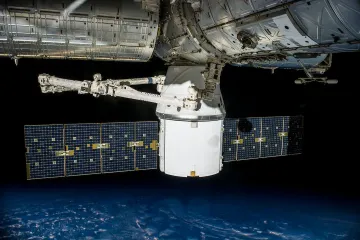
New launches also require careful planning to avoid existing traffic, especially when placing satellites into the heavily used LEO bands. [4] Rocket trajectory planners must coordinate with space situational awareness centers to plot a launch path that avoids cataloged satellites and space debris during ascent. [4][1] This is particularly important during the initial ascent phase when the vehicle is still traversing the densest orbital regions. [1]
The process generally involves ensuring the launch trajectory avoids any region of space that is predicted to be occupied by another satellite at the time the rocket passes through it. [4] Once the launch vehicle reaches its target orbit or deploys its payload, the process transitions to the standard satellite management procedures described above. [4] Successful coordination ensures that a single launch event does not immediately generate new orbital hazards for existing assets. [1][4]
# The Debris Problem
The biggest existential threat to this system isn't necessarily a perfectly functioning satellite hitting another; it's the uncontrolled, non-maneuverable space debris. [9][8] While operational satellites are actively managed, the thousands of pieces of junk—shattered remnants from past collisions or discarded upper stages—are passive threats. [9] These pieces cannot maneuver themselves out of harm's way, placing the burden entirely on the active satellites to move. [1]
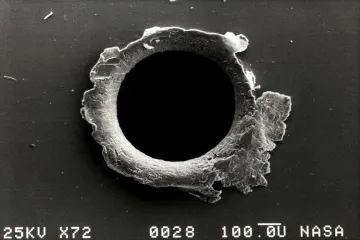
A catastrophic collision, like the 2009 Iridium-Kosmos incident, illustrates the danger. [8] When two large objects collide, they don't just create two defunct pieces; they create thousands of new pieces of debris, exponentially increasing the future collision risk for every object in that orbital shell—a process often termed the Kessler Syndrome. [8] Furthermore, if a solar storm significantly affects atmospheric density, it can cause currently stable debris to drop into lower, more congested orbits faster than expected, potentially triggering more close calls for operational satellites. [6] Managing this debris, whether through better de-orbiting practices or active removal concepts, is crucial for the long-term viability of space access. [9]
# Unforeseen Environmental Factors
The environment is not static, which introduces a layer of unpredictability even when tracking is near-perfect. Solar activity is a major external variable impacting LEO operations. [6] Intense solar flares or coronal mass ejections pump energy into the upper atmosphere, causing it to heat up and expand outward. [6]
When the atmosphere expands, it pushes up against LEO satellites, increasing atmospheric drag on objects even at altitudes previously considered safe. [7][6] This increased drag causes satellites to slow down and fall faster than predicted by standard models, altering their future positions and potentially causing a previously safe trajectory prediction to suddenly become a high-risk conjunction. [6] Operators must monitor space weather reports diligently; a severe solar event can necessitate pre-emptive avoidance maneuvers for satellites that were otherwise scheduled for routine operations, solely to counteract the unpredictable drag effect. [6]
The relationship between orbital altitude and the consequence of debris is not perfectly linear. A piece of debris at 800 km altitude might be maneuvered away from easily because there are fewer objects there than at 1,000 km, but the debris itself has a much shorter lifetime before natural decay. [7] Conversely, a collision near 1,500 km creates debris that will plague operations for centuries, as the drag forces are too minimal to clear it quickly. [8] This differential hazard mapping—where risk is weighted by the longevity of the resulting hazard—is a sophisticated layer of operational planning that goes beyond simple proximity alerts. [1]
# Ensuring Launch Safety
When placing a new asset into orbit, particularly in crowded LEO, avoiding existing spacecraft is paramount. [4] The process of launching a new satellite requires rigorous safety checks coordinated between the launch provider and the various space object catalog custodians. [4]
Before a launch window is approved, the planned ascent trajectory is checked against the predicted locations of all significant cataloged objects. [4] If a potential conflict is found during the ascent phase, the launch date or time may need to be delayed to wait for the conflicting object to pass, or the trajectory itself might be slightly modified for the initial boost phase. [4][1] Rockets are generally designed to maximize clearance during the most congested portions of their flight path. [4] Unlike satellites that can perform multiple small burns over their lifetime, a launch vehicle has a relatively fixed path, making pre-planning essential. [1]
The sheer number of objects means that sometimes, an acceptable risk might still involve a very close pass, particularly for smaller or untrackable debris that might be outside the formal catalogue but could still cause damage. [5] This is why redundancy in tracking and maneuverability for the final satellite is so critical once it reaches its operational slot. [3]
In summary, keeping satellites apart is a system built on the continuous, high-precision estimation of where everything will be, coupled with the responsible use of limited fuel resources to change the course of active hardware when uncertainty demands it. [5][1] It is an active, managed domain, not a passive one, constantly battling the twin forces of orbital mechanics and the increasing density of human creations in the space around our planet. [9]
#Videos
How Satellites Don't Collide in Space - YouTube
How Do Satellites NOT Crash. And How Can We Keep It That Way?
Related Questions
#Citations
How do we ensure that launched rockets don't collide with orbiting ...
How Satellites Don't Collide in Space - YouTube
Why don't satellites collide if their orbits cross over each other's paths?
How do rockets avoid satellites? - Space Exploration Stack Exchange
'Crash Clock' reveals how soon satellite collisions would occur after ...
Why Don't Satellites Fall Out of the Sky? | NESDIS - NOAA
A satellite collision catastrophe is now inevitable, experts warn
Space is getting crowded with satellites and space junk. How do we ...