Is there a chain of satellites?
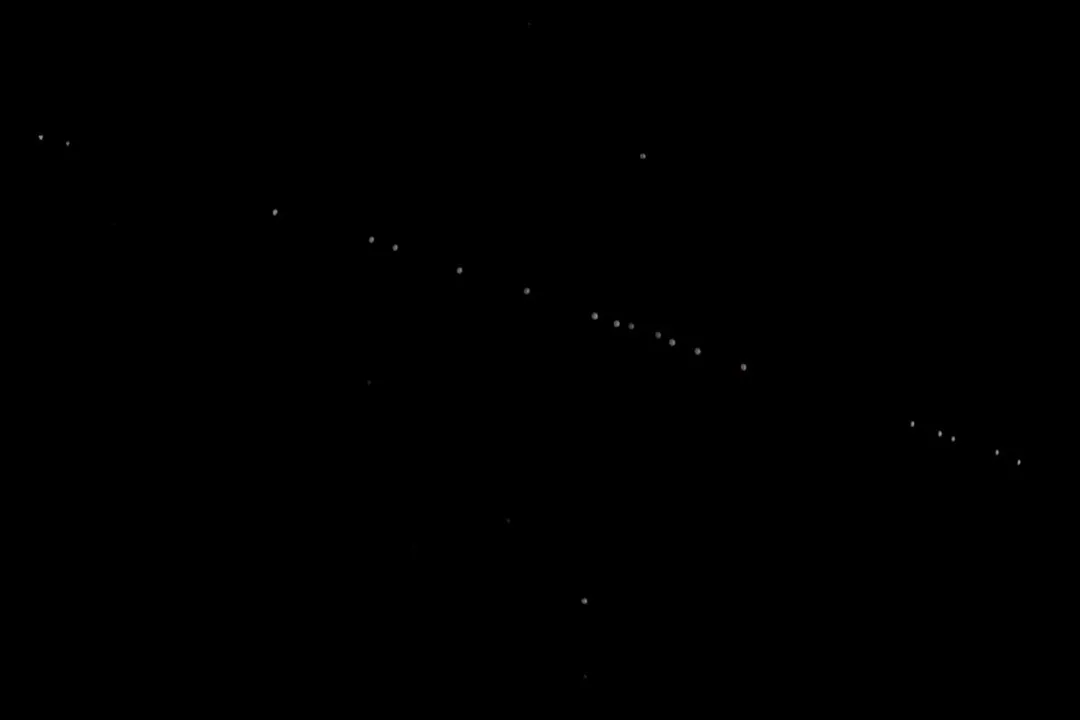
The sight of a string of bright, moving lights cutting silently across the night sky has become an increasingly common occurrence, often sparking wonder, curiosity, or even alarm among ground observers. [7][8] These visual phenomena are not an indication of alien visitation or secret military tests, but rather the visible result of modern large-scale satellite deployment efforts. [3][7] Specifically, when people speak of a "chain of satellites," they are almost always referring to the deployment phase of major constellations, with SpaceX’s Starlink system being the most prolific current example. [1][4]
# Lights Appear
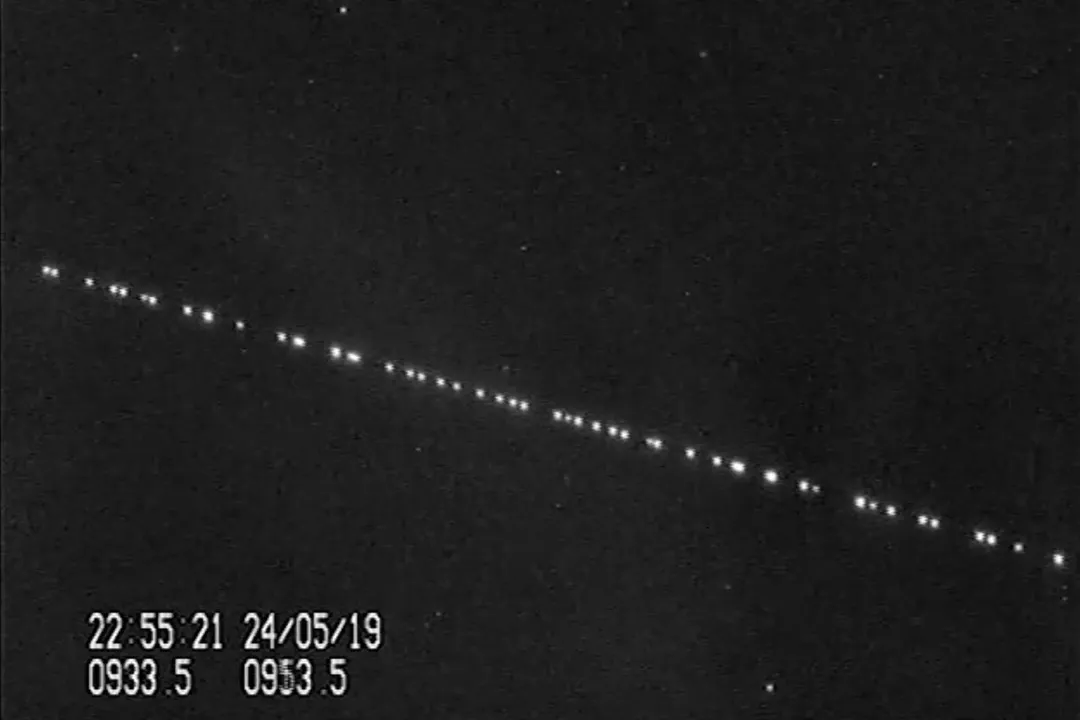
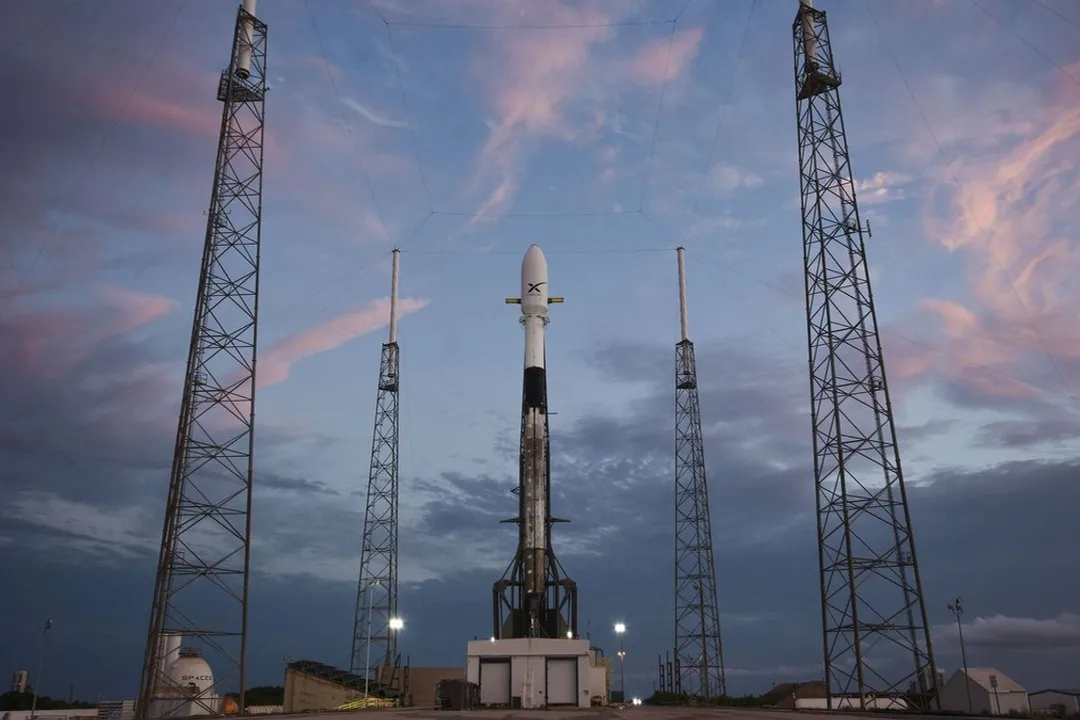
When a rocket launches, it doesn't just carry one satellite; it often carries dozens at a time. [1] These payloads are delivered into a specific initial low Earth orbit (LEO) by the rocket's upper stage. [1][6] Shortly after separation from the booster, the satellites begin their sequential deployment process. [1] This separation is deliberate, but initially, the individual spacecraft remain relatively close together, creating the distinct visual effect of a line or train of lights moving in unison across the atmosphere. [3][6] This visual signature is often captured by amateur astronomers and shared widely online before official explanations surface. [7][8]
# Initial Separation
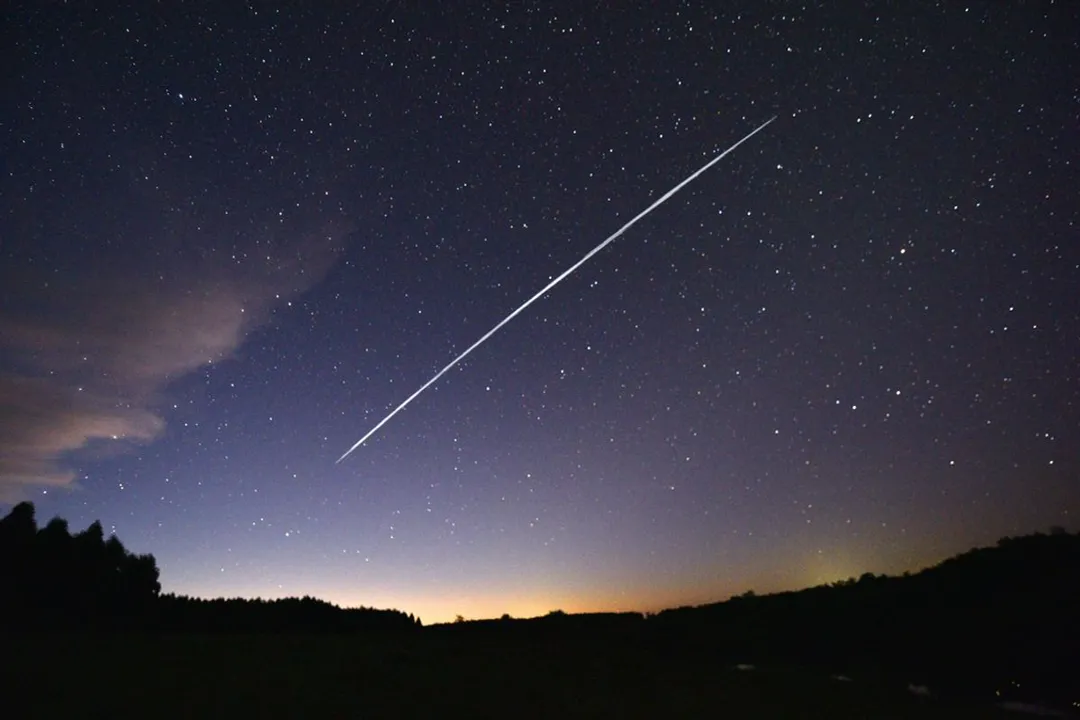
The reason these lights form a distinct chain relates directly to the mechanics of deployment from the Falcon 9 upper stage. [1] Once released, the satellites are engineered to move away from one another in a controlled manner. [1] This initial spacing is crucial; if they remained too close, collision risks would increase as they begin maneuvering to raise their orbits. [4] The process is timed so that the satellites are spread out enough to begin individual checks and system activations while still being close enough to be visually grouped by an observer on Earth. [6] For a short period following launch—usually days or a couple of weeks—they maintain this linear progression. [5]
# Tracking Visibility
The ability to see these chains is highly dependent on specific orbital mechanics and local time. [5] For an observer to see the train, the satellites must be high enough in the sky to be illuminated by the Sun, while the observer on the ground must be in darkness (dawn or dusk). [5][8] This window of visibility is relatively narrow for any single ground location. [6] Because of this predictability, specialized online tools and apps have emerged to allow enthusiasts to calculate exactly when and where a particular launch train will pass overhead. [5][8] These maps detail the path, brightness, and timing, turning a spontaneous sighting into a predictable celestial event. [5][6]
| Deployment Phase | Approximate Duration | Visual Appearance | Orbital Spacing |
|---|---|---|---|
| Initial Deployment | First few hours | Very tight grouping | Minimal separation |
| Train Phase | Days to Weeks | Distinct line or "chain" | Spreading slowly |
| Operational Phase | Long term | Dispersed, invisible to naked eye | Planned orbital grid |
# Constellation Magnitude
While the chain is a temporary feature, the underlying project is massive in scope. [4] Starlink, for example, is not just about a few dozen satellites; the long-term plan involves deploying many thousands of units into various orbital shells to ensure continuous global coverage for broadband internet access. [1][4] This concentration of hardware in LEO means that the number of artificial objects visible from Earth has increased dramatically over the last few years. [4] This scale is what distinguishes modern satellite deployments from previous generations of space infrastructure, moving from sparse, specialized assets to a truly dense, interconnected network. [4]
The concept of a satellite chain represents an engineering solution to efficiently populate a specific orbital path. If you were to look at a satellite map showing the operational Starlink satellites, you would see thousands of dots spread across the globe, not a single line. [5] The chain is merely the deployment path; the final constellation is designed to overlap and create a non-linear, global web of coverage. [4]
# Orbital Spacing
The transition from a noticeable "chain" to the invisible, working constellation highlights an important aspect of orbital design. When the satellites are first deployed, they are placed into a lower "parking orbit". [1] From this altitude, they use small onboard propulsion systems to gradually boost themselves to their final, operational altitude, which might be several hundred kilometers higher. [1][6] During this ascent, they are commanded to drift apart from their neighbors by specific time intervals and distances. This controlled separation prevents adjacent satellites from interfering with each other's maneuvers or communications links, ensuring the final network operates as intended rather than a crowded line of traffic. [4] If you manage to observe a train shortly after launch, you are seeing them actively working their way through this orbital raising process, preparing to take their designated spots in the larger operational grid.
# Observational Context
For those who wish to observe these events, understanding the difference between a train and other flying objects is key. While the ISS is the brightest object in the night sky after the Moon, it appears as a single, bright, slow-moving star that crosses the sky in minutes. [7] A Starlink train, conversely, presents as a sequence of distinct, equally bright points, often appearing briefly before fading as they drift out of the sunlight zone or as they raise their orbit high enough to be invisible to the naked eye. [5][8] If you are planning an observation, remember that the visibility window is often less than ten minutes from horizon to horizon for any given pass. [5] Also, be mindful of light pollution; in urban areas, only the very brightest passes or the initial, tightest groupings will be visible against the sky glow. [8] True, high-quality visual confirmation usually requires darker skies away from major metropolitan centers.
These chains of lights are a direct, observable consequence of the global push toward ubiquitous satellite internet connectivity. [1][4] They represent temporary orbital formations built by engineers to rapidly bring vast numbers of assets online, marking a visible milestone in our increasing reliance on space-based infrastructure. [4]
#Videos
Starlink satellites, the string of lights in the night sky. - YouTube
What Happens If SpaceX Starlink Satellites Start Colliding - YouTube
Related Questions
#Citations
Starlink satellites: Facts, tracking and impact on astronomy - Space
Starlink satellites, the string of lights in the night sky. - YouTube
Explainer: Trail of lights in the sky is Starlink >> BIT. ly/4lxzwnz
Starlink - Wikipedia
Live Starlink, SpaceX, Kuiper & GPS Satellite Map
How to See Starlink Satellite Train 2025? - Star Walk