Who contributes the most to the ISS?

The discussion surrounding the International Space Station (ISS) invariably leads to the question of who shoulders the greatest burden and, consequently, who contributes the most to this marvel of orbital engineering. The answer is not a simple declaration of a single nation, as contribution takes many forms—from billions in allocated funding to the hardware itself, and even the specialized expertise required to keep the station operational day-to-day. However, by examining the primary categories of input, a clear hierarchy emerges, with the United States leading in financial investment and operational resource allocation. [1][2]
# Core Partnership Structure
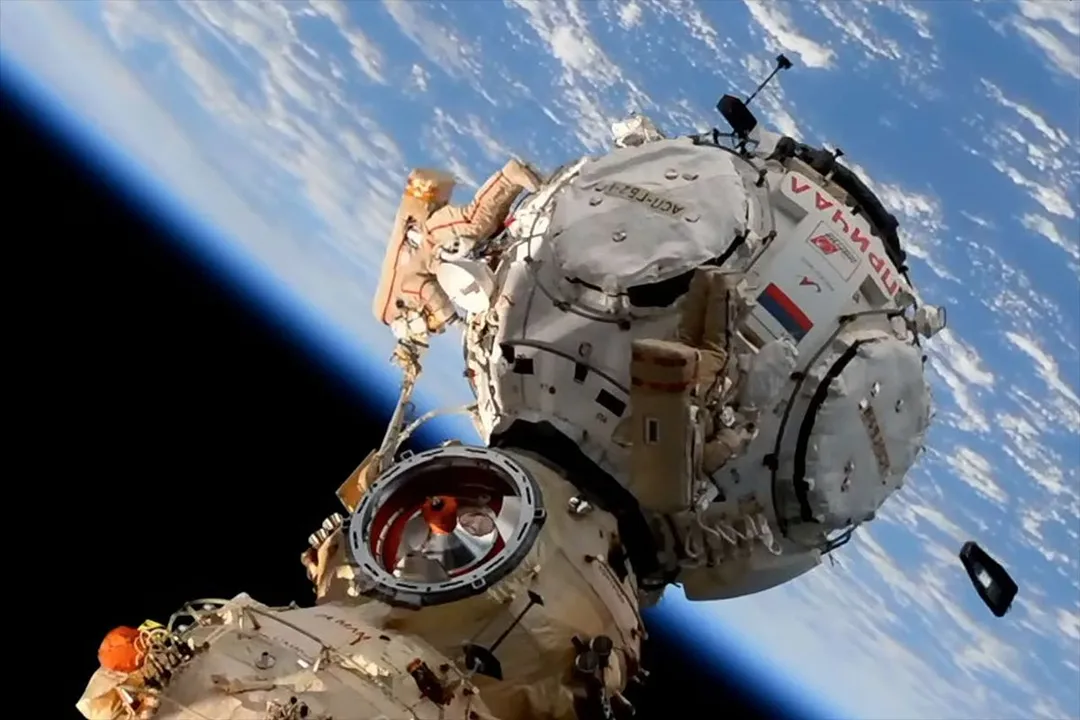
The ISS is fundamentally an international undertaking, a commitment forged from the ashes of the Cold War space rivalry when the US Freedom station concept and the Russian Mir-2 concept merged in 1993. [1] The final governing structure, laid out in the 1998 Space Station Intergovernmental Agreement (IGA), established five principal partner space agencies: NASA (United States), Roscosmos (Russia), ESA (Europe), JAXA (Japan), and CSA (Canada). [2][3][4] While fifteen countries initially signed the IGA, these five agencies manage the core responsibility for the station’s construction and operation. [1][3]
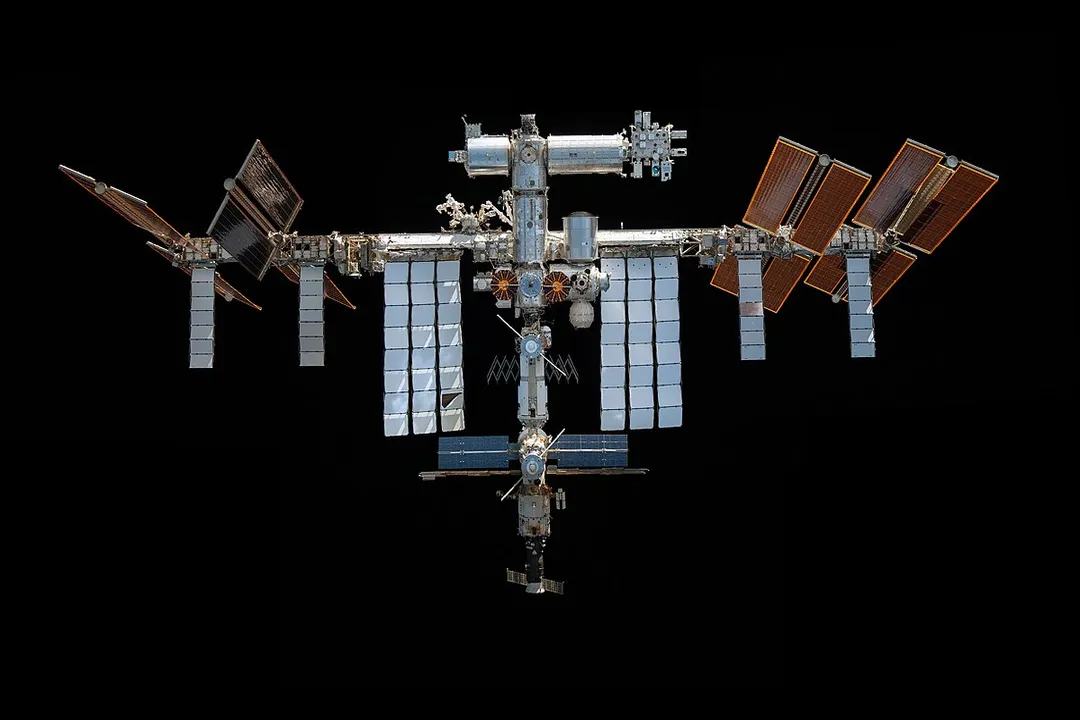
The station itself is structurally and logically divided into two primary sections: the Russian Orbital Segment (ROS) and the US Orbital Segment (USOS). [1][2] This architectural division reflects the initial, necessary compromise between the two post-Cold War superpowers, where each retained jurisdiction and control over its registered elements. [1]
# Financial Commitment Dominance
When assessing the sheer monetary investment, the United States stands out as the preeminent contributor. The ISS has been referred to as the most expensive single item ever constructed. [2] By the year 2010, the cumulative cost was estimated to be around $150 billion. [2] Breaking down the capital investment from 1985 to 2015 provides the starkest contrast:
| Partner | Financial Contribution (1985–2015) |
|---|---|
| NASA (U.S.) | $58.7 Billion [2] |
| Roscosmos (Russia) | $12 Billion [2] |
| ESA (Europe) | $5 Billion [2] |
| JAXA (Japan) | $5 Billion [2] |
| CSA (Canada) | $2 Billion [2] |
This data shows that NASA’s financial outlay for the station during this critical development and assembly period was nearly five times that of Russia and more than ten times that of the next closest partners combined. [2] This massive financial commitment underpins the American contribution to the structure, systems, and operational longevity of the entire complex.
# Hardware Contributions and Ownership
The physical structure of the ISS is a mosaic of partner-built modules. Contribution here is measured not just by financial backing but by the tangible hardware delivered to orbit. [4]
The station is organized around the ROS and the USOS. [1][2] A fascinating early example of this partnership dynamic is the first module, Zarya, which was built by Russia but funded by the United States, symbolizing the necessary early collaboration. [1][2] Zarya transitioned its role over time, moving from a primary power and control source to its current function mainly as storage. [1]
Within the USOS, which houses the bulk of the international laboratory modules, ownership is highly specific to the providing nation:
- The Destiny laboratory is predominantly NASA’s. [1]
- The Columbus laboratory, the largest single contribution from ESA, is 51% allocated to ESA, with the remaining share split between NASA and CSA. [1]
- The Kibō laboratory (Japan's module) follows a similar structure, with JAXA holding 51% ownership and the rest divided between NASA and CSA. [1]
This modular ownership model means that while the US segment hosts the laboratories of its partners, the partners retain primary ownership and therefore primary control over their specific modules. [1]
# Operational Resource Allocation
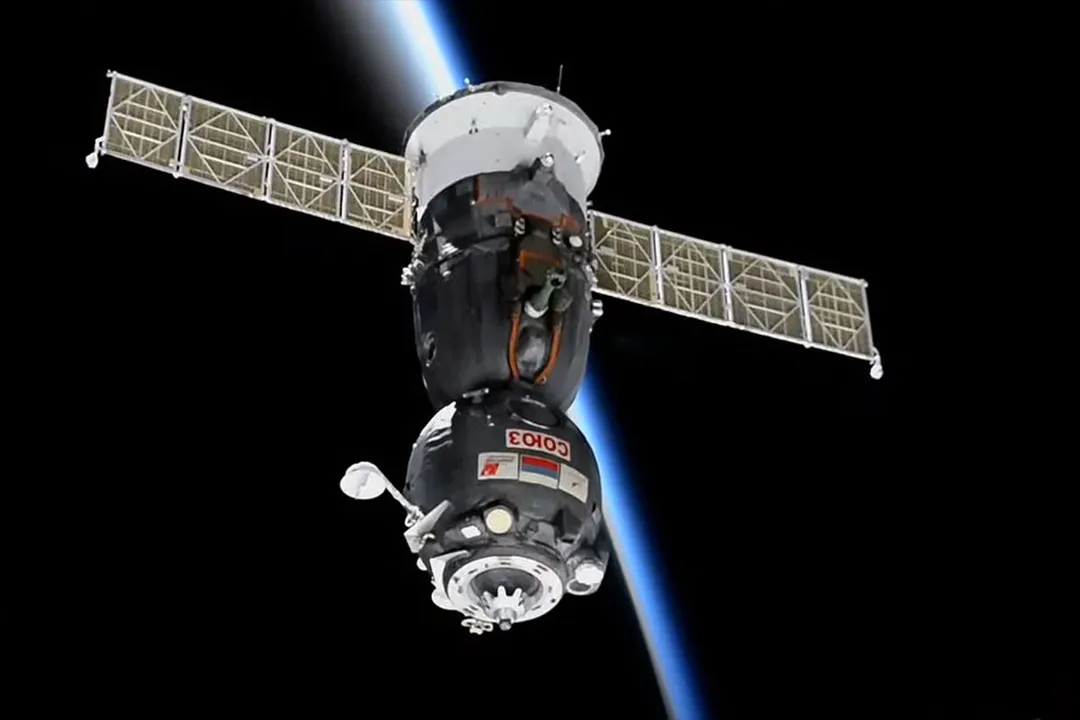
Beyond construction costs, continued operation requires massive ongoing resources, primarily measured in crew time, power generation, and communication services. Here, the allocation percentages provide a quantitative view of daily reliance:
- NASA (U.S.): 76.6% of crew time, electrical power, and rights to supporting services. [1]
- JAXA (Japan): 12.8%. [1]
- ESA (Europe): 8.3%. [1]
- CSA (Canada): 2.3%. [1]
The near 77% share held by NASA in operational resources—the time astronauts spend working, the power they consume, and the data links they use—solidifies the US role as the primary sustaining contributor to the station's ongoing scientific output. [1]
This operational reality highlights an interesting point: while the US provides the largest share of services, Russia historically provided the critical capability for orbital maintenance. The ROS contains the Data Management System that handles Guidance, Navigation, and Control (GNC) for the entire station, and Russian spacecraft have traditionally been responsible for the vital orbital reboost maneuvers necessary to counteract atmospheric drag. [2] Although NASA has contingency plans, this historical reliance on Russian propulsion, coupled with the need for cosmonauts to operate the ROS systems, means Russia’s contribution in keeping the station up is functionally irreplaceable, despite its smaller financial and operational percentage share. [1][3] This interdependence, established by the initial merger of two disparate projects, is a key feature of the ISS’s complex politics. [1]
# Crew Presence and International Reach
The term "contribution" also extends to the human element. The ISS has hosted personnel from a growing number of nations, reaching 26 countries as of August 2025, with 290 individuals visiting. [2] However, the distribution of that presence is highly skewed toward the primary partners:
| Country | Visitors |
|---|---|
| United States | 163 [4] |
| Russia | 57 [4] |
| Japan | 11 [4] |
| Canada | 9 [4] |
| Italy | 5 [4] |
The US has sent far more individuals to the station than any other country, reflecting its status as the largest financial and hardware contributor. [4] Even among the European Space Agency members, only a few nations, such as Germany and France, have sent more than one person to orbit, with several signatories like the UK, Belgium, and Sweden having sent only one. [1][3] Furthermore, the station’s design allows for a nominal crew of seven, a capacity enabled by USOS infrastructure and commercial crew vehicles, although this number has varied over the years. [2]
# The Insight of Shared Infrastructure
Considering the financial and operational dominance of NASA, it is important to note how this directly influenced the scientific environment. The USOS, which utilizes power from its own arrays (generating 75 to 90 kilowatts), powers the laboratories contributed by ESA and JAXA. [2] In turn, the crew dedicates approximately 160 man-hours per week to research, though a substantial portion is often consumed by station maintenance. [2] The very structure of the USOS, with its Integrated Truss Structure connecting the vast solar arrays to the pressurized modules, is a testament to American construction capability. [2] The fact that the US commitment is not just funding, but the very backbone supporting the partners' unique scientific facilities like Columbus and Kibō, underscores the depth of their contribution beyond mere dollars on a ledger. The capability to deploy and maintain the Canadarm2, the station's largest robotic arm, further emphasizes this role in the physical management of the USOS and its international tenants. [2]
# Beyond the Principals
While the five principal agencies drive the mission, the contribution from non-principal partners, often categorized as Visitors, is also significant, particularly in terms of expanding the global reach of space science and education. [3] Countries like Italy, with five visitors, have a long history of deep engagement, often through ESA membership or bilateral agreements with NASA. [1][3] For example, Italy contributed the Tranquility module (Node 3) and the Cupola observatory module, which ESA built. [2] This demonstrates that significant hardware and personnel contributions can come from within the partner framework, even if the financial share is distributed across the wider ESA membership. [1]
In summary, determining the single "biggest contributor" requires separating financial investment from critical operational dependency. Financially and in terms of allocated operational resources, the United States (NASA) holds the overwhelming lead. [1][2] However, the unique and irreplaceable nature of the ROS propulsion and command systems means Russia (Roscosmos) remains the indispensable partner for maintaining the station's physical orbit, illustrating a crucial, shared vulnerability despite the quantitative financial imbalance. [1][3] The ISS remains a monument not just to engineering, but to a complex, often strained, commitment across continents. [2][4]
Related Questions
#Citations
International Space Station — Everything you need to know
International Space Station Cooperation - NASA
Politics of the International Space Station - Wikipedia
ISS Countries 2025 - World Population Review
International Space Station (ISS) | Research Starters - EBSCO
How many countries have sent personnel to the ISS?