Is the ISS above the Kármán line?
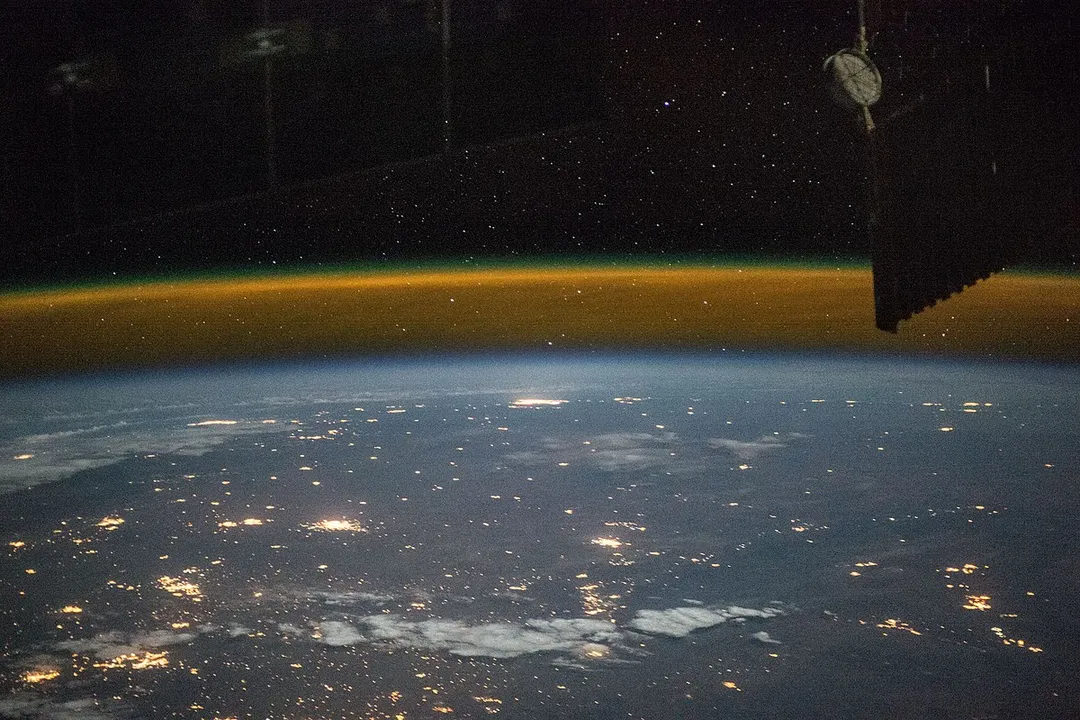
The International Space Station orbits clearly above the generally recognized boundary defining the start of outer space. This boundary, known formally as the Kármán line, is set at an altitude of 100 kilometers (62 miles) above mean sea level. [2][8] Since the ISS operates much higher than this threshold, its location places it firmly within the realm of space, even if the definition of "space" itself remains a matter of international convention rather than a sudden physical wall. [2][8]
# Boundary Marker

The Kármán line holds its status because it represents the approximate altitude where the atmosphere becomes too thin to support practical aerodynamic flight—the point where a craft would need to achieve orbital velocity to stay aloft, rather than relying on wings for lift. [2][5] Below this line, even the fastest aircraft cannot generate enough lift to counteract gravity without encountering untenable atmospheric drag. [5] It serves as a widely accepted demarcation for where space officially begins, as established by the Fédération Aéronautique Internationale (FAI). [2][8] While 100 km is the standard used by organizations like the FAI, some individuals and agencies, such as the United States Air Force and NASA, have historically recognized 50 miles (about 80 kilometers) as the threshold for astronaut wings. [8] However, the 100 km standard remains the most common international reference point. [2][8]
# Station Height
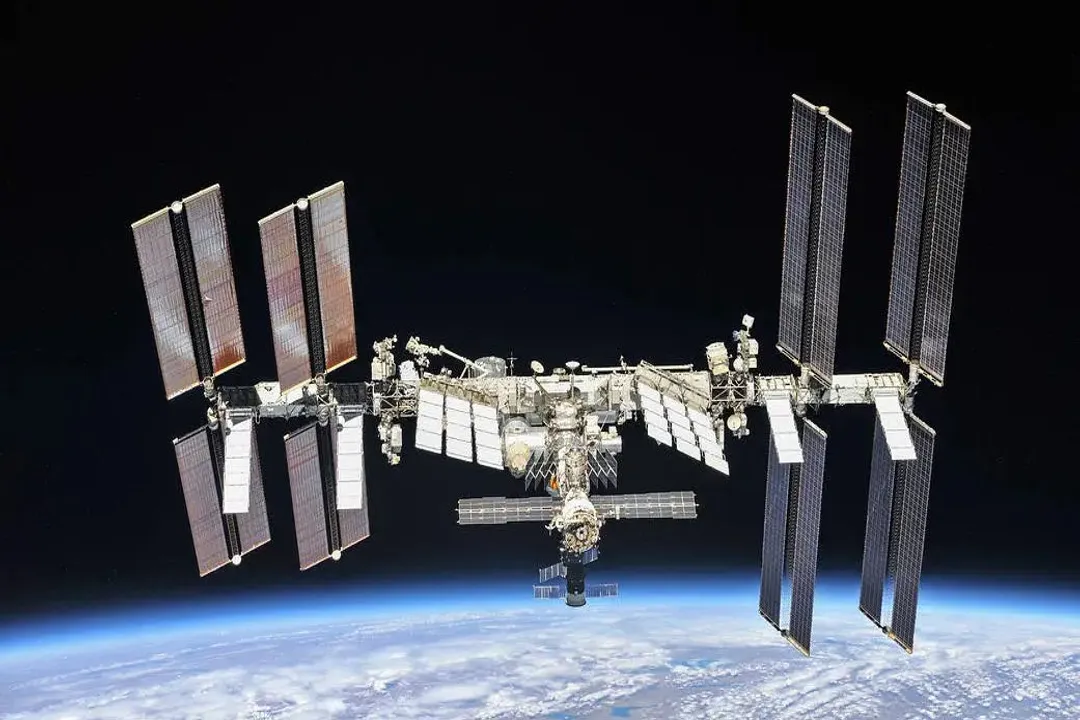
The International Space Station (ISS) operates at an altitude significantly greater than either the 100 km Kármán line or the 80 km US definition. The typical operational orbit for the ISS hovers around 400 kilometers (about 250 miles) above Earth. [1][6] If we compare the ISS's average altitude to the official Kármán line, the station is orbiting approximately four times higher than the accepted edge of space. This extra vertical separation ensures that the station is subject only to the forces of orbital mechanics and microgravity, rather than encountering the aerodynamic limitations that define the boundary below. [5]
The fact that the ISS is so far above the Kármán line also explains why it is called the Space Station, despite the fact that trace amounts of the atmosphere still exist up there. To maintain its orbit, the station constantly experiences minor drag from the extremely thin air particles remaining at that altitude. [7]
# Air Density
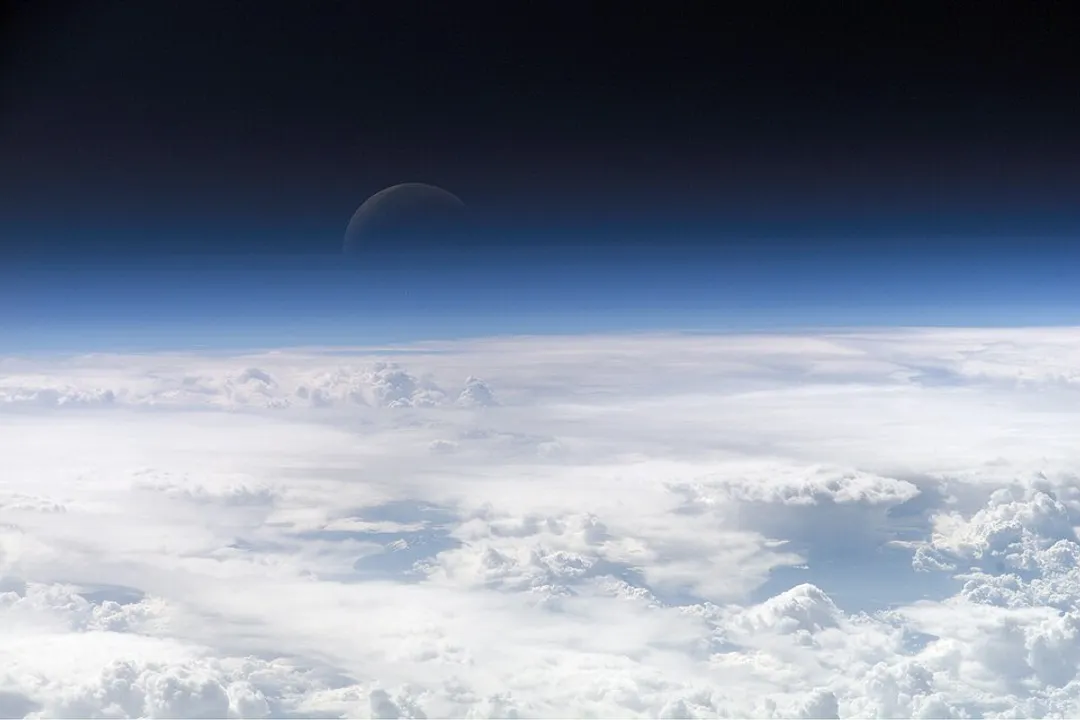
Even at 400 kilometers, the atmosphere has not completely vanished. In fact, the atmosphere is often considered to extend much further out, sometimes up to 1,000 kilometers or more, although it becomes incredibly tenuous at those heights. [3] The ISS altitude of 400 km places it well above the thickest layers, but that residual drag is real enough that the station loses altitude gradually over time. [1][7] This effect is so predictable that mission control must periodically command the attached Russian Progress cargo vehicles or other docked craft to perform a reboost burn to push the station back into a higher, more sustainable orbit. [7] If the station were only barely above the Kármán line—say, at 110 km—the atmospheric drag would be exponentially stronger, necessitating far more frequent and substantial reboosts just to remain in orbit for a few weeks, let alone years. [1] This difference in drag force highlights the importance of the altitude gap between the boundary and sustained operation.
If one considers the Earth's radius to be roughly 6,371 km, the ISS orbit represents a tiny fraction of the total distance to the Earth's center, which is why one perspective suggests the ISS is only about 5% through the total atmospheric thickness measured from the center of the Earth. [4] However, defining the atmosphere by its thickness from the surface downwards (where density changes drastically) is more relevant to the Kármán definition than measuring its extent relative to the Earth's core.
# Flight Mechanics
The distinction between flying through the air and orbiting above it dictates the speed required for any craft. An airplane, like a commercial jet, needs to move fast enough to generate aerodynamic lift but typically stays within the troposphere or lower stratosphere, perhaps cruising at Mach 0.8 at 10-12 km altitude. [5] To stay up at the Kármán line, you would need to travel at approximately orbital velocity, which is far beyond what any conventional aircraft can achieve or sustain. [5]
The ISS, orbiting at 400 km, must maintain speeds of roughly 7.66 kilometers per second (about 17,150 miles per hour) to balance its momentum against Earth's gravity and stay aloft. [6] This orbital velocity is the direct consequence of its altitude, confirming its status as an object in orbit, not merely an exceptionally high flyer. The Kármán line is the altitude where the requirement for orbital velocity begins, whereas the ISS is operating deep within the domain where that velocity is mandatory for survival.
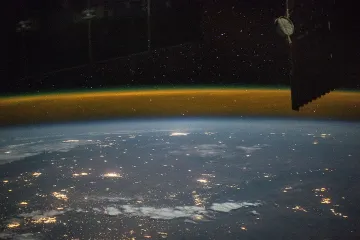
# Defining Space
The very concept of the Kármán line is a human construct designed to categorize flight regimes. Space is not defined by a single, measurable physical feature like a sudden drop in temperature or a distinct atmospheric boundary that suddenly cuts off at 100 km. [2][8] Instead, it is defined by the physics of flight required to remain there. Because the ISS requires ballistic, orbital mechanics to stay up—and because it is well past the altitude where conventional wings cease to function—it is undeniably in outer space. [5] The question is less about if the ISS is above the Kármán line—the altitude data confirms it is—and more about appreciating why that line matters for defining the realm of spacecraft rather than conventional aircraft. [2]
Related Questions
#Citations
Is the ISS technically “on Earth?” How deep into the atmosphere of a ...
Kármán line - Wikipedia
If the International Space Station is only 5% of the way ... - Quora
Why traveling to the international space station can't be done with ...
Is the International Space Station really in outer space?
How Far Away Is Space? – Math Lesson | NASA JPL Education
Space officially starts 100 km above the surface of the Earth. The ...
The Kármán Line: Where does space begin?
Across Karman FAQ - Wilson Center