How was the Kármán line determined?
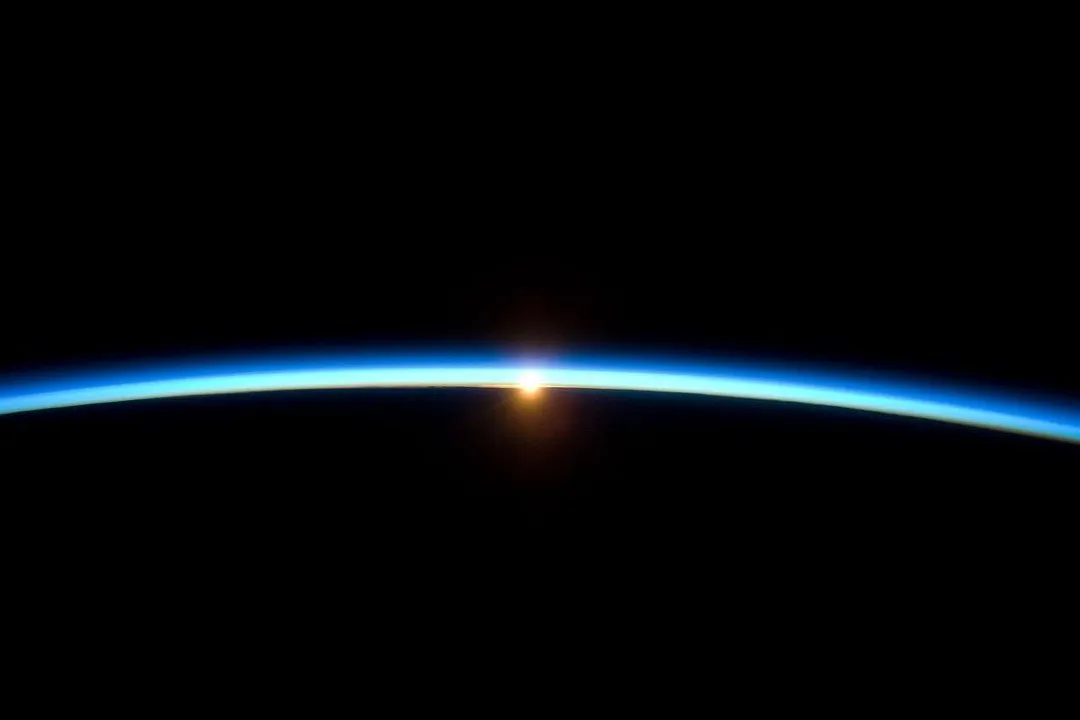
The boundary defining the beginning of outer space is not a physical wall or a sudden drop in air density that one could directly sense; rather, it is an internationally accepted convention established through aerodynamic reasoning. This agreed-upon limit, known as the Kármán line, is set at an altitude of 100 kilometers ( miles) above the mean sea level of the Earth. While the concept is widely recognized, its determination involved more than just finding a place where the air simply disappears; it hinged on assessing the practical limits of aircraft performance.
# Setting the Altitude
The figure of 100 kilometers was put forward by the Hungarian-American aerospace engineer Theodore von Kármán. His proposal stemmed from an analysis of atmospheric properties relative to the physics of flight. He sought a clear, definable altitude where the mode of flight transitions from being primarily reliant on aerodynamic lift—the method used by conventional airplanes—to one where the vehicle must rely on ballistic trajectories or orbital velocity to stay aloft.
The core challenge at increasing altitudes is that the air becomes significantly thinner, meaning there are fewer air molecules available to interact with wings to generate the necessary lift. For a vehicle to fly at a certain altitude, it must move fast enough to generate the lift required to counteract its weight. As altitude increases, the air density decreases, necessitating a proportional increase in speed to maintain the same lift.
# Aerodynamic Limits

Von Kármán calculated the specific altitude where the speed required to generate enough lift for flight equals the speed necessary to maintain a stable orbit around the Earth. This intersection point represents the practical limit for atmospheric flight as we traditionally understand it. At an altitude of , an aircraft would theoretically need to achieve orbital velocity—approximately —just to fly one pass before falling back to Earth. This speed is unattainable for traditional, winged aircraft, signifying the effective end of the atmosphere for aerodynamic purposes. It represents the altitude where the required speed to sustain flight exceeds any speed practically achievable by an air-breathing or wing-borne vehicle.
The transition is therefore less about a precise point where air ceases to exist and more about where sustained, controlled, winged flight becomes functionally impossible due to insufficient air density. The mark effectively separates the region where air can support flight from the region where only the inertia of a ballistic or orbital path can keep an object from falling. One perspective suggests that at this altitude, a vehicle would need to circle the Earth in about 90 minutes just to stay up, an engineering benchmark that clearly separates atmospheric flight from spaceflight.
# Organizational Adoption
While the physics underlying the concept provided a strong scientific basis, the final determination required formal acceptance by international bodies. The Fédération Aéronautique Internationale (), the global standard-setting body for aeronautics, formally adopted the boundary in 1961. This adoption solidified the Kármán line as the de facto international standard for where space begins. The 's definition is based purely on aerodynamic considerations—the altitude where the necessary velocity for sustained flight equals orbital velocity.
However, this consensus is not absolute across all governmental agencies. Different organizations sometimes use slightly different metrics based on their own operational needs or historical precedents. For instance, the United States Air Force and NASA have historically recognized a boundary at 50 miles ( kilometers) above sea level as the demarcation for astronaut wings. This divergence highlights that even when the scientific basis is shared, the labeling or official recognition of the boundary can vary depending on the specific context—be it international treaty or national professional certification. The figure remains the globally accepted conventional line, even if other specific bodies prefer the slightly lower 50-mile mark for their internal designations.
# Contextualizing the Line
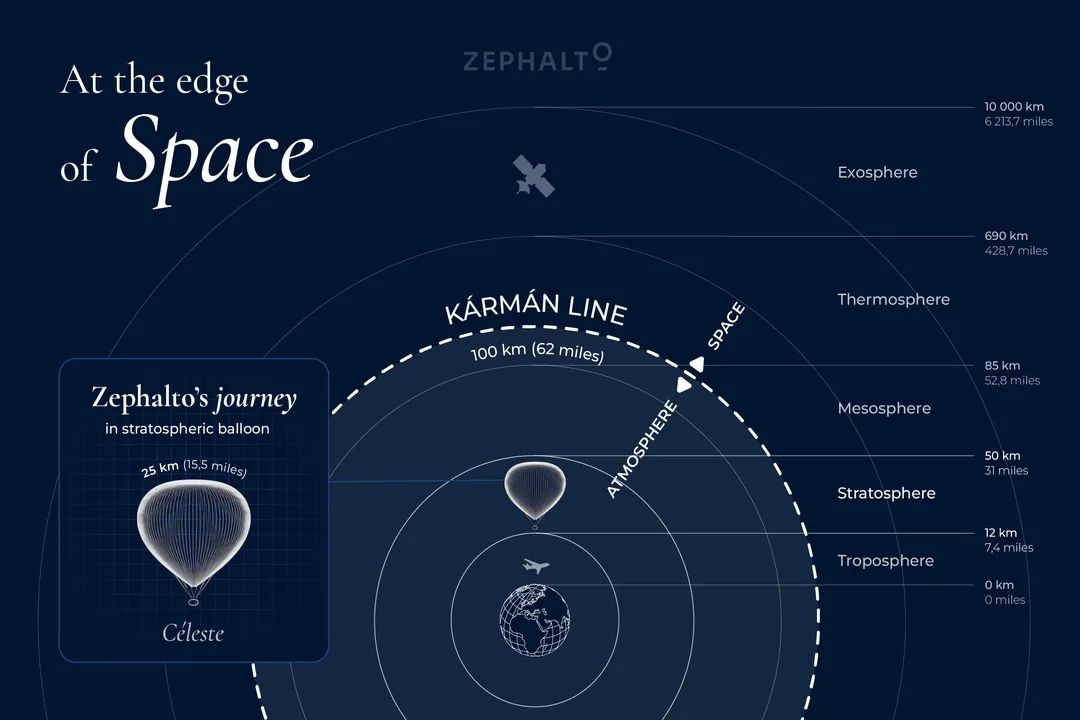
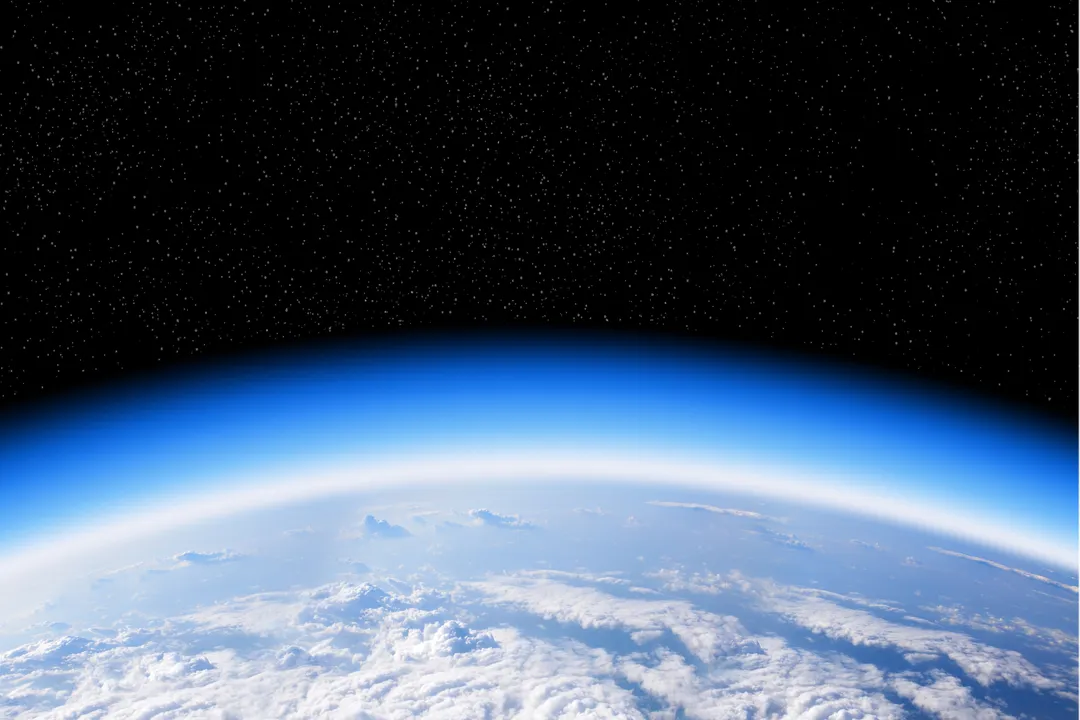
It is important to grasp that the Kármán line is a definition, not a physical phenomenon. There is no sudden, measurable physical property change that occurs precisely at . The atmosphere blends gradually into the vacuum of space, making any sharp boundary inherently arbitrary, albeit a very useful one. The choice of is thus an exercise in creating a convenient and practical demarcation point based on established scientific principles.
To appreciate the practical implication of the altitude difference between the standard and the US standard, one can consider the atmospheric density difference. While precise values vary based on atmospheric models (like the Standard Atmosphere model), the density difference between and is substantial, representing orders of magnitude change in the medium through which a vehicle must operate. This means that a vehicle just below the line might still have a slightly better chance of controlled aerodynamic maneuvering than one operating just above the boundary, illustrating the engineering reality behind the differing governmental definitions.
The Kármán line is also sometimes defined in terms of the ratio of lift-based flight to ballistic flight. One technical interpretation suggests the line is reached when the required flight speed for lift equals the speed required for a ballistic trajectory to complete a single orbit. Other models look at the ratio of lift generation to total atmospheric drag, finding the mark to be the altitude where the lift-to-drag ratio drops below a critical threshold necessary for sustained flight.
# Flight Regimes Comparison
To better understand why this specific line was chosen, it helps to visualize the change in required velocity versus altitude.
| Altitude (Approx.) | Primary Mode of Flight | Required Speed to Stay Aloft |
|---|---|---|
| Surface | Aerodynamic Lift | Low () |
| () | Mixed/Transitional | Increasing rapidly |
| () | Ballistic/Orbital | (Orbital Velocity) |
This table underscores that the Kármán line represents the point where the speed required to generate lift (the airplane domain) converges with the speed required for inertia to keep the craft up (the spacecraft domain). This convergence is the true physical basis for the convention.
The research community continues to examine the physical implications of this boundary. For instance, analyzing the dynamics of atmospheric reentry—which is essentially flying down through this region—shows that even extremely high-speed vehicles moving downward will encounter this boundary as the transition zone where atmospheric friction and drag become significant once more. The line therefore defines the upper limit of the atmosphere where aerodynamic control is first lost, not where the air disappears entirely.
# Scientific Context and Future Definition
Although is the widely accepted standard, some researchers suggest that the "true" atmospheric boundary might be better defined by looking at density ratios or even where solar radiation begins to significantly alter the upper atmosphere's composition, which happens at even higher altitudes. The acceptance of the Kármán line is a matter of utility and historical precedent as much as pure science. It offers a clean, objective numerical threshold that can be written into international agreements regarding airspace and outer space activities.
The very nature of the line being a convention means that as aerospace technology advances, the debate over the "best" definition might resurface, although the 's long-standing endorsement provides significant inertia to the figure. For practical purposes in engineering and policy, the Kármán line serves as the essential reference point for determining whether a mission falls under aviation law or space law—a concept that, while seeming abstract, has real-world implications for everything from satellite debris management to astronaut qualification. The initial determination, driven by von Kármán’s insight into aerodynamic limits, successfully provided the world with a universally workable, if conventional, answer to the question of where space begins.
#Videos
Where does outer space begin? - YouTube
Related Questions
#Citations
The Kármán Line: Where space begins - Astronomy Magazine
Kármán line | Research Starters - EBSCO
Karman line | Definition & Facts - Britannica
The Kármán Line: Where does space begin?
Across Karman FAQ - Wilson Center
Where does outer space begin? - YouTube
Kármán line : Where does space begin - Zephalto
The edge of space: Revisiting the Karman Line - ScienceDirect
[PDF] The Missing Calculation behind the Original Kármán Line Definition