What's the point of astronauts going to space?
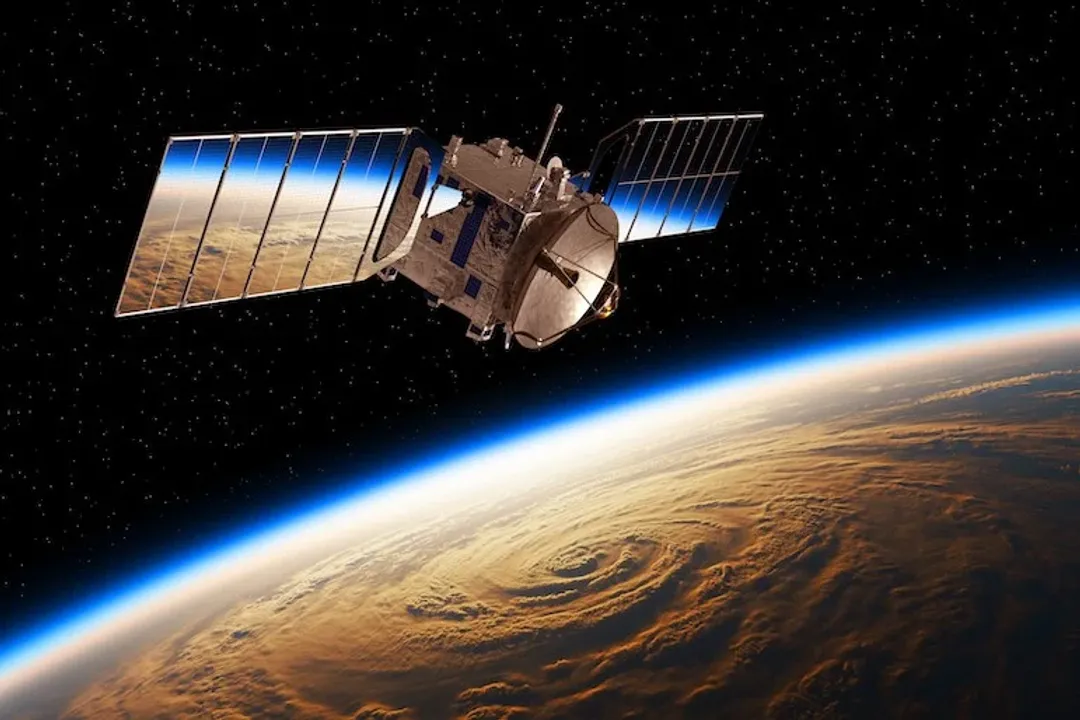
Astronauts venture beyond Earth’s atmosphere not simply for the spectacle of a launch or planting a flag, but because the extreme environment of space offers unique laboratories and a necessary perspective on our own planet and its future. The reasons are deeply rooted in scientific discovery, technological advancement, and perhaps most fundamentally, the long-term security of humanity. [1][5] When we send humans, we are extending the capabilities of human curiosity and ingenuity into a domain where life as we know it cannot easily survive, learning crucial lessons about biology, physics, and engineering in the process. [8]
# Scientific Returns
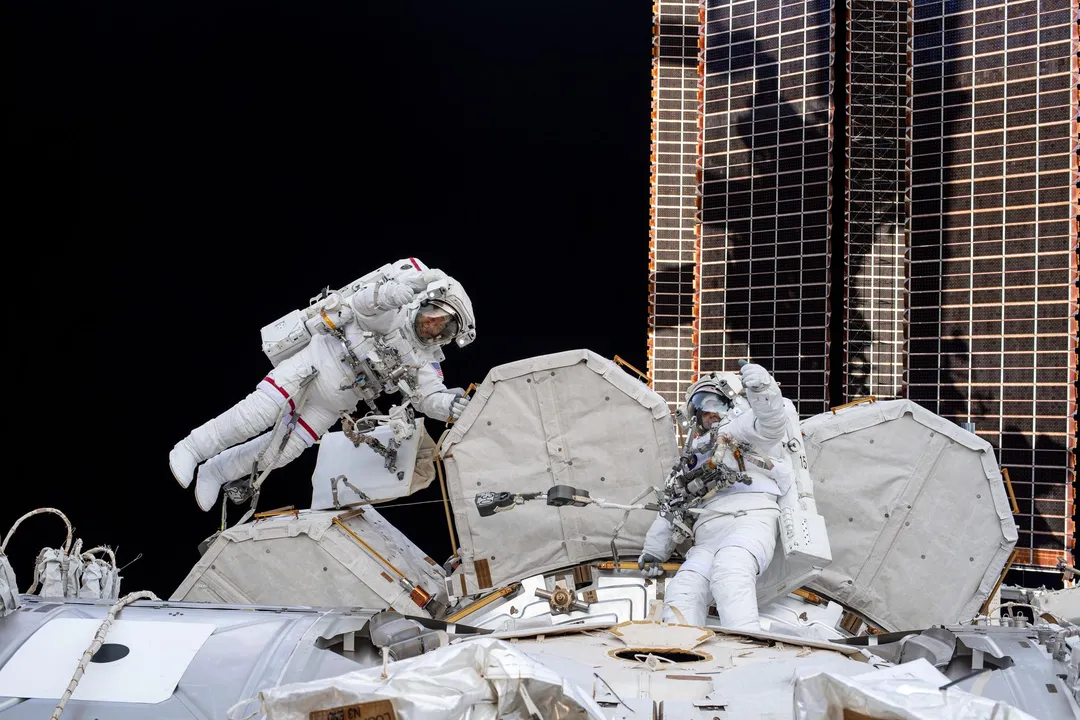
The primary justification often cited for human spaceflight lies in the unprecedented scientific access it provides. Orbiting Earth aboard platforms like the International Space Station (ISS), astronauts conduct experiments that simply cannot be replicated with the same fidelity on the ground. [1][8] The absence of gravity, or microgravity, alters physical and biological processes in ways that offer deep insights into fields ranging from materials science to medicine. [1]
For instance, in microgravity, scientists can study how protein crystals grow without the distortion caused by sedimentation, which is crucial for developing new drugs and therapies on Earth. [1][8] Furthermore, human physiology itself becomes an experiment. Understanding how the human body—its muscles, bones, and cardiovascular system—adapts to long-duration exposure to weightlessness is vital, not just for future deep-space missions, but because these changes often reveal fundamental mechanisms of aging and disease here on our home world. [8] Astronauts are essentially living test subjects in a unique, controlled environment, reporting on subjective experiences that automated systems cannot capture. [3]
Moreover, astronauts provide the essential human element for external operations, such as repairing complex external hardware or performing intricate sample collections on the Moon or Mars. [7] While robotic missions are invaluable for initial reconnaissance, complex maintenance or unexpected discovery often demands the adaptive judgment of a human operator. [2] These missions allow us to look back at Earth, too. From orbit, observations provide critical, continuous data on climate change, weather patterns, and natural disasters, offering a perspective that ground-based instruments alone cannot provide. [4]
# Technological Driver
Space exploration acts as a powerful forcing function for technological innovation. The necessity of surviving and operating millions of miles away, using limited power and resources, demands novel solutions that often find widespread application back on Earth—these are commonly referred to as spin-off technologies. [4]
The extreme engineering challenges drive advances in areas like water purification, advanced battery technology, insulation, and digital imaging. [6] When developing life support systems for a closed-loop environment like a spacecraft, engineers must achieve near-perfect efficiency in recycling air and water, lessons that translate directly into sustainable technology development for remote or resource-scarce regions on our planet. [1] Think of the miniature electronics, the sophisticated sensors, and the reliable communication systems that had to be miniaturized and hardened for space flight; these advancements permeate everything from medical imaging devices to commercial GPS systems. [4]
Here is an observation on the cost-to-benefit ratio of such innovation. While the initial investment in space hardware is high, the subsequent dissemination of the derived technology effectively subsidizes terrestrial industries. If we frame the cost of spaceflight not just as an exploration budget but as a high-stakes, high-reward Research and Development (R&D) portfolio, the return on investment, measured in terrestrial economic activity spurred by spinoffs, often outpaces the initial expenditure over a few decades. This is distinct from general R&D, as space requires integrated, near-perfect system reliability across all components simultaneously. [4]
# Human Future
Beyond immediate scientific and economic returns, sending astronauts into space is seen by many as an insurance policy for the continuation of our species. [5] Earth, for all its life-sustaining capabilities, is vulnerable to catastrophic, unpredictable events, such as large asteroid impacts or massive solar flares. [5][9] Establishing a permanent, self-sustaining human presence off-world, such as on the Moon or Mars, represents an ultimate safeguard against extinction. [5]
Space exploration also opens the door to the prospect of accessing vast extraterrestrial resources. While this is a goal for the distant future, the initial steps—sending humans to practice living and working off-planet—are essential precursors to any sustainable off-world economy or habitat. [9] Furthermore, the very act of pushing outward defines a forward-looking civilization. As the National Space Society frames it, the impulse to explore is inherent to human nature, and stagnation in this area signals a loss of vitality. [5]
# Astronaut Capabilities
While robotic probes like Voyager or the Mars rovers have achieved incredible feats, they possess fundamental limitations that human astronauts overcome. Robots are fantastic at collecting data within pre-programmed parameters, but they lack the instantaneous decision-making and adaptability required for novel or hazardous situations. [3]
An astronaut on a spacewalk, for example, can observe an unexpected crack in a solar panel, diagnose the structural issue based on years of training, and jury-rig a repair using available tools in a matter of minutes—a scenario that would require weeks of reprogramming, waiting for communication lag, and often sending a new, expensive replacement unit if a robot were involved. [7]
Consider the difference in operational flexibility during an unforeseen geological event:
| Scenario | Robotic Response | Human Astronaut Response |
|---|---|---|
| Unexpected Fissure Discovery | Halt operations, transmit data, await ground command. | Immediately collect varied samples, document orientation, adjust next traverse plan based on initial observations. |
| Tool Malfunction (Minor) | Wait for a replacement tool to be delivered (potentially years). | Apply improvised repair using on-hand materials or repair the tool itself using fine motor skills. |
| Unstable Terrain Encounter | Shut down mobility systems due to risk calculation failure. | Utilize specialized climbing gear or adjust balance dynamically to traverse the obstacle safely. |
This adaptability is priceless when the objective shifts from simple data collection to discovery in an unknown environment. [3] Astronauts bring expertise in areas like geology, biology, and engineering, applying complex, intuitive reasoning that current Artificial Intelligence struggles to replicate in unstructured, high-stakes environments. [7]
# Inspiration Perspective
Finally, we cannot discount the profound, less quantifiable benefits: inspiration and perspective. Human spaceflight captivates the public imagination in a way that automated probes rarely achieve. [6] The image of an astronaut looking back at the 'Blue Marble' often evokes what is known as the Overview Effect—a cognitive shift in awareness reported by those who see Earth from space as a single, fragile entity without visible borders. [4]
This perspective is incredibly powerful for galvanizing global cooperation on shared challenges, like environmental protection. [6] When young people see the risks and accomplishments of human space missions, it directly correlates with increased interest in Science, Technology, Engineering, and Mathematics (STEM) fields. This pipeline of motivated, highly-skilled individuals is vital for maintaining the technological momentum necessary for all modern progress, space-related or otherwise. [4] The astronaut, in essence, serves as the visible, relatable proxy for humanity's collective ambition.
The sustained presence of humans in space—from low Earth orbit to the ambitious plans for the Moon and Mars—is therefore not a luxury but a multi-faceted necessity. It is the engine driving fundamental scientific breakthroughs, the crucible forging the next generation of terrestrial technology, and the proactive step toward ensuring the long-term survival and expansion of human civilization. [5][9]
Related Questions
#Citations
Why Go to Space - NASA
What is the point of deep space research & space exploration?
What is the purpose of astronauts going into outer space? - Quora
Why Should We Explore Space? What Are the Benefits for Us?
WHY WE DO — AND MUST — GO INTO SPACE – NSS
Why do we need to explore space? - Airbus
ESA - Living in space - European Space Agency
Space exploration - Wikipedia