Does Blue Origin go to orbit?
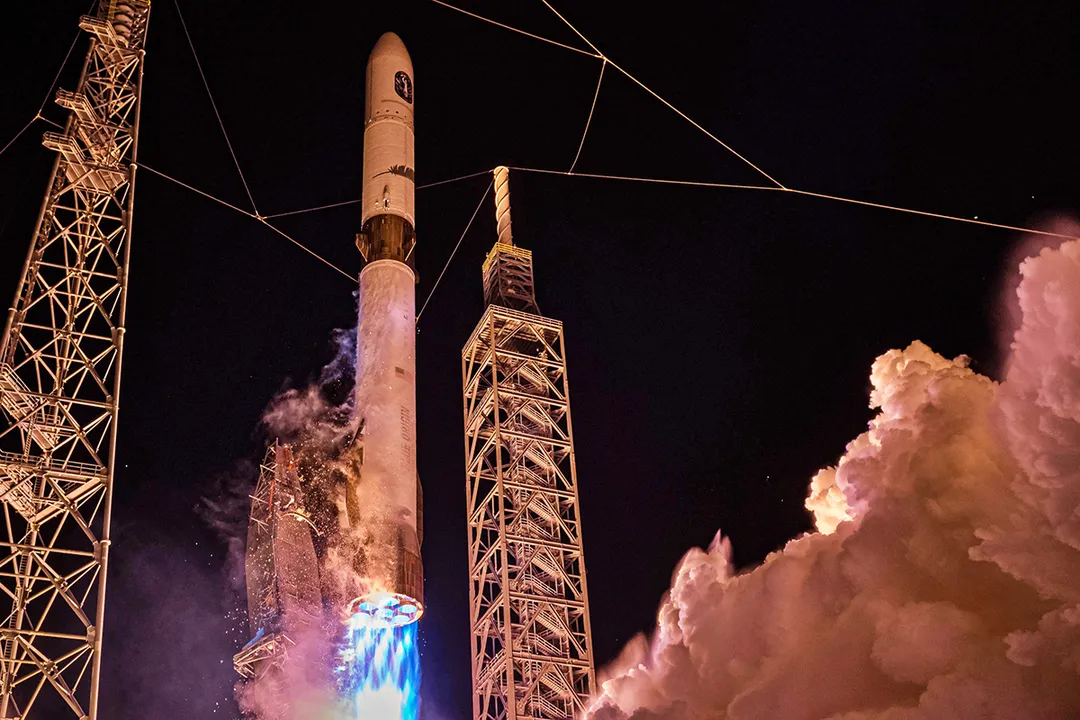
Blue Origin, the aerospace company founded by Jeff Bezos, has long been associated with spaceflight, though for years that association rested almost entirely on suborbital accomplishments. For many people, the immediate mental image is one of passengers briefly touching the edge of space and returning to Earth. [9][10] However, the definitive answer to whether Blue Origin goes to orbit hinges on their much larger, next-generation vehicle, New Glenn, which represents the company's firm commitment to achieving meaningful orbital capability. [1][5]
# New Shepard
The foundational success of Blue Origin has been built upon its New Shepard program. [9] This system is purpose-built for sending crew and scientific payloads on brief excursions above the Kármán line—the internationally recognized boundary of space—before returning them safely back to land. [10] New Shepard flights have successfully carried several passengers on these short trips to the edge of space. [10] It is an operational system, providing routine access to the high frontier, but it is fundamentally suborbital. [9] These flights, while spectacular and offering a view of the blackness of space, do not impart the necessary velocity to achieve a sustained orbit around the Earth. [1]
The company currently operates this established vehicle for tourism and microgravity research, which serves as an important demonstration of their core propulsion technology and crew capsule recovery systems. [9] This existing capability proves their expertise in launch operations and recovery, yet it remains distinct from the challenge of placing satellites or large payloads into a stable, circling trajectory around our planet.
# Orbital Push
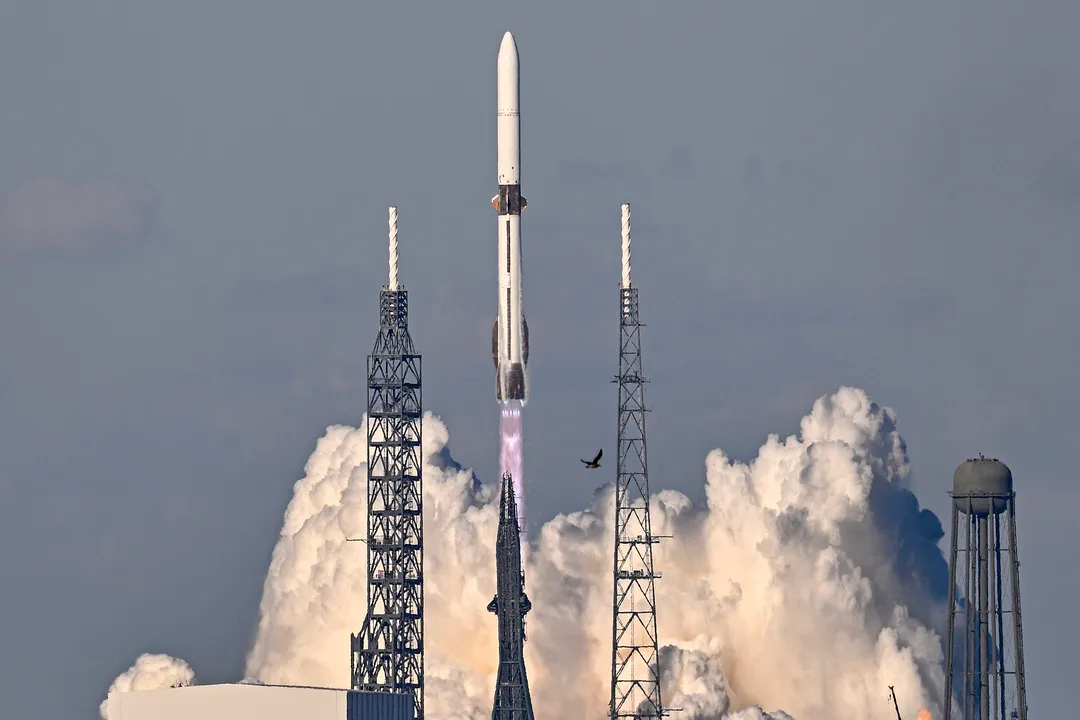
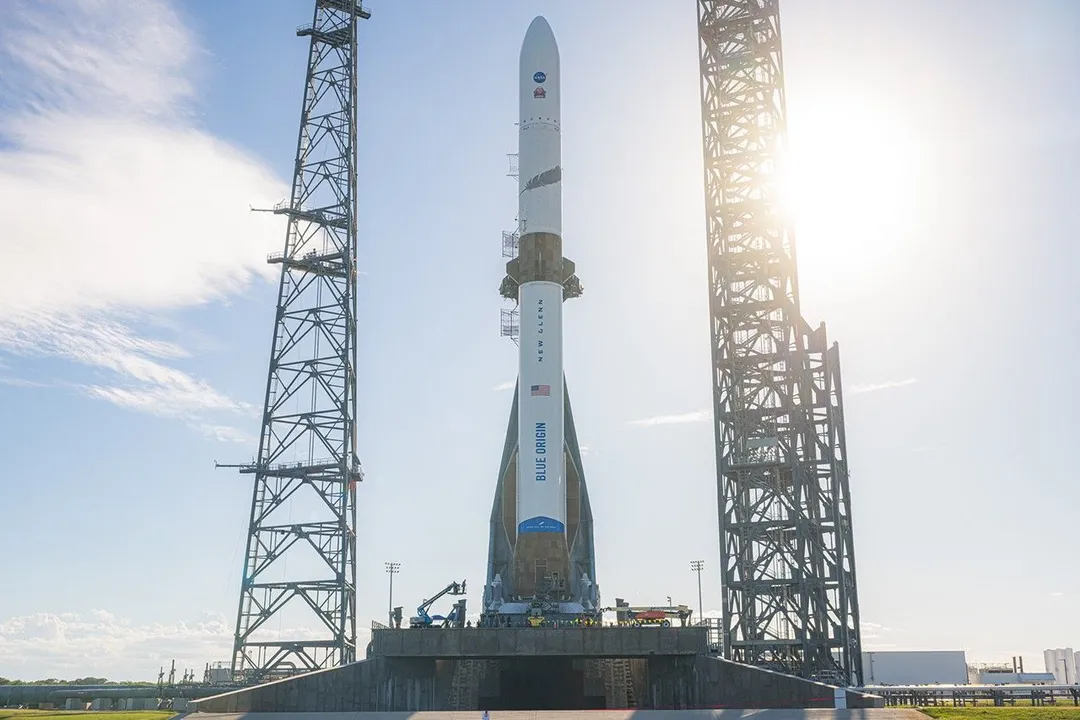
The true measure of Blue Origin's ambition to be a major player in the global launch sector lies with its heavy-lift vehicle, New Glenn. [1][2] This rocket is designed specifically to carry significant payloads into various Earth orbits, marking the company's definitive step from high-altitude tourist trips to sustained orbital mechanics. [5] The development of New Glenn is seen as necessary for the company to compete seriously in the broader commercial and national security space launch market. [7]
The highly anticipated inaugural mission for New Glenn, designated NG-1, was scheduled to launch from Cape Canaveral. [2] This first flight was not aimed at deploying a major commercial satellite, but rather served as a crucial demonstration mission, carrying the Blue Ring Pathfinder demonstrator as its primary payload. [2][3] A successful NG-1 launch, confirming the vehicle's performance and successful stage separation and recovery mechanisms, would officially place Blue Origin into the orbital launch club. [5][8]
The contrast between the two primary systems highlights a fundamental difference in mission profile. While New Shepard is about access to the very edge of space, New Glenn is about velocity needed for orbital insertion.
| Vehicle | Primary Mission | Key Characteristic | Status (Relevant to Orbital Flight) |
|---|---|---|---|
| New Shepard | Suborbital Tourism/Research | Reusable Crew Capsule | Operational [9] |
| New Glenn | Orbital Delivery | Heavy-lift capability | Awaiting inaugural orbital launch [2][8] |

# Rocket Scale
The sheer size difference between Blue Origin's two rocket families underscores the technological leap involved in moving to orbit. New Glenn is an entirely different class of machine compared to New Shepard. [1] While specific details on every aspect of the orbital vehicle are managed closely, the scale of the endeavor suggests a massive increase in required thrust and energy management. The successful debut of this rocket is critical because orbital insertion requires achieving speeds nearing 17,500 miles per hour, a velocity regime far beyond what is needed for a brief hop to the edge of space. [10]
The Pathfinder payload itself, carried on the first New Glenn flight, serves as a critical technological stepping stone. [2][3] Demonstrator missions like this allow the team to test orbital insertion profiles, payload fairing separation, and upper-stage performance under real-world orbital ascent conditions without risking a high-value primary satellite. This measured approach reflects an understanding that transitioning to orbital services carries greater complexity and higher stakes than suborbital tourism. [7]
# Market Importance
The significance of Blue Origin successfully achieving orbit extends beyond just the company's internal milestones; it has tangible implications for the larger space ecosystem. [7] A second, fully operational orbital vehicle entering the market—especially one backed by significant investment and designed for heavy lift—adds crucial redundancy and competition to the launch providers already active in the field. [7]
The ability of a company to reliably offer orbital delivery services means it can bid on large government contracts, such as those related to national security payloads or NASA science missions, which require reaching stable orbits. [7] If the NG-1 mission proceeds as planned and proves successful, the focus will immediately shift to the subsequent New Glenn missions, particularly the second one, which CSIS analysis points to as vital for establishing consistent operational cadence and proving reliability to potential customers. [7] The industry watches not just for the ability to reach orbit, but for the sustainability of that capability. The difference between one successful flight and a dependable fleet capable of flying multiple times a year is what separates a spaceflight demonstration company from a true launch service provider.
#Videos
Blue Origin Get To Orbit On First Try With Their Massive New Glenn ...
Related Questions
#Citations
Blue Origin - Wikipedia
Blue Origin becomes first new space company to reach orbit on its ...
Blue Origin's New Glenn Reaches Orbit
Blue Origin launches huge rocket carrying twin NASA spacecraft to ...
Blue Origin goes orbital
Blue Origin Get To Orbit On First Try With Their Massive New Glenn ...
How Important Is Blue Origin's Second New Glenn Launch? - CSIS
Blue Origin's New Glenn Rocket Go for Launch! - NASA Science
Blue Origin launches 6 passengers on sub-orbital trip to the edge of ...