What approximate velocity is required for orbital insertion, far exceeding New Shepard's needs?
Answer
Speeds nearing 17,500 miles per hour.
Achieving a stable, circling trajectory around the Earth—known as orbital insertion—demands an enormous amount of kinetic energy translated into speed. The text specifies that this velocity regime requires reaching speeds approaching 17,500 miles per hour. This speed is vastly greater than what is necessary for the New Shepard vehicle, which only needs enough upward velocity to briefly crest the edge of space before gravity pulls it back down, thus remaining fundamentally suborbital.
#Videos
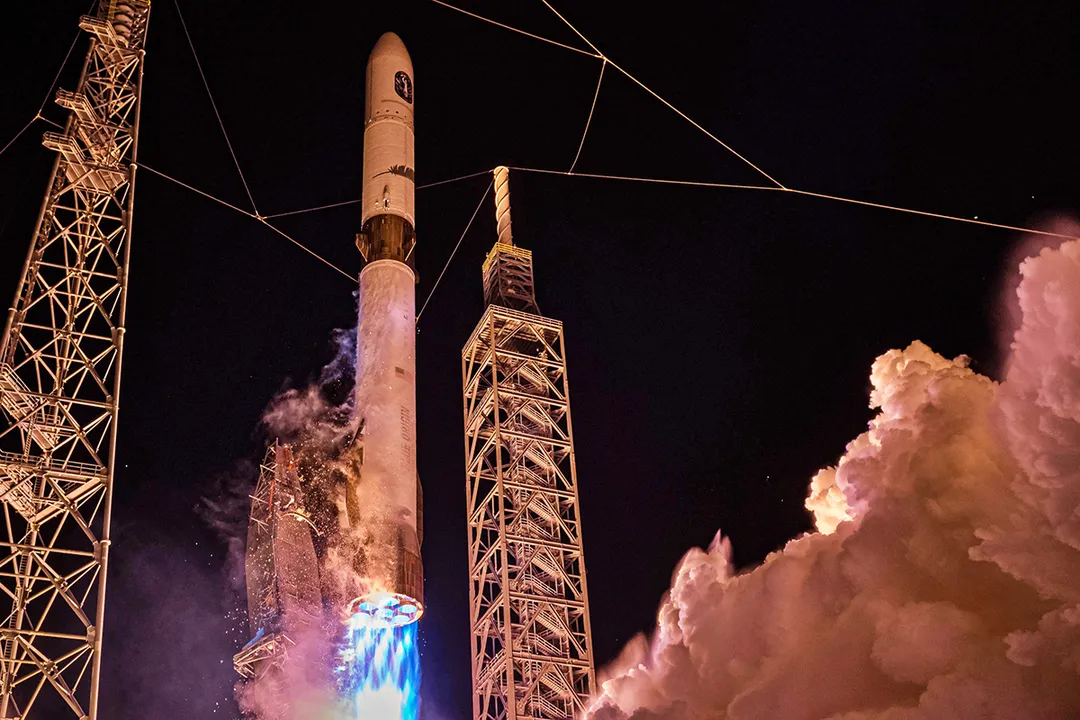
Blue Origin Get To Orbit On First Try With Their Massive New Glenn ...
Related Questions
What is the primary mission profile of Blue Origin's New Shepard system?What does the development of New Glenn signify for Blue Origin's capabilities?What was the primary payload carried on New Glenn's inaugural mission, NG-1?What approximate velocity is required for orbital insertion, far exceeding New Shepard's needs?For what primary purposes does Blue Origin currently operate the established New Shepard vehicle?What fundamental difference separates the mission profile of New Shepard from New Glenn?Why was the NG-1 flight designated as a demonstration mission rather than deploying a major commercial satellite?What tangible implication does a second, fully operational orbital vehicle like New Glenn have for the space ecosystem?What existing capability demonstrated by the New Shepard program proves Blue Origin's expertise?What is required for New Glenn to secure consistent operational cadence for potential customers?