Does Blue Origin have a reusable rocket?
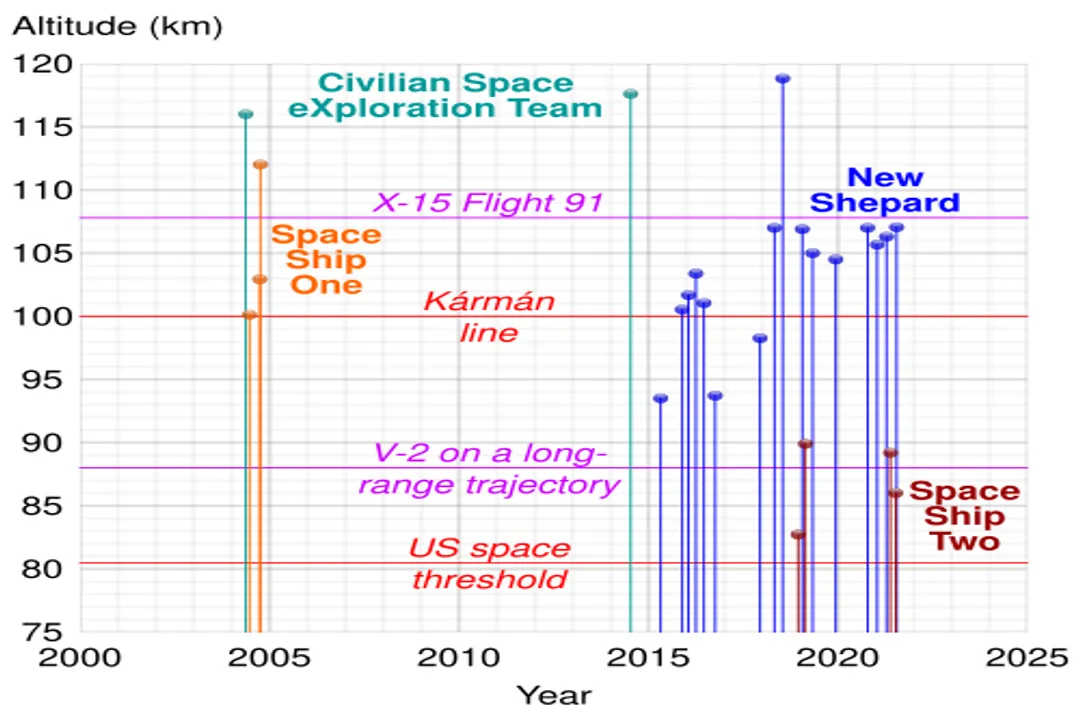
The affirmative answer to whether Blue Origin operates a reusable rocket system is definitively yes, though the answer comes with important context regarding the type of rocket being discussed. Jeff Bezos's aerospace company fields two primary launch vehicles: the suborbital New Shepard and the orbital-class New Glenn. While both are designed with reusability as a core tenet, one is already an established success story, and the other is proving out its concept for heavy-lift missions. [1][2]
# Shepard Success

The New Shepard vehicle is Blue Origin's current operational rocket system, focusing primarily on carrying passengers to the edge of space for brief periods of weightlessness, alongside flying scientific payloads. [1] This entire system—the booster and the crew capsule—is designed for vertical takeoff and vertical landing (VTVL) recovery, mirroring concepts seen in other private space ventures. [3]
The success of New Shepard’s reusability has been demonstrated over numerous flights. After ascending past the Kármán line, the boundary of space at 100 kilometers (62 miles), the booster detaches and performs a controlled, powered descent, landing vertically back on a designated landing pad near its launch site in West Texas. [3] The capsule, which carries the crew or experiments, uses parachutes for its descent, though Blue Origin states its recovery plan is designed for rapid refurbishment and reuse of both major components. [1] This operational reusability allows the company to fly missions much more frequently than an organization relying on expendable hardware, which must be entirely manufactured for every launch. [3]
A notable data point showcasing this operational capability is that the New Shepard booster has been flown multiple times, with refurbishment cycles being a key part of their process. [3] For instance, some boosters have flown numerous missions, demonstrating that the engineering supports more than just a single flight and recovery. [3] The vehicle is optimized for reliability and gentle G-forces suitable for human spaceflight passengers. [1]
# Orbital Hardware
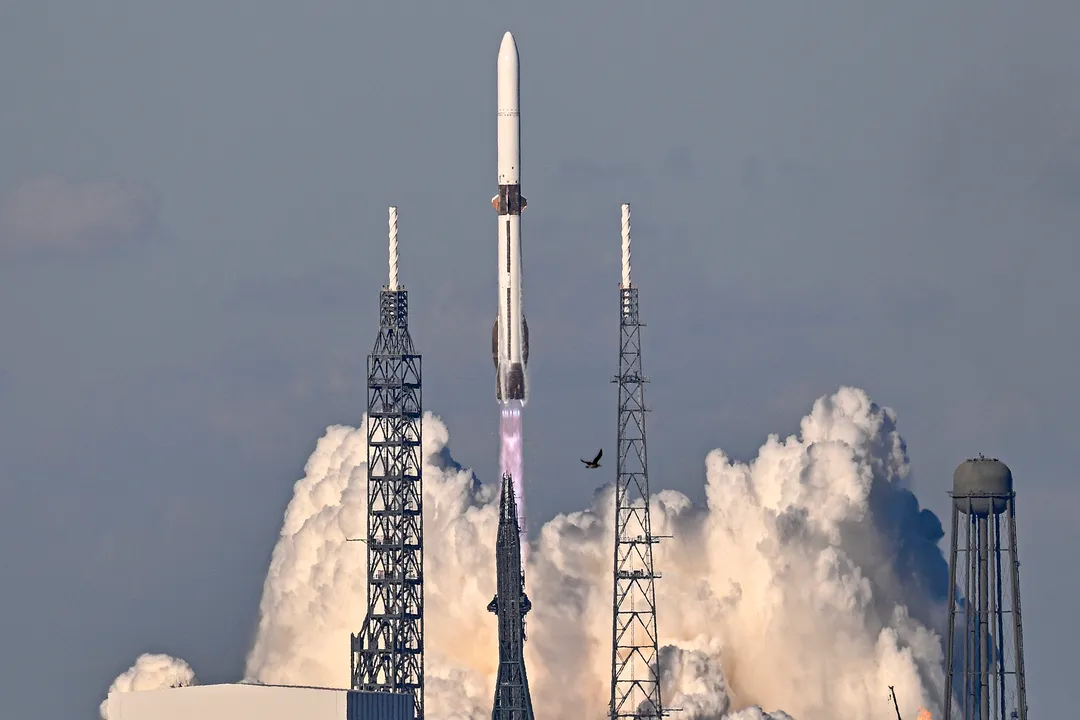
When the conversation shifts to orbital missions—launching satellites or larger payloads into sustained orbit around Earth—the vehicle in question is New Glenn. [2] This rocket is significantly larger and more powerful than New Shepard, designed to compete in the heavy-lift market. [2]
New Glenn is also engineered for partial reusability, specifically targeting the recovery of its massive first stage booster. [2] Unlike New Shepard's land landing, the massive New Glenn first stage is intended to survive reentry and return to Earth to land autonomously on one of the company's specialized drone ships stationed at sea. [2] The second stage, however, is currently planned to be expendable for its initial configurations. [2]
The transition from suborbital VTVL (New Shepard) to orbital VTVL (New Glenn) represents a massive engineering challenge, mainly due to the higher speeds and thermal loads experienced upon reentry from orbital velocity. [2] However, recent progress indicates movement toward this goal. The successful execution of New Glenn's second test flight, which included the crucial powered landing maneuver of the first stage onto a recovery vessel, marks a significant milestone for the program. [6] This successful landing validates the core design philosophy for the booster's reuse capability. [6]
Comparing the two, New Shepard provides Blue Origin with real-world experience in landing large, sophisticated rocket stages in atmosphere, experience that directly informs the development and testing of the larger New Glenn booster. [1][2]

# Strategic View
The difference between the two reusable programs reflects a clear, tiered approach to Blue Origin’s overall strategy. New Shepard serves as the immediate revenue generator and the low-risk proving ground for vertical landing technology, while New Glenn is the long-term commitment to becoming a major player in the global launch services market. [7]
One way to view this separation is through the lens of mission assurance. Suborbital flight involves predictable trajectories and less extreme re-entry environments, making proving reusability safer and faster. [3] Orbital class rockets, conversely, must handle the immense kinetic energy of returning from orbital velocity, demanding materials and throttling capabilities far exceeding what is needed for a trip to the Kármán line. [2] Blue Origin’s sequencing—mastering reusability on the smaller vehicle before applying lessons to the larger one—is a deliberate path to de-risk the heavy-lift system. [7]
The importance of New Glenn’s success cannot be overstated in the context of the broader space economy. While New Shepard caters to a niche market of tourism and microgravity research, New Glenn is positioned to lift large commercial satellites and government payloads, missions that demand proven reliability and the cost savings associated with reuse. [7] Organizations like the Center for Strategic and International Studies have noted that successfully fielding a routinely reusable heavy-lift vehicle is the necessary condition for Blue Origin to establish itself as a primary launch provider alongside established heavy-lift competitors. [7]
It is interesting to consider the economic implication of this dual focus. New Shepard’s operational status means Blue Origin has an active, if small-scale, market presence now, generating revenue and flight data. [1] This ongoing activity contrasts sharply with companies that might be solely focused on developing a single, massive rocket, allowing Blue Origin to maintain employee retention and technical proficiency during the longer development cycle of their orbital system. [10]
# Key Component Differences
To truly appreciate the engineering involved in both reusable systems, it helps to lay out a few technical distinctions derived from their operational goals: [1][2]
| Feature | New Shepard Booster | New Glenn Booster |
|---|---|---|
| Mission Class | Suborbital (Edge of Space) | Orbital (Earth Orbit) |
| Propellant | Hydrogen/Oxygen () | Hydrogen/Oxygen () |
| Recovery Site | Vertical Landing on Land Pad | Vertical Landing on Drone Ship |
| Reusability Scope | Full System (Booster & Capsule) | First Stage Only (Currently) |
| Engine Type | BE-3 | BE-4 |
The transition from the BE-3 engine on New Shepard to the much more powerful BE-4 engine powering the New Glenn booster is a critical differentiator. [2] The BE-4, which uses methane and oxygen, is specifically designed for high-thrust, high-duty cycle operations required for orbital insertion and recovery, making it central to New Glenn’s reusability profile. [2]
This engine choice presents a specific advantage when thinking about future mission profiles. Methane is often easier to handle and potentially simpler to reuse in terms of long-term component wear compared to some other propellants, and it holds promise for in-situ resource utilization (ISRU) on other worlds, a stated long-term goal for the company. [5] While New Shepard’s hydrolox engines are incredibly efficient for its mission, the BE-4’s performance envelope is what unlocks the heavy-lift, reusable orbital capability. [5]
Another subtle, but valuable, distinction lies in the landing environment. Landing on a fixed concrete pad, as New Shepard does, simplifies telemetry, ground support equipment, and immediate post-flight access. [3] Landing on a moving ship at sea, as New Glenn aims to do, requires much more sophisticated autonomous guidance, navigation, and control (GNC) software to match the pitch and roll of the ocean vessel during the final seconds of deceleration. [6] Successfully executing the sea landing on the second flight demonstrates a high level of maturity in that guidance system, which is crucial for making regular reuse practical for the larger vehicle. [6]

# Human Factor
The introduction of human passengers on New Shepard adds a layer of complexity to its reuse certification that is absent in purely cargo-focused reusable rockets. [1] Every part that flies, especially the capsule and its parachutes, must be rigorously inspected, refurbished, and recertified to the extremely high safety standards required for astronaut transport. [1] This necessity builds an internal culture and data set around safety and rapid turnaround that, while time-consuming, ultimately strengthens the operational expertise for any future human-rated vehicle, including potential cargo or crew versions of New Glenn later on. [5]
In summary, Blue Origin absolutely possesses a reusable rocket system right now in the form of New Shepard, which has been flying and reusing its hardware for years. [3] Their commitment to reusability extends to their much larger New Glenn vehicle, which has successfully demonstrated the powered landing of its first stage, paving the way for orbital-class reuse in the near future. [6][7] The company’s strategy appears focused on building out this capability incrementally, moving from suborbital success to heavy-lift orbital viability. [1][2]
#Videos
Watch Bezos' Blue Origin launch and land its reusable rocket
Blue Origin Lands Its New Glenn Rocket Booster for the First Time
Related Questions
#Citations
New Shepard | Blue Origin
New Shepard - Wikipedia
Watch Bezos' Blue Origin launch and land its reusable rocket
Blue Origin has successfully landed the New Glenn booster ... - Reddit
How Important Is Blue Origin's Second New Glenn Launch? - CSIS
Space Shocker! It Turns Out Blue Origin, Not Rocket Lab, Is "the ...