Is IIT Madras and ISRO collaborate to establish a center for thermal challenges in spacecraft?

The establishment of a dedicated research hub bringing together the Indian Institute of Technology Madras (IIT-M) and the Indian Space Research Organisation (ISRO) signals a significant national commitment to mastering the nuances of spacecraft thermal management. This collaboration centers on addressing the extreme and unforgiving thermal environments that every satellite, probe, and launch vehicle must survive, moving beyond generalized engineering solutions toward specialized, in-house expertise. [1][3] The resulting Centre of Excellence (CoE) represents a formalizing of an essential scientific partnership required for India’s expanding and increasingly ambitious space program. [8]
# Thermal Challenges
Spacecraft face a constant battle against temperature extremes. On one side, components can be scorched by direct solar radiation, reaching temperatures far exceeding what electronics can reliably handle. Conversely, objects in shadow or deep space can plummet to cryogenic levels, causing materials to become brittle or propellants to freeze. [1] Managing this thermal gradient—the difference between the hottest and coldest points on a vehicle—is not merely a matter of comfort; it is fundamental to mission success and longevity. [3] Failures in thermal control systems are insidious, often leading to gradual performance degradation or catastrophic failure long after launch. [1]
The necessity for this focused center stems from the unique requirements of ISRO's diverse mission portfolio. While near-Earth satellites operate in a relatively stable thermal regime compared to interplanetary probes, even standard geostationary craft demand precise temperature control for their sensitive optics, batteries, and communication hardware. [8] When missions venture toward the Sun, like the Aditya-L1 solar observatory, or towards deep space, where heat dissipation becomes the primary challenge, standard engineering practices are insufficient. The CoE is positioned to develop novel solutions tailored to these specific, high-stakes scenarios. [1]
# Formal Center
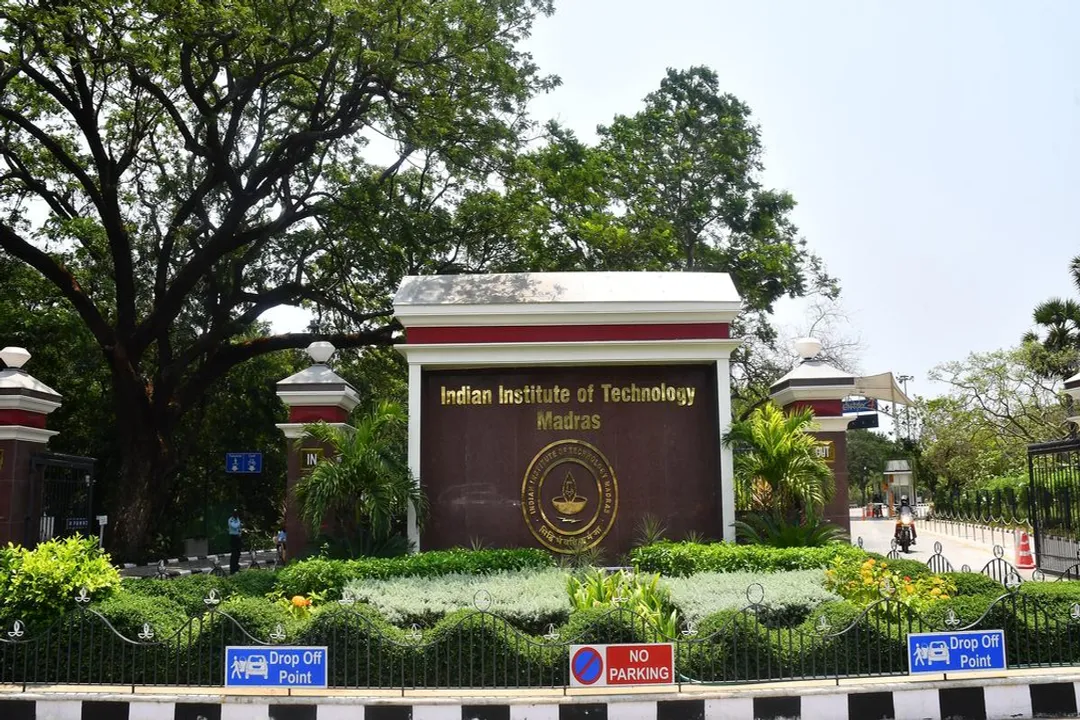
The agreement between the premier engineering institute and the national space agency culminated in the formation of a Centre of Excellence focused specifically on these fluid and thermal sciences. [6] The inauguration was marked by the presence of key figures, including ISRO Chairman Dr. V. Narayanan, who formally launched the center at the IIT Madras campus. [2][5][9] This move formalizes the research conduit, ensuring a steady flow of cutting-edge academic thinking directly into operational space technology development. [8]
The memorandum of understanding (MoU) signed between the two entities underscores a commitment to mutual benefit. For ISRO, it means access to world-class academic theory, simulation capabilities, and a pipeline of highly trained researchers. [6] For IIT Madras, it translates into access to real-world, mission-critical problems that drive relevant, impactful research outcomes, essentially providing live case studies for advanced scientific inquiry. [4]
| Aspect | IIT Madras Role | ISRO Role | Outcome |
|---|---|---|---|
| Research Core | Fundamental theory, advanced modeling | Mission requirements definition, real-world validation | Indigenous thermal control technology |
| Talent Pool | Developing specialized PhDs/Post-docs | Mentoring researchers on space constraints | Skilled workforce pipeline |
| Infrastructure | Hosting the CoE, providing lab access | Providing data, test articles, operational feedback | Verified hardware and processes |
| [1][6] |
An interesting observation drawn from the institutional alignment is the shift toward proactive thermal design rather than reactive mitigation. In older space programs, thermal blankets and radiators were often added as large, heavy subsystems to manage unforeseen heat loads. By focusing on fluid and thermal sciences as an integrated discipline right from the initial design phase, the CoE aims to embed thermal efficiency directly into the structural and material selection process itself, potentially leading to lighter, more reliable spacecraft. [6]

# Specialized Focus
The mandate of the center extends across several critical areas within thermal management. It is not just about passive cooling through radiators or insulation. It encompasses active systems as well. [1] Key areas likely include the study and development of advanced cryogenic fluid management systems—essential for future long-duration missions requiring liquid oxygen or liquid hydrogen propellants—and the perfection of heat pipe technology for efficiently moving heat away from sensitive electronics hubs. [3]
Consider the challenges of planetary landers. A vehicle descending through an atmosphere experiences aerodynamic heating, followed by rapid cooling once engines cut off or when settling on the surface in shadow. The transition points are often the most dangerous thermal moments. The expertise cultivated here will involve dynamic modeling to predict these transient thermal states with extremely high fidelity, moving beyond steady-state analyses which often simplify the reality of launch and orbit insertion maneuvers. [1]
One area demanding significant original insight from the CoE will be the thermal design of optical instruments destined for Lagrange points or deep space. These instruments must maintain positional and thermal stability to within millikelvins across a vast external temperature spectrum. This necessitates the development of ultra-low-conductance structural mounts and highly effective multi-layer insulation (MLI) techniques that can be rapidly deployed and verified. [1][3]
# Academic Integration
The success of such a specialized center hinges on its ability to bridge the gap between abstract academic knowledge and the harsh realities of space engineering. Dr. V. Narayanan’s involvement in the launch highlights ISRO’s prioritization of this knowledge transfer. [2][9] For the students and faculty involved, this collaboration offers a unique experiential learning opportunity that few universities globally can match.
Imagine a fourth-year B.Tech or a first-year M.Tech student at IIT Madras getting access to telemetry data from a recent satellite failure attributed, even partially, to an unexpected thermal excursion. This direct feedback loop is invaluable. It moves the research from theoretical modeling of a generic black body to the complex, real-world system involving multi-layer material interactions, internal component heat generation profiles, and external radiation absorption coefficients specific to ISRO hardware. [4]
This synergy creates a cycle: ISRO presents a need, IIT-M develops a solution via fundamental research, and the solution is then tested and re-validated using ISRO’s testing facilities or flight data. This iterative process significantly accelerates technology readiness levels (TRLs) for thermal hardware, which is often a bottleneck in mission readiness. [8]

# Future Trajectory Analysis
While the immediate focus is clearly on thermal challenges, the scope mentioned—"fluid and thermal sciences"—hints at an even broader future potential for the partnership. [6][7] Fluid dynamics is intrinsically linked to thermal transfer, especially in two-phase cooling systems or propellant sloshing dynamics within tanks. Future focus could naturally expand into:
- Advanced Propellant Storage: Developing phase-change materials or supercritical fluid storage concepts that manage the boil-off of propellants over multi-year missions.
- Entry, Descent, and Landing (EDL) Aerothermodynamics: While ISRO has significant expertise here, the CoE could offer refined computational fluid dynamics (CFD) modeling to optimize ablative heat shield materials for future high-speed atmospheric entries, perhaps for crewed missions or sample return projects. [3]
A point worth considering, which seldom makes it into formal press announcements, is the sheer cost implication of thermal over-engineering. Every kilogram of excess insulation, every oversized radiator panel, translates directly into higher launch costs. If the CoE can demonstrate even a 5% mass reduction in the thermal control subsystem across a large satellite platform through superior design modeling, the resulting savings over a decade of launches could amount to tens of crores of rupees, paying for the research center many times over. This economic argument underpins the scientific necessity. [8]
The collaborative structure suggests a commitment to building indigenous capability, reducing reliance on proprietary technologies or specialized foreign vendors for critical thermal components. This self-reliance, often termed Atmanirbharta, is a key objective for strategic national assets like the space program. [3][4] By establishing this center, the foundation is laid not just for the next Chandrayaan or Gaganyaan, but for the sustained operational excellence of India’s entire orbital and interplanetary fleet for decades to come. [1] The formal inauguration by the Chairman serves as a clear institutional endorsement that thermal engineering is recognized at the highest level as a core competency requiring dedicated academic support.
Related Questions
#Citations
IIT Madras partners with ISRO to establish Research Centre to study ...
IIT Madras and ISRO to establish CoE for spacecraft thermal ...
IIT Madras collaborates with ISRO for spacecraft thermal research
ISRO Chairman Launches Thermal Research Centre at IIT Madras
ISRO, IIT-M sign MoU to set up centre of excellence in fluid and ...
ISRO Chairman launches fluid and thermal research centre at IIT ...
Indian Economy News - IBEF
ISRO Chairman V Narayanan inaugurates advanced thermal ...