Were there any remains found of the Challenger crew?
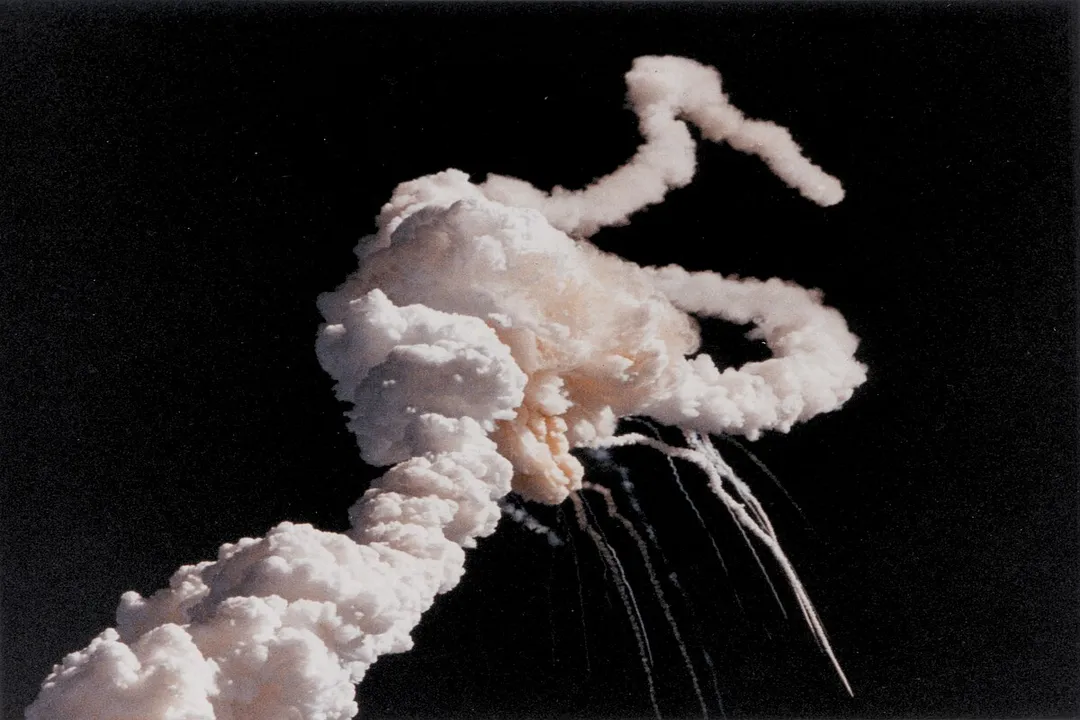
The question of what became of the seven astronauts aboard the Space Shuttle Challenger following its catastrophic breakup on January 28, 1986, is a sensitive one, yet the recovery and identification process forms a critical, albeit painful, chapter in the disaster's history. Almost immediately following the explosion of the external fuel tank and the subsequent disintegration of the orbiter, a vast search operation began in the Atlantic Ocean off the coast of Florida. [3][6] The recovery effort was dual-purpose: finding pieces of the spacecraft for the ongoing investigation and locating the crew members.
# Initial Breakup
The shuttle broke apart 73 seconds into the flight, reaching an altitude of about 46,000 feet. [3] The vehicle did not explode in the traditional sense; rather, the breakup was caused by aerodynamic forces acting on the structure after the failure of the right solid rocket booster's O-rings. [3][8] This disintegration occurred at high speed and high altitude, resulting in the dispersal of the orbiter's components and the crew compartment across a wide swath of the ocean. [8] This dispersal pattern dictated the immense challenge facing searchers, as the wreckage was scattered across an area stretching more than 240 miles. [8]
# Massive Search

The immediate response involved an unprecedented mobilization of resources from the U.S. Coast Guard, Navy, and NASA, attempting to locate debris in the unpredictable ocean currents. [1][6] Recovery crews navigated through rough seas and unpredictable weather in the days and weeks following the loss. [1] While the primary focus of the public and the accident investigation board (the Rogers Commission) was the physical evidence of the vehicle needed to determine the cause, the recovery teams were simultaneously searching for human remains. [4] This dual mission—investigative necessity meeting profound human tragedy—placed immense pressure on the recovery personnel. [1] Early efforts yielded significant amounts of debris, but identifying the location of the crew compartment itself was vital for finding the astronauts. [8]

# Cabin Recovery
Remarkably, the crew cabin section, which was designed to be relatively pressure-resistant, separated relatively intact from the main body of the orbiter. [4] It was eventually located and recovered from the ocean floor. [4] The recovery of the crew compartment was a somber milestone in the search. [8] While the physical breakup was violent, the cabin section provided the crucial nexus for what remained of the crew.
It is important to distinguish the recovery of the vehicle debris from the recovery of the crew. While large pieces of the shuttle were recovered relatively quickly, the process of finding and securing human remains was necessarily slower and more deliberate. [4] The knowledge that the cabin section had been found offered a degree of certainty to the families that their loved ones were not completely lost to the sea, even if the state of the remains presented new, agonizing hurdles. [7]
# Forensic Science
Once recovered and brought ashore, primarily to Patrick Air Force Base in Florida, the remains faced an incredibly difficult identification process. [4] The high-velocity impact and subsequent submersion meant that forensic identification was the only pathway forward. [4] Medical examiners and forensic specialists were tasked with the grim work of analyzing the partial remains recovered from the crew module. [4]
The identification relied heavily on advanced forensic techniques available at the time, including dental records and fingerprint analysis, though many remains were too fragmented or compromised for traditional methods. [4] It is publicly documented that all seven crew members were ultimately identified, a testament to the dedication of the forensic teams working under intense scrutiny and pressure. [4][6] The recovery effort continued for many months, securing further, smaller fragments of remains as they were discovered in the debris field. [4]
One insight that often goes unstated is the sheer logistical contrast between the initial investigation and the recovery effort. The Presidential Commission zeroed in on the mechanical failure—the O-rings—which could be identified from small pieces of recovered hardware. [3] However, for the families, the physical recovery of the crew, however fragmented, served as the necessary anchor for grief that the technical investigation could never provide. [7] While the technical failure was solved with bits of recovered rubber and metal, the human closure required the slow, systematic work of the medical examiners on the remains themselves. [4]
# Family Closure
Following the official identification by medical personnel, the remains of the Challenger crew were returned to their respective families. [4][6] NASA consulted with the families to determine appropriate arrangements, respecting their wishes for privacy during this intensely personal time. [6] Because of the nature of the accident, traditional open-casket services were not possible for any of the crew members. [4]
Instead, the families held private memorial services. In the end, the remains of all seven individuals—Francis R. Scobee, Michael J. Smith, Ronald McNair, Ellison Onizuka, Judith Resnik, Gregory Jarvis, and Christa McAuliffe—were interred at Arlington National Cemetery. [4][6] The return of the remains, even in scattered forms, allowed for a formal, dignified process of farewell, concluding the physical aspect of the recovery operation that began in the cold waters of the Atlantic. [6] The sheer volume of debris recovered, over 220 tons in total, speaks to the thoroughness of the search, but it is the successful, albeit tragic, identification of the crew that offered the final measure of closure to the families. [8]
Considering the depth of the impact and the subsequent scattering of the wreckage, the success of the recovery and identification teams in accounting for every astronaut stands as a significant, if somber, operational achievement. [4] In many maritime disasters, large portions of the victims are never recovered, leaving families in perpetual uncertainty. [5] The thoroughness applied to the Challenger search, driven by the need to return the astronauts to their loved ones, contrasts sharply with scenarios where such complete accounting is impossible, highlighting a determined, if heartbreaking, commitment to the personnel lost. [1]
#Videos
What Happened to the Bodies of the Challenger Disaster Crew
What Happened To The Bodies Of The Challenger Crew? - YouTube
Related Questions
#Citations
Cabin, Remains of Astronauts Found : Divers Positively Identify ...
Is it publicly known what condition the Challenger crew's bodies ...
Space Shuttle Challenger disaster - Wikipedia
What Happened to the Bodies of the Challenger Disaster Crew
After the Challenger explosion, have they found the bodies? - Quora
Challenger Crew Report - NASA
The mystery of where the bodies of the Challenger crew were found ...
5 Things You May Not Know About the Space Shuttle Challenger ...