What is the remaining debris from a supernova called?
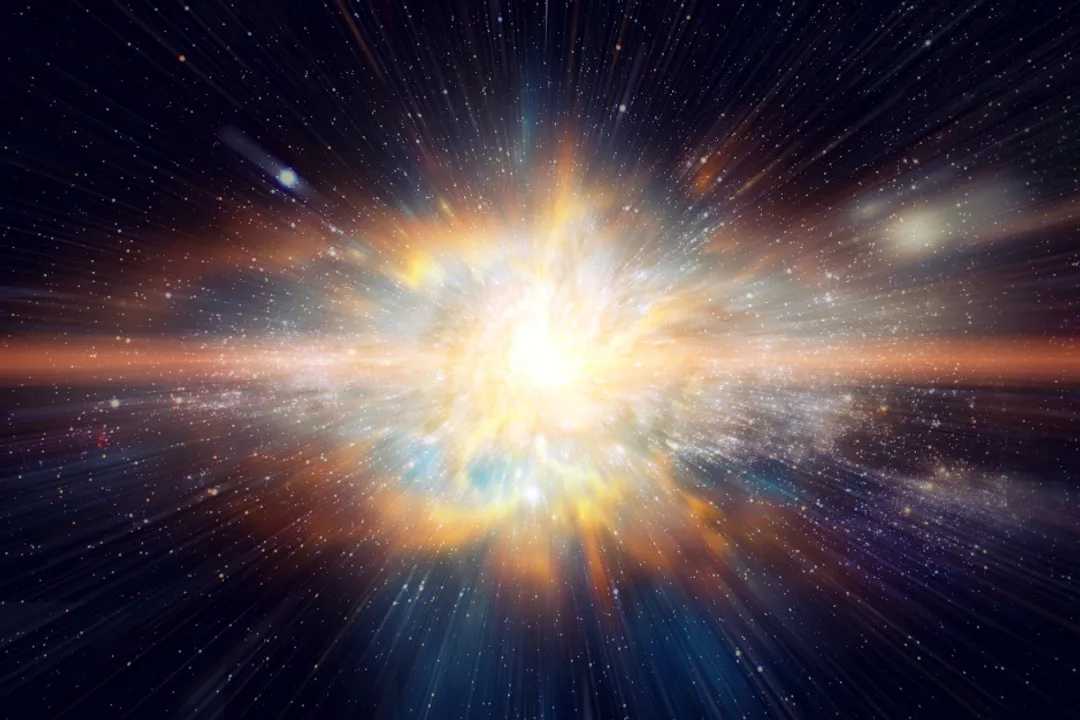
The material left behind after a star meets its dramatic end—a supernova explosion—is known by a specific name: the supernova remnant. [2][3][5][8] This isn't just a lingering puff of smoke; it is an expanding, dynamic structure composed of gas and dust that sails outward into the vast ocean of the interstellar medium (ISM). [1][2][3] This event marks the death of either a very massive star, leading to a core-collapse explosion (Types II, Ib, or Ic), or the complete obliteration of a white dwarf star within a binary system (Type Ia). [1] The explosion itself is incredibly swift, but the resulting remnant continues its physical evolution for staggering lengths of time, sometimes persisting for tens of thousands of years. [5]
# Explosion Aftermath
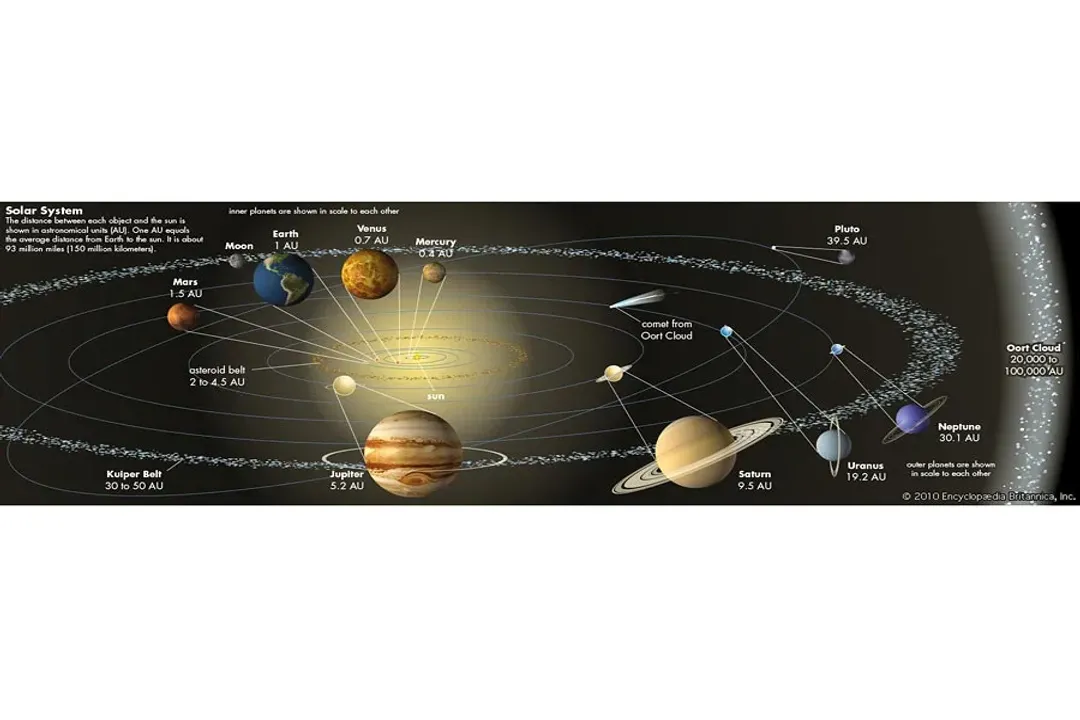
The process begins with the explosion itself, which flings stellar material—the ejecta—outward at immense speeds. [2] This ejected material is not the only component of the final remnant, however. As this superheated bubble of stellar guts rushes outward, it slams into the surrounding interstellar gas and dust that was already present in the star's vicinity. [3][8] This interaction creates a powerful shock wave. [3][8]
The shock wave is the engine driving the remnant's expansion and heating. [3][6] Think of it like a cosmic snowplow; it sweeps up the pre-existing interstellar material, accelerating and heating it to extreme temperatures. [3][8] The material within a supernova remnant is therefore a mixture: the actual guts of the star that exploded, and the recycled material from the interstellar medium that it has recently swept up. [6] Because the shock front can heat the gas to millions of degrees, these structures become powerful emitters of high-energy radiation. [2][6]
It is fascinating to consider that the structure and ultimate fate of this expanding bubble depend significantly on two factors: the sheer energy released in the initial blast, and the density and distribution of the material the star was already residing in. [7] A star that lived and died in a relatively sparse patch of the galaxy will produce a remnant that expands more quickly and perhaps for longer, whereas one surrounded by thick molecular clouds will create a more compressed and perhaps shorter-lived spectacle. [7] The initial energy of the explosion dictates the speed, while the surrounding environment dictates the drag and eventual shape. [7]
# Observational Signatures
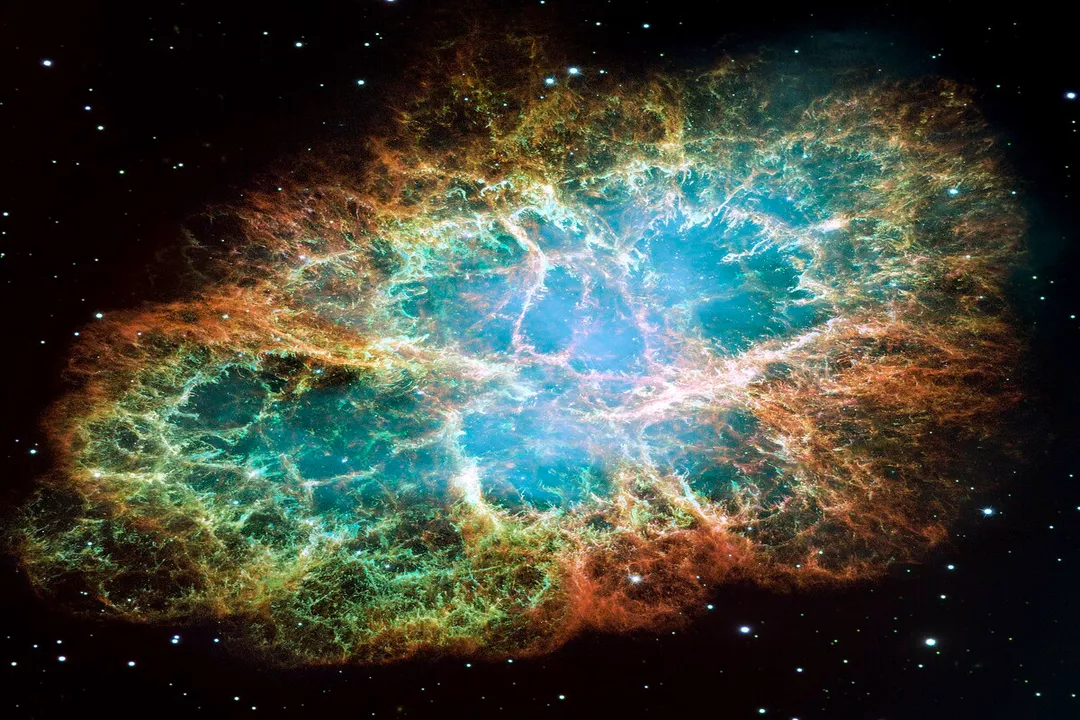
When we look at a supernova remnant through a telescope, we are not seeing just one thing; we are observing the aftermath across the entire electromagnetic spectrum. [3] The specific wavelength we observe dictates what part of the remnant's complex structure we are viewing. [3]
Radio waves reveal the remnants that have been interacting with the ISM for a long time. [3] These signals often come from highly energetic electrons spiraling around magnetic field lines within the remnant's structure, a process known as synchrotron radiation. [1] The Crab Nebula, one of the most famous supernova remnants, is a prime example that shines brightly in the radio spectrum. [5]
In the optical spectrum, we see the material that has cooled sufficiently to emit visible light, often showcasing intricate filaments of gas—the shock-heated, glowing remnants of the stellar envelope and the swept-up ISM. [5]
However, perhaps the most dramatic signature comes from the X-ray observations, often gathered by specialized instruments like the Chandra X-ray Observatory. [6] The gas heated by the shock wave to millions of degrees glows intensely in X-rays before it has time to radiate away that energy. [2][6] These X-rays allow scientists to map the hottest, fastest-moving regions of the explosion's aftermath, revealing where the mixing of ejecta and ISM is most active. [6]
To organize this observational data, astronomers often look at how the remnant's structure appears across these different views. A simple breakdown can illustrate this information gain:
| Wavelength | Dominant Source of Emission | Information Gained |
|---|---|---|
| Radio | Synchrotron radiation from energetic electrons | Magnetic field structure, extent of shock acceleration [1] |
| Optical | Glowing, cooling shocked gas filaments | Morphology, interaction with ambient gas [5] |
| X-ray | Extremely hot gas ( K) | Shock velocity, temperature, composition of hottest ejecta [6] |
It might seem counterintuitive that the remnant, an object of violent creation, would be categorized by its relatively stable shape observed across vast timescales. [1][7] Yet, this structure is fundamental to classifying them. While the general term is supernova remnant, astronomers sometimes use more specific morphological classes. [1] For instance, some are classified as Composite because they show strong radio emission overlying thermal X-ray emission. [1] Others are labeled Mixed-Morphology (MM), which often exhibit characteristics of a centrally filled shell structure in X-rays, suggesting they are interacting with a heterogeneous ISM. [1] A third category is Monochromatic, which primarily emit strongly at a single wavelength band. [1] This categorization helps astronomers deduce the age and environment of the original star. [1]
# Cosmic Fertilizers
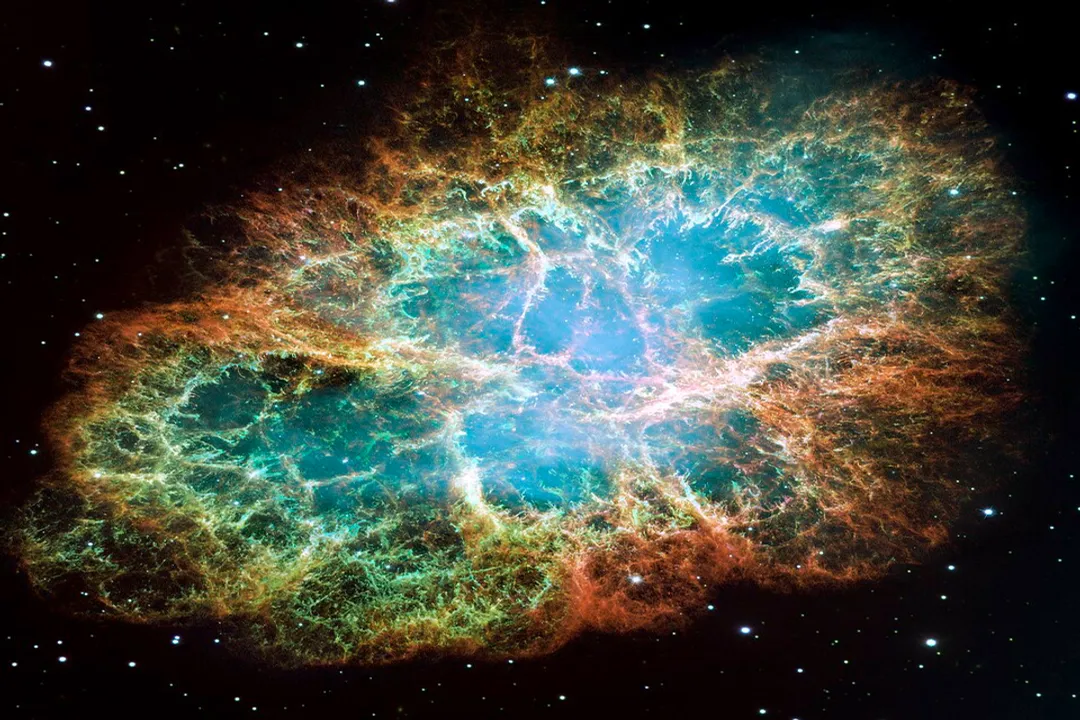
The true significance of these energetic remnants extends far beyond their immediate destructive power; they are fundamental to galactic ecology and the creation of new solar systems. [10] Stars are nature's element factories, fusing lighter elements into heavier ones deep in their cores during their lifetimes. [10] When a massive star explodes, it broadcasts these newly forged elements—including the carbon we are made of, the oxygen we breathe, and the iron in our blood—out into space. [10]
The material ejected by the supernova is thus rich in these heavy elements synthesized within the star. [10] This ejected material mixes with the surrounding ISM, enriching the galactic gas clouds from which future generations of stars and planets will form. [10] In essence, the debris cloud is the seed material for terrestrial planets like Earth. [10] Without the explosive recycling mechanism provided by supernovae, the universe would remain largely hydrogen and helium, and complex chemistry—and thus life—would be impossible. [10] This is an absolutely vital process, meaning every supernova remnant is a colossal, though slow-moving, chemical delivery service operating over cosmic timescales. [10]
Furthermore, these violent events are thought to be the primary acceleration mechanism for cosmic rays—high-energy particles that zip through the galaxy. [1] The powerful shock fronts within the remnant can accelerate particles to near the speed of light, injecting them into the galactic magnetic fields where they travel across the cosmos. [1]
# Millennia Span
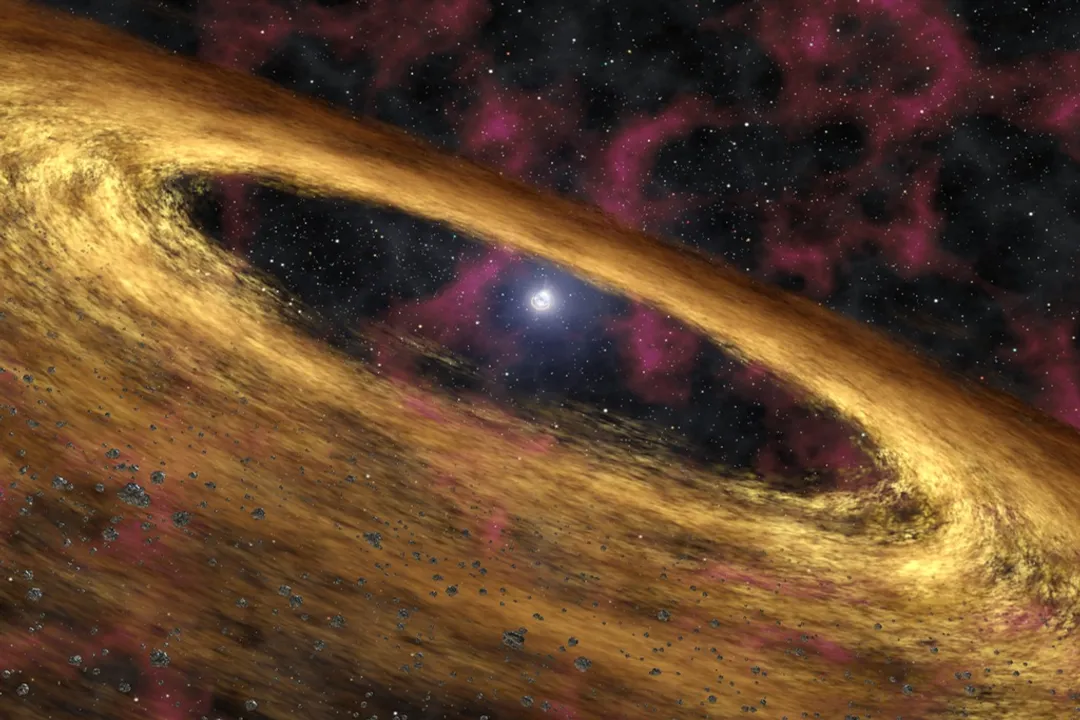
When considering the timescale, it's worth pausing to appreciate the sheer duration involved. An explosion lasts seconds, but the visible remnant can last for millennia. [5] Consider a familiar example: the Crab Nebula, which originates from a supernova observed in . [5] That remnant is still clearly visible and actively studied today, nearly a thousand years later. [5] While the initial expansion is rapid, the slowing and cooling process is gradual. [5][7]
The longevity and appearance are intrinsically linked to the concept of cosmic recycling. If a supernova remnant dissipates entirely in, say, 50,000 years, that means the heavy elements it seeded took 50,000 years to blend thoroughly into the galactic nursery dust. [5] This sets a minimum timescale for the recycling loop: Star lives Explodes Seeds ISM ISM collapses to form new stars. [10] This whole cycle is punctuated by these billion-year-scale events followed by tens-of-thousands-of-year-long diffusion periods. [5] It’s a stark reminder that the physical processes shaping our local stellar environment operate on scales far beyond human experience, with the debris of a single star remaining an observable entity for longer than recorded human history. [5] The debris field essentially becomes part of the background ISM, but its initial infusion of heavy elements is permanent, becoming locked into subsequent stars and planets. [10]
This long-lived, expanding shell of gas and dust, heated by its own violent birth, is the tangible legacy of a star's death. It is the supernova remnant, and it serves as both a spectacular celestial object and a fundamental engine for cosmic chemistry. [2][3][10]
Related Questions
#Citations
Supernova remnant - Wikipedia
Supernova Remnants - Imagine the Universe!
Supernova remnant | Astronomy, Physics & Formation | Britannica
Dictionary of Space Concepts - Supernova Remnant - UNIVERSEH
Supernova Remnant Facts - The Planets - ThePlanets.org
Debris from Stellar Explosion Not Slowed After 400 Years
Supernova explosions stay in shape - UC Santa Cruz - News
Supernova explosions - Las Cumbres Observatory
What is the name given to remnants of supernova explosions left ...
Stellar Rubble May Be Planetary Building Blocks - Spitzer - Caltech