What is a supernova called?
The term used to describe the cataclysmic explosion of a star is supernova, which literally means "new star" in Latin, although it is anything but new in the stellar life cycle; rather, it signals a violent end. [6] When astronomers refer to a supernova, they are using a broad category label for one of the most energetic stellar explosions in the universe. [1][10] These events are so luminous that they can temporarily outshine entire galaxies, releasing an enormous amount of energy in a matter of weeks or months. [1][6] However, simply calling an event a "supernova" is often insufficient for professional study. Like species in biology, these stellar deaths are subdivided into distinct classes based on the physical mechanisms causing the explosion and the chemical evidence they leave behind in their light spectra. [7] Understanding what a supernova is called requires delving into this precise system of astronomical nomenclature, which is rooted in observational evidence. [1]
# Distinguishing Novae
Before labeling an event a supernova, astronomers must first differentiate it from a much less dramatic phenomenon known as a nova. [8] While the word nova means "new," both novae and supernovae involve a sudden, dramatic brightening in the sky, which can easily confuse casual observers. [6]
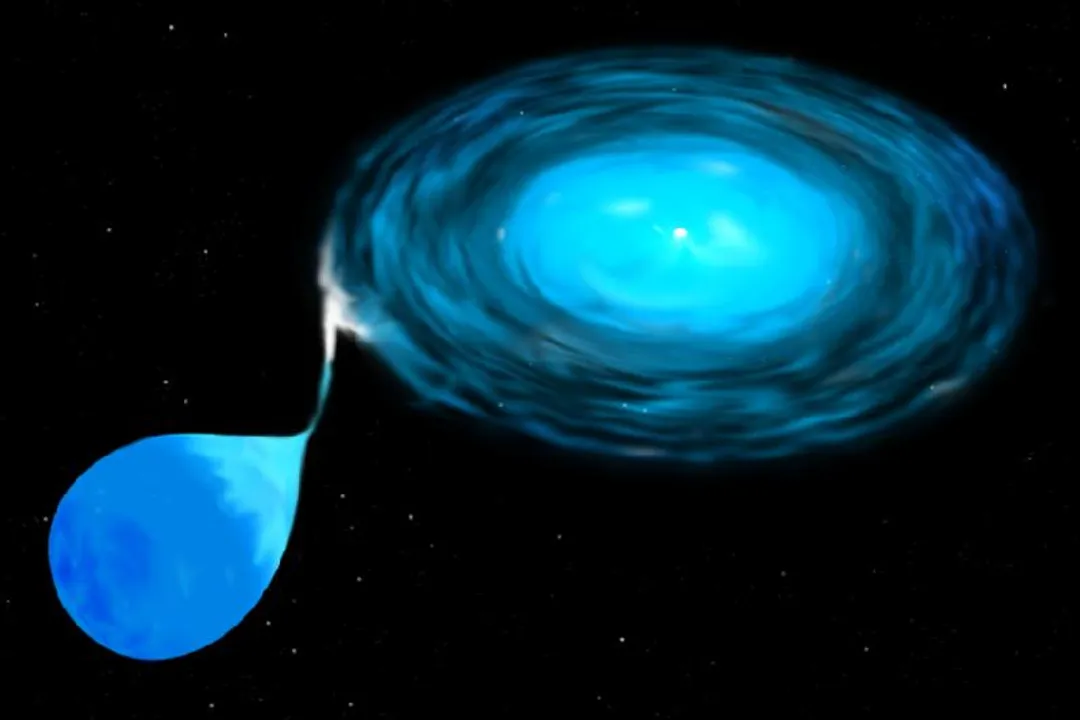
A nova occurs when a white dwarf star, typically in a binary star system, accretes matter from its companion star. [8] As the hydrogen-rich material piles up on the white dwarf’s surface, it eventually reaches a critical temperature and density, triggering a runaway thermonuclear reaction on the surface layer only. [4] This eruption makes the star temporarily much brighter, but the white dwarf itself remains intact, ready to repeat the process over long timescales. [4][8] The energy released is immense, but it pales in comparison to the death throes of a true supernova. [4]
In stark contrast, a supernova represents the complete, catastrophic destruction or dramatic structural collapse of the star itself. [1][4] To put the scale difference into perspective, a typical, bright classical nova might increase a star's luminosity by a factor of 50,000 to 100,000 times relative to its normal state. [8] A Type Ia supernova, on the other hand, can briefly shine with the light of ten billion suns, easily exceeding the output of the entire galaxy that hosts it. [1][6] The fundamental difference lies in the finality of the event: novae are surface events; supernovae are stellar endings. [4]
# Spectral Classification
The primary method for naming and classifying a specific supernova relies on analyzing its light spectrum shortly after the explosion is detected. [1][7] Astronomers look for the presence or absence of specific chemical elements represented by their spectral lines. [7] This observational data is used to sort supernovae into two main categories: Type I and Type II. [7]
# Type I Spectra
A Type I supernova is defined by the absence of hydrogen spectral lines in its light signature. [1][7] Because hydrogen is the most abundant element in the universe, its lack tells astronomers that the star must have either lost its outer hydrogen envelope before exploding or it never had one to begin with. [7] Type I events are further subdivided based on the presence or absence of helium lines:
- Type Ia: These exhibit strong silicon lines but show neither hydrogen nor helium. [7] This specific signature points toward a white dwarf explosion mechanism. [1]
- Type Ib: These lack hydrogen but do show significant helium lines. [7]
- Type Ic: These lack both hydrogen and helium lines. [7]
# Type II Spectra
Conversely, a Type II supernova is identified by the clear presence of prominent hydrogen lines in its spectrum. [1][7] This indicates that the exploding star still possessed a substantial hydrogen envelope at the moment of its demise. [7] Type II supernovae are inherently linked to the core collapse of massive stars. [1]

# Mechanisms Naming
The classification based on spectral appearance directly maps to the physical event that caused the explosion, which provides the underlying rationale for the name. [1]
# Thermonuclear Collapse
The most widely studied and arguably most important for cosmology are the Type Ia supernovae. [7] These events are theorized to occur in binary systems where a white dwarf pulls material from a companion star. [1] The white dwarf accumulates mass until it exceeds the Chandrasekhar limit—approximately $1.4$ times the mass of our Sun. [1][7] Once this limit is breached, the core collapses under its own gravity, triggering runaway carbon fusion that rapidly consumes the entire star in an unimpeded thermonuclear explosion. [1][7] Because the initial mass threshold (the Chandrasekhar limit) is nearly identical for every progenitor system, Type Ia supernovae are incredibly consistent in their peak brightness, making them invaluable "standard candles" for measuring vast cosmic distances. [1] The predictability of the initial conditions is why we can call them by the singular, standardized name Type Ia—it signifies a specific, known ignition process.
# Core Collapse Pathways
The Type II supernovae, along with Types Ib and Ic, all fall under the umbrella of core-collapse events. [1][7] These occur when a single, massive star—at least about eight times the mass of the Sun—runs out of fuel in its core. [1]
When fusion stops in the iron core, gravity overwhelms the outward pressure, and the core implodes in milliseconds. [1] The outer layers of the star crash onto this collapsing core, rebounding in a massive shockwave that blows the rest of the star into space. [1][10]
- Type II: These are the classic massive star explosions where the outer hydrogen envelope remains intact during the explosion. [7]
- Type Ib and Ic: These are also core-collapse events, but the progenitor star was so massive, or its binary companion so effective, that it lost most or all of its outer hydrogen envelope (Type Ib) or both hydrogen and helium envelopes (Type Ic) before the final collapse occurred. [7] The name difference (Ib vs. Ic) simply reflects how much of the star's outer material was stripped away prior to going supernova.
# Stellar Remnants
What remains after the explosion helps confirm the name and the underlying mechanism, though the remnant is not part of the initial classification name itself. [1][9]
For Type Ia events, since the white dwarf is completely obliterated by the explosion, virtually no compact remnant is left behind—just an expanding cloud of heavier elements synthesized during the explosion itself. [1][9]
For core-collapse supernovae (Type II, Ib, Ic), the fate of the collapsed core determines the final object:
- If the original star's core mass is between about $1.4$ and $3$ solar masses after collapse, the core is compressed into an incredibly dense object called a neutron star. [1][9]
- If the original star was exceptionally massive, gravity wins completely, and the core collapses indefinitely to form a black hole. [1][9]
When considering the scientific designation of a supernova, it is helpful to map the name directly to the expected outcome. If an astronomer observes a Type Ia explosion, they expect no compact object remaining; if they observe a Type II, they anticipate either a neutron star or a black hole lurking in the center of the resulting supernova remnant. [9] This relationship between the name (classification) and the expected end product offers a layer of observational confirmation for the theoretical models. [1]

# Historic Naming Conventions
While the Type I/Type II spectral classification system dominates modern astronomy, individual supernova events that are close enough or historically significant often receive an auxiliary designation based on when and where they were found. [1] This is analogous to naming a comet after its discoverer, though supernova designations are more standardized.
A common naming convention involves the prefix "SN" followed by the year of its discovery, and then a lowercase letter indicating the order of discovery within that year. [1] For example, SN 1987A refers to the first supernova observed in the year $1987$. [1] This designation is necessary because, depending on the decade, dozens of supernovae might occur in a given galaxy, or one might be discovered simultaneously by multiple teams worldwide. [1]
However, it is important to recognize that the spectral type (like Ia or IIb) is the scientific name that describes the explosion's physics, while the SN YYYY letter designation is more of a historical catalog number. [1] If SN 1987A had been analyzed spectroscopically, it would have been classified as a Type IIb supernova, indicating it was a core-collapse event that had lost most, but not quite all, of its hydrogen envelope before exploding. [7] Therefore, the full scientific identity is often a combination: SN 1987A is a Type IIb supernova. [7]
To make tracking these transient events easier for researchers, especially when dealing with new detections, specific surveys often employ their own tracking systems before a formal designation is issued. For instance, a recent discovery might temporarily be called ATLAS19abc before being confirmed and assigned the standard SN year/letter nomenclature. This complex system ensures that even in a crowded field of transient events, every explosion can be uniquely identified and its physical process inferred, linking the name back to the underlying astrophysics.
# Unpacking Sub-Types and Nuances
The simple Type I and Type II split actually masks significant astrophysical variety, which is captured in the subtypes like Ib, Ic, and II-P (Plateau). [7] These subtle variations in the naming scheme tell astronomers crucial things about the star’s environment and mass loss history.
Consider the Type II classification. A Type II supernova is often further broken down based on its light curve—the way its brightness changes over time after the initial peak. [7]
- Type II-P (Plateau): These events show a distinct plateau phase in their light curve, meaning their brightness stays relatively constant for several weeks or months before fading steadily. [7] This plateau is caused by the vast amount of hydrogen gas in the envelope recombining with electrons, releasing energy that keeps the surface bright. [7]
- Type II-L (Linear): These exhibit a more steady, linear decline in brightness immediately following the peak, suggesting a less extensive or less dense envelope compared to the Type II-P stars. [7]
This level of detail is essential for stellar modeling. When an astronomer sees a "Type II-P," they immediately know they are dealing with a massive star that retained a significant hydrogen envelope, likely one in the intermediate range of progenitor masses, allowing them to refine estimates on the star's initial mass and the physics of the shockwave propagation through that dense atmosphere.
If we compare the mechanism behind a Type II-P (massive star core collapse) to a Type Ia (white dwarf detonation), the resulting chemical signatures are entirely different. The Type Ia explosion synthesizes vast quantities of elements like Nickel-56, which rapidly decays into Cobalt-56 and then Iron, powering the characteristic light curve decay. A core-collapse supernova synthesizes elements heavier than iron in the shockwave, and its energy output is governed by the radioactive decay of ejected nickel as well as the slower energy release from the cooling remnant neutron star or black hole. [1] The different names are the condensed summary of these distinct physical engines.
It is fascinating to realize that the name of the explosion—whether it is Ia, IIb, or Ic—is a direct shorthand for a detailed observational analysis: "We see no hydrogen, strong silicon, and the light curve suggests complete white dwarf destruction." In essence, the classification name is a diagnostic tool in itself, summarizing months of spectral analysis into three characters. This rigorous naming convention is what allows astronomers globally to compare results instantly without needing to re-examine raw data every time. When an event is called a Type Ib, it carries the entire established physics model of a massive star that lost its outer layers before exploding, which is far more informative than simply calling it a "bright flash."
Related Questions
#Citations
Supernova - Wikipedia
What Is a Supernova? | NASA Space Place – NASA Science for Kids
DOE Explains...Supernovae - Department of Energy
What is the difference between a supernova and a hypernova?
Supernova explosions - Las Cumbres Observatory
Supernova | Definition, Types, & Facts - Britannica
The different types of supernovae explained - Astronomy Magazine
Novas Vs. Supernovas: What's The Difference? - Adler Planetarium
Supernovas & Remnants | Center for Astrophysics
Supernova - ESA/Hubble