What is the thermal protection system for reentry vehicles?

Reentry into Earth's atmosphere subjects any returning spacecraft—whether a crew capsule or an uncrewed probe—to an environment of unimaginable thermal stress. As the vehicle slams into the thinner upper layers of air at hypersonic speeds, the air molecules in front of it compress violently, generating temperatures that can easily soar above . [3] Without a specialized defense, the vehicle's structure would rapidly melt, vaporize, or disintegrate long before reaching the ground. [1][4] This critical defense is the Thermal Protection System (TPS), an engineered envelope designed to manage, dissipate, or absorb that extreme thermal energy. [1][3]
# Entry Forces
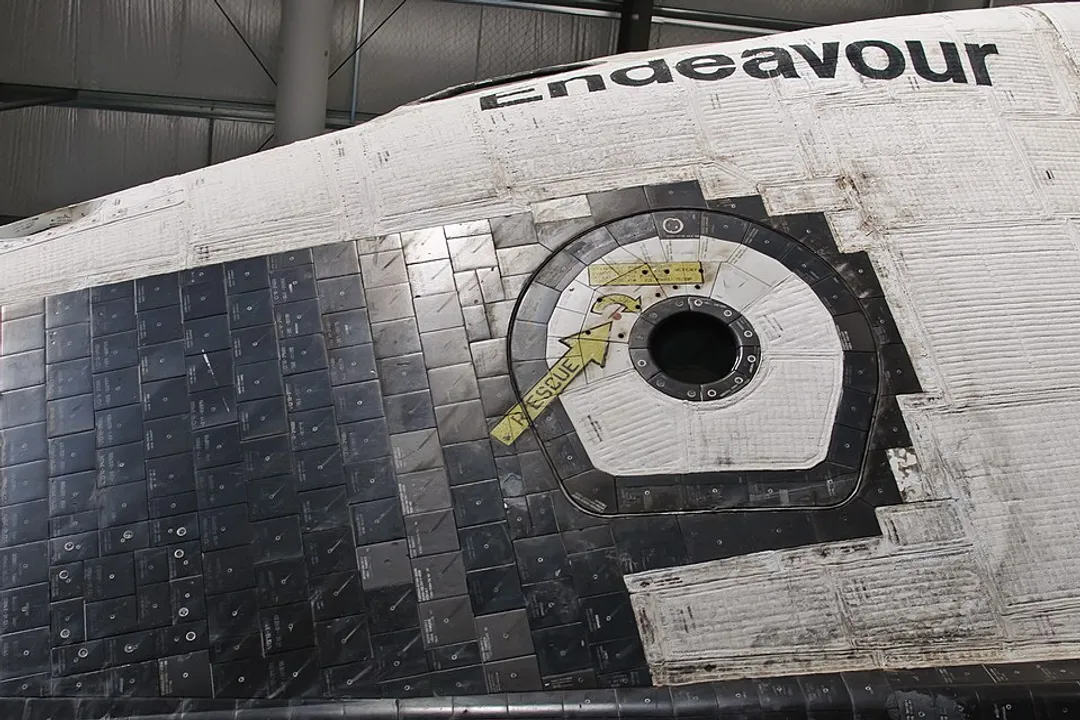
The primary challenge during atmospheric reentry is not simply friction, as is sometimes mistakenly believed; it is the extreme heating caused by the aerodynamic compression of the air itself. [3] This process, called stagnation heating, transfers heat primarily through convection to the vehicle's leading surfaces. [3] The intensity of this heat flux varies dramatically depending on the vehicle's speed and its entry trajectory—a shallow, long-duration glide will spread the heat load over more time but might subject the surface to higher peak temperatures than a steep, rapid dive. [1] Therefore, the TPS must be specifically tailored to the thermal profile the vehicle is expected to encounter throughout its descent path. [3]
# Protection Types
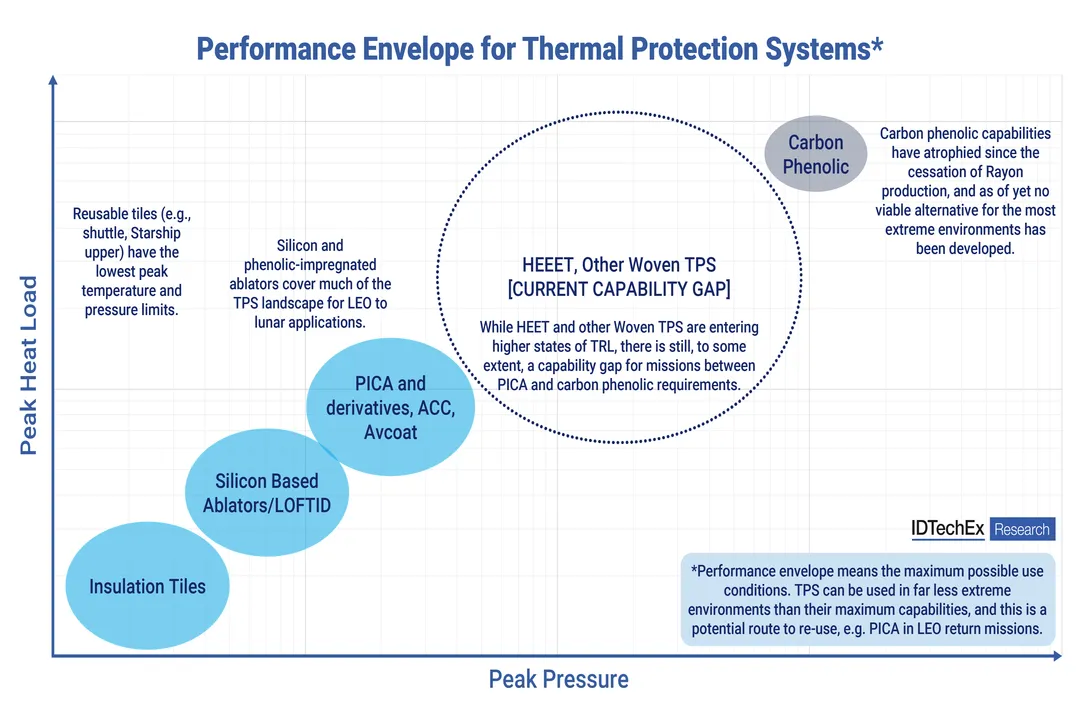
Engineers have developed a few core strategies to survive this thermal onslaught, broadly categorized by whether the protection is designed to be disposed of or reused. [1][2]
# Sacrificial Shields
The first major category involves ablative systems. These materials are designed to deliberately burn away, melt, or vaporize during entry. [1] As the outer layer sacrifices itself, the resulting hot gas layer carries the heat away from the vehicle structure, effectively insulating what remains. [2] This process consumes the material, making it ideal for one-time missions, such as sample return capsules returning from deep space, where mass efficiency for the return trip is paramount and vehicle recovery is secondary or not required. [2] Examples of ablative materials often rely on polymer resins, such as phenolic epoxies, which undergo necessary chemical transformations to manage the heat flow. [2]
# Reusable Assets
For crewed vehicles or spacecraft intended for multiple flights, an ablative system is impractical due to the required thickness and replacement cost. [4] Reusable systems must manage the heat while remaining largely intact for inspection and refurbishment. [5] This approach demands materials that can survive high temperatures repeatedly without significant degradation, requiring insulation layers that reflect or radiate heat away without melting or decomposing drastically. [1]

# Shuttle Materials
The retired NASA Space Shuttle Orbiter provided the most complex, high-profile example of a reusable TPS to date, utilizing an integrated system of distinct materials tailored to the specific heat expected at different locations on the airframe. [4] The strategy was to apply the highest temperature protection only where absolutely necessary to save weight, as every pound of insulation added mass that needed to be lifted against Earth's gravity. [5]
# High Heat Areas
The absolute hottest zones—the nose cap and the leading edges of the wings—faced temperatures that exceeded the limits of ceramic tiles. [4] These areas were protected by Reinforced Carbon-Carbon (RCC) panels. [6] RCC is a composite material where carbon fibers are impregnated with a silicon carbide matrix, allowing it to withstand temperatures approaching or . [4][6] Because RCC panels are rigid and experience significant thermal expansion, they had to be installed with precise gaps that allowed for movement during heating, creating a complex interface challenge. [7]
# Insulating Surfaces
The majority of the Orbiter’s upper surfaces utilized specialized ceramic insulation tiles. [4] The underbelly, which absorbed the bulk of the convective heating during landing approach, was covered in High-Temperature Reusable Surface Insulation (HRSI) tiles. [4] These tiles are silica-based, incredibly porous, and lightweight—composed of about 90% air—which makes them highly effective insulators. [4] The goal of these tiles was not to withstand the full on the surface, but rather to keep the aluminum skin of the spacecraft structure beneath them below . [4]
The upper fuselage and flight surfaces not exposed to the highest reentry heating utilized flexible insulation blankets made from silica fibers, classified as Fibrous Refractory Composite Insulation (FRCI). [4] Even the areas facing minimal heating, such as the payload bay doors, used Low-Temperature Reusable Surface Insulation (LRSI) blankets, which resemble thick, white fabric insulation designed primarily to keep the internal bay environment below . [4] This layered, graded approach across a single vehicle is a testament to the extreme optimization required in aerospace thermal engineering. [5]
# Installation Precision
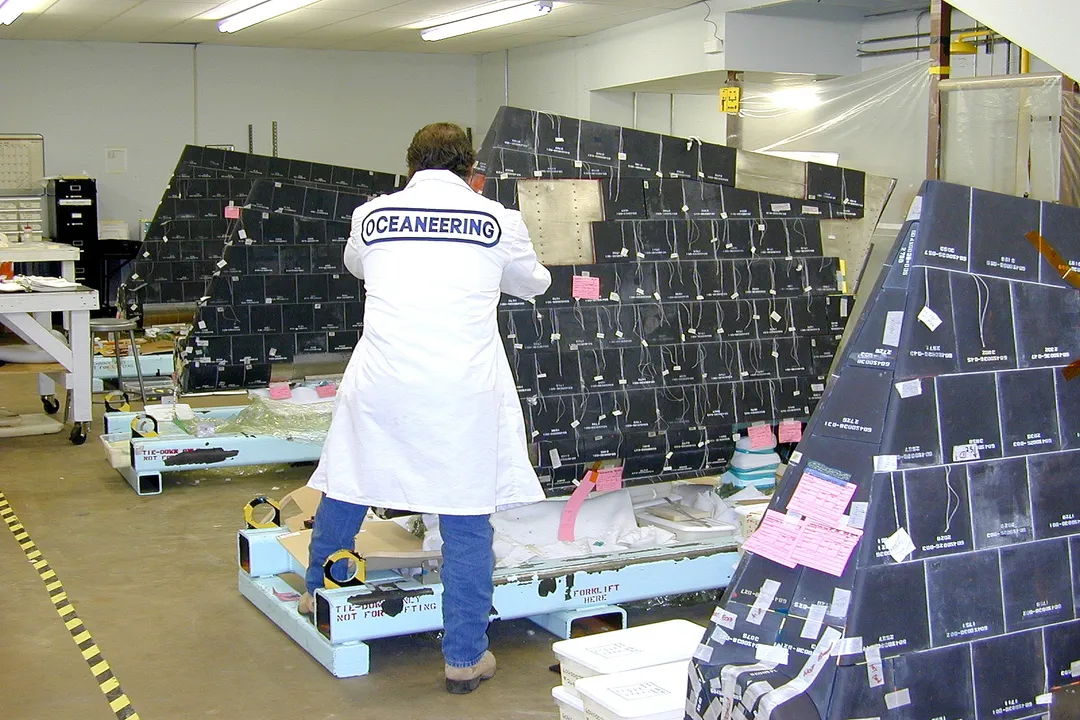
Constructing a system involving thousands of individual components—like the over 20,000 tiles on the Shuttle—presents profound challenges in quality control and integration. [4] When different materials meet, or when a rigid tile meets a flexible blanket, the interface becomes a critical weak point. [7] Any gap, misalignment, or missing piece can act as a path for superheated gases to impinge directly onto the underlying structure, leading to localized melting and catastrophic failure. [4][7]
This sensitivity means that the manufacturing and fitting process is as vital as the material science itself. [5] Modern approaches emphasize strict adherence to tolerances during the application phase, sometimes using advanced metrology and strain monitoring during thermal cycling to ensure that the installed system behaves exactly as modeled in the lab. [7] If you view the TPS not as a simple shield but as a highly distributed thermal buffer, the slightest defect in the boundary condition—the joint between two tiles—can cause the entire system's performance to collapse locally. [1]

# Material Evolution
The operational lessons from past programs continue to drive the development of new TPS technologies for crewed vehicles like NASA’s Orion capsule or commercial vehicles. [2][8] One significant shift involves moving away from the incredibly labor-intensive tile replacement cycle of the Shuttle toward integrated heat shields. [5]
Newer designs often favor advanced ablative systems, sometimes based on derivatives of PICA (Phenolic Impregnated Carbon Ablator), which offer superior thermal protection relative to their weight compared to older ablatives, while still providing a simpler refurbishment process than individual tile replacement. [2] Researchers are also heavily investigating advanced Ceramic Matrix Composites (CMCs). [8] CMCs promise superior durability and higher temperature resistance than traditional silica ceramics, potentially allowing for lighter, more robust reusable shields in the future. [5][8] However, the challenge remains to manufacture these advanced materials into the complex, non-uniform shapes required by aerospace vehicles cost-effectively. [5] The engineering objective is always to find the perfect balance: maximizing thermal standoff capability while minimizing overall dry mass and post-flight maintenance hours. [5]
Related Questions
#Citations
Thermal Protection Systems - NASA
Thermal protection systems for space vehicles: A review on ...
How Does a Thermal Protection System Work? - Tex Tech Industries
Space Shuttle thermal protection system - Wikipedia
Thermal Protection Systems for Aerospace Applications: Materials ...
Thermal Protection Systems (TPS) - Oceaneering
Spaceplane Thermal Protection System Control | Dewesoft
Heat Shields & Thermal Protection Systems for Spacecraft 2025-2035
The Development of Thermal Protection Systems for Aerospace ...