Does our solar system come from Sagittarius?
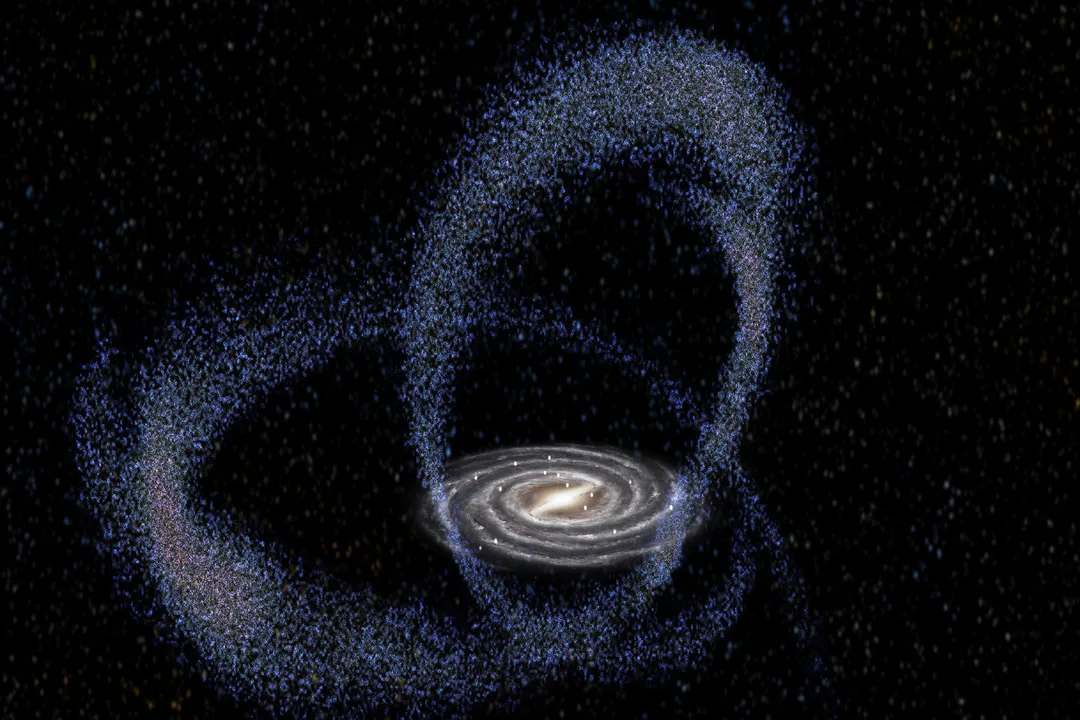
The origins of our Solar System are deeply intertwined with the vast, dynamic structure of our home galaxy, the Milky Way. For a long time, the formation of our Sun and planets was often viewed as a relatively isolated event, perhaps triggered by a passing shockwave from a supernova. However, recent astrophysical modeling, supported by precise data from missions like ESA’s Gaia observatory, suggests a much grander, more violent cosmic catalyst: a galactic merger. Specifically, the hypothesis points toward the gravitational interaction with the Sagittarius Dwarf Spheroidal Galaxy (Sgr Dwarf), a smaller satellite galaxy currently being consumed by the much larger Milky Way.
# Galactic Cannibalism
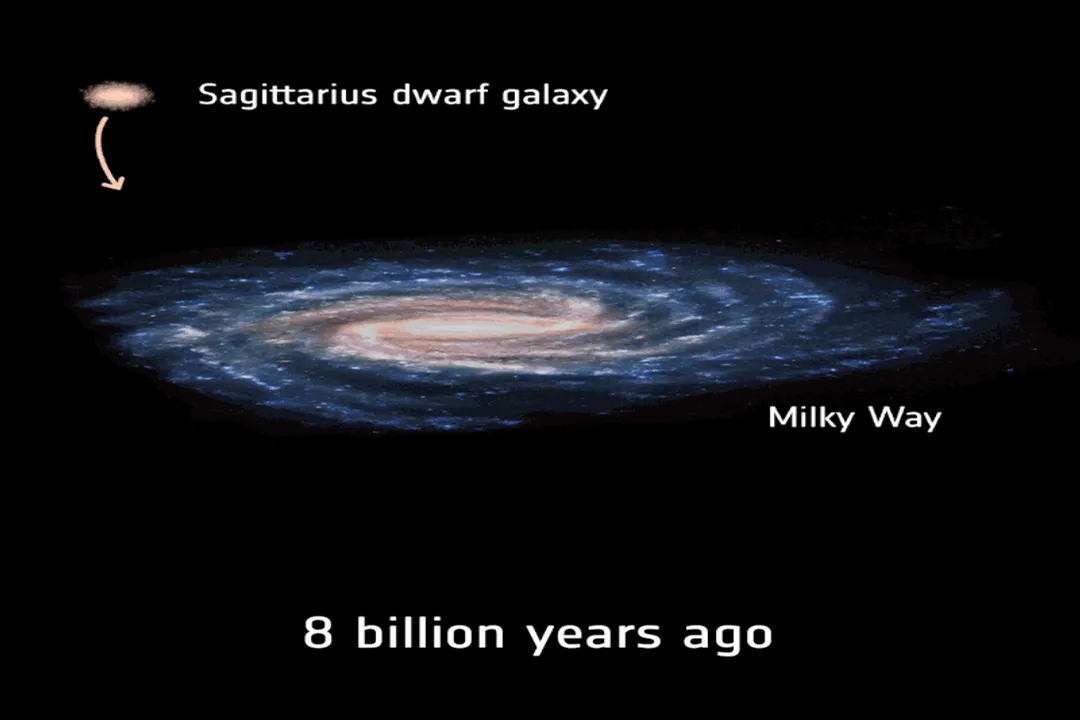
Our Milky Way is not a solitary entity; it is an active participant in a process of galactic cannibalism, constantly absorbing smaller galaxies in its vicinity. The Sagittarius Dwarf Galaxy is one such unfortunate, yet cosmically important, neighbor. This dwarf galaxy is currently plunging through the disk of the Milky Way. It is being stretched and torn apart by the tidal forces of our own galaxy, leaving behind trails of stars and gas.
This ongoing process creates ripples or disturbances in the Milky Way’s main stellar and gaseous disk. Imagine dropping a large object into a still pond; the resulting waves propagate outward. In the galactic context, the passage of the Sgr Dwarf acts as that disruptive object. Scientists have been able to map these disturbances, noting that they are particularly pronounced in the gaseous layer of the Milky Way disk. The proximity of the Solar System to one of these gravitational ripples at the crucial time of its birth forms the backbone of this formation theory.
# Triggering Collapse
The central idea is that the Solar System did not form inside the Sagittarius Dwarf Galaxy itself, nor did it originate from the matter of the dwarf galaxy directly. Instead, the gravity of the passing Sgr Dwarf, specifically when it made close passes through the galactic plane, created shockwaves. These shockwaves compressed large, diffuse clouds of interstellar gas and dust—the raw material for stars—within the Milky Way disk.
When gas clouds are compressed sufficiently, gravity overcomes the internal pressure, causing the cloud to collapse inward upon itself. This collapse is the necessary first step in stellar formation, eventually leading to the ignition of a star—our Sun—and the subsequent accretion disk that birthed the planets. Current estimates, using simulations guided by observational data, suggest that one of these close passes by the Sgr Dwarf approximately 4.5 billion years ago provided the exact nudge needed at the right location in the galaxy.
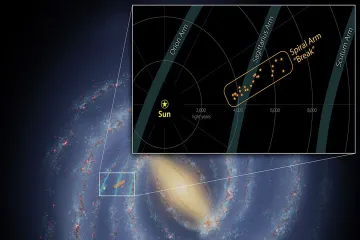
It is important to distinguish the role of this dwarf galaxy from other structures named after Sagittarius. A common point of confusion arises when discussing the center of our galaxy. The Solar System does not orbit the supermassive black hole known as Sagittarius A* (Sgr A*), which resides at the very core of the Milky Way. Our Sun orbits the galactic center, but we are located about 26,000 light-years away from Sgr A* in one of the spiral arms, far from the immediate gravitational influence of the central behemoth. The theory under discussion specifically implicates the dwarf galaxy in Sagittarius, not the central black hole.
# Evidence and Comparison
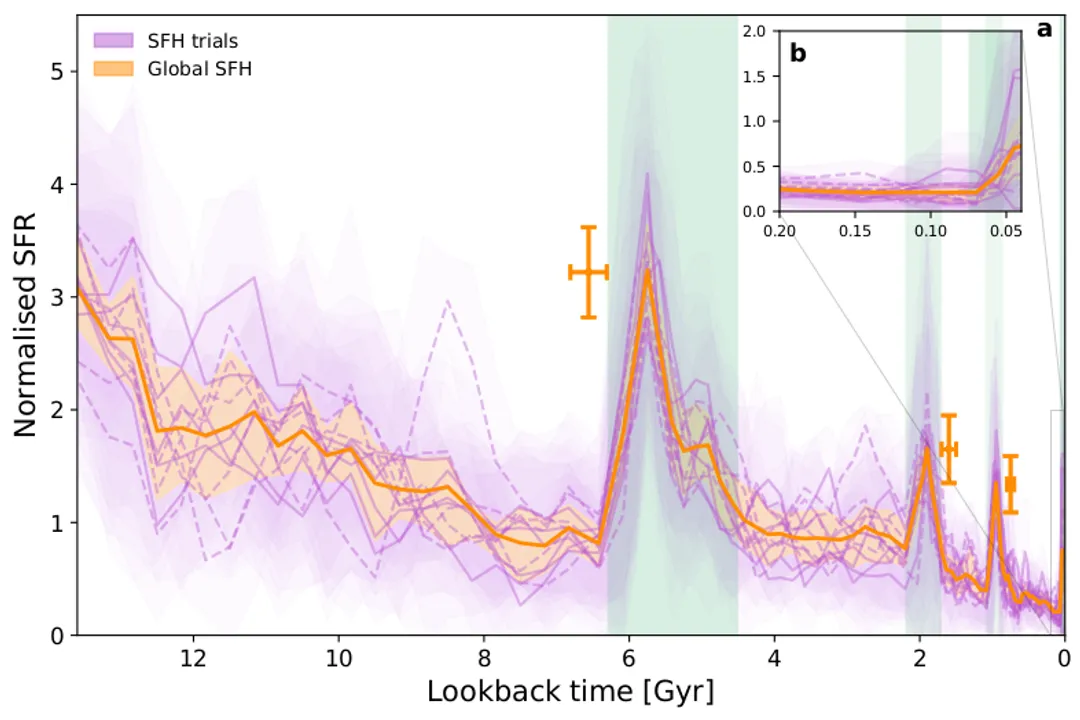
The strength of this hypothesis comes from the ability to trace the history of the Sgr Dwarf and correlate it with the timeline of Solar System formation. If the theory holds, the disturbances caused by the Sgr Dwarf should show a periodic pattern that aligns with the calculated age of our Sun, roughly 4.6 billion years old.
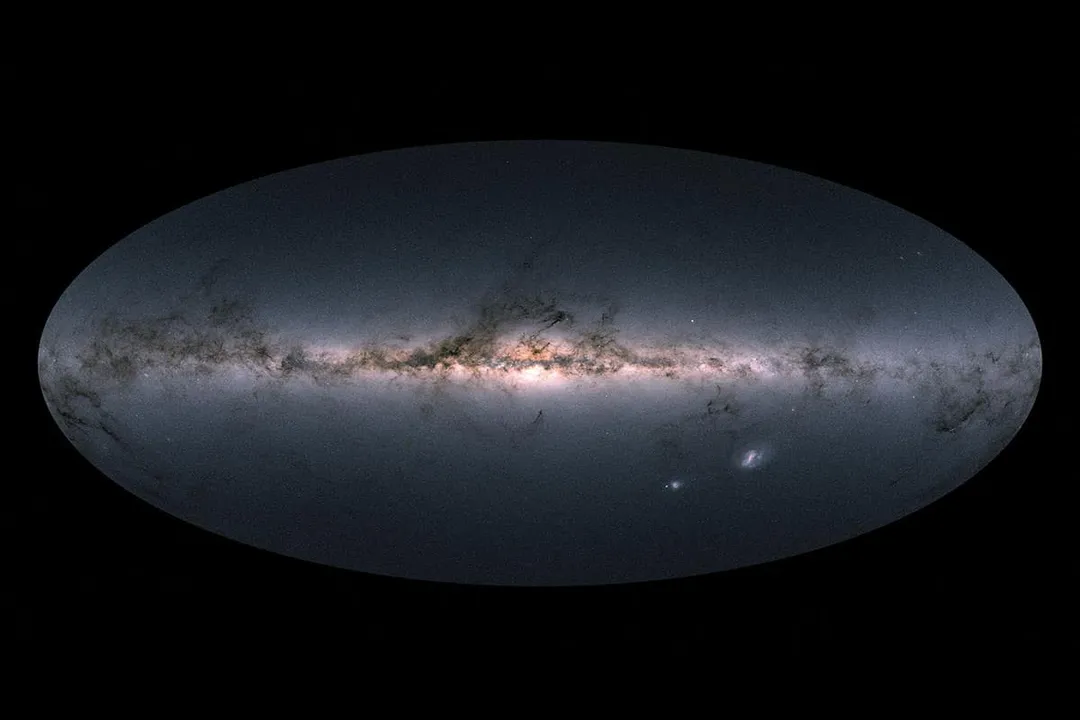
Astronomers have used data from the Gaia mission to map the orbits and velocity dispersions of stars in the Milky Way, looking for patterns that match the gravitational impact signature of the Sgr Dwarf. The findings suggest a strong correlation between past passages of the dwarf galaxy and the formation events recorded in our immediate stellar neighborhood.
To better illustrate the distinction between the two major "Sagittarius" objects often discussed in proximity to the Solar System's location, one can compare them:
| Feature | Sagittarius Dwarf Galaxy (Sgr Dwarf) | Sagittarius A* (Sgr A*) |
|---|---|---|
| Type | Dwarf Spheroidal Galaxy (Satellite) | Supermassive Black Hole (SMBH) |
| Location | Currently passing through the Milky Way Disk | Center of the Milky Way Galaxy |
| Mass | Relatively small, composed of stars and gas | Millions of solar masses |
| Role in Theory | Gravitational trigger for gas cloud collapse | The primary mass object at the Galactic Center |
This comparison highlights that the trigger mechanism relies on the gravitational "sloshing" effect of the entire dwarf galaxy moving through the plane, rather than the stable, central mass of Sgr A*.
# Implications for Galactic Habitation
The concept that our Solar System’s formation was initiated by an external event, like a galactic collision, has profound implications for understanding the galactic habitable zone. The location of a star system within a galaxy significantly affects its long-term stability and the likelihood of life developing. Systems too close to the chaotic galactic center face intense radiation, frequent supernovae, and the constant gravitational disruption of Sgr A*. Systems too far out in the sparse outer halo may lack the heavy elements necessary to form rocky planets.
If the Solar System’s birth was timed by a specific gravitational wave from the Sgr Dwarf, it suggests that the timing of galactic mergers might be as critical to habitability as the location itself. It implies that a region in the Milky Way disk, which seemed relatively calm and conducive to planet formation, might have required a specific shock from an external source to kickstart the entire process. This moves the focus from merely surviving in a safe location to being placed in a safe location via a violent event. In essence, our formation might be a consequence of the Milky Way’s violent adolescence, an event that both destabilized existing structures and simultaneously provided the necessary compression for new ones, like ours, to begin.
# Refining the Timeline
While the Sgr Dwarf collision provides a compelling explanation for the timing of the collapse, the actual material making up the Sun and Earth originated from pre-existing molecular clouds enriched by earlier stellar generations within the Milky Way. The theory is about the initiation of the collapse, not the fundamental elements themselves. The gaseous layer disturbed by the Sgr Dwarf would have already contained the heavy elements—carbon, oxygen, iron—forged in previous stars that exploded long before our Sun ignited.
Further refinement of this astrophysical model involves tracking the debris stream left behind by the Sgr Dwarf. As the dwarf galaxy’s stars and gas are stretched out, they form distinct streams around the Milky Way. By precisely mapping these streams and their velocity vectors, astronomers can retroactively calculate the exact moment and geometry of the closest passages. This ongoing observational work, heavily reliant on instruments capable of measuring precise stellar positions and motions, adds layers of confidence to the timeline that places the gravitational "slap" from Sagittarius right at the moment the solar nebula began to contract. This level of detail pushes our understanding of cosmic origins from educated guesswork to a science grounded in measurable, repeatable (though ancient) gravitational effects.
#Videos
How Did Our Solar System Get Here? | Universe | BBC Earth Science
Related Questions
#Citations
Galactic crash may have triggered Solar System formation - ESA
Colliding galaxies created the solar system, say astronomers
Is it true that our solar system belongs to another galaxy which ...
Location of our solar system : r/Astronomy - Reddit
Solar System: Facts - NASA Science
Could the origin of our Solar System be related to the Sagittarius ...
Does our solar system orbit Sagittarius A (location of the SMBH)?
Did galactic crash trigger solar system formation? - EarthSky
How Did Our Solar System Get Here? | Universe | BBC Earth Science
Where did we come from? | New Philosopher