Does every solar system have a Goldilocks zone?

The simple answer to whether every star system possesses a Goldilocks Zone is complex, leaning toward "no," depending on how strictly one defines the term and the system’s architecture. Conceptually, the idea that a specific region must exist where temperatures allow liquid water to pool on a planet's surface is an intuitive benchmark for life as we know it. [5][6] This habitable zone (HZ), often called the Goldilocks Zone, is fundamentally defined by the right distance from a star—not too hot, not too cold—which is a condition dictated by stellar physics and planetary orbital mechanics. [5][1] However, applying this concept universally to every star system requires accounting for binary stars, stellar type variation, and atmospheric requirements, which frequently invalidate the simple zone model. [2][8]
# Defining The Zone
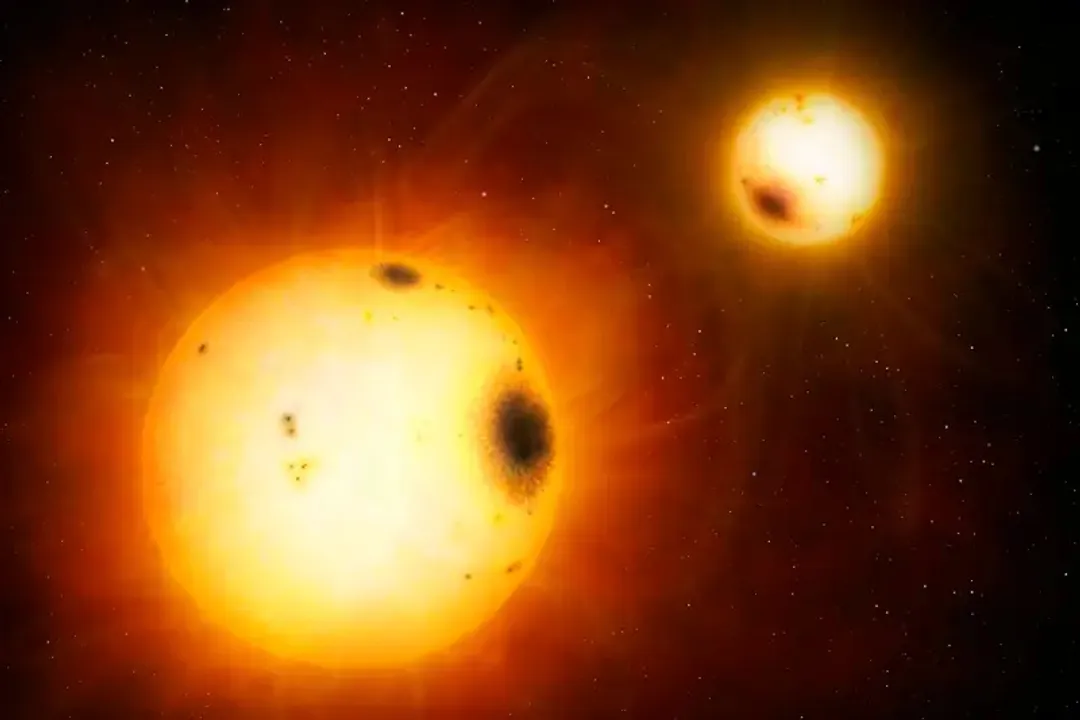
The habitable zone is more formally known as the circumsolar habitable zone (CHZ) or simply the HZ. [1] It marks the orbital region around a star where a terrestrial planet with sufficient atmospheric pressure could maintain liquid water on its surface. [5][6] This concept is derived from the need for liquid water, which scientists consider essential for life to begin and thrive. [3][6] It is not a guarantee of habitability; rather, it is a filter for candidates that meet this basic prerequisite. [4]
For our own Solar System, which orbits a G-type main-sequence star (the Sun), the HZ is relatively well-defined, encompassing orbits roughly between Venus and Mars. [5][1] Planets orbiting inside the inner edge of this zone are too close, leading to a runaway greenhouse effect where water boils away, like what may have happened to Venus. [5][1] Conversely, planets orbiting beyond the outer edge receive too little energy, causing surface water to freeze permanently into ice. [5][1]
# Stellar Influence
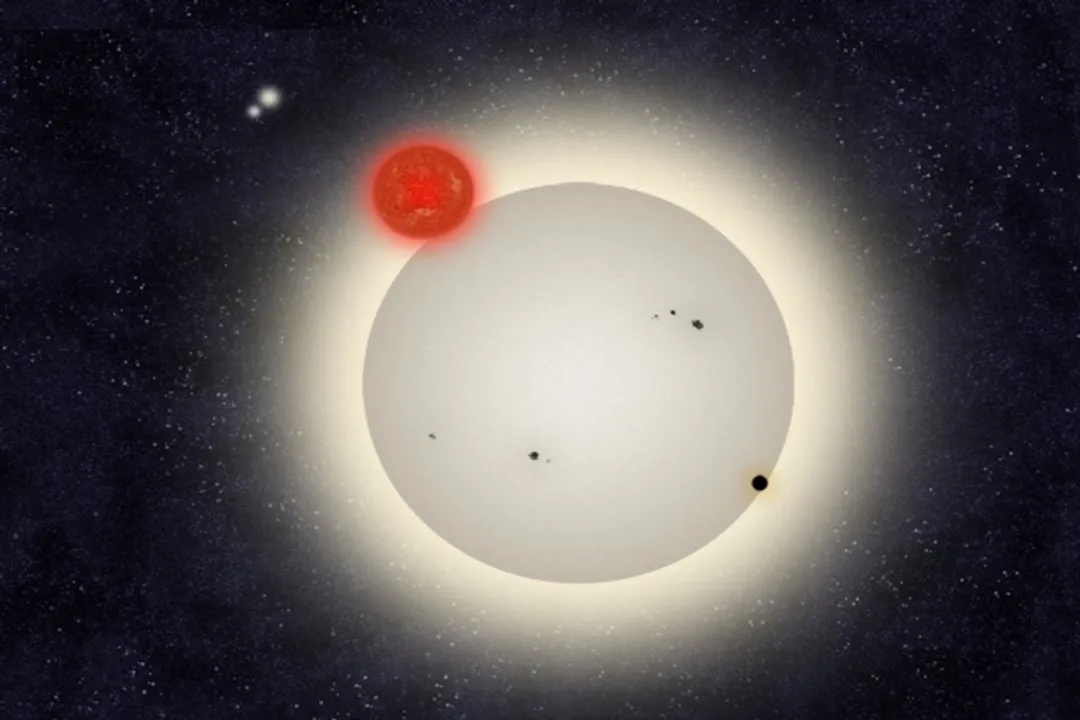
The defining characteristic that determines where a system’s Goldilocks Zone lies is the luminosity of its central star. [1][5] A star’s brightness directly correlates with the amount of energy it emits, which in turn dictates the necessary orbital distance for a planet to remain warm enough for liquid water. [5][6]
Stars that are intrinsically more luminous and hotter than the Sun, such as A or F-type stars, will have their HZs situated much farther out in their systems. [1] Conversely, the most common type of star in the galaxy, the cooler and dimmer red dwarf stars (M-type stars), possess HZs that are extremely close to the star, sometimes only a fraction of the distance between the Earth and the Sun. [4][6] This difference in scale has a significant implication for planetary dynamics; the habitable real estate around a dim red dwarf might span only a few million miles in orbital distance, whereas the HZ around a massive blue star could stretch across hundreds of millions of miles, creating vast, yet potentially unstable, potential habitats. [5]
The HZ for a dim star is therefore located much closer than the HZ for a bright star, meaning the physical location changes drastically from one system to the next based purely on the central light source. [1][5]
# Beyond Distance Factors
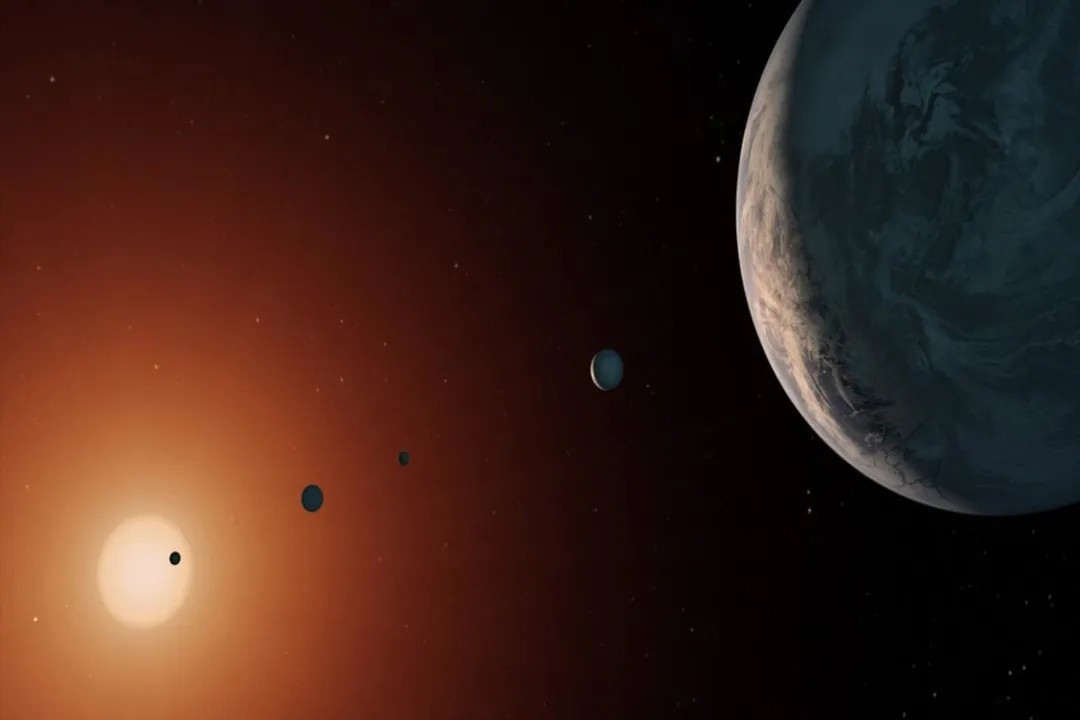
While the distance from the star sets the baseline temperature, it is an oversimplification to suggest distance alone creates a habitable world. [3] The composition and density of a planet's atmosphere play a critical role in trapping heat and maintaining surface pressure, which is necessary to keep water in a liquid state. [1] A planet in the middle of the HZ, like Earth, benefits from the right amount of insulation provided by its atmosphere and greenhouse gases. [3]
A planet with a very thin atmosphere, even if positioned perfectly within the calculated HZ, might experience low enough pressure for water to sublimate (go directly from ice to gas) or boil off rapidly, rendering the zone functionally dry. [1] Conversely, a planet receiving slightly less solar energy, but possessing a thick atmosphere rich in carbon dioxide or methane, could experience an enhanced greenhouse effect, pushing liquid water to exist farther out in the system than a simple stellar flux calculation would predict. [5][3] This means the boundaries of the HZ are fuzzy regions rather than razor-sharp lines, heavily dependent on the secondary characteristics of the planet itself. [1]
When astronomers calculate the HZ, they often rely on models that incorporate these atmospheric effects, leading to the concepts of the conservative HZ (where water is almost certainly liquid) and the optimistic HZ (which allows for greater atmospheric variation). [1]
# System Architecture
The crucial element in answering the question of universality lies in system architecture. Does every system have a stable HZ? The answer here is likely no, particularly when considering systems with more than one star. [2]
While the presence of a star inherently creates a theoretical zone based on its output, the stability of that zone—and whether a planet can maintain a lasting orbit within it—is complicated by gravitational interactions. [8] In a single-star system like ours, orbital paths are generally predictable over billions of years. [6] However, many stars exist in binary or multiple-star configurations. [8]
In a system with two stars, the definition of the HZ becomes ambiguous. There are two primary orbital arrangements for a planet to consider:
- P-type (Circumbinary) Orbit: The planet orbits both stars at a great distance, treating the pair as a single, central mass. [8]
- S-type (Circumstellar) Orbit: The planet orbits only one of the two stars. [8]
For the P-type orbit, the combined radiation output of the two stars creates a fluctuating HZ that expands and contracts as the two stars orbit each other. [8] If the stars are too close together, the HZ might remain relatively stable. However, if the stars orbit far apart, the planet's orbit might swing wildly between the individual habitable zones of Star A and Star B, resulting in massive temperature swings that prevent stable liquid water, even if a zone technically exists around the primary star. [8] Astronomers have found multi-star systems with stable HZs, but the conditions required—specific stellar masses and orbital separations—are quite restrictive. [8] In systems where these conditions are not met, a stable, persistent HZ may not exist for long enough to be relevant to life's evolution. [2]
Furthermore, the sheer abundance of stars suggests that while HZs are common around stars, complex systems or stars with highly eccentric companions could easily disrupt any potential habitable region over astronomical timescales. [2]
# Practical Search Limitations
It is important to remember that our primary method for identifying these zones relies on the assumption that the target star behaves like our Sun. [4] When searching for exoplanets, current instrumentation is far better at detecting larger planets or planets orbiting closer to smaller, dimmer stars. [4]
This leads to an interesting point regarding abundance: since red dwarfs (M-dwarfs) make up the vast majority of stars in the Milky Way, their extremely tight and relatively cool HZs represent the majority of potential habitable real estate in terms of raw stellar count. [4] However, planets in these tight zones are subject to intense tidal locking and often face powerful stellar flares, which can strip atmospheres—conditions that push the definition of habitability far away from Earth's environment. [3] While the zone exists mathematically around the M-dwarf, the environment may be too hostile for the sustained liquid water required by our definition.
The HZ concept is a necessary first step in exoplanet hunting, acting as a necessary but not sufficient filter for potential life-bearing worlds. [6] It tells us where to look based on energy input, but it requires extensive follow-up characterization of the planet's mass, composition, and magnetic field to determine if it actually is a "Goldilocks World". [3] The absence of a calculated HZ does not mean life is impossible—perhaps exotic life could utilize solvents other than water or harness geothermal energy deep beneath an ice crust—but for life as we currently understand it, the HZ remains the best starting point. [1][6]
Related Questions
#Citations
Habitable zone - Wikipedia
Does every star system have its own habitable zones? - Reddit
Goldilocks Worlds - National Geographic
ESA - Planets in the habitable zone - European Space Agency
What is the habitable zone or “Goldilocks zone”? - NASA Science
What Is the Habitable Zone? | The Planetary Society
All Planets in the Habitable Zone #Shorts - YouTube
These 5 multi-star systems have habitable zones | Space - EarthSky