What are the particles in the solar system?
The space surrounding Earth and extending throughout the Sun’s gravitational domain is far from empty. It is populated by a constant, dynamic population of moving matter, ranging from minuscule specks of grit smaller than smoke particles up to atomic nuclei traveling near the speed of light. Understanding these constituents—the particles of the solar system—requires looking at matter that is either generated internally by the Sun and smaller bodies or that originates from sources light-years away in the wider galaxy.
# Tiny Debris
One of the most pervasive components filling the void between planets is interplanetary dust. These particles are often referred to as micrometeoroids or space dust, and they represent the remnants of ancient solar system formation and the continuous erosion of larger bodies. The size spectrum for this material is vast, generally spanning from the scale of a few micrometers up to about a millimeter.
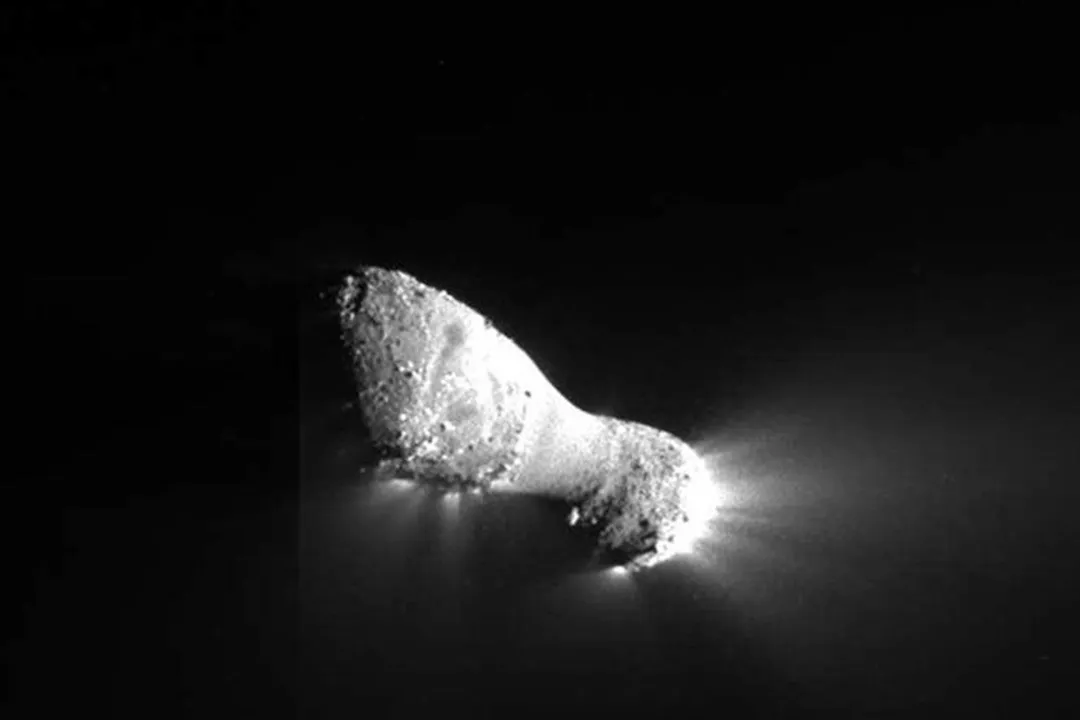
The primary factories for this debris are the smaller, rocky bodies we observe. Asteroids constantly experience collisions, shattering fragments into smaller pieces that feed the interplanetary dust cloud. Similarly, comets, which are often described as dirty snowballs composed of ice, rock, and dust, release vast amounts of particulate matter as they approach the Sun and their icy components sublimate into gas, carrying the dust along in their wake. Material shed by comets forms streams that Earth sometimes passes through, resulting in meteor showers. Dust originating from both asteroids and comets can populate the entire inner and outer solar system.
Different sources contribute to different spatial distributions. Material from the Kuiper Belt and the Oort Cloud also contributes to the overall population. For a general reader, imagining the volume of this material can be difficult. Think of it this way: the average concentration of dust is extremely low—perhaps one grain per cubic kilometer of space—but given the sheer volume of the solar system, the total mass is still significant over time.
# Solar Ejecta
While dust particles are typically inert, the Sun itself is a constant source of high-energy, charged particles. These emissions are broadly categorized into two main streams: the continuous solar wind and the transient Solar Energetic Particles (SEPs).
The solar wind is a persistent outflow of plasma—a superheated gas composed primarily of electrons and protons—that streams outward from the Sun’s corona in all directions. This plasma carries the Sun’s magnetic field with it, forming what is called the interplanetary magnetic field (IMF), which permeates the entire solar system.
More dramatic than the wind are the SEPs. These are clouds of highly accelerated, charged particles that are violently ejected during solar events, most notably solar flares and Coronal Mass Ejections (CMEs). The energy of these particles can be significantly higher than that of the average solar wind particles, posing a radiation hazard to unshielded spacecraft and astronauts. The energy spectrum for these particles tends to peak in the lower-energy range compared to the particles arriving from deep space, but their sudden arrival and high flux make them a major area of study for space weather forecasting.
# Cosmic Beams
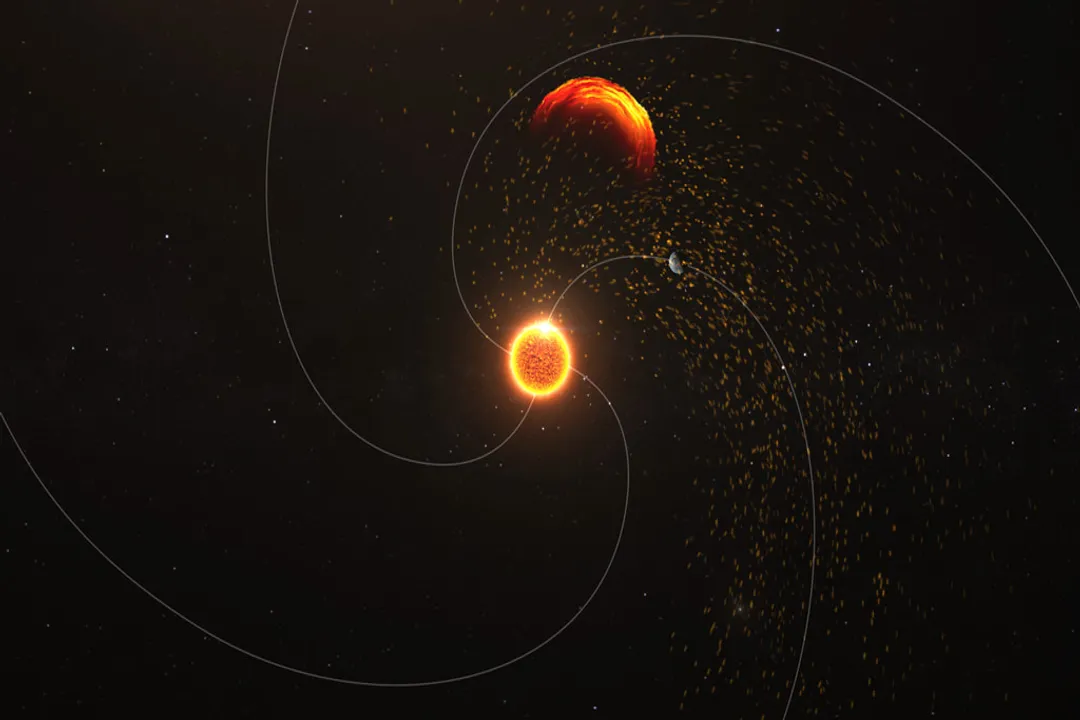
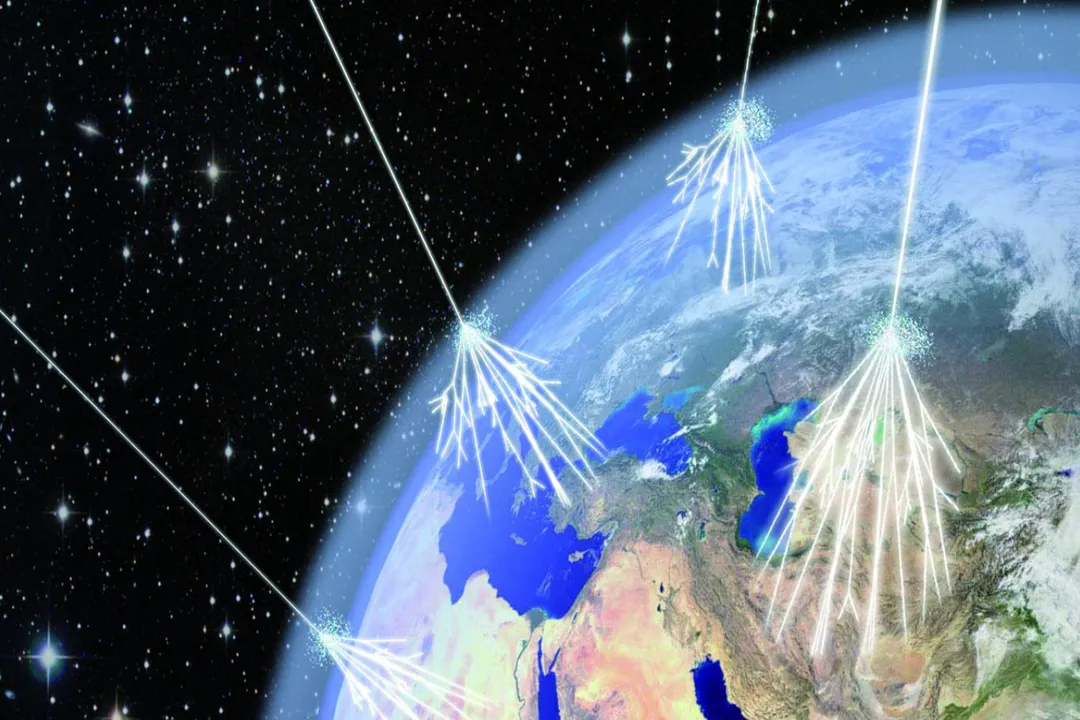
Distinct from particles originating within the Sun or from solar system debris are Cosmic Beams, the high-energy particles arriving from outside our heliosphere. These are known as Galactic Cosmic Rays (GCRs).
GCRs are not generated locally; they originate in distant, violent astrophysical events, such as the shockwaves resulting from supernovae explosions in other star systems. Consequently, they carry enormous amounts of energy. The composition of these particles is well-studied: they are primarily atomic nuclei, with protons (hydrogen nuclei) making up about 90% of the flux, followed by alpha particles (helium nuclei), and small traces of heavier elements.
Because these particles have such immense kinetic energy, they are highly penetrating. When they interact with the Earth's atmosphere or a spacecraft’s shielding, they can create showers of secondary particles. The high energy of GCRs sets them apart from both the dust and the typical solar wind plasma; they represent the energetic frontier of matter entering the solar system from the interstellar medium.
# Particle Kinematics
The different origins of these particles lead to drastically different behaviors as they move through the solar system. Examining how they are affected by solar forces provides a key method for distinguishing between them.
If we consider the sheer volume of particles, the dust population is particularly interesting because its fate is heavily influenced by the Sun’s pressure and radiation, a process that dictates how long the dust remains in the inner system. The solar wind and sunlight exert a drag force on the smallest dust grains. One critical process is the Poynting-Robertson effect, where the pressure of sunlight causes dust particles to slowly spiral inward toward the Sun over long timescales. This means that dust originating from distant comets is constantly being swept inward, feeding the zodiacal light phenomenon near the Sun.
In contrast, the high-energy Galactic Cosmic Rays interact strongly with the Sun’s magnetic field. The heliosphere—the protective bubble created by the solar wind—acts as a partial shield, deflecting some of the highest-energy GCRs away from the inner solar system. The magnetic field configuration changes over the solar cycle, meaning the amount of GCR flux measured near Earth varies depending on solar activity, demonstrating an inverse relationship between solar activity and GCR arrival rates.
To clearly illustrate the contrast in scale and origin, one can organize the primary components:
| Particle Type | Primary Origin | Typical Size/Energy | Dominant Force Affecting Motion |
|---|---|---|---|
| Interplanetary Dust | Comets and Asteroids (Local) | Micrometers to Millimeters | Poynting-Robertson Drag, Solar Wind |
| Solar Energetic Particles (SEPs) | Sun (Flares/CMEs) | MeV to GeV (Variable) | Sun’s Magnetic Field |
| Galactic Cosmic Rays (GCRs) | Supernovae (Galactic) | GeV and higher | Heliospheric Magnetic Deflection |
An interesting consideration when viewing these components together is the concept of equilibrium. While solar wind continuously replenishes the plasma and active regions constantly launch SEPs, the dust population must maintain a steady state. This implies that for the dust concentration to remain roughly constant, the rate at which grains spiral into the Sun or are ejected from the system by radiation pressure must perfectly balance the rate at which new material is supplied by cometary outgassing and asteroidal collisions.
# Observing Flux
Gaining empirical knowledge about these particles is achieved through sophisticated instrumentation placed both on spacecraft navigating the solar system and on ground-based detectors.
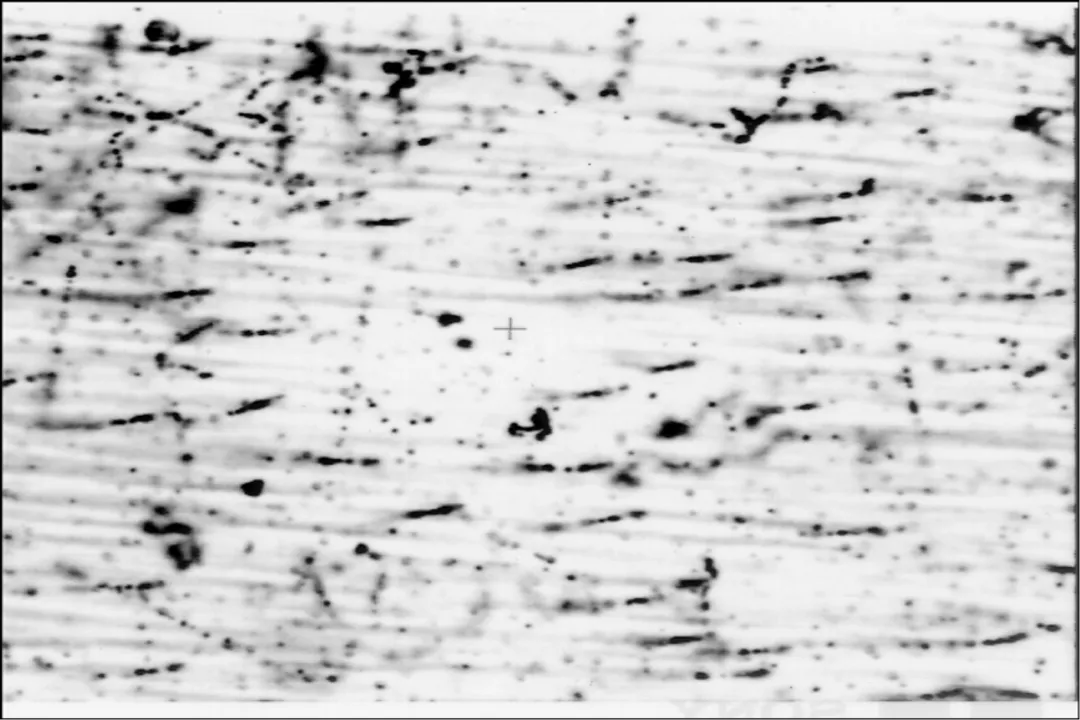
Dust particles are primarily measured in situ by impact detectors carried aboard space missions. When a micrometeoroid hits such a detector, the kinetic energy is converted into an electrical signal, allowing scientists to determine the particle's velocity and mass, providing direct measurements of the local flux. Missions designed to study comets and asteroids have provided crucial data points for understanding the composition of this local material.
For the highly energetic particles—both solar and galactic—the study relies on measuring the resulting charged particle flux. Solar Energetic Particles are tracked using instruments sensitive to lower energies that can distinguish their origin based on when they arrive relative to a detected flare or CME.
Galactic Cosmic Rays, due to their extreme energies, are often studied using detectors placed on satellites or the International Space Station, which are sensitive to penetrating radiation. Furthermore, because GCRs interact with Earth’s atmosphere, ground-based observatories can detect the resulting secondary particle showers, allowing for long-term monitoring of the GCR influx modulated by the Sun.
A practical challenge for researchers is separating the subtle background noise from the truly exotic events. For example, a low-energy event detected near Jupiter might be an influx of SEPs interacting with Jupiter’s massive magnetosphere, or it could be the leading edge of an expected solar wind stream. Distinguishing a genuine interstellar particle from local solar plasma often hinges on the subtle variations in charge state and energy spectrum detected over several solar rotations, requiring instruments that can operate with high fidelity over years, not just during immediate solar events. This continuous monitoring builds the authority required to model the boundaries of our solar system accurately.
Related Questions
#Citations
Solar Energetic Particles - NASA SVS
The Outer Planets: Dust and Plasma
Tiny Dust Particles in the Solar System | Center for Astrophysics
Cosmic ray - Wikipedia
Cosmic rays: particles from outer space - CERN
Asteroidal and cometary dust flux in the inner solar system
Solar Particle - an overview | ScienceDirect Topics
Comets - NASA Science
Cosmic rays, explained - UChicago News - The University of Chicago
Asteroids - Particle Precipitation