Why is the Goldilocks zone habitable?
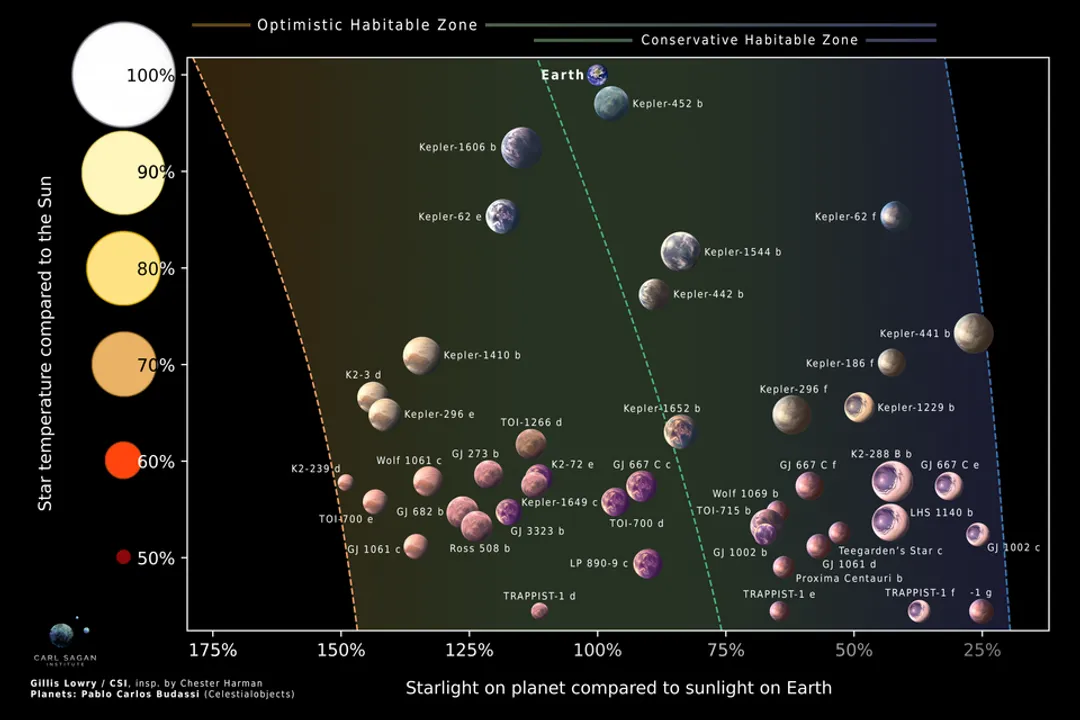
The region around a star where a planet could potentially host liquid water on its surface is commonly known as the Habitable Zone, but most people recognize it better by its nickname: the Goldilocks Zone. [2][5] This name perfectly captures the delicate balance required—the conditions cannot be too hot, nor too cold; they must be just right. [2][5] The concept centers entirely on the physics of water, which, for life as we understand it, requires liquid availability. [7] If a planet orbits too close to its star, the heat will cause surface water to boil away completely, resulting in a steam-filled atmosphere that cycles water vapor out into space, a runaway greenhouse scenario similar to what is believed to have happened on Venus. [1][4][9] Conversely, if the planet orbits too far out, the stellar energy becomes insufficient, causing all surface water to freeze solid, locking up the necessary solvent for biological processes. [4]
# Water State
The reason this specific temperature range is so paramount is that liquid water is the essential medium for life. [7] Water’s unique chemical properties allow it to dissolve many substances, facilitating the complex chemical reactions necessary for biology. [7] In our solar system, the Habitable Zone is where Earth resides, positioned neatly between the scorching inner edge represented by Venus and the frozen outer edge near Mars. [9] However, simply being in the orbital band defined by this distance is not a guarantee of habitability; it only sets the potential for liquid water based on the star’s output. [4]
# Stellar Distance
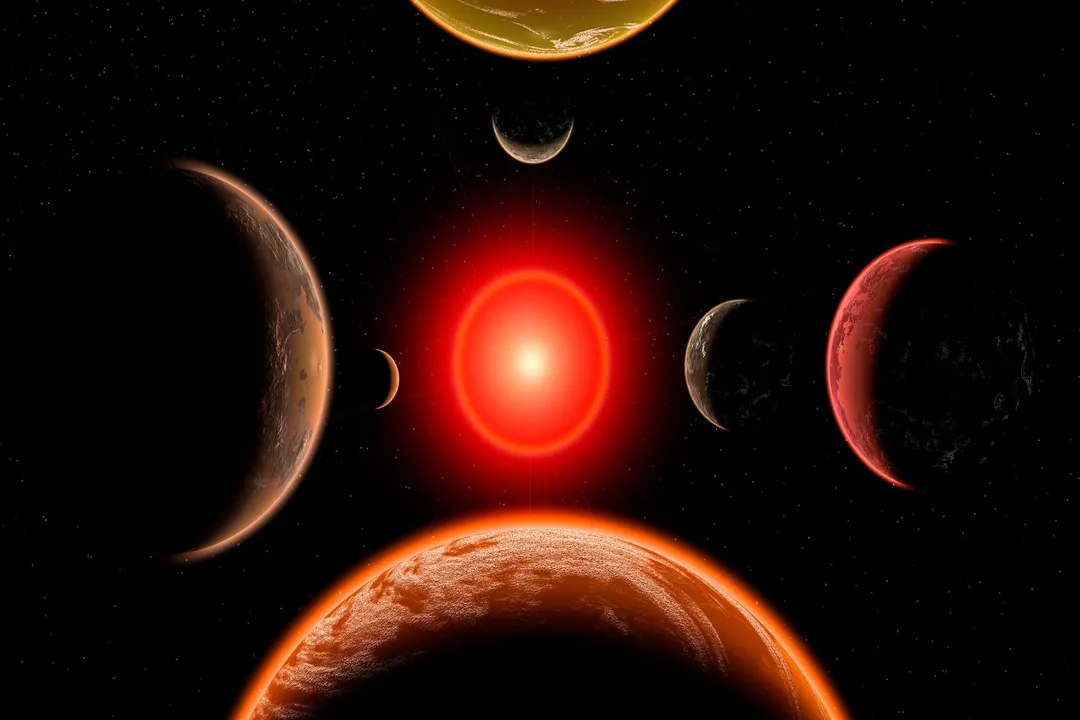
The location of the Goldilocks Zone is entirely dependent on the characteristics of the central star. [1] Brighter, hotter stars emit much more energy, which pushes the zone much further out into the system. [4] A planet needs a wider orbit to maintain the temperate conditions required for liquid water. [4] Conversely, dimmer, cooler stars, like M-dwarfs, possess a Habitable Zone situated much closer to the star. [4] For instance, the habitable zone for a star cooler than the Sun would place potential Earth-like planets in an orbit closer than Mercury’s. [9] This variability means that when astronomers search for exoplanets, they must first calculate where the HZ lies for that specific star before identifying planets in that region. [8] The Sun’s relatively stable energy output over billions of years offers a distinct advantage for long-term biological evolution compared to the volatile energy profiles of many smaller stars. [9]
# Atmospheric Role
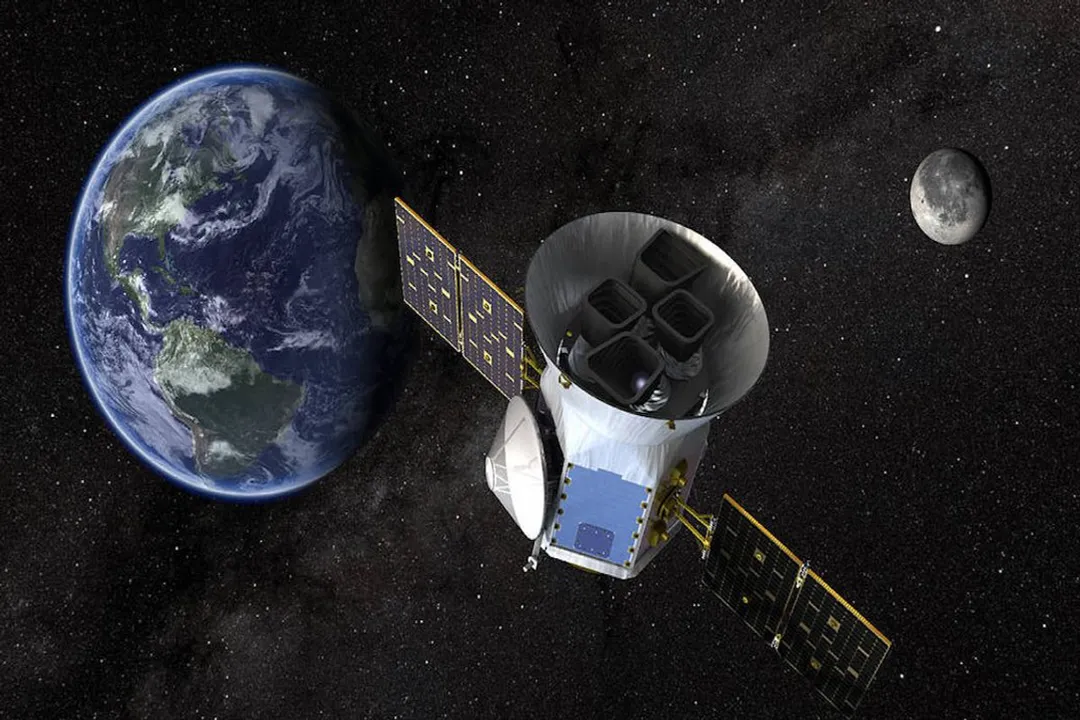
Even if a planet achieves the perfect orbital distance, water will not necessarily remain liquid on the surface without a supporting atmosphere. [1] An atmosphere is critical because it exerts pressure, which lowers the boiling point of water, and it traps heat through the greenhouse effect. [7] Without sufficient atmospheric pressure, water can transition directly from ice to gas (sublimation) even at temperatures that would otherwise permit liquid water. [7] This atmospheric component acts as a crucial secondary filter on the Habitable Zone defined purely by orbital mechanics. A planet with a very thin atmosphere, even if orbiting at Earth’s distance, might still experience water loss if the surface pressure is too low. [1]
Here is a crucial concept to consider regarding the HZ: while the zone is often mapped as a fixed band, the effective habitability is dynamic. Imagine two planets orbiting a star at the exact same distance, squarely in the middle of the calculated HZ. If Planet A has a dense, high-pressure atmosphere rich in greenhouse gases, it might actually be too hot—pushed past the inner boundary by its own atmosphere—while Planet B, with a very thin, tenuous atmosphere, might be too cold, effectively residing outside the outer boundary because its surface pressure is too low to support liquid water. [1][7] Therefore, the calculated HZ represents the orbit where an Earth-like atmosphere allows for liquid water, not the orbit where any planet automatically gets liquid water. [4]
# Planetary Attributes
Once the orbital distance and atmospheric conditions suggest potential habitability, the physical characteristics of the planet itself come into play. [6] Planetary size, which dictates mass and thus gravity, is significant because gravity is required to hold onto that life-enabling atmosphere over cosmological timescales. [6] Smaller planets, like Mars, have lower gravity and have lost much of their original atmospheres, leading to conditions that are too cold and dry today, despite Mars having once been within the HZ. [9]
The geology of the planet also plays a major part in long-term habitability, even within the HZ. [7] Plate tectonics are believed to be essential for cycling carbon dioxide out of the atmosphere, buffering the climate against long-term runaway heating or cooling effects—a process known as the carbonate-silicate cycle. [7] Furthermore, a strong global magnetic field, generated by the planet’s interior dynamics, is necessary to deflect high-energy charged particles streaming from the star, which would otherwise strip away the atmosphere over time. [9] A planet can be perfectly placed in the Goldilocks Zone but still fail to support life if its internal engine shuts down, leaving its atmosphere vulnerable to stellar winds. [7]
Thinking about the search for life, it is helpful to move away from a strictly two-dimensional map of orbital distance. Instead of viewing the Habitable Zone as a simple ring, it might be more accurate to conceptualize a three-dimensional "Habitability Bubble" surrounding a star. Orbital distance is merely the primary axis. A second, equally important axis would be atmospheric density/composition, representing the thermal retention capabilities. A third axis could represent the internal state, such as the presence of a magnetic field or active geology, which dictates how long the planet remains within the first two favorable zones. A planet only resides in the sweet spot of this bubble if it scores favorably on all three metrics simultaneously. [7]
# Limits Defined
The term "habitable" carries a significant caveat: it pertains strictly to the conditions that permit liquid water, which is the baseline for life as we know it. [1][7] It does not equate to inhabited. [1] Many other factors must align for life to actually take hold and flourish. For example, the star itself must be relatively benign. Stars that frequently emit powerful, energetic flares—common among smaller M-dwarfs—can sterilize a planet’s surface even if the planet is orbiting well within the calculated HZ. [7] Such flares can damage organic molecules or strip the atmosphere through repeated high-energy particle impacts. [7]
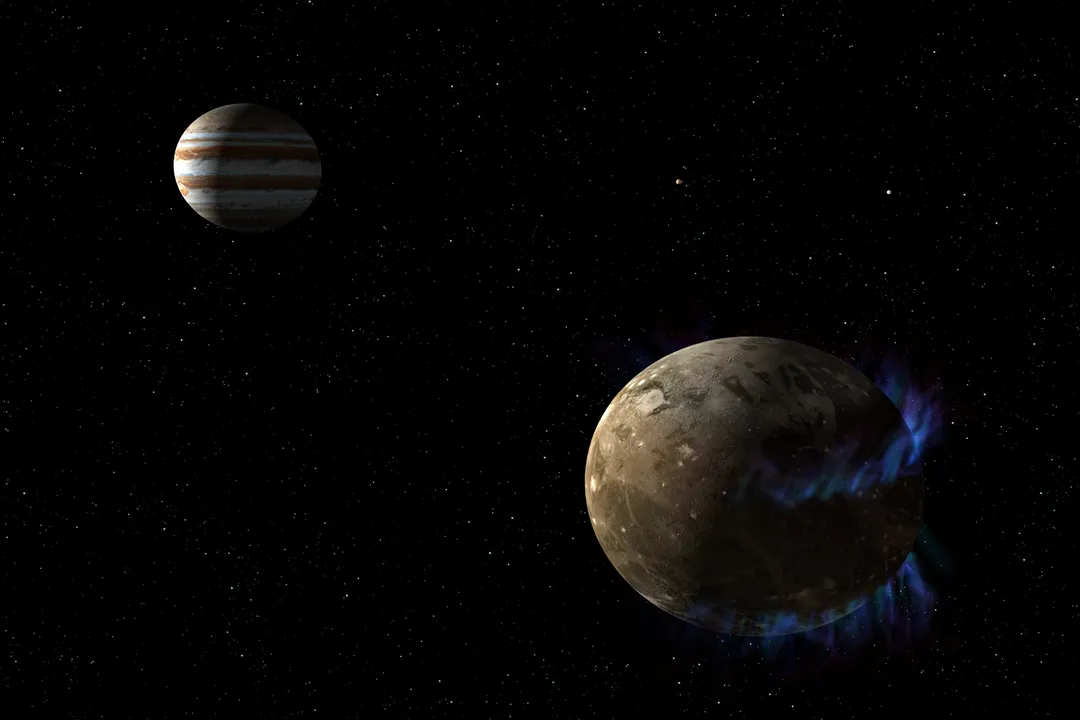
The chemical makeup of the planet is another unknown variable. Life requires specific elements, often heavier elements formed in previous stellar generations, to be present in sufficient quantities. [7] A planet could be the perfect temperature and pressure, yet lack the building blocks necessary for biochemistry to begin. [7] Furthermore, the concept of the HZ tends to focus on surface water. Subsurface oceans, such as those hypothesized on icy moons like Europa, are kept liquid by tidal heating from a large gas giant, not by stellar radiation. These moons orbit far outside the classical Goldilocks Zone but are considered potential havens for life due to geothermal or tidal energy sources. [1] Therefore, while the orbital Habitable Zone is an indispensable tool for prioritizing targets in exoplanet surveys—since surface liquid water remains the most straightforward requirement—it serves as a filter for potential, not a confirmation of life. [1][8]
Related Questions
#Citations
Habitable zone - Wikipedia
Goldilocks zone: A guide to the habitable sweet spot - Space
How Goldilocks are we? : r/space - Reddit
Habitable Zone - ESA/Hubble
Goldilocks Zone: The Search for Habitable Planets
A goldilocks zone for planet size - Harvard SEAS
The Habitable Zone - Understanding Evolution - UC Berkeley
ESA - Planets in the habitable zone - European Space Agency
Why is the solar system considered to be in a 'Goldilocks zone,' and ...