Are Saturn's moons habitable?
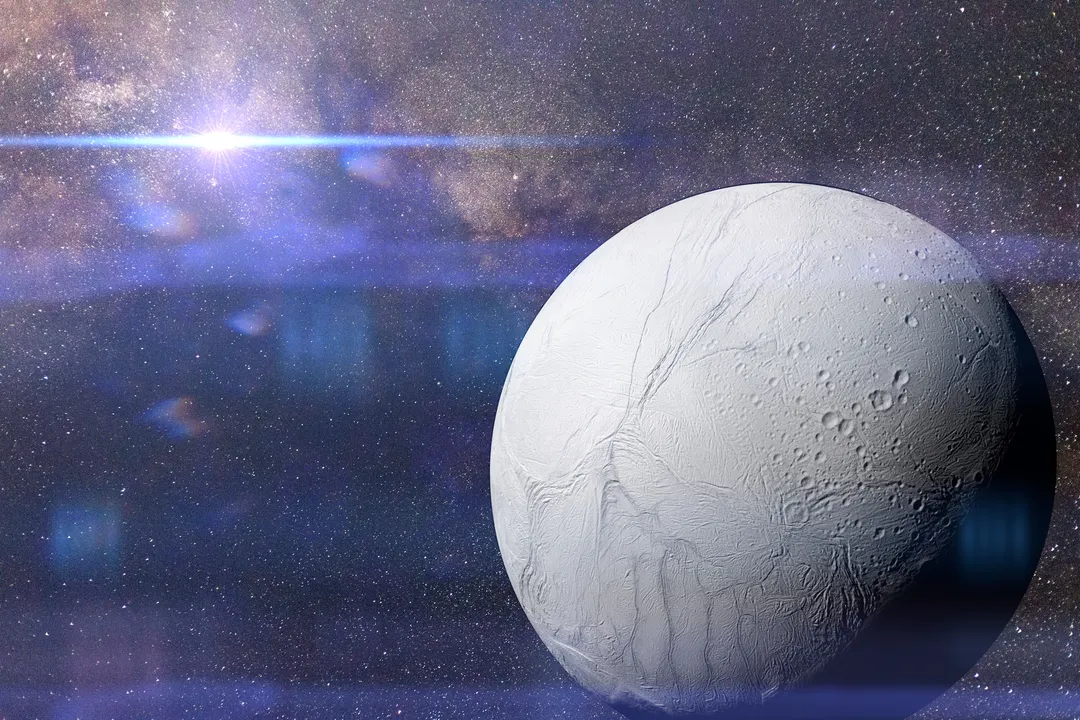
The potential for life existing on worlds orbiting Saturn has captivated planetary scientists for decades, moving from speculative fiction to concrete targets for scientific investigation. While Saturn itself is a gas giant inhospitable to life as we know it, several of its icy moons present environments that tick several crucial boxes required for biology: liquid water, energy sources, and the necessary chemical ingredients. Among the dozens of satellites circling the ringed planet, two stand out in the conversation about habitability: the geologically active Enceladus and the massive, atmosphere-shrouded Titan.
# Enceladus's Ocean
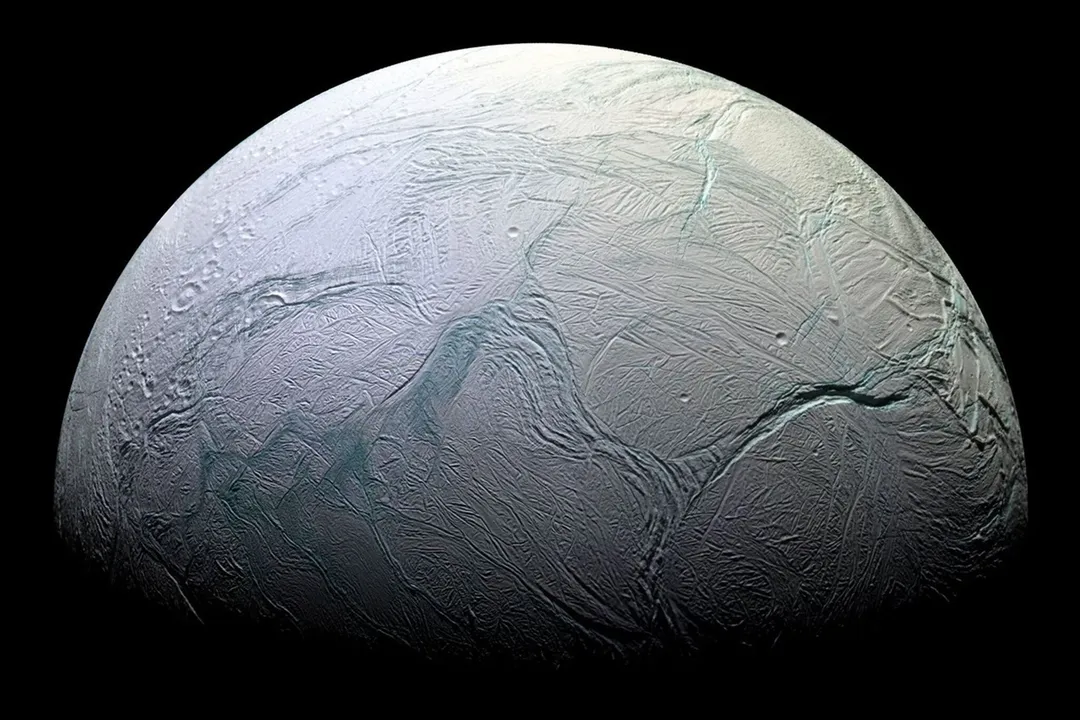
Enceladus, a small, bright, ice-covered moon only about 310 miles across, has emerged as perhaps the most promising place in the outer solar system to search for extant life. Data gathered by NASA's Cassini mission provided irrefutable evidence that this icy world harbors a significant, global subsurface ocean of liquid water located beneath its icy shell. This water is not static; it is actively vented into space through massive geysers erupting from fissures near the moon's south pole, often called "Tiger Stripes".
These plumes act as natural sampling ports, carrying material directly from the deep ocean and the underlying seafloor right past Cassini's instruments as the spacecraft flew by. This allowed scientists to analyze the chemistry of the interior environment without having to drill through miles of ice.
# Chemical Signatures
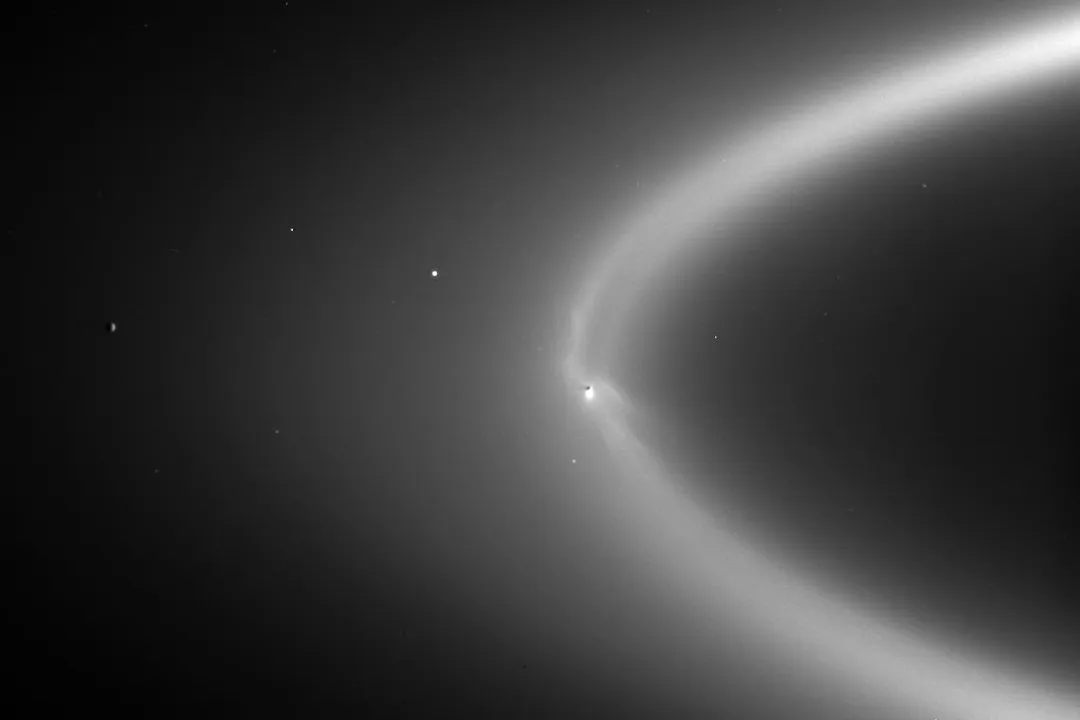
The analysis of these plume materials has yielded increasingly exciting results regarding habitability. Researchers have confirmed the presence of simple organic molecules and various salts, indicating that the water is in contact with a rocky core. More compelling still, subsequent analysis of the data confirmed the presence of hydrogen, carbon dioxide, and other essential organic compounds within the material ejected by Enceladus.
The detection of molecular hydrogen, in particular, is significant because it suggests active hydrothermal vents on the seafloor. On Earth, similar vents provide chemical energy for ecosystems thriving far from sunlight, relying on chemosynthesis rather than photosynthesis. Furthermore, studies have identified materials that serve as key ingredients necessary for forming the basic building blocks of biological molecules. It is one thing to find water ice; it is another entirely to find liquid water interacting with rock, providing energy, and actively cycling carbon-based compounds into that water.
# Ocean Longevity
A significant factor in determining genuine habitability is time. A short-lived ocean might not allow biological processes, even simple ones, the requisite time to emerge and evolve. Recent modeling work suggests that Enceladus's interior ocean is potentially stable over long timescales, possibly for billions of years. This stability suggests that if life ever started there, it may have had enough time to persist and develop in conditions suitable for biology. This contrasts sharply with some models that suggested only intermittent liquid water. The evidence now points toward a long-lasting, chemically rich, liquid water environment interfacing with a rocky interior.
# Titan's Environment
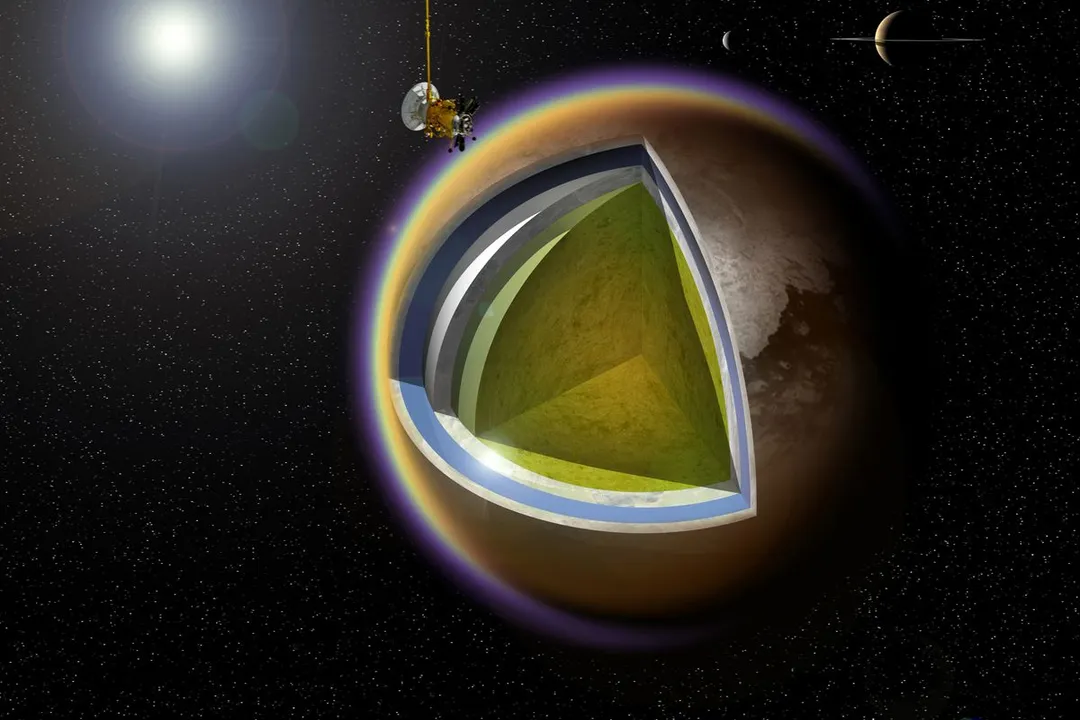
Saturn's largest moon, Titan, presents a very different, yet chemically intriguing, case for life. Titan is famous for its dense, nitrogen-rich atmosphere and its surface features reminiscent of Earth, complete with rivers, lakes, and seas—though these bodies are composed of liquid methane and ethane rather than water. While Titan’s surface hosts active hydrocarbon chemistry, the question for life as we understand it revolves around a potential subsurface liquid water ocean.
However, recent research casts some doubt on the most promising aspect of Titan's interior habitability. Some analyses suggest that Titan’s internal structure and thermal history might preclude the formation or long-term maintenance of a large, deep, liquid water ocean beneath its icy crust. If this assessment holds, Titan’s potential for water-based life is severely diminished compared to Enceladus, despite its abundance of organic molecules on the surface.
# Comparing Candidates
The differing conditions on the two primary contenders create a fascinating comparison for astrobiologists seeking the best place to focus future missions.
| Moon | Liquid Solvent | Energy Source | Organics Availability | Habitability Assessment |
|---|---|---|---|---|
| Enceladus | Global Water Ocean | Hydrothermal Activity | Confirmed precursors for life | High Potential |
| Titan | Surface Methane/Ethane; Deep Water Uncertain | Solar/Tidal Heating | Abundant Surface Hydrocarbons | Lower Water Potential |
The key difference lies in the solvent. Enceladus offers warm, salty, liquid water actively mixed with rock, the quintessential environment where terrestrial life began. Titan offers an exotic chemical environment based on liquid methane at extremely cold temperatures, which would require a complete re-imagining of biochemical processes, making it a secondary target for water-based life searches.
# Other Satellites
While the focus remains heavily on the two largest chemically active moons, Saturn possesses many others, such as Mimas, Rhea, and Iapetus. These moons are largely considered less likely candidates because they lack the strong, sustained tidal heating or significant internal energy required to maintain a liquid water ocean beneath their icy shells. Their geological activity, if any, is much less pronounced than the explosive venting seen on Enceladus.
# Mission Priorities
The detailed chemical data collected by Cassini is foundational, but it is not the final word on the question of life. The next steps involve designing missions capable of more precise sampling or, ideally, deploying craft that could land on Enceladus and analyze the plume material or even the ocean water directly for complex biological signatures. The ongoing study of the Cassini data continues to refine models of the plume composition, offering constant new insights into the energy balance and chemical potential locked within Saturn’s small, icy world. It is this combination of confirmed ingredients and apparent long-term environmental stability that places Enceladus at the forefront of the solar system's search for life outside of Earth.
#Videos
NASA Just Found Signs of Life on Saturn's Moon Enceladus
Related Questions
#Citations
Saturn's moon Enceladus may be more habitable than ... - Reddit
Cassini at Enceladus - NASA Science
Signs of life? Why Saturn moon offers hope of finding ET in Earth's ...
NASA Just Found Signs of Life on Saturn's Moon Enceladus
Surprise: Saturn's huge moon Titan may not have a buried ocean ...
Life on a Saturn moon? Harvard-NASA study finds key ingredient for ...
Habitability of natural satellites - Wikipedia
Saturn's icy moon may host a stable ocean fit for life, new study finds
Discovery of organic compounds bolsters case that Saturn's moon ...
Which moons of Saturn are habitable? - Quora