What feature allowed the Cassini mission to analyze Enceladus's deep ocean chemistry without drilling?
Massive geysers erupting from fissures near the south pole, often called "Tiger Stripes"
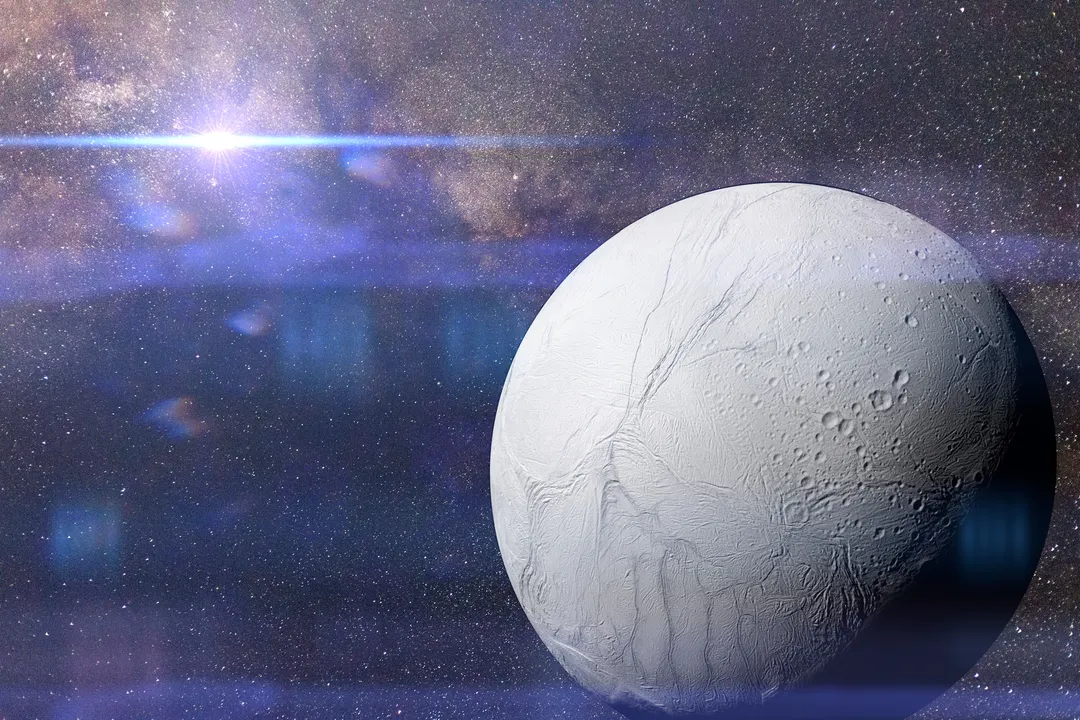
The structure of Enceladus, a small, icy moon, presented a significant challenge for direct subsurface access. However, the Cassini mission discovered that this world actively vents material from its global subsurface ocean directly into space. These eruptions originate from fissures near the south pole, commonly known as "Tiger Stripes." These plumes serve as natural sampling ports, meaning that as Cassini flew through them, its instruments could directly capture and analyze materials—including water vapor, salts, and organic compounds—that originated from the deep ocean and the underlying seafloor. This bypasses the immense engineering hurdle of drilling through miles of solid water ice, providing immediate chemical context for the interior environment.
#Videos
NASA Just Found Signs of Life on Saturn's Moon Enceladus