What depth-to-diameter ratio range characterizes Tycho and other large, complex impact structures?
Answer
1/15 to 1/25
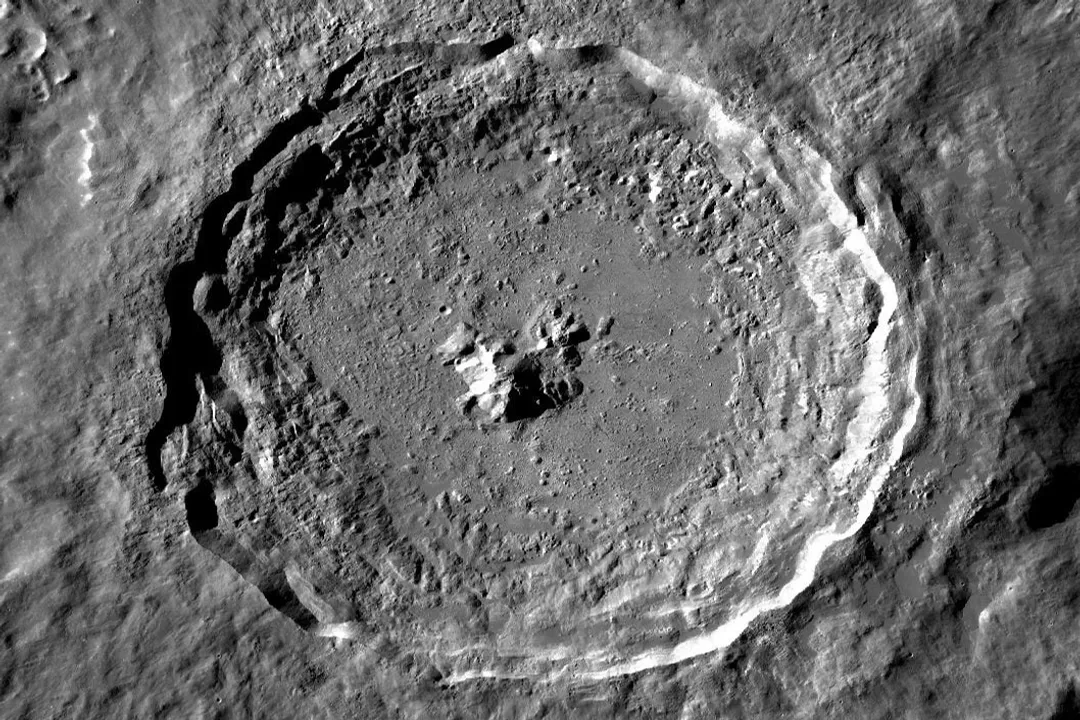
Scientists categorize crater morphology using the depth-to-diameter ratio, and for large, complex craters such as Tycho, Copernicus, and Aristarchus, this ratio typically falls within the range of 1/15 to 1/25. This specific ratio indicates that the crater is surprisingly shallow when compared to its immense width, which is approximately 85 kilometers. For example, using the established dimensions (4.8 km depth / 85 km diameter), the resulting ratio is about 1/17.7, confirming its placement within the characteristic range for complex impacts. This contrasts sharply with smaller, fresher craters (< 20 km), which can approach a ratio of 1/4, making them proportionally much deeper, akin to a soup bowl shape.
Related Questions
What is the consistent scientific measurement for the depth of the Tycho crater from rim to floor?Approximately how long ago did the impact that formed the Tycho crater occur in geological terms?What depth-to-diameter ratio range characterizes Tycho and other large, complex impact structures?How high does Tycho’s central mountain rise above the surrounding crater floor according to measurements?Tycho is classified as what type of impact crater due to its intricate structure?If Denali were placed on the floor of Tycho, what would happen relative to the crater’s rim?What geological mechanism explains why Tycho’s depth is shallow relative to its width?Which crater serves as a contrast, demonstrating what Tycho might look like after eons of space weathering?What does spectral analysis of Tycho’s central peak material reveal about its origin?How does the Moon's curvature affect the apparent imposition of Tycho's rim for an observer standing on the crater floor?