When were craters on the Moon discovered?
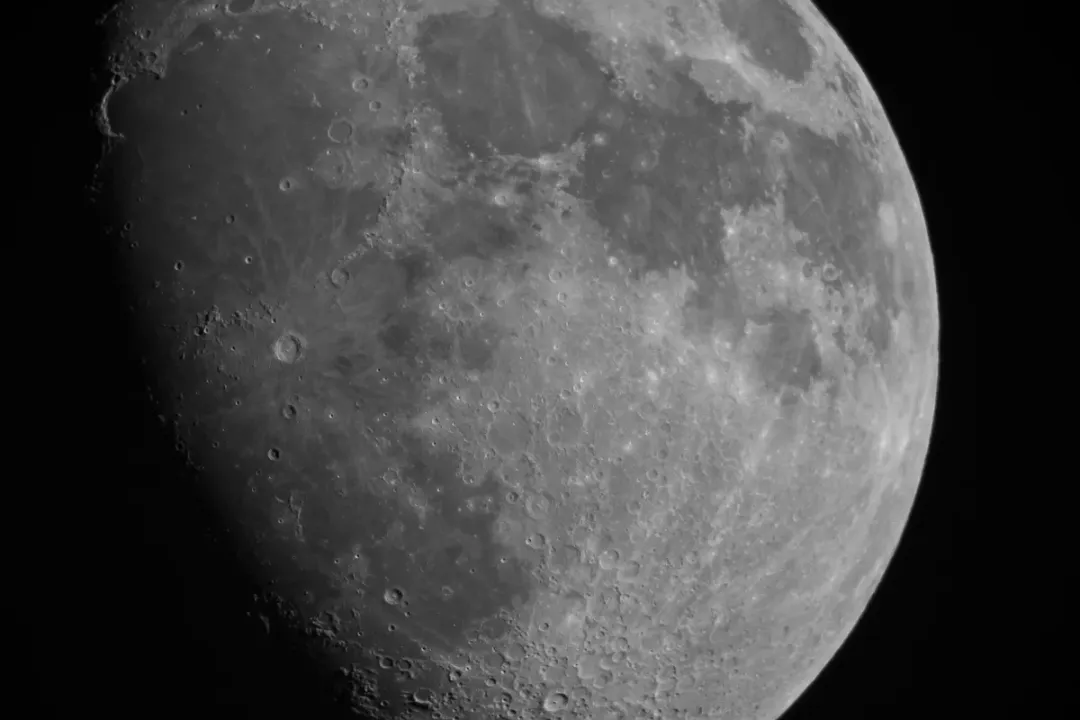
The dark, circular markings upon the face of the Moon have been noted by observers across countless generations, long before the advent of sophisticated optics. To the naked eye, these features appear as shadows or dark plains, leading ancient civilizations to name them for seas or bodies of water, suggesting an interpretation of large, flat geological structures. [1][2] The true "discovery" of what these features actually are, however, is a complex narrative stretching over centuries, involving initial misinterpretations, fierce scientific debate, and the eventual triumph of the impact hypothesis.
# Early Views
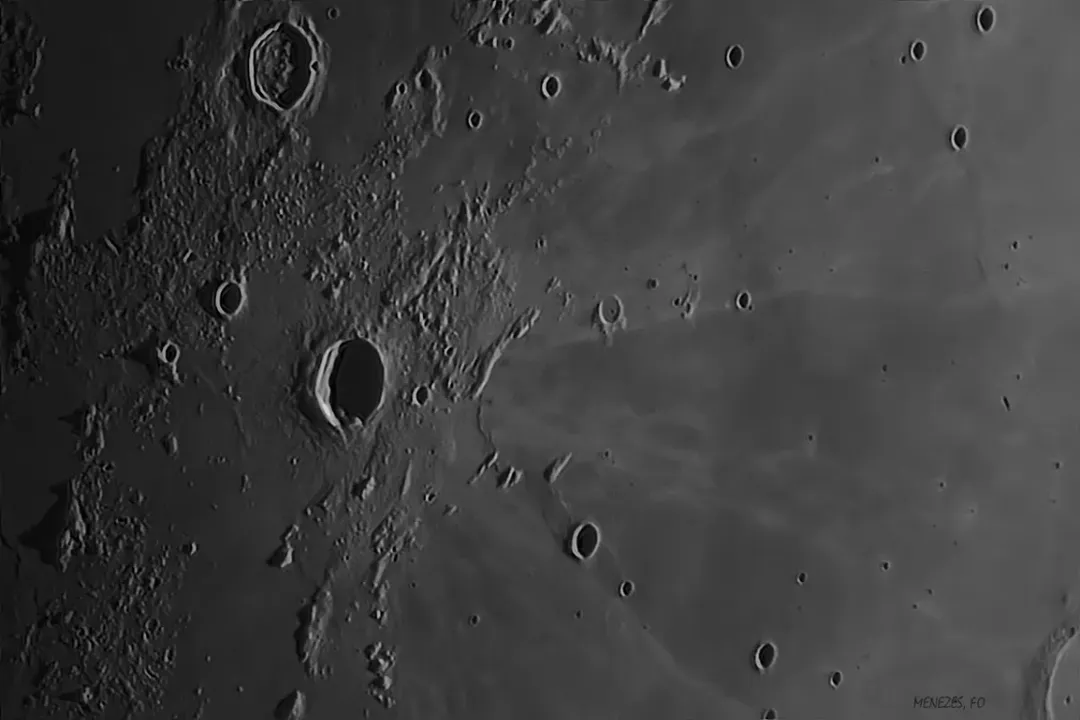
The earliest observations, even without a telescope, established the Moon as a decidedly imperfect sphere, marred by surface features. [3] While ancient Chinese and Greek texts mention these markings, it was the invention of the telescope that transformed them from vague smudges into distinct, quantifiable topographical structures. [2][4] The features became undeniably three-dimensional rather than simply flat contrasts in brightness. [3]
# Galileo's Map
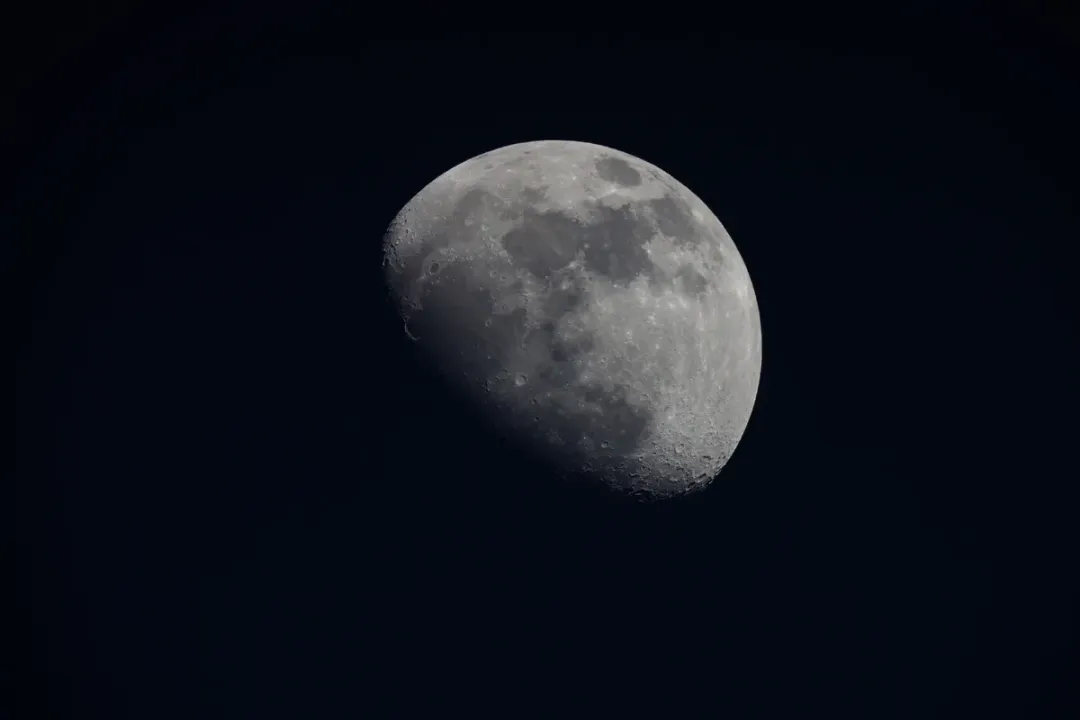
When Galileo Galilei first turned his rudimentary telescope toward the Moon in the early 17th century, his observations were revolutionary. [2][3] He was one of the first to document these features in detail, noticing that the terminator—the line separating the illuminated day side from the dark night side—revealed mountains and deep depressions. [5]
Galileo correctly interpreted that the irregular shadows cast by features near the terminator demonstrated their significant relief; they were not mere spots of light and dark on a flat surface. [3] He famously compared the lunar surface to the Earth's, noting that its mountains and valleys resembled those on our own world. [4] However, while Galileo confirmed the existence of pronounced topography, he, like many contemporaries, initially attributed these features to processes similar to those shaping Earth, primarily volcanism. [1][4] The dark areas were often assumed to be seas (maria), and the lighter, cratered areas were considered continents. [3]
# The Volcanic Consensus

For the next few centuries, the prevailing scientific consensus favored an internal, volcanic origin for the Moon's circular structures. [4][6] This perspective was intellectually convenient; if the Moon was formed similarly to Earth, then its surface features should be explained by familiar terrestrial processes like volcanism, faulting, and erosion. [1]
As telescopic resolution improved in the 18th and 19th centuries, more craters were cataloged, and their bowl-like, raised-rim morphology became increasingly apparent. [2][4] Yet, even with better views, the volcanic explanation held firm. One significant challenge for the volcanists was explaining why impact structures looked so consistently like nested bowls with central peaks, rather than the more varied shapes typically associated with terrestrial volcanoes. [1] Furthermore, the Moon lacks an atmosphere and liquid water, meaning erosion would not smooth features as it does on Earth, suggesting that any ancient features should be preserved, which they clearly were. [1] Despite these inconsistencies, the deeply entrenched belief in a shared geological history between the Earth and Moon kept the volcanic hypothesis dominant well into the early 20th century. [4]
# Dating the Shape Debate
The transition from observation of shape to acceptance of origin was characterized by a long period where one idea was visually confirmed but scientifically rejected.
| Era/Observer | Key Observation | Dominant Interpretation | Citation Support |
|---|---|---|---|
| Ancient/Pre-Telescope | Dark/light markings visible | Seas and Continents | [2][3] |
| 17th Century (Galileo) | Relief revealed by shadows | Mountains and Valleys (Volcanic) | [3][4] |
| 19th/Early 20th Century | Thousands of circular features mapped | Primarily Volcanic | [1][4] |
| Mid-20th Century | Statistical/Geological evidence mounts | Impact Origin | [1][6] |
This table highlights a gap of nearly 300 years between the detailed topographical observation by Galileo and the scientific community's general acceptance that the features were not volcanic. [3][4]
# Seeds of Impact
The idea that the Moon's surface might be scarred by high-velocity impacts, similar to how meteorites strike Earth, was proposed long before it gained acceptance. [1] As early as the 18th century, astronomers like William Herschel suggested that some features might be impact phenomena, but this remained a fringe theory. [4]
The critical shift began when scientists started seriously considering the implications of comets and asteroids striking the Earth. [1] If Earth, which is much larger and has an atmosphere and active geology, could be struck, the relatively smaller, airless, and geologically dead Moon would be an even more susceptible target. [5][1]
A major turning point involved the study of terrestrial impact structures. For decades, features like Meteor Crater (Barringer Crater) in Arizona were often mistaken for collapsed volcanic structures. [4] Only after geological investigation proved that Meteor Crater was formed by an impacting meteorite did scientists begin to look at the Moon with fresh eyes. [1][6] The physical evidence—shattered rock and impact melt sheets—found at terrestrial impact sites provided a tangible analog to what must have occurred on the Moon. [1]
# Confirmation of Origin
The true "discovery" that the Moon is overwhelmingly shaped by impacts, rather than volcanoes, solidified between the 1950s and 1960s. [4] Key research focused on the statistical distribution of craters across the lunar surface. [6] If volcanism were the primary force, one would expect a continuous creation and resurfacing process. Instead, observations showed that older craters were overlapping and being entirely covered by newer ones, creating a cumulative history of impacts. [4][6]
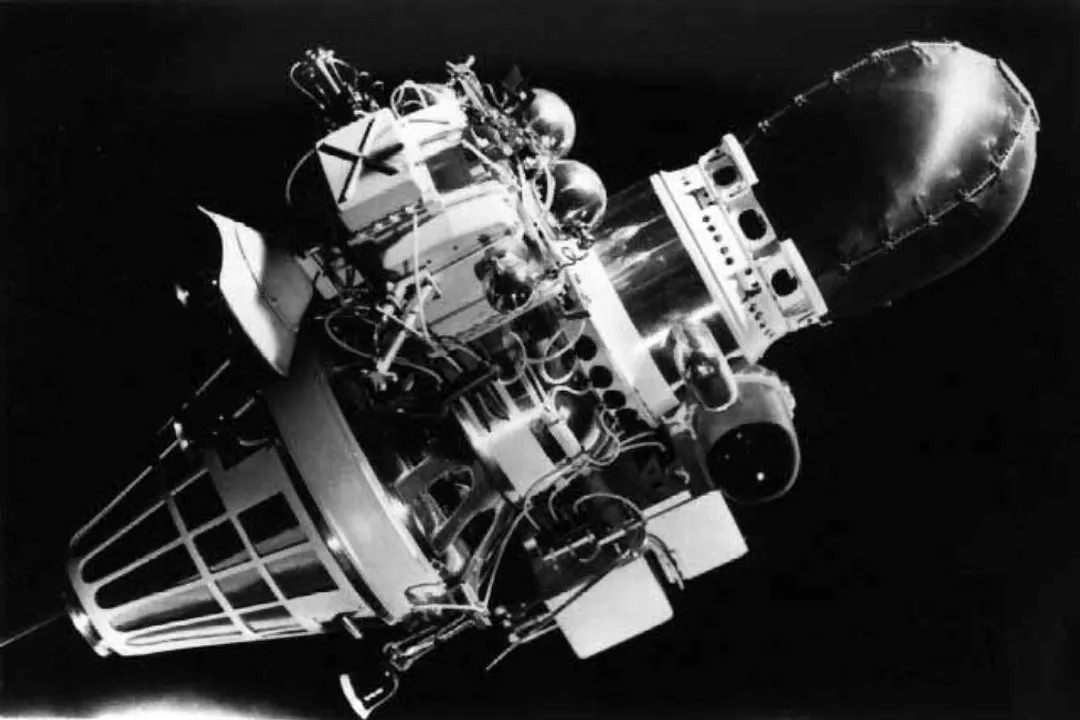
The conclusive evidence arrived with the space age. [4] When the Ranger missions began sending back close-up images of the lunar surface in the early 1960s, the resolution revealed features that were unequivocally impact-formed—characteristics such as central peaks, raised rims, and ejecta blankets of debris radiating outwards. [5][4] These images showed surfaces completely saturated with craters, an appearance completely inconsistent with a surface dominated by localized volcanic eruptions. [1][6]
The Apollo missions provided the final, undeniable proof. By physically returning lunar rock samples to Earth, scientists could date the formation of various surface regions and confirm that the oldest surfaces bore the highest density of the largest, oldest impact basins. [4] The study of the Moon’s craters thus became a proxy for understanding the bombardment history of the entire inner solar system, including Earth’s own long-buried past. [7][8]
The acceptance of the impact origin meant that the "discovery" wasn't a single "eureka" moment, but rather a slow, multi-century process of disproving the more familiar volcanic hypothesis. [1][4] The features were seen by Galileo, but their nature was only truly "discovered" by geologists and planetary scientists armed with comparative planetary data and space-age imaging. [6][8]
# Ongoing Refinement
Even though the mechanism of formation—impact—was settled by the mid-20th century, the process of understanding the craters continues. For instance, the detailed mapping conducted by the Lunar Reconnaissance Orbiter (LRO) has refined our understanding of the youngest craters, such as Copernicus, revealing complex ejecta patterns and the effects of secondary impacts caused by the initial impactor. [5][9]
Furthermore, studying the preservation state of ancient craters tells us volumes about Earth's own history. [8] Because the Moon lacks atmosphere, plate tectonics, and widespread water erosion, the impact record remains largely pristine, serving as a geological archive of the early bombardment period that has long since erased such features from Earth's surface. [8] The continued study of crater morphology, depth-to-diameter ratios, and distribution across different lunar terrains provides constant, incremental discoveries about the impactors themselves and the structure of the Moon's crust. [6]
The initial discovery was recognizing the shapes; the deeper discovery was realizing that those shapes were windows into the violent, shared youth of the terrestrial planets. This realization, cemented by space exploration, fundamentally changed how we view the geological evolution of the Moon and Earth alike. [7][8]
Related Questions
#Citations
Lunar craters - Wikipedia
The Origin of the Moon's Craters | Center for Astrophysics
Moon Craters - NASA Science
Lunar craters | Research Starters - EBSCO
On The Moon - American Museum of Natural History
A guide to the Moon's Copernicus Crater | BBC Sky at Night Magazine
Craters On The Moon From Galileo To Wegener: A Short History Of ...
A History of Lunar Science - Lunar Reconnaissance Orbiter Camera
Ancient lunar craters reveal Earth's own impact history