How deep is the deepest Moon crater?
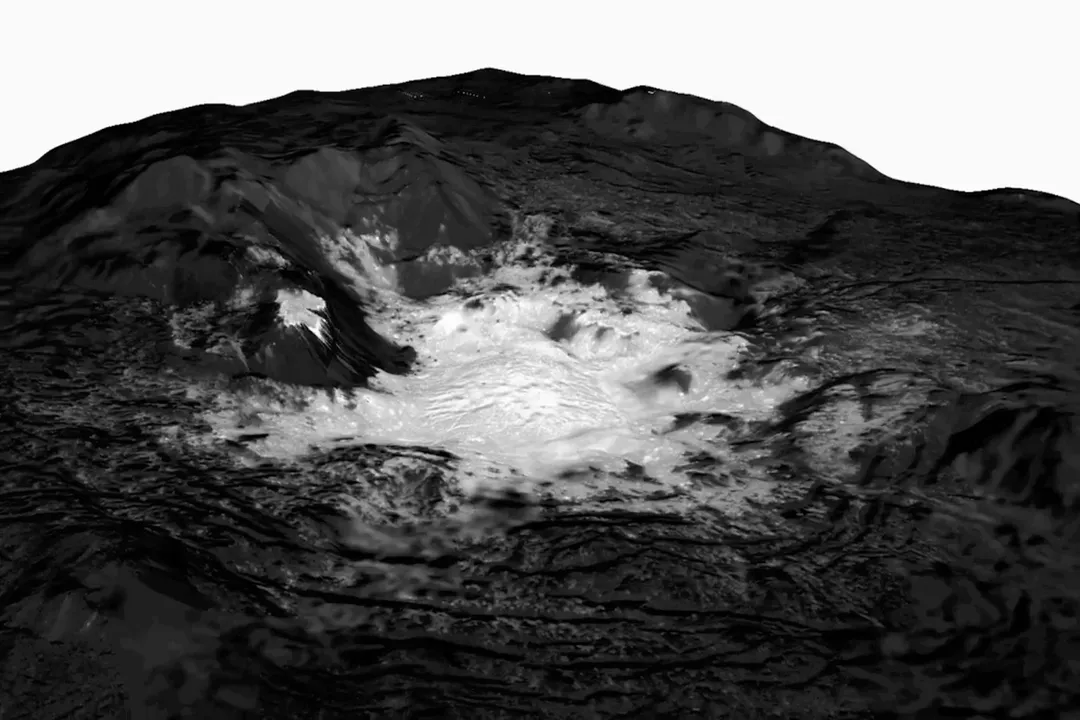
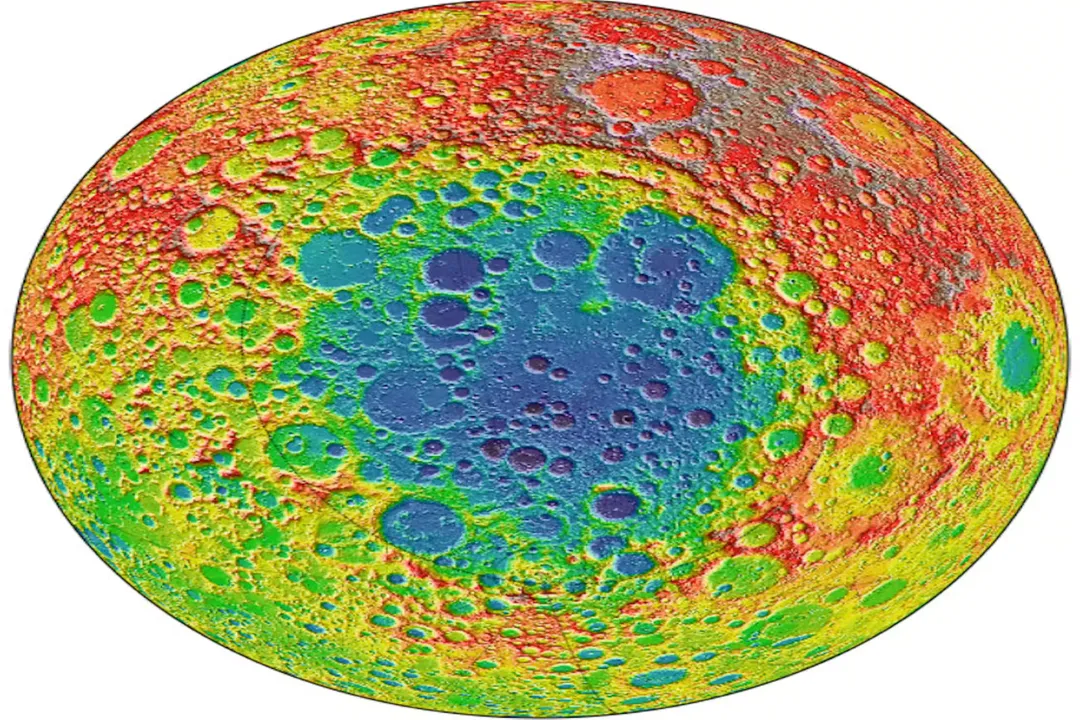
The landscape of our Moon is dominated by impact scars, but among these vast basins and craters, one stands out not just for its breadth, but for its profound vertical drop. When we talk about the deepest feature yet identified on the lunar surface, we are looking toward the far side, into a structure so ancient and massive that it fundamentally shaped the Moon's geology: the South Pole-Aitken Basin (SPA). [1][6]
# Basin Location
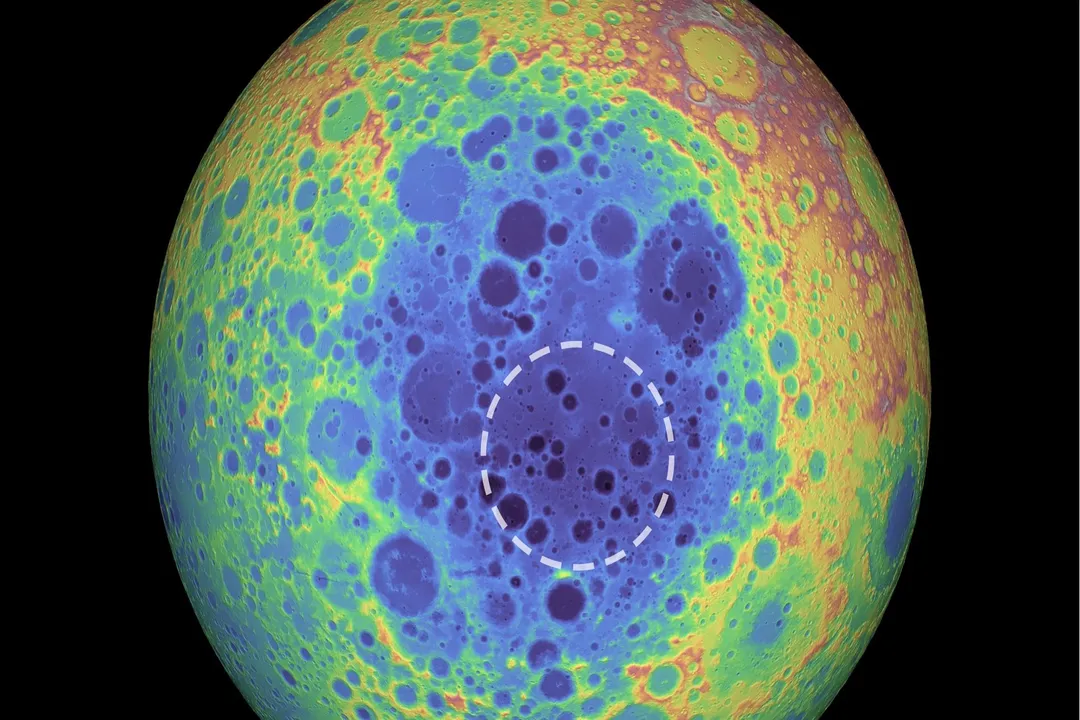
This immense geological feature occupies a significant portion of the Moon's southern hemisphere on the side perpetually facing away from Earth. [1][5] The South Pole-Aitken Basin is widely recognized as the largest, deepest, and oldest impact crater known in the entire Solar System. [3][6] Its sheer scale is hard to grasp; it stretches across roughly 2,500 kilometers (about 1,600 miles). [1][3] For context, this single impact structure covers an area larger than the entire state of Texas or nearly the entire country of France. [1]
While the term "dark side" is often used colloquially, the far side of the Moon receives just as much sunlight as the near side; it is simply the side we never see directly from Earth. [5] It is within this remote, rugged hemisphere that the impact responsible for SPA occurred, punching through a significant portion of the Moon's crust. [6] Modern imaging and analysis suggest that the basin is actually more circular than older, lower-resolution maps indicated, though its immense size still makes it appear slightly elliptical due to perspective. [8]
# Depth Measurement
The defining characteristic of the SPA Basin is its exceptional depth. The floor of the basin sinks approximately 13 kilometers (or about 8 miles) below the level of the surrounding lunar terrain. [1] To put this immense void into perspective, if we were to place the highest point on Earth, Mount Everest (roughly 8.8 km high), at the bottom of the SPA Basin, its peak would still be submerged by over four kilometers of lunar crust above it. [1] Conversely, if one were to compare this depth to the lowest point on Earth's ocean floor, the Challenger Deep in the Mariana Trench (around 11 km deep), the Moon’s basin still holds a slight edge in terms of vertical relief from its rim to its floor. [1]
This incredible impact event was energetic enough to expose material from deep within the Moon’s crust, offering scientists a rare window into the Moon’s internal structure without needing to drill. [6] The sheer force required to create such a feature is staggering, representing one of the most violent moments in the Moon’s early history. [6]

# Mass Anomaly
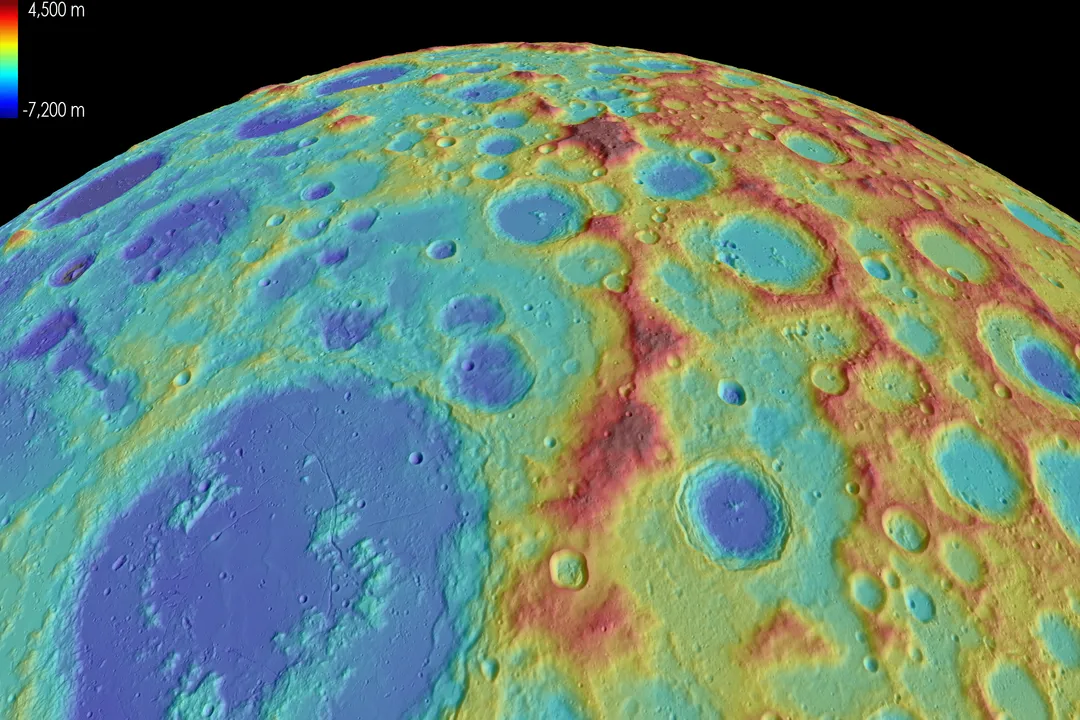
Further complicating and enriching the study of this deep void is the detection of a mass anomaly located beneath the basin floor. [4] This anomaly suggests that the impactor itself—the colossal body that struck the Moon—did not entirely vaporize or scatter, but rather that a large, dense remnant settled deep within the mantle or core boundary layer following the collision. [4] Scientists estimate this mass concentration is equivalent to a block of material roughly a billion billion tons. [4]
Analyzing this subsurface gravity structure is a key area of research because it provides direct evidence regarding the crustal thickness in that region and the nature of the impactor that created the basin. [4] The presence of this dense structure deep below the surface confirms that the impact excavated material far deeper than the visible topography suggests, reinforcing the 13-kilometer depth estimate as a minimum for the structural disturbance. [1][4]
# Cosmic Scale
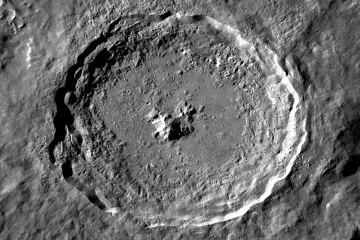
While the South Pole-Aitken Basin is the deepest on the Moon, it exists within a solar system full of colossal scars, demonstrating that impacts of this magnitude are not unique, though they are rare. [3] Other notable large impact structures include the Caloris Basin on Mercury, and Hellas Planitia on Mars, both immense basins created by ancient, powerful collisions. [3] On our own Moon, younger, more familiar craters like Tycho or Copernicus are striking because of their sharp features and bright ejecta blankets, but they do not approach the sheer scale or depth of the SPA Basin. [2][3]
For instance, the prominent, relatively fresh Tycho Crater is often studied for its distinct rays, but its depth is measured in the few kilometers range, dwarfed by the ancient SPA feature. [2] The difference highlights the erosion of time; while young craters are sharp, older basins like SPA have had billions of years for subsequent impacts and seismic activity to modify their original profile. [6]
# Research Focus
The scientific drive to understand the SPA Basin goes far beyond simply measuring a hole in the ground. [1] Because the impact penetrated deeply, the basin floor contains rocks and materials that originated from deep within the Moon, potentially exposing portions of the lower crust or even the upper mantle. [6] This access to deep material is invaluable for understanding the bulk composition and thermal history of the Moon. [1]
Furthermore, the region around the Moon’s south pole holds particular interest today due to the presence of permanently shadowed regions (PSRs), such as within craters like Shackleton. [1] These areas, where sunlight never reaches, are thought to contain deposits of water ice, making the entire southern lunar region a target for future crewed missions. [1] Understanding the bedrock geology of the vast SPA Basin adjacent to these crucial resource areas informs landing site selection and long-term habitation planning. The data gathered from orbiters about the basin’s composition—for example, identifying materials like iron and thorium—provide clues about the differentiation processes that occurred when the Moon first formed. [1][4]
Considering the mechanics of such a massive event, an interesting byproduct is the localized thinning of the crust beneath the impact point. [4] While the immense impactor settled as a dense core anomaly, the original crust it struck was already highly fractured and thinned by the colossal force, creating a distinct geological boundary layer that future missions will aim to characterize further. [4][8] This duality—a massive hole filled partially by the impactor’s remnants, sitting above a thinned crust—makes SPA a natural laboratory for planetary impact physics. [4]
#Videos
How Deep are the Craters on Moon ? - YouTube
Related Questions
#Citations
What is the South Pole-Aitken Basin? - NASA Science
How deep are the craters on the Moon? | Astronomy.com
5 incredible craters that will make you fall in love with the grandeur ...
Mass Anomaly Detected Under the Moon's Largest Crater
Nobody Knows What Made the Gargantuan Crater on the Dark Side ...
The biggest, deepest and oldest impact crater on the Moon ... - Reddit
How Deep are the Craters on Moon ? - YouTube
The Moon's Biggest and Most Ancient Crater Is More Circular Than ...