What is the crater on the dark side of the Moon?
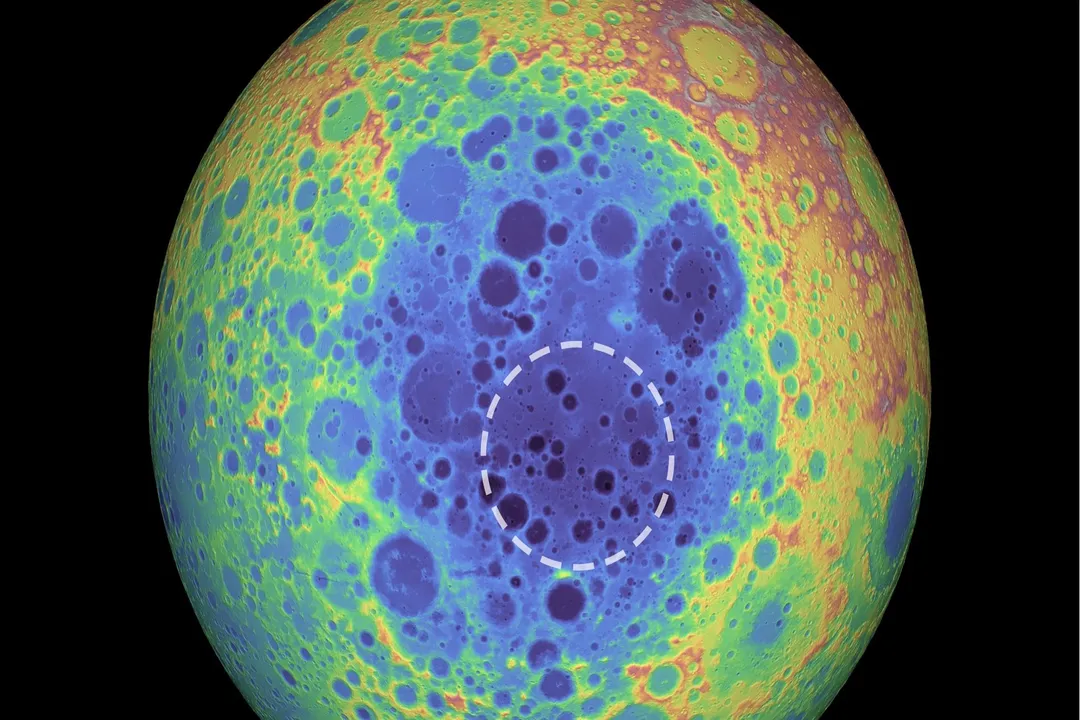
The vast, ancient impact scar dominating one hemisphere of the Moon is often referenced when people ask about a specific crater on the far side. This immense geological feature isn't just any hole; it is the South Pole-Aitken (SPA) basin, a structure so large it represents one of the most significant impact sites known anywhere in the Solar System. [2][3] When we look up at the Moon, we see the near side dominated by dark, flat plains called maria, but the far side presents a much more heavily pockmarked, rugged terrain. [7] The SPA basin is the defining feature of this rugged terrain, providing scientists a unique window into the Moon’s deep history. [3]
# Lunar Geography
Before diving into the crater itself, it’s worth clarifying the term "dark side of the Moon." This popular moniker is slightly misleading. [7] Because the Moon is tidally locked with Earth, we only ever see one face—the near side. [7] The far side, therefore, receives just as much sunlight as the side facing us; it is simply the far side, not the perpetually dark side. [7] This region remained largely unobserved until the Soviet Luna 3 probe photographed it in 1959. [7] It is on this seldom-seen far side, near the Moon’s southern pole, that the South Pole-Aitken basin resides. [2]
# Immense Scale
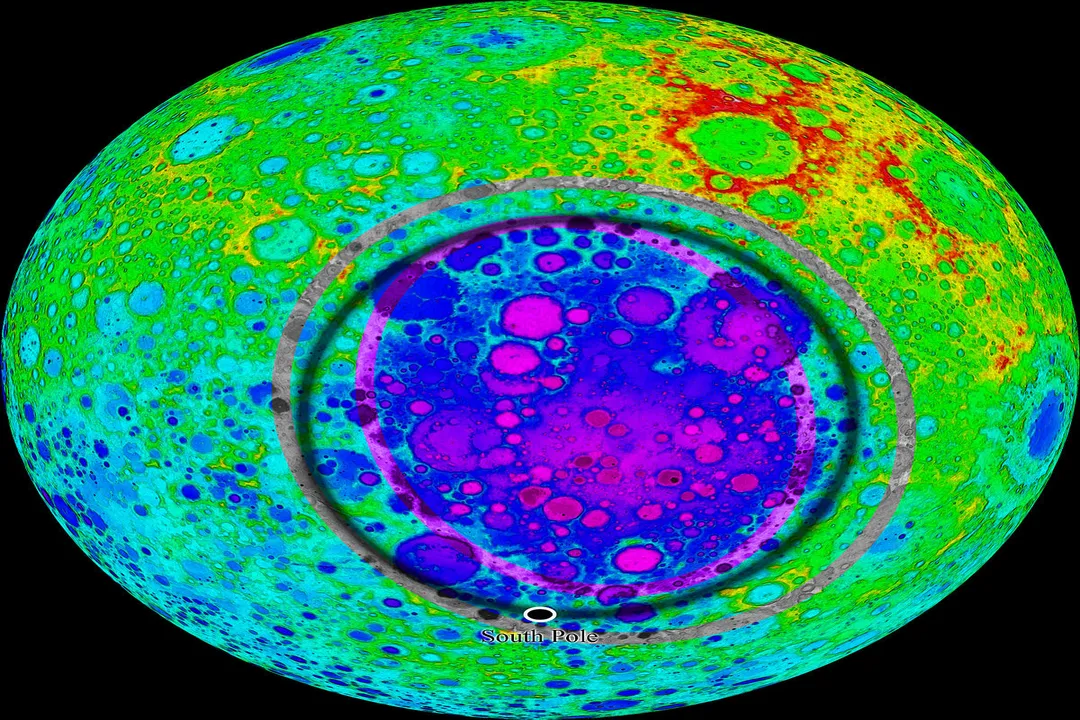
The dimensions of the SPA basin are staggering, easily qualifying it as the Moon’s largest impact feature. [3][8] Its diameter spans an approximate 2,500 kilometers (1,550 miles), making it an enormous depression on the lunar surface. [2][3] Furthermore, the basin is remarkably deep, with some measurements suggesting a depth approaching 8.2 kilometers. [2] To put this into perspective, an impact capable of creating a hole this size would have needed to involve an object traveling at tremendous speed, striking a target already billions of years old. [2] Its age places its formation deep in the Moon's past, suggesting it is an imprint from the early bombardment period of the inner Solar System. [2] This immense size difference highlights why the far side looks so different from the near side; the crust there is significantly thicker, which meant that smaller impacts couldn't punch through to create the expansive lava flows that later formed the near-side maria. [7]

# Mantle Window
The sheer violence required to carve out the SPA basin had a profound effect on the Moon's subsurface structure, making the basin scientifically invaluable. [3] Scientists believe that the impact was powerful enough to breach the Moon’s crust and excavate material from the underlying mantle. [2][3][6] Examining the composition of the material exposed within the basin allows researchers to study what the Moon is made of beneath its surface layer without having to drill kilometers deep. [3] The results of this excavation have offered clues about the Moon's formation and early differentiation. [3]
This ancient event left behind more than just topography; it also left gravity signatures. Researchers have detected a significant mass anomaly beneath the central region of the basin. [6] This anomaly represents a concentration of mass that is denser than the surrounding rock, possibly consisting of remnants of the original impactor or dense material that rose from the lower mantle during the event. [6] It serves as a subsurface fingerprint of one of the biggest crashes in lunar history.
It is interesting to consider the geology as a giant, unintentional comparative study. The near side, shielded by a thinner crust, erupted volcanically after major impacts, creating the dark maria, whereas the far side, protected by its thick crust, retained the evidence of the original, deep impacts like SPA. [7] The SPA basin is essentially the single largest scar from a geologic process that defined the two hemispheres differently.
# Exploration Efforts
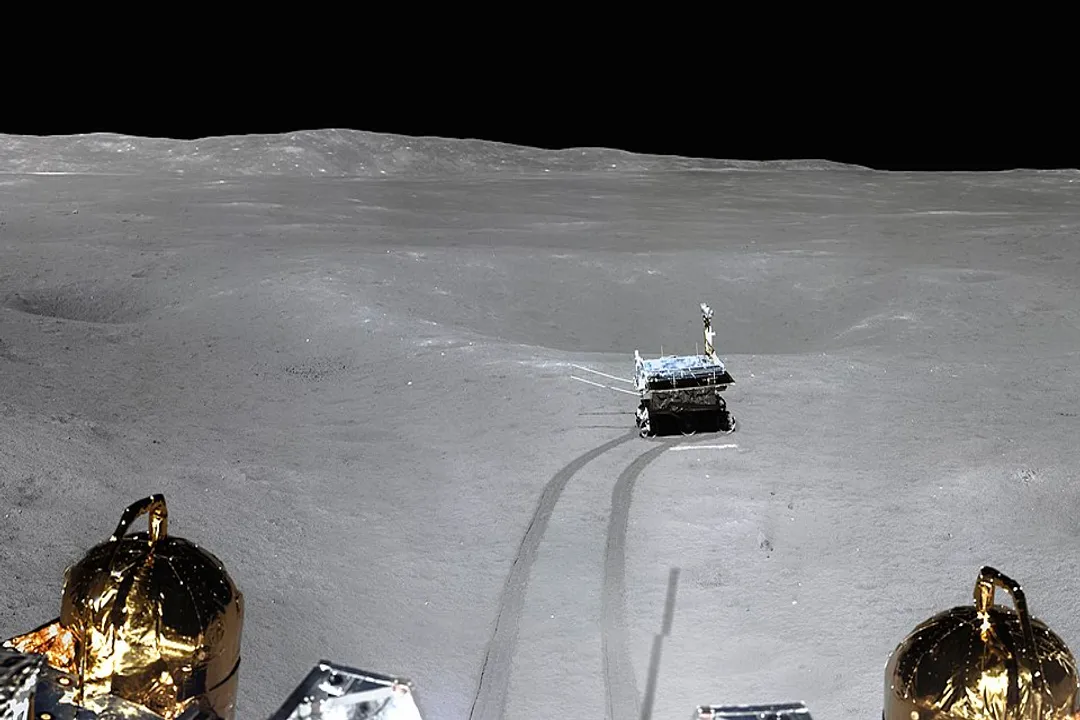
Understanding this structure has become a major goal for modern space agencies. The sheer scientific payoff of analyzing the exposed mantle rock has driven targeted missions. [3] Most notably, China's Chang'e 4 mission successfully soft-landed a lander and a rover, Yutu-2, inside the basin in January 2019. [1] This was the first soft landing on the far side of the Moon, chosen specifically because of the scientific treasures locked within the SPA basin. [1] The mission carries instruments designed to probe the subsurface structure and sample the materials that were brought to the surface by the impact. [1]
The planning for such landings is complex. Because the far side lacks the constant line-of-sight communication of the near side, missions like Chang'e 4 require a relay satellite, such as the Queqiao orbiter, to communicate with Earth. [1] This necessity underscores the difficulty of studying this region, adding another layer of engineering complexity to the scientific goals. For instance, when planning any future probe descent within or near the SPA basin, mission controllers must account for the gravitational variations caused by the subsurface mass anomaly mentioned earlier. [6] This requires precise calculations to ensure the spacecraft navigates safely through an area where standard lunar gravity models might be slightly skewed due to that deep, dense material. [6]

# Key Components
The SPA basin is not a simple hole; it contains several distinct features that scientists study:
- The Basin Floor: The lowest point, where the deepest excavated material should be found. [2]
- Central Peaks: Mountains rising from the basin floor, formed as the ground rebounded after the colossal impact. [2]
- The Rim: The raised, fractured edge that surrounds the entire structure. [2]
If you were to map out the relative elevation across the Moon, the difference between the highest point on the near side (the edge of the Procellarum KREEP Terrane) and the lowest point within the SPA basin creates the single greatest elevation difference on the entire body. [2] This topographical contrast highlights the extreme nature of the impact event that formed the basin.
# Lasting Legacy
The South Pole-Aitken basin remains one of the most compelling targets in planetary science. [3] It is more than just the biggest crater; it represents a preserved record of the early Moon's composition and bombardment history. [2] The work being done by robotic explorers like Chang'e 4 is helping piece together the violent genesis of our closest celestial neighbor. [1] Every rock analyzed from this region provides data that helps refine our models of how terrestrial planets accrete and evolve. Its features—the exposed mantle, the gravitational oddities—offer clues not just about the Moon, but about the impact mechanics that shaped the entire inner Solar System billions of years ago. [2][3]
#Videos
The Massive Chunk of Metal Hiding in the Moon - YouTube
Related Questions
#Citations
Nobody Knows What Made the Gargantuan Crater on the Dark Side ...
South Pole–Aitken basin - Wikipedia
What is the South Pole-Aitken Basin? - NASA Science
Crater on the Moon Named After Elisha Kent Kane - Facebook
what is this crater called? I want to learn the history of it : r/space
Mass Anomaly Detected Under the Moon's Largest Crater
What is the name of the largest crater on the Moon? - Quora
The Massive Chunk of Metal Hiding in the Moon - YouTube