Can we see the south side of the Moon?
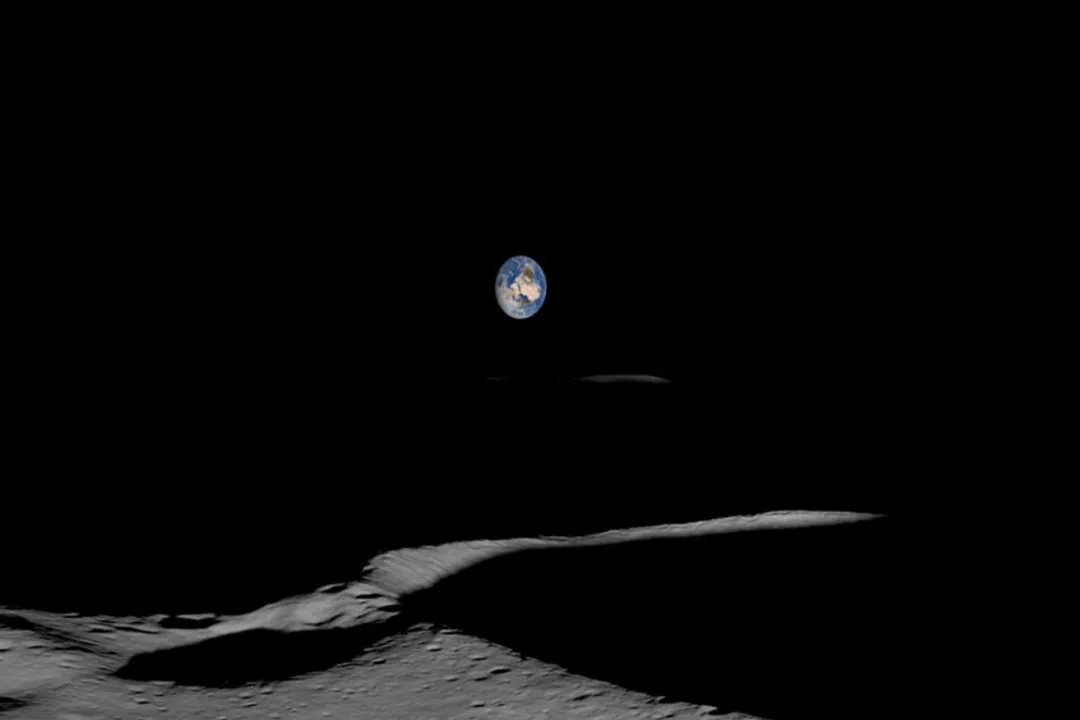
The far side of the Moon, often mistakenly referred to as the "dark side," remains perpetually hidden from our direct view here on Earth. However, the question of seeing the south side—which can mean the southern hemisphere or the south pole—is a slightly different matter, one tangled up in the mechanics of lunar orbit and the slight shifts in perspective we experience over time. [1][6] Generally speaking, whether you are standing at the North Pole of Earth or somewhere deep in the Southern Hemisphere, you are looking at the same hemisphere of the Moon, with only minor variations in what you can perceive along the edges. [1][9]
# Tidal Lock
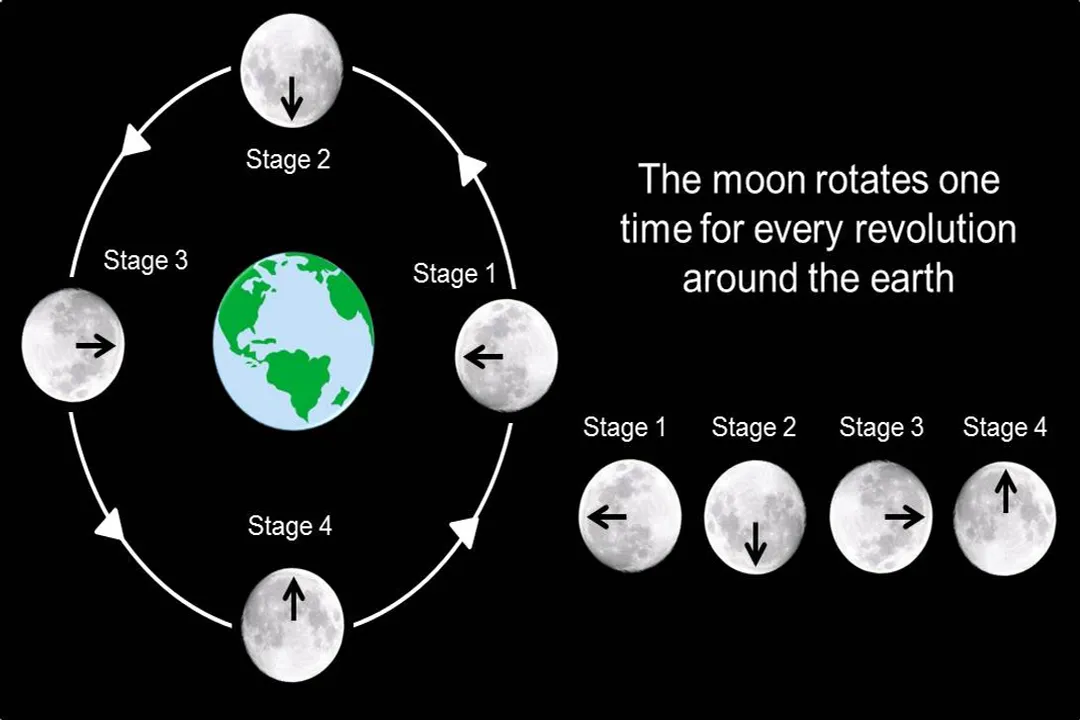
The fundamental reason we cannot see the entire lunar surface is that the Moon is tidally locked with Earth. [3] This means the Moon’s rotation period—the time it takes to spin once on its axis—is exactly the same as its orbital period—the time it takes to circle our planet. [3] This precise synchronization ensures that one hemisphere is always facing us, the near side, while the other hemisphere, the far side, faces away into space. [3] This is not a coincidence of timing; it is the result of billions of years of gravitational interaction between the two bodies. [3]
# Hemisphere Differences
The two hemispheres are far from identical twins. The near side, the one we see regularly, is characterized by darker, smoother plains known as maria, which are large basaltic lava flows filling ancient impact basins. [8] In contrast, the far side is vastly different; it has far fewer of these mare features and is instead heavily cratered and covered in lighter, ancient crustal material. [8] When scientists analyzed the first rock samples returned from the far side, this compositional difference—specifically, the paucity of mare material—became very clear, offering a window into a very different early lunar history than the side facing us. [8]
| Feature | Near Side (Visible) | Far Side (Hidden) |
|---|---|---|
| Surface Color/Type | Darker (more maria) | Lighter (more ancient crust) |
| Cratering Density | Lower overall | Significantly higher |
| Compositional Indicator | Richer in iron and magnesium | Thicker crust evident |
We often hear the term "dark side," but this is a misnomer. [4] Just like Earth, the Moon goes through phases, meaning the amount of sunlight hitting any part of it changes constantly. [4] During a New Moon phase as viewed from Earth, the near side is dark, but the far side is fully illuminated by the Sun. [4] Conversely, during a Full Moon as viewed from Earth, the near side is brilliantly lit, but the far side is experiencing its own lunar night. [4]
# Earth Location
The specific location of the observer on Earth—whether near the North Pole or down in the Southern Hemisphere—does not change the overall view of which hemisphere is visible. [1][6][9] If you are in Australia, you see the same general face as someone in Norway. [9] The Moon is high in the sky for one, and low on the northern horizon for the other, but the hemisphere facing them is the same near side. [9]
This consistency is because the viewing geometry, determined by the Moon’s orbit, dictates which hemisphere faces Earth, not the observer’s latitude on Earth. [6] If you could travel to the Moon's South Pole and look back at Earth, you would see the Earth rotating, but you would always be looking at the near side of the Moon from that vantage point as well. [1]
# Wobbling View
While the far side remains hidden, we do get to peek around the edges slightly, a phenomenon known as libration. [5] Libration is a nodding or rocking motion that the Moon exhibits from our perspective. [5] There are several causes, including variations in the Moon's orbital speed (it speeds up and slows down slightly) and the tilt of the Moon’s axis relative to its orbit. [5]
Libration allows us to see up to about 59% of the Moon’s surface over time, meaning we gain about 9% visibility beyond the initial 50% facing us. [5] This slight wobble is what makes the far side the far side rather than the permanently hidden side in the strictest sense, though the bulk of it remains out of sight. [5] This slight viewing advantage means that the very edges of the South Pole—the southern limb—can occasionally become visible as the Moon wobbles slightly in its path relative to our line of sight. [1][6] The visibility of the entire South Pole, however, is dependent on these small librational effects, which vary slightly depending on the time and the precise orbit mechanics. [5] For instance, the maximum libration is generally greater along the east-west line than along the north-south line, meaning it is slightly easier to see around the east and west edges than it is to see directly over the north and south poles at their maximum extent. [5]

# Polar Interest
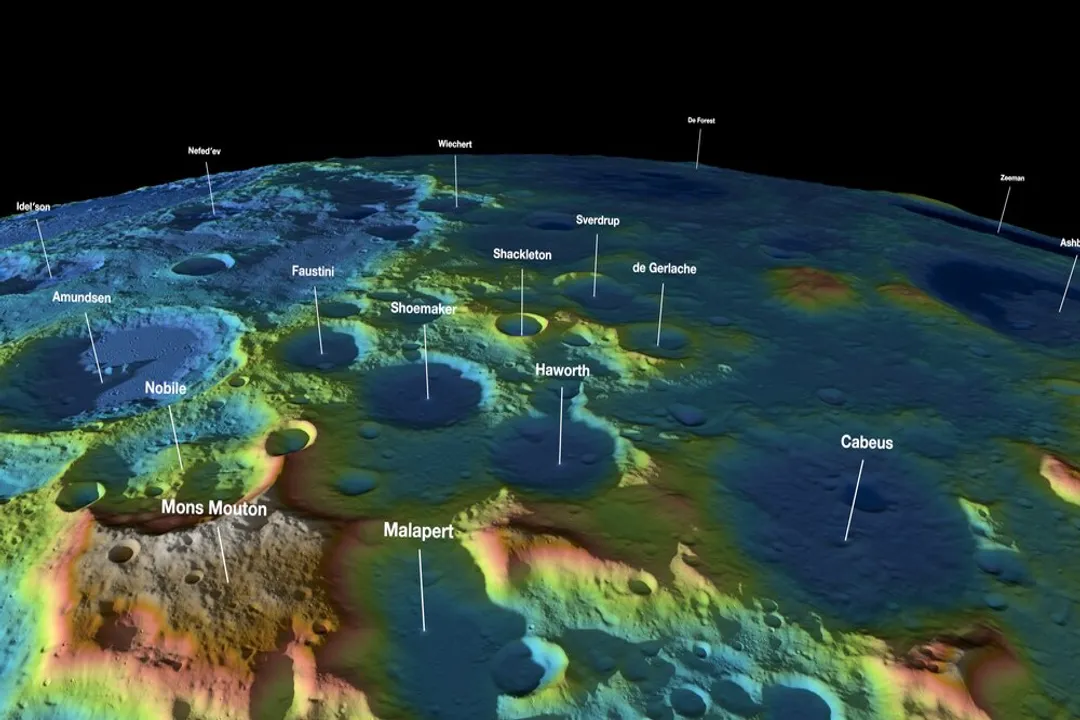
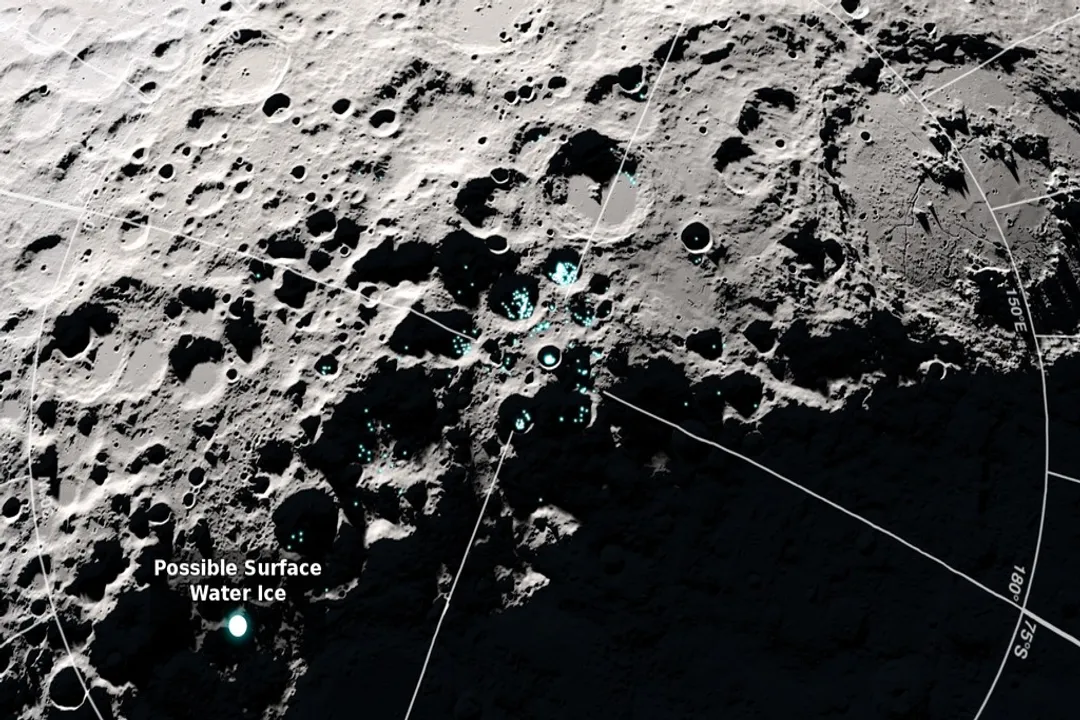
The South Pole region of the Moon has captured immense scientific interest in recent decades, perhaps even more so than the rest of the far side. [7] The primary driver for this attention is the potential presence of water ice trapped in permanently shadowed regions (PSRs) near the poles. [7] Because the Sun hangs perpetually low on the horizon near the Moon's poles, certain deep craters never receive direct sunlight, creating areas of extreme cold where volatile materials like water ice could survive for eons. [7] Discovering and quantifying this ice is a major goal for current and future lunar missions, as it represents a crucial resource for supporting long-term human outposts. [7] Understanding the exact visibility of the South Pole, therefore, is not just an astronomical curiosity but a practical concern for mission planning that seeks to map these cold traps from orbit before landing. [7]
Though we cannot look down and see the South Pole any more clearly from a balcony in Buenos Aires than we can from a location in Anchorage, the robotic exploration currently underway is changing that. Orbiters are meticulously mapping the poles, and upcoming landers are specifically targeting the southern latitudes, allowing us an unprecedented, up-close view of the topography we can only glimpse along the lunar limb from Earth. [7] The 'south side' in the sense of the south pole, while technically part of the near side or its immediate edge, is quickly becoming the most well-mapped and scrutinized part of the Moon due to its resources. [7]
Related Questions
#Citations
Can we see the south pole of the moon standing on the north pole of ...
The Moon's South Pole - NASA SVS
Why don't we ever see the far side of the moon? | PBS News
The far side of the moon, illuminated by the sun, as it crosses ...
Can the Moon be upside down? | The Planetary Society
orbit - Can we see the south Pole of the Moon standing on North ...
Lunar south pole - Wikipedia
First returned rock samples shine a light on the Moon's 'dark side'