What time will we see the black moon?
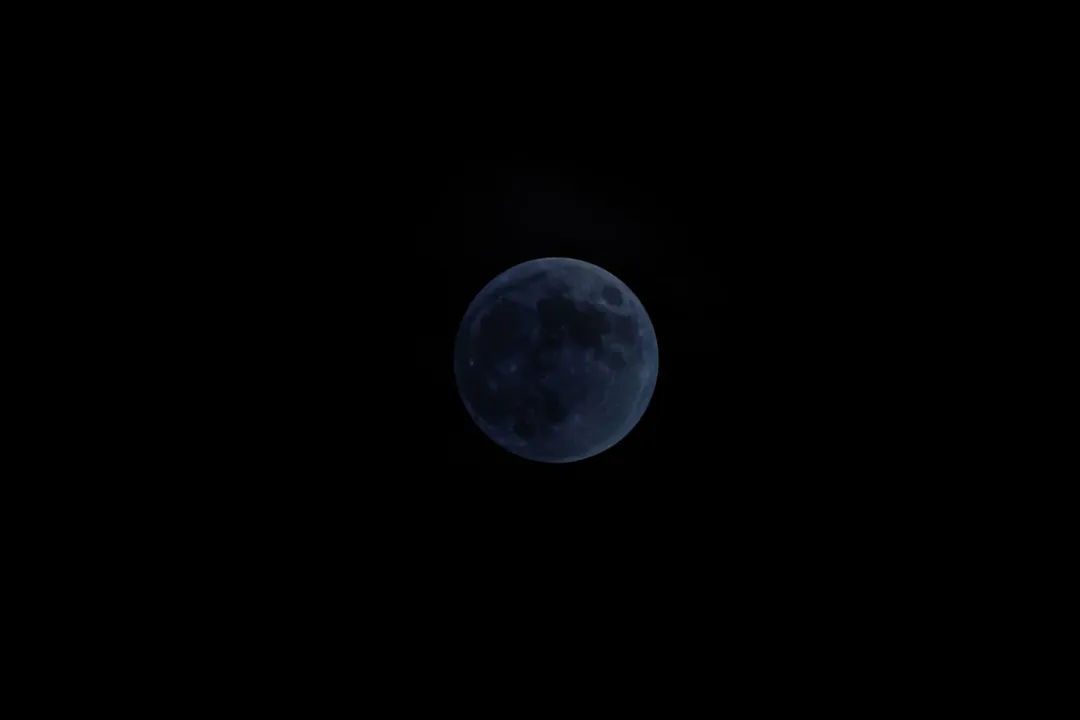
The next highly anticipated celestial marker known as a Black Moon is scheduled for August 23, 2025 across most of the globe. If you are planning your night sky schedule around this event, the first thing to understand is that "Black Moon" is not a formal term used by professional astronomers. Instead, it’s a popular nickname applied to several different, infrequent patterns within the lunar cycle as measured against our standard calendar.
# Lunar Naming Schemes
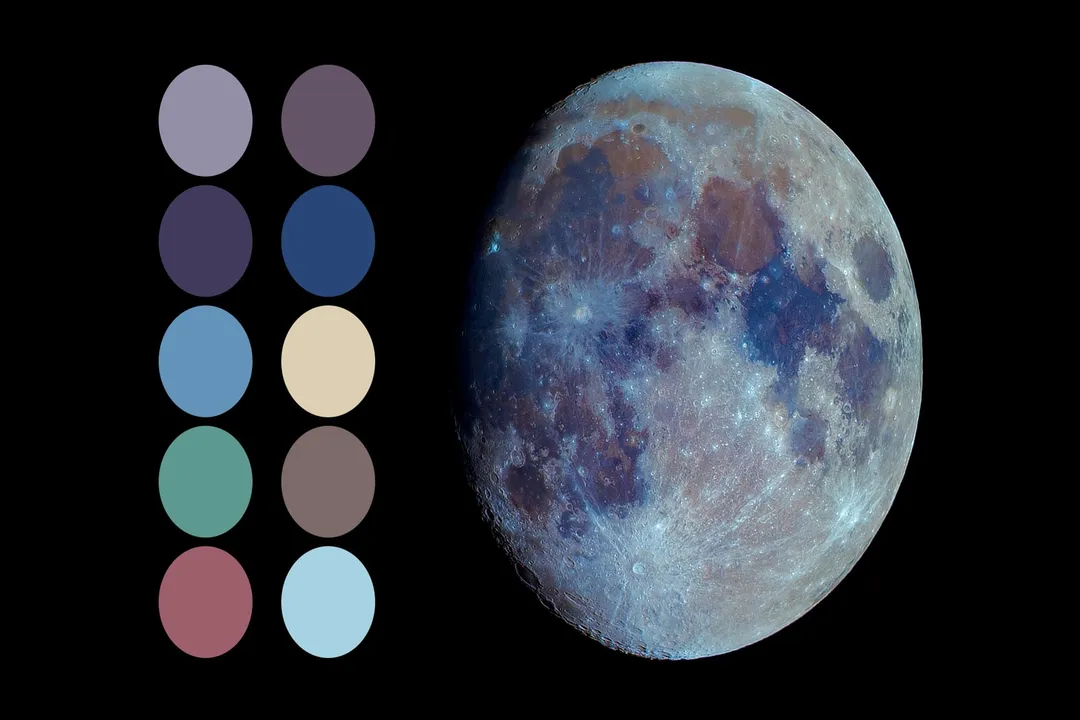
The confusion around the Black Moon arises precisely because the term lacks a single, unified astronomical definition. It generally refers to an extra New Moon occurring within a set timeframe—either a calendar month or an astronomical season.
# Calendrical Second
The most common definition, the Calendrical Black Moon, arises when a single calendar month contains two New Moons. Because the lunar cycle averages about 29.5 days, it occasionally slips in an extra phase within a month that has 30 or 31 days. This version appears roughly every 29 months, making it the most frequent type of Black Moon event. For context, this phenomenon is the direct counterpart to the more famous Blue Moon, which is the second Full Moon in a single month.
# Seasonal Occurrence
A second, slightly rarer definition involves astronomical seasons. An astronomical season typically contains three New Moons, but when a season experiences a fourth New Moon, the third one in that sequence is labeled the Seasonal Black Moon. This definition exists as the exact counterpoint to the original definition of a Blue Moon (the third of four Full Moons in a season). These seasonal shifts happen approximately once every 33 months. The August 2025 event falls under this classification.
# February's Anomaly
The third, and perhaps most unusual, designation for a Black Moon describes an entire calendar month that is entirely devoid of a New Moon, or conversely, a month without a Full Moon. This scenario is exclusively possible in February, as it is the only month on the Gregorian calendar shorter than the average lunar cycle. The absence of a New Moon in February only occurs about once every 19 years.
# Pinpointing August 2025
When people discuss the upcoming Black Moon for August 2025, they are referring to the Seasonal Black Moon occurring that month. This New Moon is the third of four occurring between the June solstice and the September equinox.
The precise moment the Moon reaches its New phase—the moment of alignment between the Sun, Earth, and Moon—is calculated globally at 6:06 UTC on August 23, 2025. Because this is a precise, time-zone dependent instant, observers in different parts of the world will experience the event on slightly different local dates. For those on the United States east coast, this is 1:06 a.m. CDT on the 23rd. However, observers in western time zones will witness the New Moon phase occurring on the evening of August 22, 2025.
To help frame this for those not operating on UTC or CDT, we can quickly calculate a few other common time zones based on the 6:06 UTC mark:
| Time Zone | Time on August 23, 2025 | Day |
|---|---|---|
| UTC (Coordinated Universal Time) | 06:06 | August 23 |
| CDT (Central Daylight Time) | 01:06 a.m. | August 23 |
| PDT (Pacific Daylight Time) | 10:06 p.m. | August 22 |
| BST (British Summer Time) | 07:06 a.m. | August 23 |
| IST (Indian Standard Time) | 11:36 a.m. | August 23 |
This variability underscores why the term isn't official; the "date" of the New Moon shifts depending on where you are standing on Earth when the alignment occurs.
# Seeing Darkness
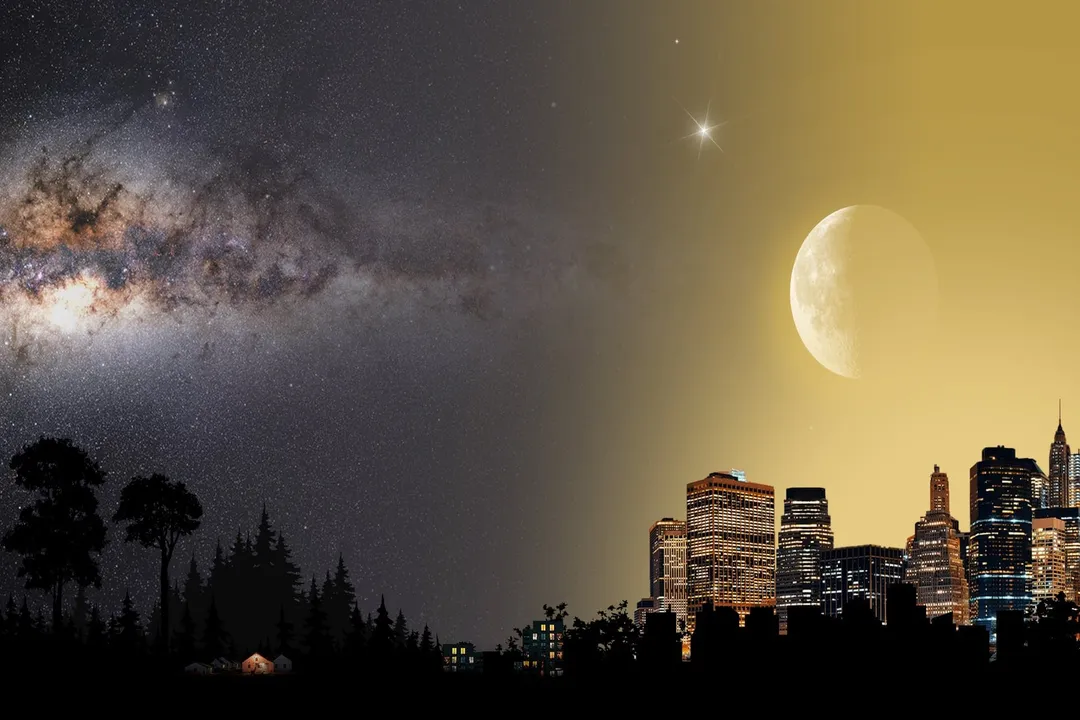
The most crucial takeaway regarding visibility is this: a Black Moon, by any definition, is simply a type of New Moon. During the New Moon phase, the Moon is positioned almost directly between the Earth and the Sun. Consequently, the side illuminated by the Sun is entirely facing away from us, leaving the side visible to Earth completely dark.
If you step outside expecting a visual spectacle, you will be disappointed, as you cannot see the Black Moon itself. Furthermore, the Moon at this phase is traveling across our sky right alongside the Sun, meaning any remaining faint illumination is drowned out by the Sun’s daytime glare, making observation during the night impossible. This is unlike a Blood Moon, which is a visible event—a total lunar eclipse where the Moon takes on a distinct red hue due to light filtered through Earth’s atmosphere. A Black Moon has no inherent change in color or physical state; it is purely a matter of timing.
# Dark Skies Opportunity
While you cannot see the Moon, the period surrounding the New Moon offers the best natural conditions for stargazing. Since the Moon is the brightest natural object in our night sky, its absence means the sky becomes substantially darker. This lack of ambient light pollution from our nearest neighbor allows fainter, more distant celestial objects to become visible.
For those interested in sky observation, this dark window is prime time. Professional astronomers frequently plan their viewing sessions around the New Moon phase specifically to study dim objects.
If you plan to take advantage of this natural darkness, consider a few preparatory steps to maximize your experience:
- Go Dark: The greatest benefit comes when you minimize artificial light pollution. If possible, travel away from city lights, even just to a park or hilltop outside the main urban glow.
- Know Your Targets: Since the sky will be dark, focus on objects that are usually washed out. This includes faint nebulae, distant galaxies, and the hazy band of the Milky Way.
- Give Eyes Time: Your eyes need about 20 to 30 minutes in complete darkness to fully adapt and achieve their maximum sensitivity. Once adapted, even objects that normally appear fuzzy will "pop" into view.
This near-total absence of lunar light is the true gift of the Black Moon event—it temporarily transforms the night sky into a darker, more revealing canvas for the rest of the cosmos.
# Cultural and Historical Notes
The rise in popularity of the Black Moon moniker seems to be a relatively recent phenomenon, heavily propelled by social media, astrologers, and followers of certain spiritual paths. For practitioners of some forms of Pagan religions, including Wicca, the night of the Black Moon is believed to hold extra potency, where specific actions or rituals may become more effective.
The term's origins are less clear than the Blue Moon’s. The modern Blue Moon concept originated from a mistaken quote in a 1946 Sky & Telescope article regarding the Old Farmer's Almanac. The Black Moon’s initial popularization is harder to trace but has been noted in astronomical blogging for decades, sometimes linked to Wiccan culture.
# Future Appearances
Since the definitions are based on cycles that don't perfectly align with our yearly calendar, the pattern is irregular, but we can look ahead to see when these events next appear:
- August 23, 2025: Seasonal Black Moon (the one in focus).
- August 31, 2027: Calendrical Black Moon (second New Moon in the month).
- August 20, 2028: Seasonal Black Moon. Note that the New Moon on this date will also coincide with perigee, making it a Black Super Moon, though still invisible.
The year 2033 is projected to be particularly active for Black Moons, potentially hosting three in a row globally, due to the rare February "no New Moon" scenario. In the context of New York time zones, the New Moons of January 30 and March 30, 2033, will be the second in their respective months, with no New Moon occurring in February 2033 at all. If you are interested in the absence of a Full Moon, the next time February will skip a Full Moon (a double Blue Moon in January and March) is in 2037, the last one having occurred in 2018.
While the Black Moon itself remains hidden from view, the time it signifies offers a predictable, scheduled darkness—a reliable, month-to-month opportunity to recalibrate your gaze toward the fainter wonders scattered across the vast, moonless night sky.
Related Questions
#Citations
When Is the Next Black Moon? - Time and Date
Rare Black Moon coming August 22-23! Why so special? - EarthSky
What Is a Black Moon and When Is the Next One in 2025?
Black Moon in August: What it is, what it isn't, and how to 'see' it
Astrophysicist Talks Rare 'Black Moon' Event in August