What part of the Moon do we not see?
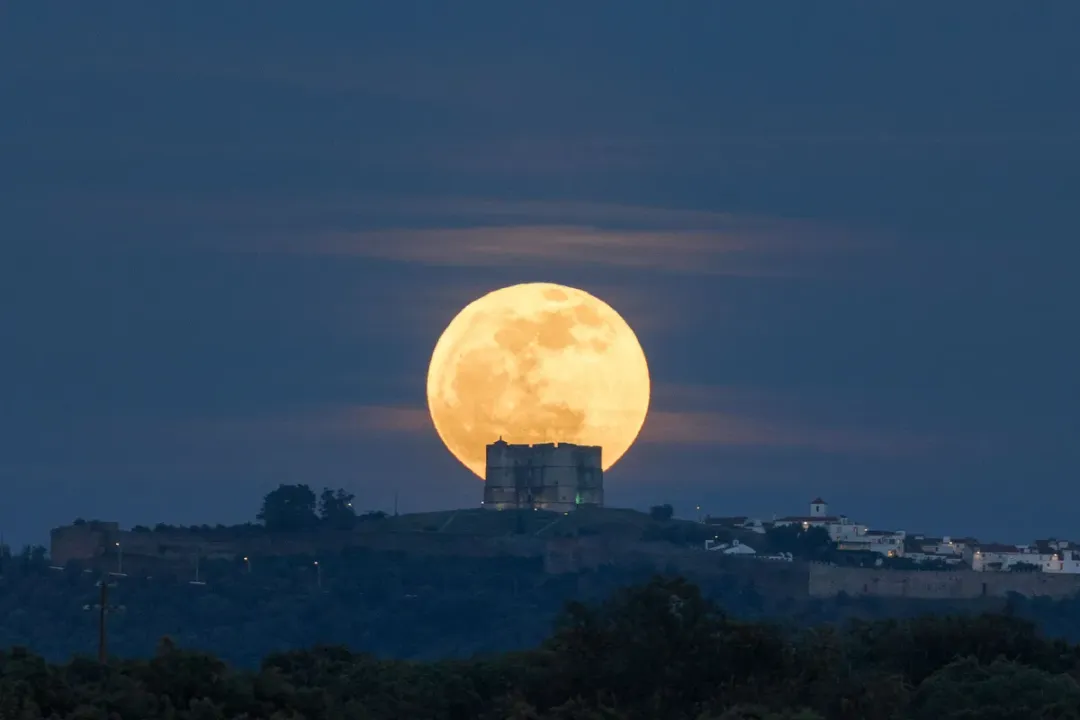
The Moon presents a constant face to us here on Earth, meaning roughly half of its surface remains perpetually hidden from direct view by ground-based observers. This unseen hemisphere has, for centuries, fueled speculation and mystery, though modern science has replaced guesswork with detailed mapping. It is a fixed perspective, dictated not by darkness, but by mechanics. [6][8]
# Synchronous Spin
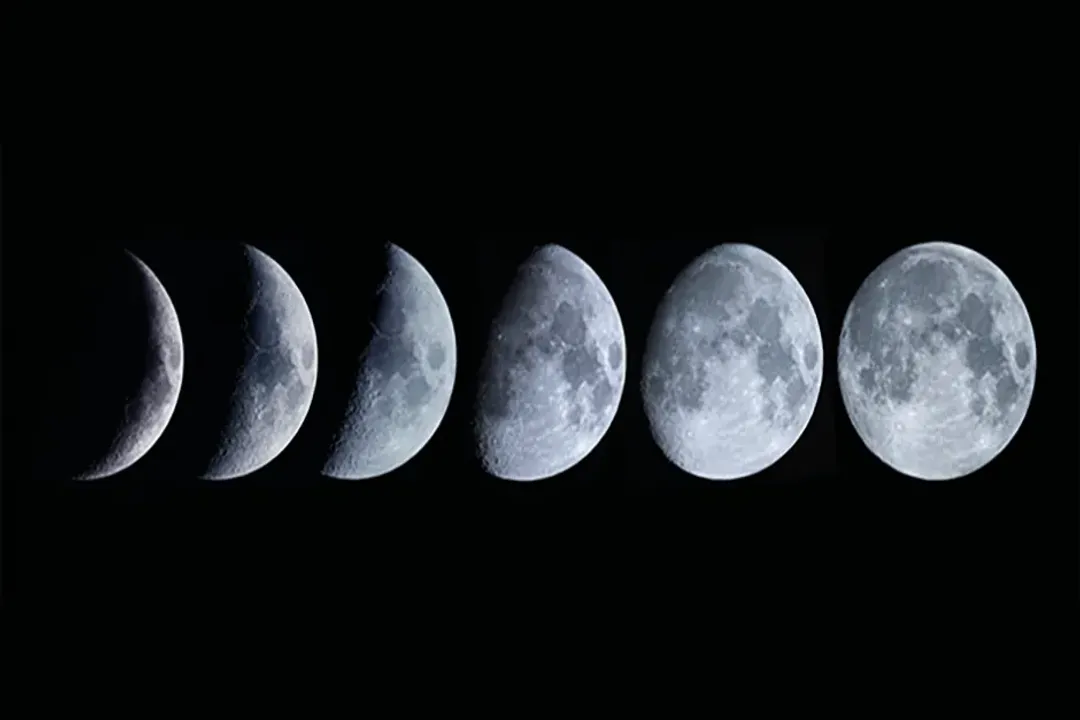
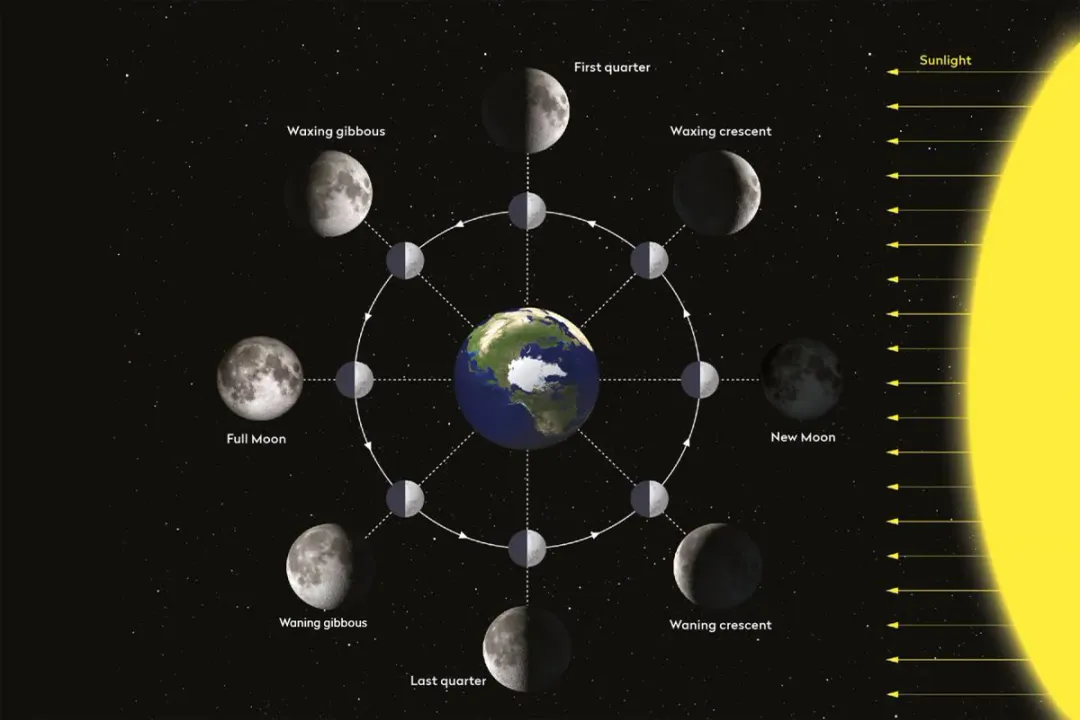
The primary reason we never see the entire lunar globe relates to a phenomenon known as tidal locking or synchronous rotation. [1][6] When the Moon formed, it was much closer to Earth, and the strong gravitational influence—the tidal forces—acted like a brake on the Moon’s rotation over billions of years. [8] This gravitational tugging slowed the Moon's spin until its rotation period exactly matched its orbital period around our planet. [6]
This perfect match means that for every single orbit the Moon completes around Earth (which takes approximately $27.3$ Earth days), it also completes exactly one rotation on its own axis. [1][8] The result is that the same hemisphere is always pointed toward us. Think of it like one partner in a slow dance always facing the other—no matter how much they circle the room, their faces remain locked toward each other. [6]
# Name Correction
The unseen hemisphere is frequently, but incorrectly, called the "dark side of the Moon". [5] This term implies that this half of the Moon is permanently shrouded in shadow, which is far from the truth. [1] Because the Moon rotates, the far side experiences a full cycle of day and night, just like the near side we observe. [1]
When we see a New Moon from Earth—that thin sliver of darkness when the Moon is positioned between the Sun and Earth—the far side is actually fully illuminated by the Sun. [1] Conversely, when we see a Full Moon, the near side is completely bathed in sunlight, meaning the far side is experiencing its own lunar night. [1] Therefore, the most accurate designation is the far side of the Moon, reserving "dark side" only for when that hemisphere is in shadow during its night cycle. [5]
# Surface Variance
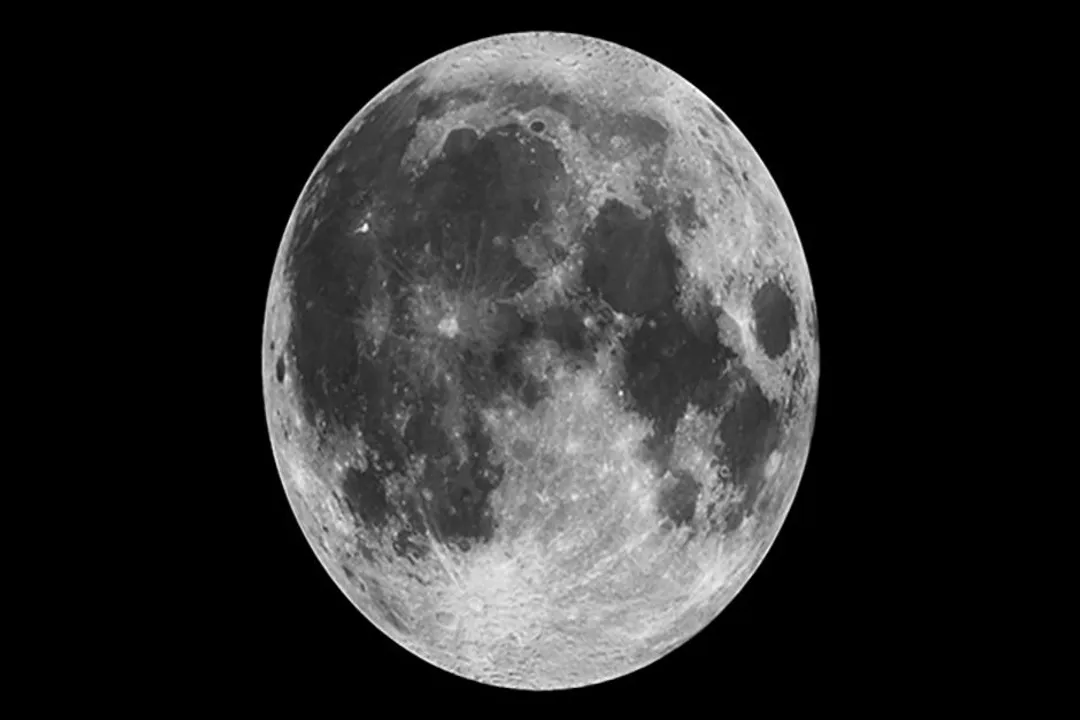
While the near side we observe is dominated by large, dark, smooth plains known as maria (Latin for seas), the far side presents a starkly different geological portrait. [1][4] The near side has about $31%$ of its surface covered by these volcanic plains, which formed from vast floods of ancient lava welling up through the crust. [9]
The far side, however, is almost entirely covered in heavily cratered, lighter-colored terrain, known as the lunar highlands. [1][9] The number of these large impact basins is staggering; one striking difference is that the far side is home to the massive South Pole-Aitken Basin, one of the largest, oldest, and deepest impact structures on any planetary body in the Solar System. [1][4] This stark asymmetry—a near side characterized by smoother, darker basaltic plains and a far side dominated by ancient, rugged highlands—is quite unusual among natural satellites, as many other planetary moons tend to show much more uniform surface features on both hemispheres. [9]
The reason for this dramatic difference seems tied to the crust itself. Scientific data suggests the crust on the far side is considerably thicker than that on the near side. [9] This thicker crust may have acted as an insulator, preventing the molten rock from reaching the surface to form the dark maria that characterize the side facing Earth. [9]
# First Views
For most of human history, the far side remained entirely conjectural, existing only in theory. [1] It wasn't until the dawn of the Space Age that humanity finally received visual confirmation of what lay beyond our familiar view. The Soviet Union’s Luna 3 probe, launched in October 1959, was the first spacecraft to successfully photograph the far side, sending back grainy but revolutionary images. [1][4]
Subsequent missions, particularly the American Apollo program, provided much higher-resolution imagery and eventually brought human boots to the near side, with crews orbiting the Moon and directly observing the far side from lunar orbit. [4] Astronauts on the Apollo missions observed the stark contrast between the near and far sides firsthand, confirming the geological mystery that spacecraft photography had first revealed. [1]

# Orbital Mechanics Nuance
Although tidal locking dictates that we only ever see $50%$ of the Moon, due to slight variations in the Moon's orbit and axial tilt—a phenomenon called libration—we can actually catch glimpses of a little more than half its surface over time. [6][8] Libration, which comes in several forms (latitude, longitude, and diurnal), allows observers from Earth to peer slightly around the Moon's edges, meaning we can eventually see about $59%$ of the total surface given enough time and perspective. [6] This small percentage increase shows that the boundary between the visible and unseen is not perfectly static, but changes subtly over the course of the lunar month. [8]
The fact that the far side crust is thicker is an interesting engineering footnote. While the near side is often favored for initial landings due to its flatter maria making landing sites easier to select, that same thinner crust is perhaps more vulnerable to meteorite impacts and solar particle events penetrating deep into the subsurface. [9] Consequently, the rugged, seemingly less hospitable far side, with its thicker bedrock, might offer inherently better natural shielding for any future long-term habitat established beneath the surface. This hidden geology presents a natural, built-in advantage for radiation protection that we don't possess on the near side.
# Communication Challenges
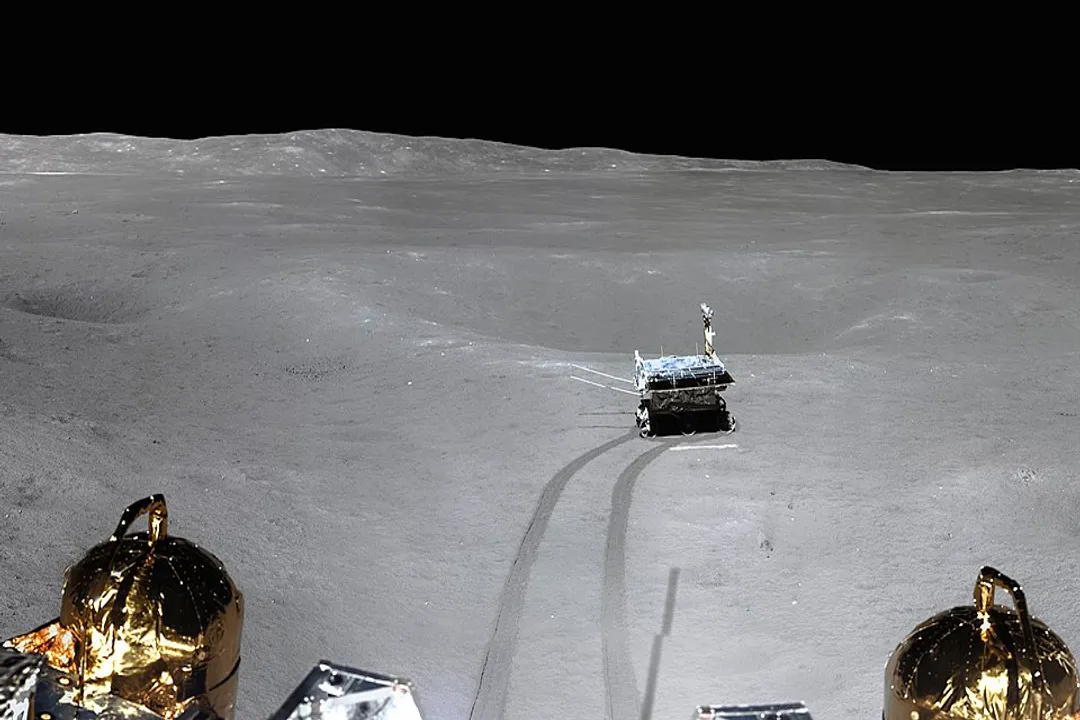
A final, practical consideration for the far side is communication. Because the Earth itself blocks any direct radio line of sight from the Moon's far side, communicating with missions or surface assets requires specialized relay satellites. [4] When the Chinese Chang'e 4 mission successfully landed on the far side in 2019—the first-ever soft landing there—it relied entirely on the relay satellite Queqiao positioned at the Earth-Moon L2 Lagrange point to transmit data back to Earth. [4] This necessity underscores that the physical separation created by tidal locking imposes a significant technological barrier that must be overcome for sustained activity on that hemisphere.
#Videos
WHY CAN'T WE SEE THE FAR SIDE OF THE MOON? - YouTube
Related Questions
#Citations
Far side of the Moon - Wikipedia
WHY CAN'T WE SEE THE FAR SIDE OF THE MOON? - YouTube
Why do we never see the dark side of the moon? : r/askscience
The Moon From the Other Side - NASA Science
What is the other side of the moon that you cannot see called? - Quora
Is the backside of the moon in total darkness when we see the lit ...
NASA on Instagram: "It's the side of the Moon we never see from home
Why we always see the same side of the Moon
The Moon's two faces don't match, and we think we know why