What is the south part of the Moon?
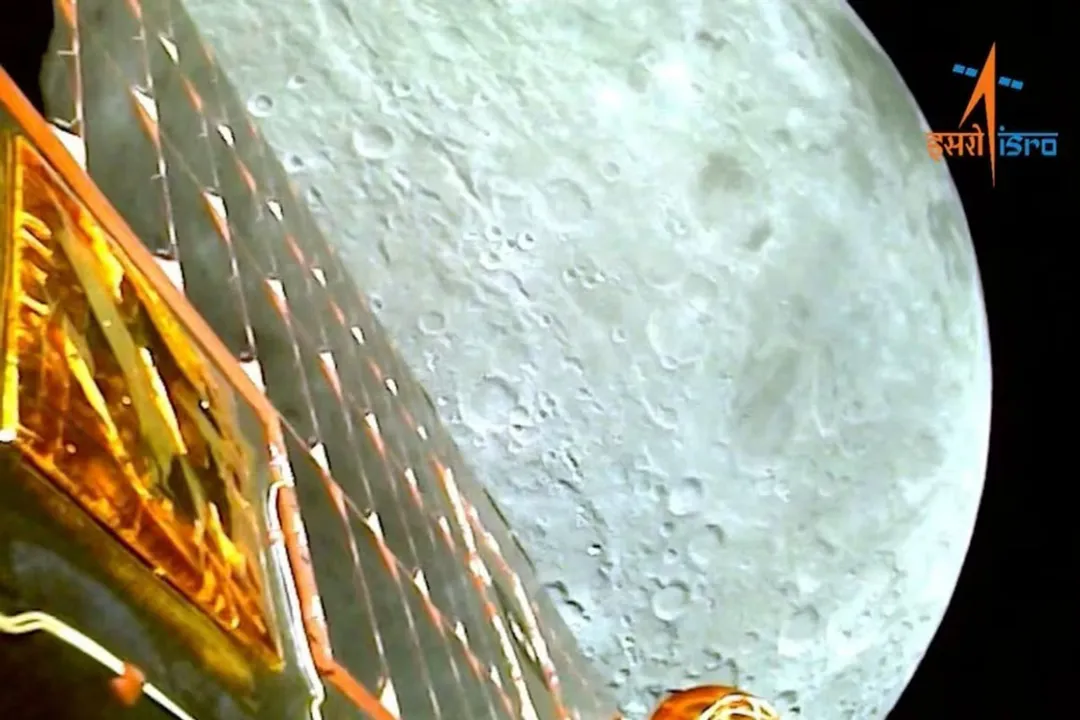
The southern region of our Moon has rapidly transitioned from a distant, vaguely mapped territory into the most scrutinized patch of extraterrestrial real estate in modern space exploration. It is not merely a geographic location on a celestial body; it represents the next major frontier for sustained human presence beyond Earth. This area, particularly near the South Pole, captivates scientists and engineers because it appears to hold the key ingredients—water ice and unique lighting conditions—necessary for building a sustainable outpost far from home. [1][2] The stark contrast between sunlit peaks and permanently shadowed craters makes this landscape both scientifically rich and extraordinarily challenging to navigate.
# Pole Definition
Determining the exact location of the Moon’s South Pole is more complex than one might initially assume. On Earth, the pole is defined by the axis of rotation, and while the Moon shares this characteristic, its axis wobbles slightly over time. This subtle motion means that the true instantaneous rotational pole shifts slightly across the lunar surface over an extended period. [5][9] However, for practical and navigational purposes, scientists define the South Pole as the point on the surface where the lunar axis of rotation passes through the Moon’s interior, effectively anchoring the rotational coordinate system. [5] This definition is crucial for mapping and mission planning, allowing spacecraft to maintain a consistent orientation relative to the Moon's spin. [9] The methodology used to establish this point relies on precise tracking of the Moon's libration—the slight nodding and weaving motions it exhibits as viewed from Earth—to mathematically pinpoint where the rotation axis intersects the surface, a technique that establishes a fixed reference frame for all lunar activities. [7]
# Rugged Terrain
The topography surrounding the South Pole is decidedly not smooth. It is characterized by an intensely fractured and heavily impacted landscape, a testament to billions of years of bombardment. [1] This region is home to massive impact basins, like the Aitken Basin, which is one of the largest and deepest impact structures in the entire Solar System, spanning thousands of kilometers. [4] Navigating this area requires extreme precision because the surface is littered with craters of varying sizes, many of which cast enormous, deep shadows. [1][6] These shadows are central to the region's mystery, as they protect volatile compounds from solar radiation, allowing them to persist over eons. [1] Comparing this to the near side’s mare regions, which are relatively flat plains formed by ancient lava flows, the south presents a far more complex and three-dimensional challenge for any landing vehicle. [4][8] The sheer scale of the topographical variation means that even small movements can result in massive changes in local elevation and lighting conditions. [1]
# Shadow Traps
The most compelling characteristic of the lunar south, and the primary driver for current exploration interest, lies in the near-total absence of direct sunlight in certain deep craters near the pole. [4] These areas are known as Permanently Shadowed Regions (PSRs). [1][2] Imagine a deep bowl where the Sun, perpetually low on the horizon, never quite manages to illuminate the bottom interior, regardless of the time of the lunar day or even the time of year. [4] This phenomenon occurs because the Moon’s axis of rotation is tilted only about relative to the plane of its orbit around Earth, meaning the shadows cast by crater rims are incredibly stable and persistent. [9] If one were to stand on a sunlit peak near the pole, the Sun would hover just above the horizon, casting long, sharp shadows that rarely shift, providing stable areas of near-absolute zero temperature within the shadowed depressions. [1][6] It’s this unique lighting geometry that creates what are essentially deep-freeze storage lockers on the Moon. [4]
# Water Ice Deposits
The reason those deep, cold shadows matter so much is what they are thought to contain: water ice. [2] Observations from orbiting spacecraft, using instruments like radar and neutron spectrometers, have detected spectral signatures indicating the presence of hydrogen, strongly suggesting deposits of water ice mixed with the regolith inside these PSRs. [2][4] While the exact concentration and distribution are still subjects of intense study, the consensus is that significant quantities of frozen volatiles exist here. [2] The persistence of this ice is a direct consequence of the near-perpetual darkness and extremely low temperatures found within the shadows—temperatures that can dip below (or about ). [1] This ice is not just a scientific curiosity; it is a potential in-situ resource. Water can be split into hydrogen and oxygen—the fundamental components for breathable air and rocket propellant. [2]
For instance, if a mission could reliably extract just one metric ton of usable water ice from the south pole region, the mass saved on launching that same resource from Earth would be monumental. A simplified calculation reveals the profound impact: launching one kilogram of liquid oxygen (LOX) from Earth costs thousands of dollars and requires immense energy. If the same kilogram can be harvested on the Moon, that cost drops to the expense of the mining hardware and energy consumption on the surface, offering an immense economic advantage for any future sustained presence. [4] This potential for in-situ resource utilization (ISRU) is what makes the South Pole the primary target over other, more easily illuminated lunar locales. [2]
# Illumination Opportunities
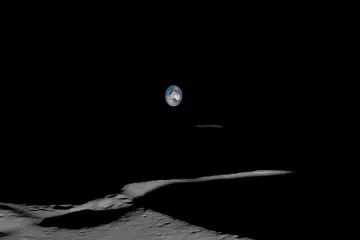
While the shadows are resource repositories, the areas outside the shadows are equally important. The peaks of certain craters, which stick out above the shadow line, receive almost constant sunlight. [1] These areas, often referred to as Peaks of Eternal Light (PELs), offer a unique operational advantage. [4] A lander or habitat placed on one of these sun-drenched ridges could theoretically draw power from solar arrays that never experience the two-week-long lunar night experienced elsewhere on the Moon. [1] This constant energy supply is critical for powering ISRU operations, communications, and life support systems without relying on massive, heavy battery storage or nuclear generators.
When comparing the two major resources—ice in the shadows and constant light on the ridges—a logistical pattern emerges for future bases. The ideal settlement would likely be situated in a valley or on a slope adjacent to a PSR, allowing short excursions by rovers or astronauts to mine the ice, while the primary habitat and power generation facilities occupy the nearby, sunlit ridge line. [4] This proximity minimizes transit time and maximizes resource access, creating a self-sufficient operational node. [1] This juxtaposition of permanent darkness and permanent light, co-existing within meters of each other, is a topographical duality found nowhere else we currently plan to land. [4]
# Navigational Specifics
Understanding the difference between the geographic South Pole and areas near the South Pole is important for mission planners. Missions like NASA's Artemis aim for the South Polar Region, which is generally defined as any area within about 10 degrees latitude of the rotational pole. [1] This broader zone encompasses both the PSRs and the PELs. [4] The rationale for targeting this region, rather than the exact rotational pole point, is flexibility. [7] The exact pole is mathematically defined but may not coincide with the best geological or resource location. Therefore, the engineering objective centers on accessing the resources associated with the pole—the deep shadows and perpetual light—rather than achieving an arbitrary landing spot on the exact geometric pinprick. [5]
# Exploration Focus
The interest in the Moon's south is not purely theoretical; it is driving active international space efforts. [1] Several robotic missions have been specifically targeted at probing this area to confirm the nature and accessibility of the water ice before sending humans. [2] Missions have been designed to orbit, impact, or land in this rugged terrain to analyze the composition and depth of the volatiles. [4] The technological hurdles are significant; landing anywhere on the Moon is hard, but landing near the South Pole requires specialized hazard avoidance systems to deal with the extreme shadows that can blind optical navigation sensors or hide dangerous slopes. [1] The scientific community views this region as a geological and astrobiological treasure trove, as the preserved ices may hold records of the early Solar System’s composition, perhaps even containing material delivered by ancient comets. [4] The data gathered from successful robotic precursors will directly inform the design of the first permanent crewed lunar base, making every data point gathered there exceptionally valuable. [1][2]
The selection of the south polar region as the cornerstone for sustained lunar exploration highlights a shift in philosophy from the Apollo-era landings, which favored flat, equatorial regions for ease of landing and sunlight access. Today, the goal is staying, and staying requires local resources, which, in the lunar South Pole, appear to be locked away in permanently frigid darkness, waiting for the right technology to unlock them. [2] The planning phase for these subsequent missions often involves intricate orbital mechanics simulations to ensure that communication blackouts, caused by lunar features blocking the line of sight back to Earth, are minimized for the landing site selection, which adds another layer of complexity beyond just terrain and lighting. [3][9]
The presence of these unique environmental factors means that any long-term structure built there will likely need to incorporate radiation shielding derived from the regolith itself, alongside systems designed to cope with massive, localized temperature gradients spanning hundreds of degrees Celsius across a relatively short distance. [1] This engineering challenge—managing extreme thermal variation while maintaining a breathable, pressurized habitat near a volatile ice mine—represents a truly novel problem set for future space settlements. [4] The South Pole is less a destination and more a proving ground for deep space habitation technology.
#Videos
What's So Special About The Moon's South Pole - YouTube
Related Questions
#Citations
The Moon's Rugged, Intriguing South Pole
Why is the moon's south pole so important? | World Economic Forum
What's So Special About The Moon's South Pole - YouTube
Exploring the Moon's South Pole - Lunar and Planetary Institute
Here's The Exact Point of the Moon's South Pole - Universe Today
South pole of the Moon - ESA
ELI5: How did we decide which of the moon's poles is its south pole?
Map of the Moon's South Pole | National Air and Space Museum
Topographic Map of the Moon's Southern Side