Why is the south side of the Moon important?
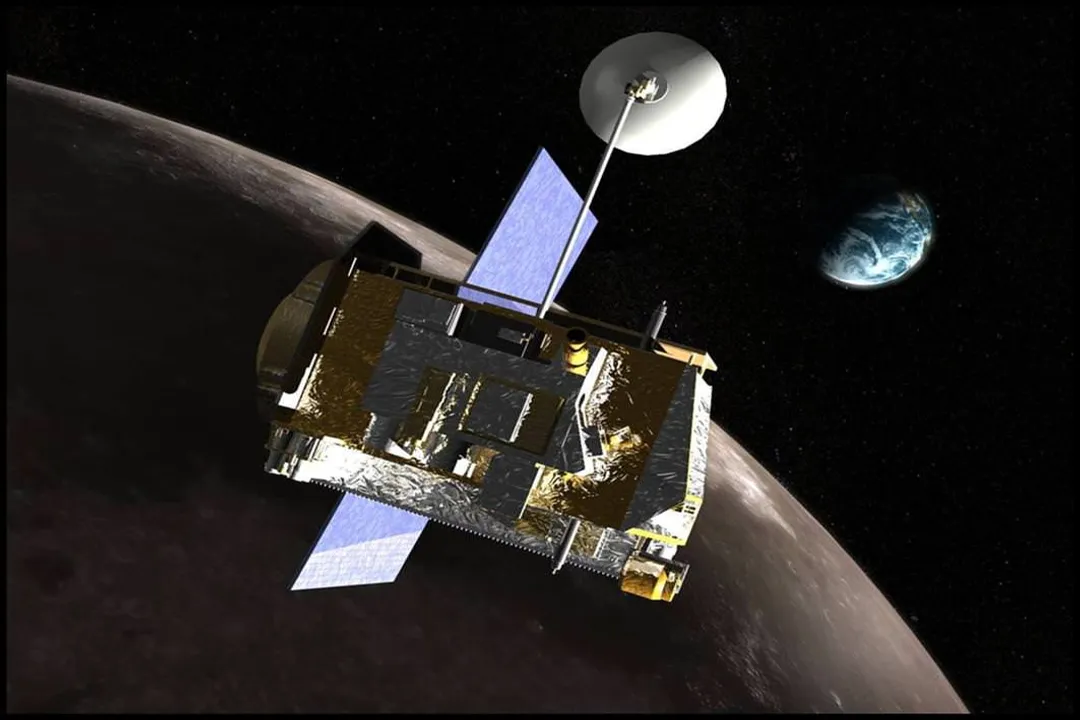
The region around the Moon’s South Pole has rapidly shifted from a scientific footnote to the primary target for sustained human presence beyond low Earth orbit. While the far side of the Moon captures imagination due to its radio silence, it is the deep, frigid shadows near the southern lunar geographic pole that hold the key to making long-term off-world habitation economically and logistically feasible. The scientific intrigue surrounding this area is intrinsically linked to the confirmed presence of water ice, a resource previously only theorized to exist in significant quantities. This potential store of frozen volatiles transforms the Moon from a scientific destination into a functional waypoint for deep space exploration.
# Water Ice
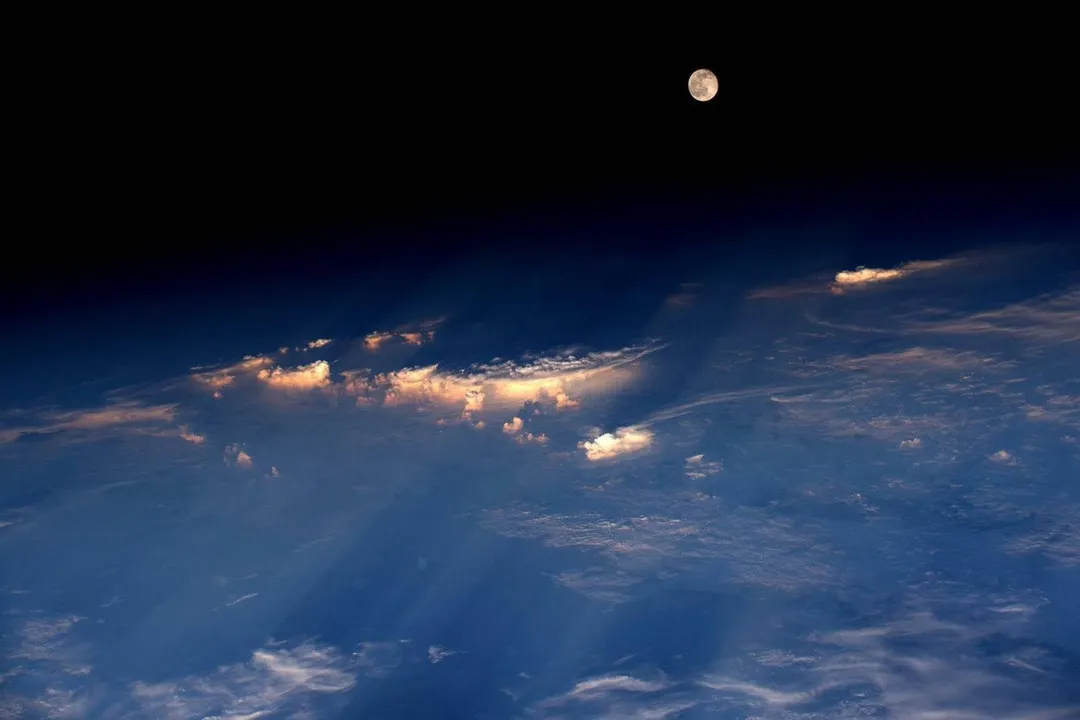
The identification of water ice in the Lunar South Polar Region (LSPR) is arguably the most significant discovery influencing current and future lunar exploration strategies. This ice is not scattered across the sunlit surface; rather, it is concentrated in areas that never receive direct sunlight. The crucial context here is that the Moon has almost no axial tilt, meaning the floors of deep craters near the poles remain perpetually shielded from solar energy.
Multiple missions, using different instrumentation, have provided increasingly compelling evidence confirming the existence of this water ice. This persistence of ice is what makes the location so valuable. On Earth, even in arctic permafrost, geothermal warming and other processes can cause ice to migrate or sublimate over vast timescales. On the Moon, however, the ice locked away in these permanently shadowed regions (PSRs) has been preserved in a near-perfect vacuum for billions of years. It is essentially a pristine record of the materials that have impacted the Moon over its history, as well as a readily accessible store of essential compounds for human endeavors.
# Shadowed Craters
The physical environment creating these icy reservoirs is defined by the permanently shadowed regions within deep craters. These regions act as exceptionally efficient cold traps. Because the sunlight never reaches the crater floors, temperatures plummet dramatically, creating some of the coldest known places in the entire solar system, often hovering around $-240$ degrees Celsius or lower.
Imagine a container sealed for eons where the contents never change temperature. That is the state of the PSR floors. Any water molecules—perhaps delivered by comets or asteroids over billions of years—that drift into these shadowed areas become instantly trapped, unable to escape due to the lack of thermal energy to break their bonds with the lunar regolith. This trapping mechanism is what concentrates the water ice into deposits that might be exploitable. Unlike terrestrial ice, which requires complex geological modeling to predict stability, lunar PSR ice is inherently stable until disturbed by drilling or robotic excavation. This stability, coupled with the extreme cold, means the resource isn't just present; it is preserved.
It is interesting to consider that the extremely low temperatures inside these traps also mean the environment is an unparalleled vacuum, which paradoxically aids preservation but complicates initial robotic investigation; any machinery needs to be designed to operate reliably at cryogenic levels while also withstanding the abrasive lunar dust.
# Resource Utilization Future
The primary reason the South Pole is a "game-changer" is its resource potential, specifically the ability to convert water ice into usable components for In-Situ Resource Utilization (ISRU). Water (H₂O) is the Swiss Army knife of space exploration.
If we can extract the water ice, we can then break it down through electrolysis into its constituent parts: hydrogen and oxygen.
- Oxygen is vital for breathing (life support).
- Hydrogen and Oxygen, when combined as liquid cryogenic propellants, create one of the most powerful chemical rocket fuels available.
This ability to make fuel on the Moon is transformative. Currently, every kilogram of propellant needed for a mission heading to Mars or beyond must be launched from Earth's deep gravity well, which is extremely expensive. If future missions—both robotic and crewed—can land at a South Pole base, mine water ice, turn it into propellant, and refuel their ascent vehicles there, the required launch mass from Earth drops precipitously. This shifts the Moon from being a destination to being a gas station for the solar system.
To illustrate the benefit, consider this: launching one metric ton of liquid oxygen from Earth to low Earth orbit costs hundreds of thousands of dollars. If a modest lunar operation could produce and store even just five metric tons of propellants derived from local ice, that represents millions of dollars saved and frees up significant payload capacity for scientific instruments or habitat modules on the initial Earth launch. Without this local resource, maintaining a continuous presence is prohibitively costly, keeping missions short and science-limited.
# Scientific Intrigue
While the practical aspects of resource extraction drive funding and mission planning, the region also offers unique scientific returns independent of ISRU. The LSPR hosts regions that have been largely undisturbed by solar wind, micrometeorite impacts, or geothermal activity for eons.
The deep regolith layers near the poles may contain a preserved record of the early solar system's composition, far better preserved than samples collected from equatorial landing sites that have experienced more thermal cycling and solar exposure. Studying the specific isotopic ratios of the trapped water and other volatiles could shed light on the origin of Earth’s water and the bombardment history of the inner solar system.
Furthermore, the geology of the area is distinct. The deep, ancient craters themselves represent major impact events that shaped the Moon early in its history. Scientists are eager to study the mineralogy and structure within these regions to understand the dynamics of large impacts and subsequent thermal evolution, providing context for the entire lunar body. The contrast between the permanently illuminated peaks (which receive near-constant sunlight) and the permanently shadowed floors offers a natural laboratory to study extreme thermal gradients over very short distances.
# Landing Challenges
The scientific and logistical rewards of the South Pole region come with significant engineering hurdles, primarily related to navigation and landing safety. Landing near the poles is inherently more complex than landing near the lunar equator, which has been the target for most previous landings.
Traditional landing sites often feature relatively flat, smooth terrain that is well-illuminated, simplifying hazard avoidance for autonomous systems. In contrast, the South Polar region is characterized by rugged topography, deep shadows, and extreme lighting variations that confuse optical sensors. Landers must navigate based on extremely limited visual data or rely heavily on pre-loaded terrain maps derived from orbiters, which may not capture the micro-hazards on the surface.
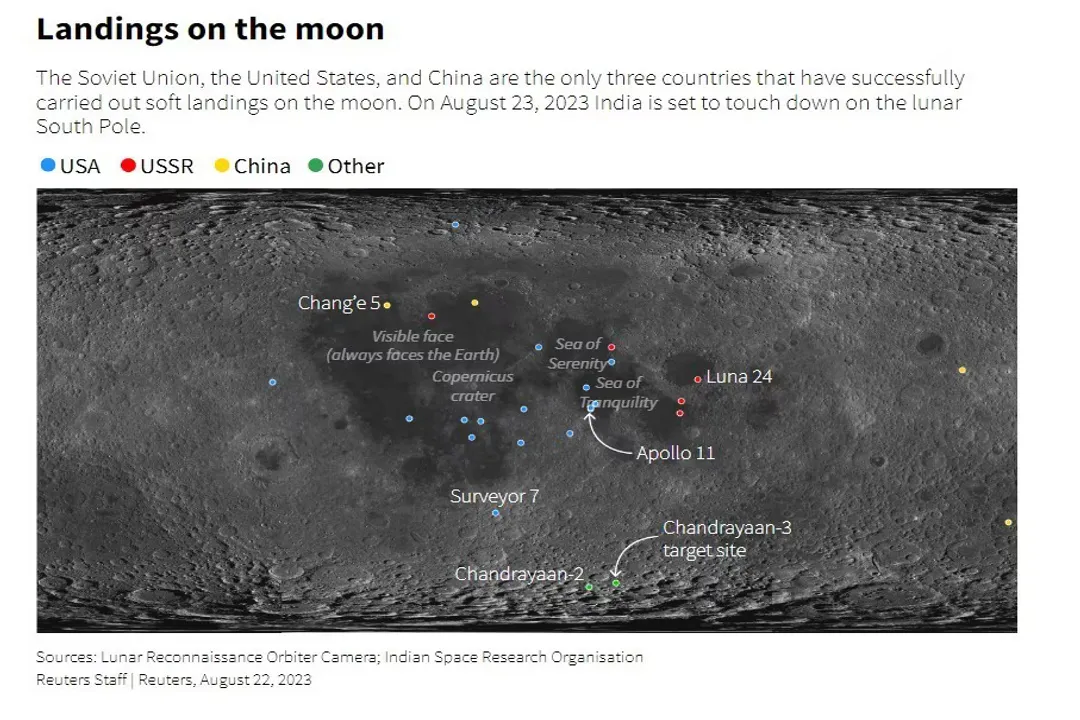
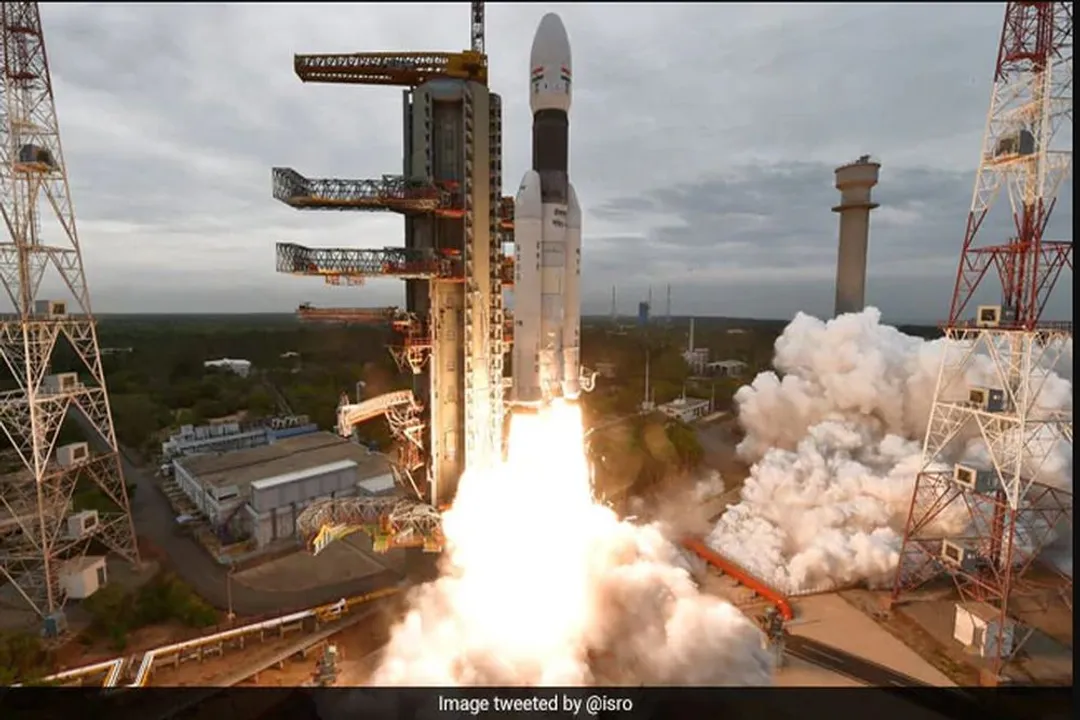
The success of nations like India in achieving soft landings near the South Pole is therefore a notable engineering feat, demonstrating advancements in autonomous navigation systems capable of dealing with these challenging environments. The difficulty is twofold: ensuring the lander survives the descent by avoiding boulders and steep slopes, and ensuring it lands within range of the desired ice resource, often located in the permanently shadowed zone itself. Future crewed missions must plan for bases near the "peaks of eternal light" on crater rims—where sunlight is nearly constant for power generation—but close enough to send rovers down into the permanently shadowed floors to harvest the water ice. This proximity requirement forces a complex operational footprint right from the start of establishing a permanent base.
#Videos
Why South Pole of Moon important | Chandrayaan 3 landing
Related Questions
#Citations
Why is the moon's south pole so important? | World Economic Forum
Moon's South Pole is Full of Mystery, Science, Intrigue - NASA
ELI5 why is it so impressive that India landed on the South side of ...
Why South Pole of Moon important | Chandrayaan 3 landing
#753: Why is the Moon's South Pole So Interesting? | Astronomy Cast
Why is the South Pole of the Moon a game-changer for space ...
Why Is The Moon's South Pole So Important? It's All About Water
[PDF] WHY ARTEMIS WILL FOCUS ON THE LUNAR SOUTH POLAR ...
To the far side of the Moon: the battle for lunar resources