Has any human been to the dark side of the moon?
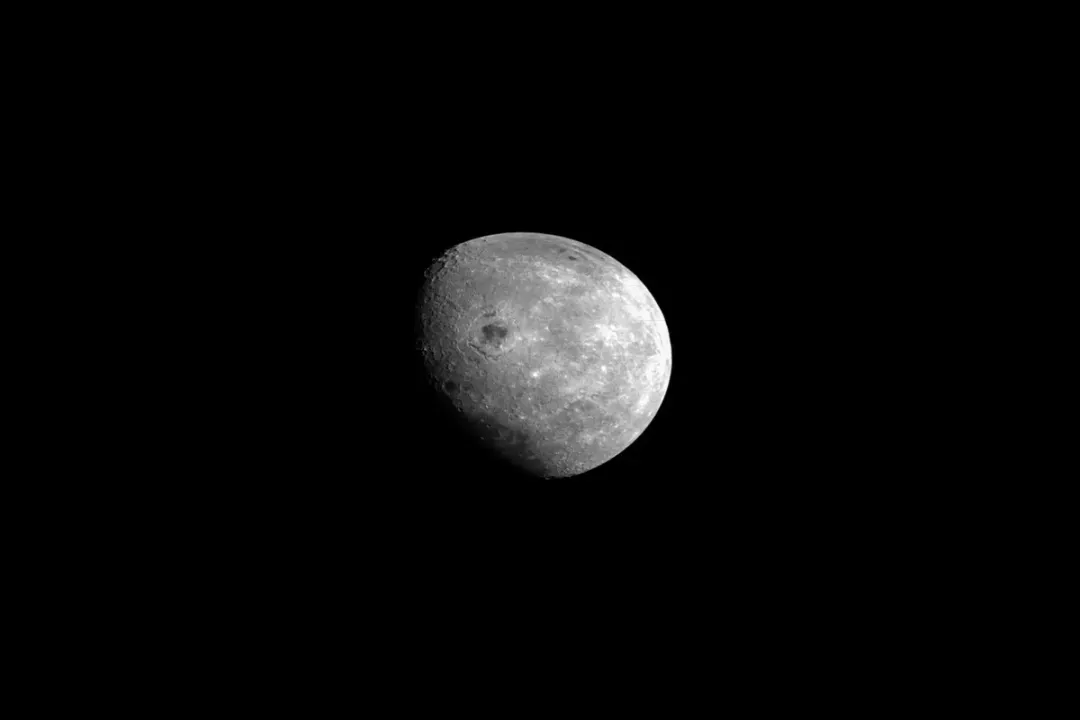
The simple answer to whether any human has visited the far side of the Moon is complex, hinging entirely on how one defines "visit." While no human has yet stepped foot on that terrain, astronauts have passed over it, seeing it firsthand from lunar orbit. The popular culture term, the "dark side of the Moon," is technically inaccurate and often causes confusion about what we are actually discussing. [8]
# Terminology Shift
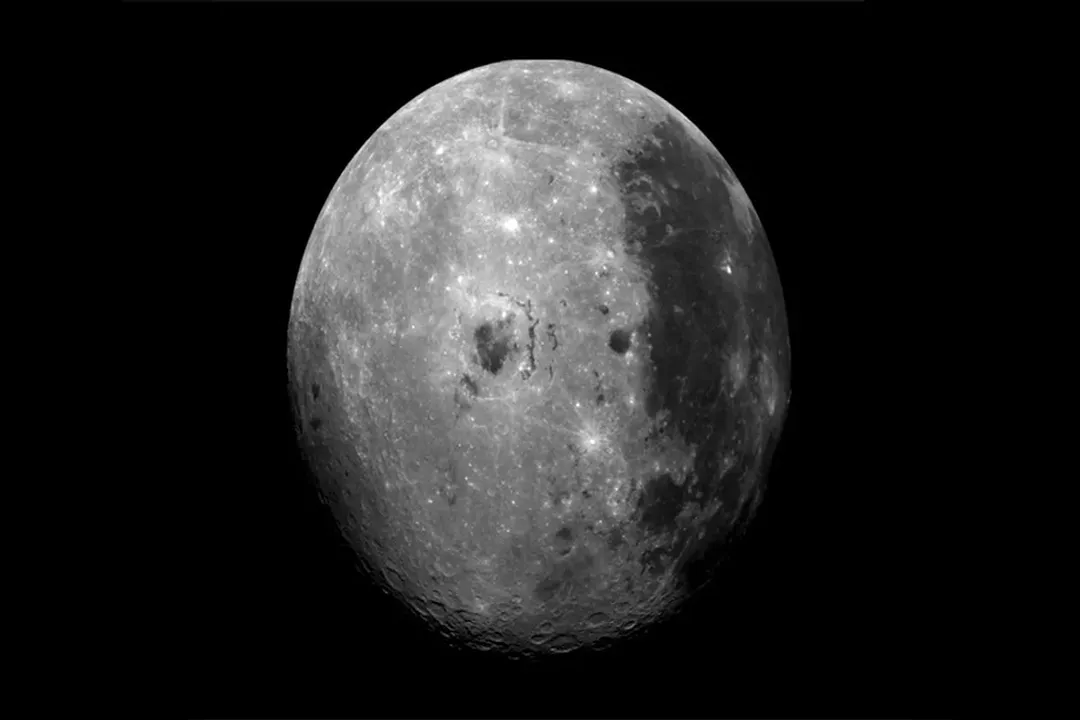
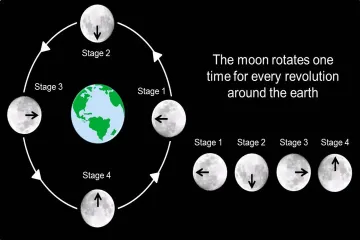
The primary clarification needed when discussing this region is the terminology itself. What is often called the "dark side" is properly referred to as the far side of the Moon. [8][9] This distinction is critical because the far side is not permanently dark. Since the Moon rotates on its axis as it orbits the Earth, the far side receives sunlight just as regularly as the near side we see every night. [8] For any location on the Moon, a lunar day lasts about 14 Earth days, followed by a 14-day lunar night. [8] The confusion stems from tidal locking, a gravitational phenomenon that causes the Moon to always present the same face—the near side—toward Earth. [8] Therefore, if you are standing on the far side, you will never see our home planet in your sky. [9]
# Orbital Passes
The first humans to witness the far side were the crew of Apollo 8 in December 1968, who became the first to orbit the Moon and photograph the unseen landscape. [1] Any astronaut who has flown on an Apollo mission that successfully reached lunar orbit, including the later missions that landed on the near side, would have experienced crossing over the far side several times during their transit. [1]
One of the most famous examples of a human being in that specific, silent region is Apollo 11 Command Module Pilot, Michael Collins. [3] While Neil Armstrong and Buzz Aldrin were descending to the Sea of Tranquility, Collins remained in the Command Module, Columbia, orbiting the Moon. During these passes over the far side, he was completely isolated from direct radio contact with Earth, as the Moon itself blocked the signal. [3] For those brief periods, he was further from humanity than any other person in history. [3] When thinking about the view during those transits, the experience is profoundly different depending on which side the astronaut is passing. When orbiting the near side, the Earth hangs large and blue in the black sky, a constant, reassuring presence. For an orbiting astronaut, the far side represents an almost absolute sensory reversal: the Earth vanishes, replaced only by the deep, unchanging blackness of space in one direction and the Moon's alien terrain in the other. [3][8] This stark contrast likely offers a unique psychological imprint, far exceeding the already intense isolation felt when simply knowing Earth is temporarily obscured. [1]
# The Landing Milestone
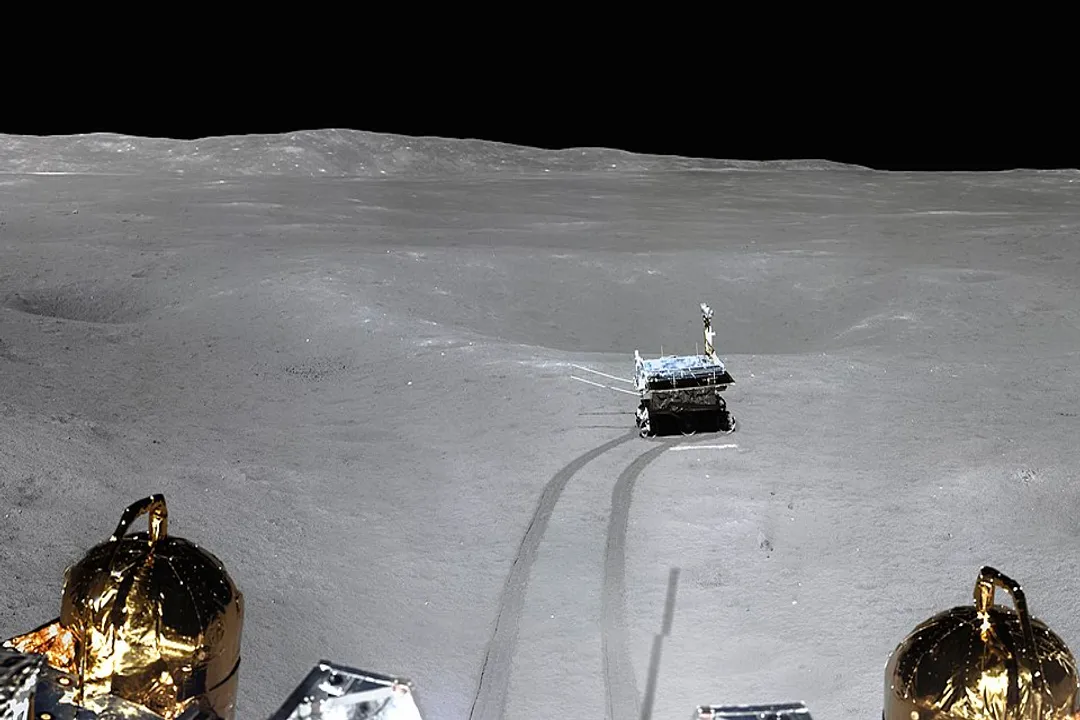
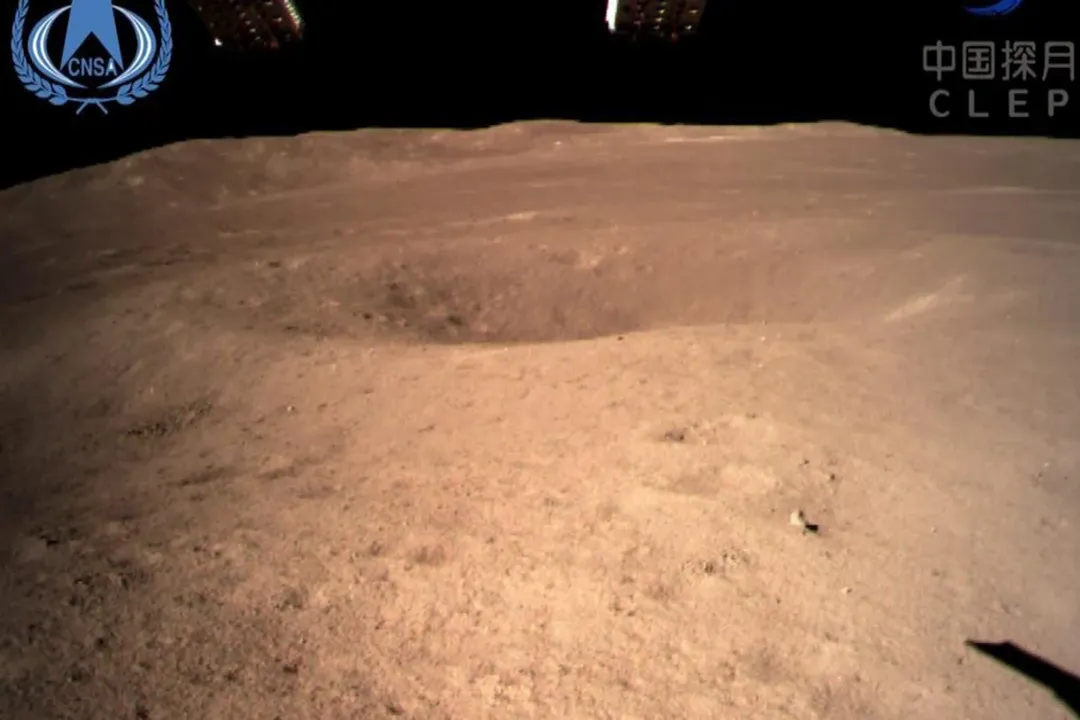
While humans have passed over the far side in orbit, successfully landing there required overcoming significant communication hurdles. Because the Moon blocks direct radio transmission, any lander on the far side requires a relay satellite to communicate with controllers on Earth. [7] This challenge was definitively solved by China’s Chang'e 4 mission, which executed the first successful soft landing on the far side in January 2019. [7] This unmanned achievement marked a massive technological step forward, demonstrating the necessary infrastructure for deep-space operations behind an occulting body. [7] To date, no human has followed that robotic path to stand on that terrain. [2] The experience of walking there, should it happen, will be defined by that constant radio silence from Earth, an auditory void that no near-side mission has ever truly replicated.
# Geological Differences
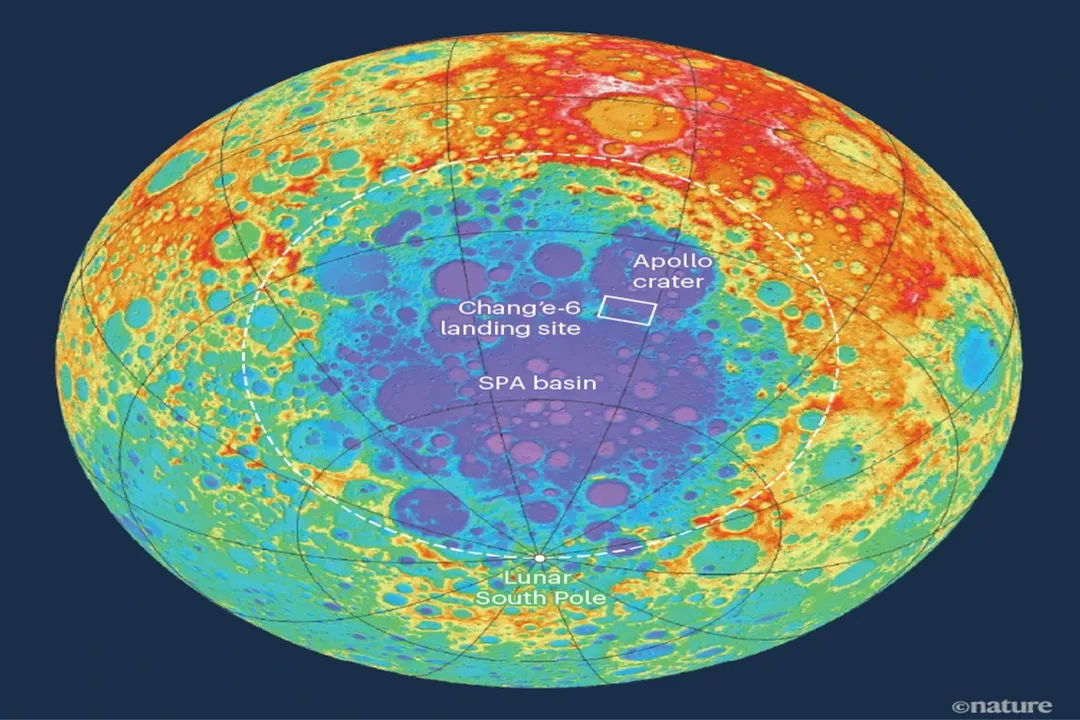
The far side isn't just geographically separate; it is geologically distinct from the side facing us. [4] Scientists have long noted that the far side features significantly fewer maria—the large, dark, basaltic plains formed by ancient volcanic eruptions—compared to the near side. [8] The near side is covered in these smooth, dark plains, which account for about 31% of its surface area, whereas the far side has maria covering only about 1% of its surface. [8] This disparity suggests a fundamental difference in the Moon's crustal structure. [4]
Analysis of the first rock samples returned from the far side—specifically those brought back by the Chinese Chang'e 5 mission, which landed near the boundary but collected material believed to represent far-side composition—has shed light on this asymmetry. [4] These returned materials show that the crust on the far side is generally thicker than the crust on the near side. [4][8] This thicker crust may have made it more difficult for magma to breach the surface and form the expansive basaltic seas we see on the near side. [8] This geological variation underscores why the far side is a prime target for future scientific exploration; understanding why the Moon evolved into a two-faced body requires samples from the less-volcanic region. [4]

# Astronaut Accounts
The experience of returning home after having seen the far side, even just from orbit, is a recurring point of interest. While astronaut accounts often focus on the profound effect of seeing the Earthrise from the near side, the silent passage over the far side must leave a distinct impression. [3] For the Apollo astronauts, the entire trip was life-altering, but the periods where communication was lost due to the orbital mechanics would have magnified the sense of distance. When they returned, the contrast between the Moon's desolate, silent landscape and the bustling life of Earth must have been overwhelming. [2] Astronauts who have experienced that isolation often speak about a new perspective on Earth's fragility and interconnectedness, a perspective only achievable by leaving its immediate gravitational presence and seeing it shrink against the void. [2]
# Future Probes
The success of the unmanned far-side landings [7] sets the stage for human ambition. Future crewed missions aiming for the far side will require more than just a relay satellite; they will need advanced life support and perhaps entirely new methods of navigation and communication to handle the sustained absence of a direct Earth line-of-sight. [7] The next generation of explorers will be the first to set foot on this historically hidden terrain, potentially establishing a listening post free from the radio noise originating from Earth. [8] That step, when it occurs, will complete the full exploration of the Moon's surface by human beings.
#Videos
World first: Chinese spacecraft lands on 'dark' side of moon - YouTube
Related Questions
#Citations
Far side of the Moon - Wikipedia
Has anyone ever walked on the dark side of the moon? If so ... - Quora
Michael Collins, an Apollo 11 astronaut, was dubbed the “worlds ...
First returned rock samples shine a light on the Moon's 'dark side'
Mysterious figures on the dark side of the moon - Facebook
World first: Chinese spacecraft lands on 'dark' side of moon - YouTube
China lands spacecraft on 'dark' side of moon in world first
The Dark Side and the Bright Side - Earth Observatory - NASA Science
Far side of the Moon - history and pictures