Has any human ever seen the dark side of the moon?
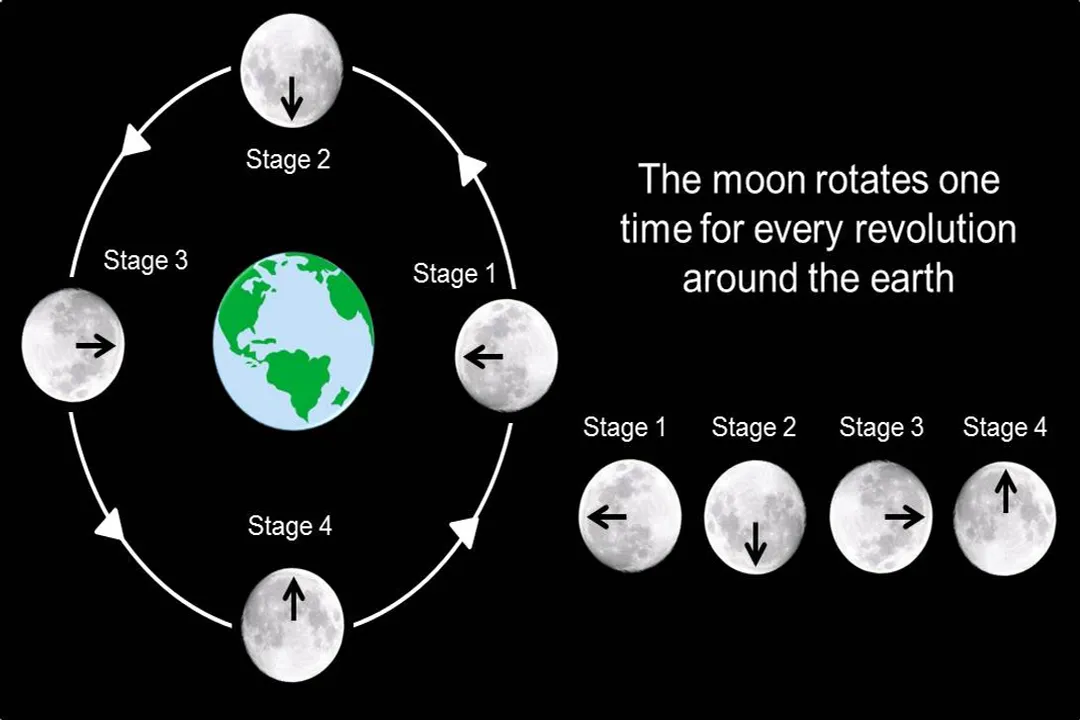
The concept of a "dark side" of the Moon has captured the human imagination for generations, conjuring images of a permanently shadowed, mysterious hemisphere forever hidden from our view. This persistent idea stems from a fundamental misunderstanding of celestial mechanics, but the truth behind what we call the dark side is even more fascinating than the myth suggests. The simple answer to whether any human has seen it is a definite yes, but not in the way most people assume the term implies.
# Tidal Lock
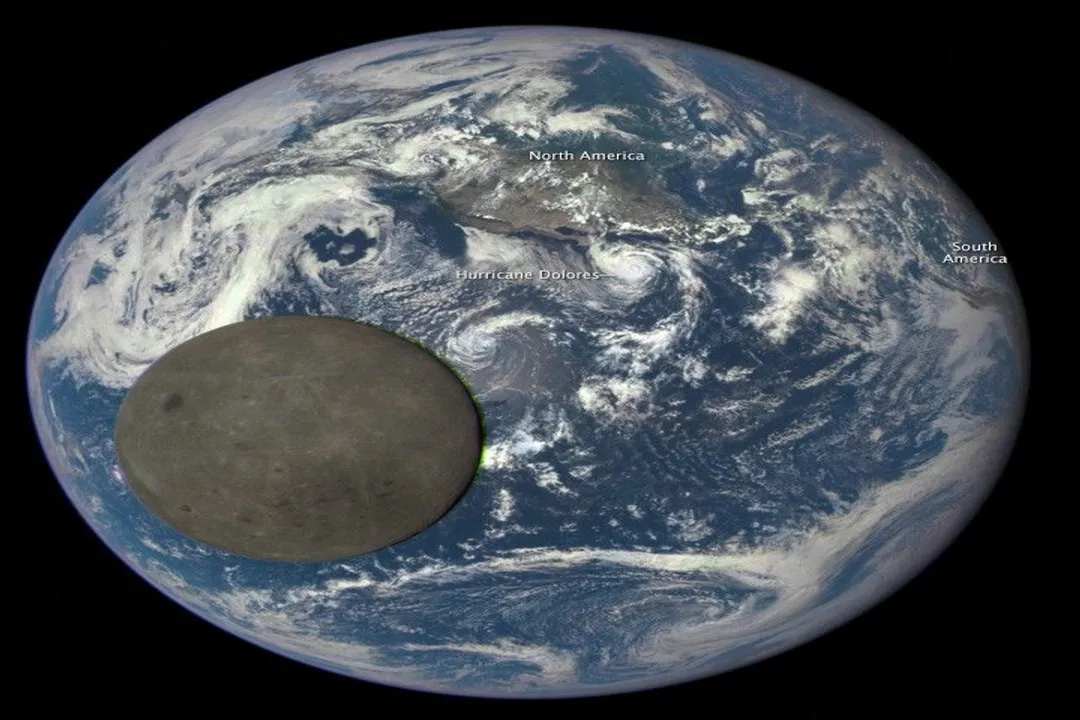
The reason Earthlings only ever see one face of our natural satellite boils down to a phenomenon known as synchronous rotation or tidal locking. Over eons, the gravitational pull between the Earth and the Moon resulted in the Moon’s rotation period slowing down until it matched its orbital period exactly. This means the Moon spins on its axis precisely once for every orbit it completes around Earth.
Think about it this way: if you walk around a statue while constantly facing it, you are performing one rotation around the statue for every trip you make around it. The Moon does the same thing relative to Earth. Because of this precise synchronization, the same hemisphere—the near side—is always pointed toward us, and the other hemisphere—the far side—is perpetually turned away.
# Far Side
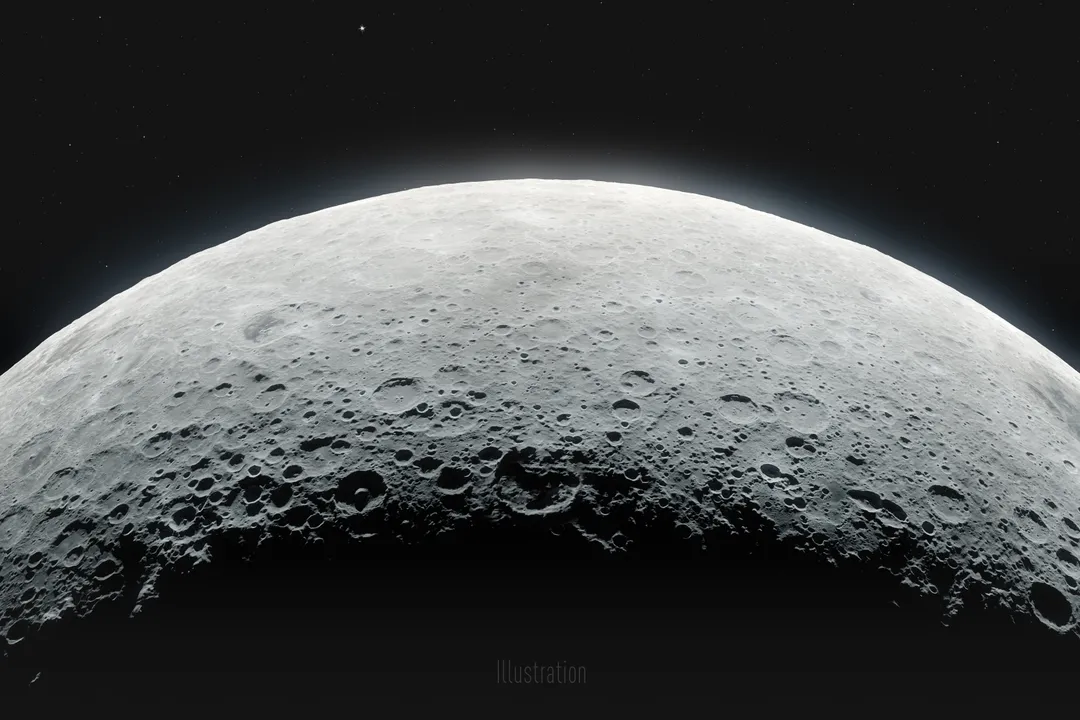
The most crucial clarification to make is that the term "dark side" is inaccurate terminology; the correct phrase is the far side of the Moon. The far side is not eternally cloaked in shadow; it receives just as much solar illumination as the near side over the course of one lunar cycle. When we experience a New Moon on Earth—meaning the side facing us is unlit—the far side is fully illuminated by the Sun. Conversely, when we see a Full Moon, the far side is experiencing its own version of night. The difference is merely whether the sunlight is hitting the face visible from Earth or the face hidden from Earth.
This misunderstanding is easy to propagate because, from our vantage point, only a portion of the visible near side is ever illuminated at any given time. We call the cycle of light and dark we observe lunar phases, which are determined by the changing angles of the Sun, Earth, and Moon, not by a static dark hemisphere.
# First Sight
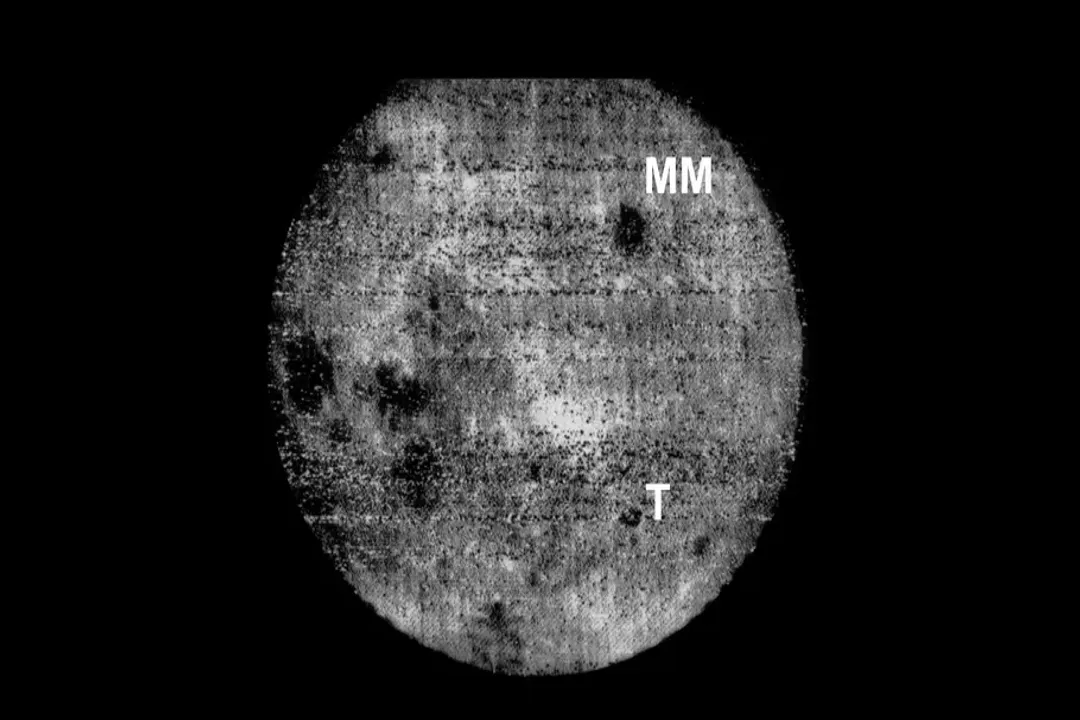
Since no human on Earth can see the far side directly, the first beings to ever view that hemisphere were robotic explorers. That monumental first glimpse happened in October 1959, courtesy of the Soviet Union’s Luna 3 probe. This uncrewed mission successfully circled the Moon and transmitted the first-ever images of the hidden landscape back to Earth.
However, the question asks about human eyes. The first human beings to look upon the lunar far side were the crew of Apollo 8 in December 1968. As their spacecraft rounded the Moon, the astronauts experienced a profound moment, becoming the first people to witness the alien landscape that was completely unknown to humanity until that point. They saw the entire hemisphere pass before them as they orbited. It is important to note, though, that while they saw it, no human has yet walked on the far side. All successful crewed Moon landings, from Apollo 11 onwards, touched down on the near side.
# Surface View
The images relayed by Luna 3 and later confirmed by subsequent missions, including the Apollo program, revealed a stark contrast between the two hemispheres. If you look at a map of the near side, you see large, dark, relatively smooth plains interspersed with craters. These dark patches are called maria (Latin for seas), which are vast fields of ancient, solidified basaltic lava.
The far side, however, tells a very different geological story. It is much more heavily pocked, covered in a dense saturation of impact craters with very little of the smooth maria material. Scientists attribute this difference primarily to the thickness of the Moon's crust. The crust on the far side is significantly thicker than the crust on the near side, making it much harder for molten rock from the lunar interior to break through and flood the surface to create those dark plains. This structural asymmetry is a key difference between the two faces, something only understood once we had visual confirmation from probes and the Apollo crews.
To visualize this disparity in geological features, consider the primary surface types:
| Feature | Near Side Dominance | Far Side Dominance |
|---|---|---|
| Maria (Dark Plains) | High concentration; makes up about 31% of the surface | Very few, small plains |
| Craters | Significant but interspersed with maria | Extremely dense saturation |
| Crustal Thickness | Thinner overall | Significantly thicker |
The difference in appearance is so striking that, had a human traveler only ever seen images of the near side, they would have been completely unprepared for the rugged, ancient look of the far side. It’s like comparing the relatively smooth, dark flood basalts of the Columbia River Plateau on Earth to the heavily impacted highlands of the Moon—the underlying processes are similar (volcanism), but the resulting surface appearance is radically different due to crustal features.
# Human View
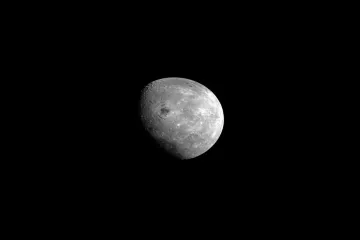
The experience of the Apollo 8 crew—Frank Borman, Jim Lovell, and William Anders—seeing the far side was historic not just for what they saw, but for how they saw it. They were the first humans to have their view of Earth entirely blocked by the Moon as they orbited. The experience was characterized by the stark, unfamiliar terrain. This was an event that marked the transition from speculation and telescopic observation to direct, human sensory input about the Moon's hidden face.
It’s worth remembering the limitations of early photography and telescopic observation compared to direct human sight. While Luna 3 sent back the first crude pictures, the Apollo astronauts provided the first high-fidelity, real-time observation, seeing the full relief, shading, and three-dimensional nature of that unseen territory with their own eyes. They were seeing something that had only been mapped mathematically or hinted at by early probes.
# Future Landings
While humans have seen the far side, setting foot there remains an objective for future space exploration. Landing a spacecraft on the far side presents unique technical challenges, primarily related to communication. Because the bulk of the Moon blocks direct line-of-sight radio communication with Earth, any lander or rover sent there requires a dedicated relay satellite positioned at the Earth-Moon Lagrange point L2. This orbital relay acts as a crucial intermediary, bouncing signals between the lander and mission control on Earth.
The advantage of exploring the far side, besides completing the exploration of the Moon, is its relative isolation from Earth's radio noise. This quiet environment makes the far side an attractive location for building radio telescopes that require an extremely low interference background to detect faint signals from the very early universe. The scientific payoff for establishing a base or conducting surface experiments there is high, but the logistical hurdle of setting up the communication chain is significant. The exploration of the near side, while critical for the initial Apollo missions, was dictated partly by ease of communication, allowing continuous contact with Houston. Landing on the far side requires an entirely different communication strategy, relying on technology deployed specifically for the task.
In summary, the "dark side" is indeed visible to humans, having been first witnessed by astronauts in 1968. It is not dark, but simply far. Furthermore, while we have seen it, the challenge of physically walking there has yet to be overcome, a feat awaiting future missions capable of managing the inherent communication blackout. The initial photographs, taken decades earlier by the Soviet Luna 3, confirmed the Moon’s profound geological imbalance, showing a heavily cratered terrain largely devoid of the dark volcanic seas common on the face we know so well.
#Videos
'Dark side' of moon seen from surface for first time - YouTube
There is No "Dark Side of the Moon" - YouTube
Related Questions
#Citations
are humans able to see the dark side of the moon? - Reddit
'Dark side' of moon seen from surface for first time - YouTube
The Dark Side and the Bright Side - Earth Observatory - NASA Science
Has anyone ever walked on the dark side of the moon? If so ... - Quora
Why don't we ever see the far side of the moon? | PBS News
What the Dark Side of the Moon Looks Like - Explorersweb »
Is the “Dark Side of the Moon” Actually Dark?
Ask Ethan: Is there really a “dark side” of the Moon? - Medium