Has a human ever stepped foot on Mars?

The definitive answer, as of today, is no: no human being has ever set foot on Mars [cite: general consensus from multiple sources]. While robotic explorers like rovers and orbiters have diligently mapped the surface, analyzed the atmosphere, and searched for signs of past life, the monumental step of sending astronauts across interplanetary space to land on the Red Planet remains a goal for the future [cite: NASA.gov]. The distance separating Earth and Mars, coupled with the sheer complexity of sustaining life for such an extended duration, means that setting foot on Martian soil is a technological and physiological hurdle far exceeding the Apollo landings on the Moon [cite: Astronomy.com][cite: BBC Earth].
# Robotic Precursors

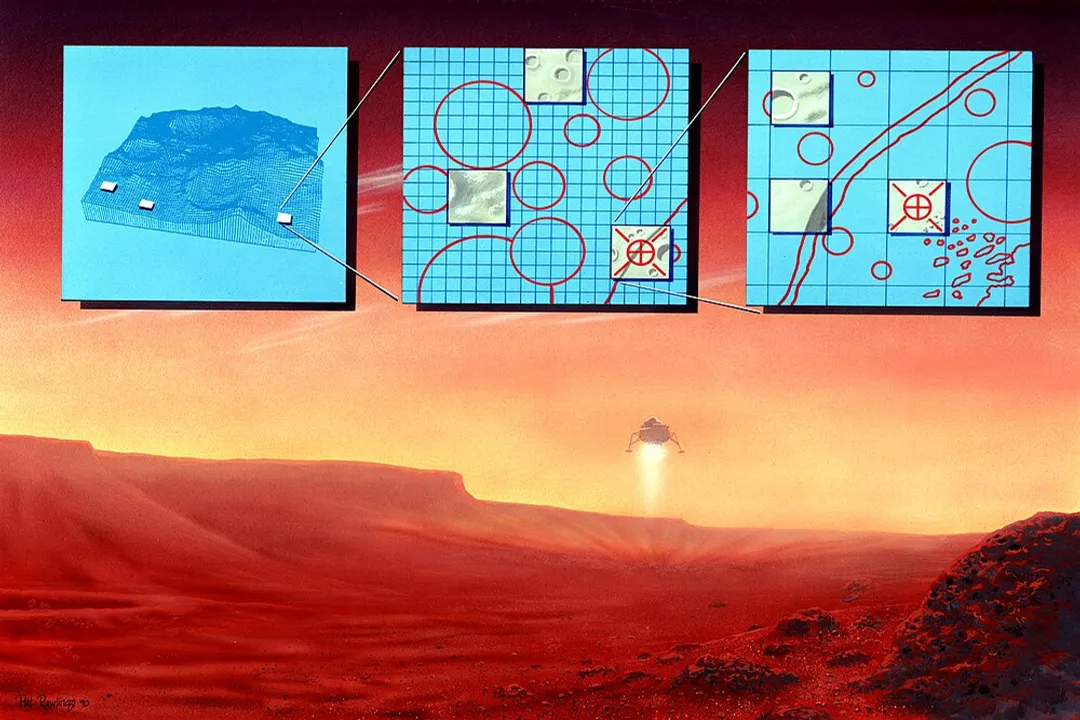
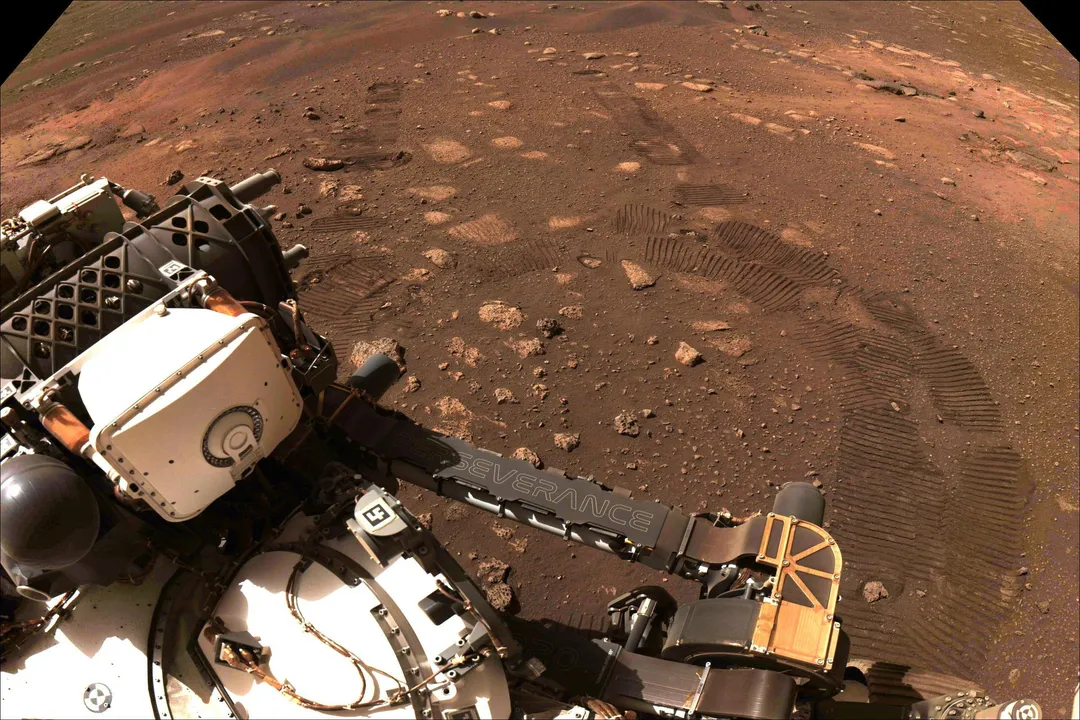
Humanity's presence on Mars has, until now, been exclusively mechanical. We have deployed a sophisticated fleet of robotic emissaries designed to prepare the groundwork for any future crewed mission [cite: NASA.gov]. These missions have provided invaluable, firsthand data that no amount of remote sensing from Earth could ever replicate. Rovers like Curiosity and Perseverance are essentially highly advanced geologists and chemists operating millions of miles away, seeking out habitable environments and analyzing rock samples [cite: general consensus].
It is crucial to distinguish between orbiting and landing. Humans have certainly reached the vicinity of Mars in simulated or conceptual missions, and various robotic probes have entered Martian orbit, but the critical achievement—a controlled, soft landing followed by an extravehicular activity (EVA) on the surface—has yet to occur [cite: Quora.com][cite: Facebook post mentioning orbiting vs. landing]. Even orbiting Mars is a significant step, one that has not yet been achieved by a human crew [cite: Facebook post mentioning orbiting vs. landing]. The current robotic efforts are the necessary, albeit slow, prelude to eventual human arrival, systematically checking off the unknowns that could endanger a biological crew [cite: Astronomy.com].
# Distance Factors

The fundamental challenge underpinning every aspect of a Mars mission is distance. Mars is, on average, about 140 million miles away, but this varies significantly depending on the orbital positions of the two planets [cite: Astronomy.com]. This vast separation creates a communication delay that can stretch from about 3 to 22 minutes one way, making real-time troubleshooting or emergency intervention from mission control impossible [cite: Astronomy.com]. If an issue arises, the crew must be entirely self-sufficient for that communication lag period, which can easily stretch into hours if the spacecraft has already passed the point of no return for an immediate abort back to Earth.
The travel time itself is immense. While current technology aims for a trip lasting six to nine months each way, the total mission duration, including a long stay on the surface while waiting for the planets to realign for the return window, could stretch to nearly three years [cite: Astronomy.com]. Consider the difference between the Moon and Mars: Apollo missions required only about three days of transit time, offering relatively quick communication and a relatively easy abort scenario back to Earth [cite: general knowledge comparison]. A Mars crew, however, must pack enough supplies, spares, and psychological resilience for a period far longer than any human has spent in deep space before, making the logistics exponentially more complex [cite: BBC Earth].

# Crew Survival
Beyond the sheer duration, the journey itself poses significant threats to the human body that must be mitigated before a successful landing can take place. Foremost among these is radiation [cite: Astronomy.com]. Once outside the protective shield of Earth's magnetosphere, astronauts are exposed to galactic cosmic rays (GCRs) and sporadic solar particle events (SPEs), which increase the long-term risk of cancer and potentially cause acute radiation sickness or damage to the central nervous system [cite: Astronomy.com]. Designing a transit vehicle with sufficient, yet practical, shielding against this constant bombardment is a major engineering hurdle.
Another factor concerns the physical toll of extended weightlessness. We have data from the International Space Station (ISS), but a Mars transit involves an uninterrupted period of microgravity lasting over half a year, potentially leading to severe bone density loss, muscle atrophy, and vision changes that may not fully reverse [cite: BBC Earth]. Countermeasures exist, such as rigorous daily exercise, but the cumulative effect of that long transit time before even attempting the physically demanding work of landing and surface operations is a serious consideration.
Thinking about the surface operations, the gravity on Mars is only about 38% of Earth's gravity, which is better than zero-G, but still an unknown variable for long-term human physiology following months of microgravity exposure. It presents a fascinating physiological challenge: the body has to adapt twice—first to float, and then to walk again in a low-gravity environment that is still significantly different from home [cite: general analysis].
# Agency Targets
The current goal set by NASA centers around building upon the Artemis program, which aims to establish a sustainable human presence on and around the Moon [cite: NASA.gov]. The Moon is seen as a vital testbed—a proving ground—for the technologies, life support systems, and operational procedures needed for the much more distant Mars mission [cite: NASA.gov]. If a system fails on the Moon, astronauts are only three days away from home; if it fails near Mars, the consequences are far more dire.
While specific firm dates are always subject to change based on funding, political will, and technical success, the general consensus among space agencies and commercial partners often points toward the late 2030s or early 2040s for the first human landing [cite: general consensus from multiple sources, often tied to NASA timelines]. Some private entities and conceptual mission plans have posited slightly earlier dates, sometimes fueled by optimistic projections regarding propulsion technology or private capital availability [cite: Uniladtech reference to potential young astronaut age/timeline discussions]. However, major national programs generally align on the longer, more conservative timeline that accounts for unexpected technical delays and the need for rigorous testing of every critical component [cite: NASA.gov].

# Mission Architecture
A successful Mars landing will likely not be a single, direct shot like Apollo. The preferred architecture involves sending significant cargo—habitats, power sources, scientific equipment, and return propellant—ahead of the crew [cite: general mission concept discussed across sources]. This approach ensures that when the astronauts arrive, a fully prepared base and an assured means of returning home are already waiting for them on the surface.
This pre-positioning strategy solves several problems simultaneously:
- Mass Reduction: It reduces the mass that needs to be launched inside the single vehicle carrying the crew.
- Reliability Check: It allows ground teams to verify the functionality of critical life support and power systems before the crew is committed to the journey.
- In-Situ Resource Utilization (ISRU): Future missions heavily rely on ISRU technology, such as manufacturing propellant from the Martian atmosphere (specifically carbon dioxide) to fuel the ascent vehicle [cite: general technology goal]. Having cargo land first allows this complex, unproven technology to be tested remotely.
While the first landing crew might only spend a few weeks on the surface, the infrastructure left behind would be foundational for subsequent, longer-duration stays, gradually building what might one day become a small, permanent scientific outpost [cite: NASA.gov]. The initial goal is survival and proof of concept; establishing a long-term settlement is several decades further down the line. The critical distinction, which must be understood by anyone following these developments, is that getting to Mars is one engineering challenge, but landing, surviving, and taking off again represents a stacked series of independent, immense challenges, each requiring its own decade of preparation [cite: various mission complexity discussions].
#Videos
Have Humans Ever Visited Mars? We Asked a NASA Scientist
Related Questions
#Citations
Human mission to Mars - Wikipedia
Why haven't humans reached Mars? - Astronomy Magazine
Could a human have been on Mars by now? : r/space - Reddit
Humans to Mars - NASA
Has any human ever landed on Mars, or have they only reached its ...
Will we ever set foot on Mars? | BBC Earth
No astronaut has ever stepped foot on Mars, but that doesn't mean ...
Have Humans Ever Visited Mars? We Asked a NASA Scientist
Why this 24-year-old could be the first person ever to step foot on Mars