Did people ever believe there was life on Mars?
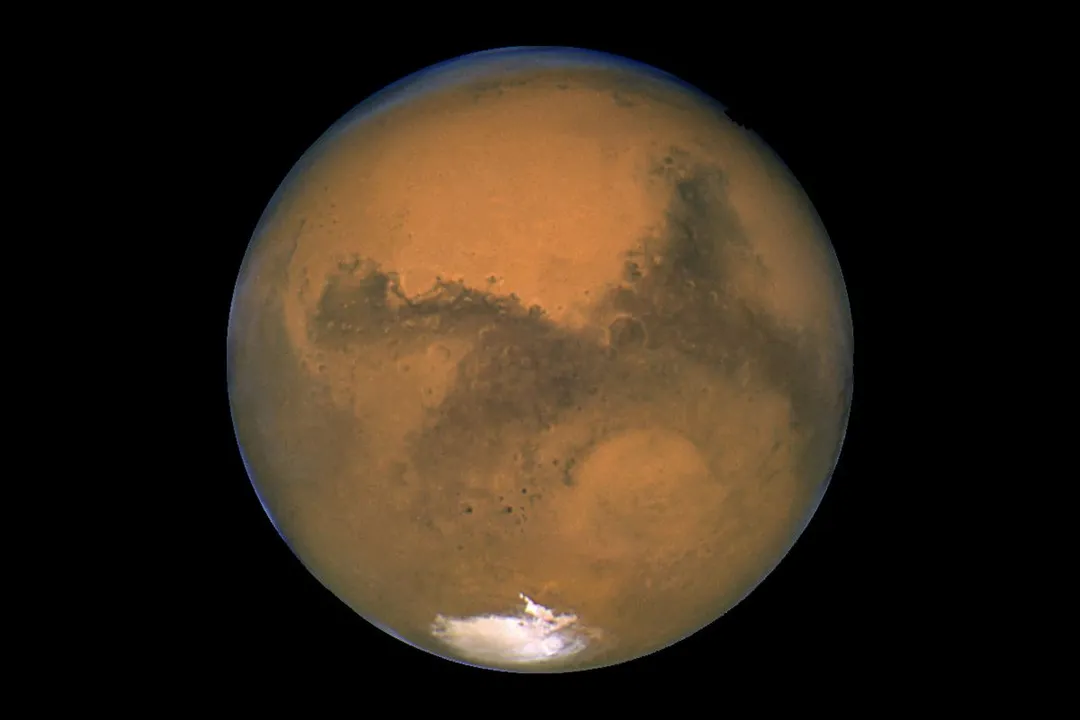
The enduring fascination with Mars often centers on one profound, lingering question: could we be sharing our solar neighborhood with neighbors? This isn't a modern preoccupation spurred by sleek rover photography; rather, it is a deep-seated historical conviction that the Red Planet harbored a civilization or, at the very least, living organisms. [8] For centuries, as astronomical instruments improved, the desire to see signs of life on Mars fueled intense scientific and public speculation, creating a narrative of discovery and disappointment that stretches back well over a hundred years. [4][7]
# Telescopic Glimpses
Early, less powerful telescopes offered only fuzzy, indistinct views of the Martian surface, which appeared to fluctuate in brightness and color. [4] These seemingly subtle changes were interpreted by some observers as evidence of seasonal changes—perhaps the thawing and freezing of polar ice caps or even massive bodies of water changing with the seasons. [4][6] Before the 19th century gave way to the 20th, many believed Mars possessed an Earth-like environment, complete with oceans, rivers, and even seas, which naturally implied the presence of life capable of supporting itself in such conditions. [4][7] The very concept of a habitable world just next door was intoxicating, fostering an environment where suggestive but unconfirmed visual data could easily morph into accepted fact. [2]
When observers noted darker regions on the planet, the immediate, intuitive leap was to connect these variations to biological processes, much like observing changing vegetation on Earth. [3] This pattern of observation, interpretation, and subsequent assumption set the stage for the most famous period of Martian life speculation, driven by the perceived evidence of artificial structures.
# Martian Canals
The idea that intelligent beings might inhabit Mars took definitive hold with the widespread observation of what appeared to be vast, interconnected networks of straight lines spanning the planet's surface. [1] In 1877, the Italian astronomer Giovanni Schiaparelli reported seeing canali—channels—on Mars during his observations. [1][4] The Italian word canali simply means 'channels' or 'grooves,' but when translated into English, the term gained the connotation of artificial waterways, strongly suggesting construction by an intelligent species. [4][7]
This perceived network became an absolute focal point for the belief in Martian life, particularly when American astronomer Percival Lowell became obsessed with the phenomenon. [1] Lowell established an observatory in Flagstaff, Arizona, dedicated almost entirely to mapping these features, convinced they were the work of intelligent Martians attempting to irrigate their dying world by piping water from the melting polar caps. [2][7] Lowell’s detailed drawings and publications, made with advanced equipment for the time, cemented the image of a sophisticated Martian civilization in the public consciousness throughout the late 19th and early 20th centuries. [1][4][8] His romantic vision depicted engineers on Mars building monumental structures, a concept which captured the public imagination far more than the dry data suggesting a barren world. [4]
It is important to note the role of technology and cultural context in this period. Lowell’s fervent belief was not entirely detached from reality as seen through his lenses; the observations were consistent within the limits of his instruments and the prevailing scientific excitement of the era. [2] However, one interesting historical parallel emerges when comparing this era to today: the public's willingness to accept ambiguous data as confirmation. While Lowell used drawings of lines, modern audiences are often captivated by computer-generated images and highly processed data visualizations from rovers, showing a consistent, though perhaps scientifically less grounded, desire for martian confirmation. [2] The method of visual confirmation has changed, but the eagerness for positive results persists.
# Waning Belief
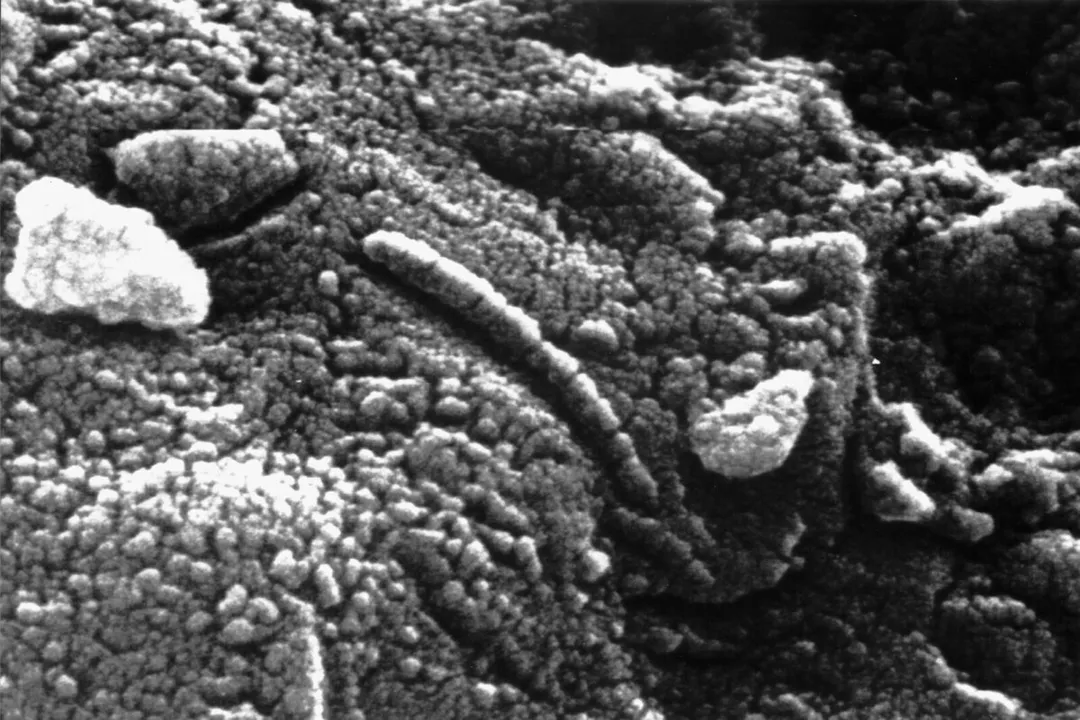
As the twentieth century progressed and observational technology sharpened, the grand Martian canal system began to fade from view. [1] By the 1920s and 1930s, astronomers using larger, more powerful telescopes found that the distinct, artificial-looking lines were illusions—the result of optical artifacts combined with human tendency to perceive patterns in randomness, especially when predisposed to see them. [2][7] The concept of Martians actively engineering their planet began to recede from serious scientific consideration, though the idea lingered in popular culture and science fiction. [1][8]
The transition from seeing canals to accepting a barren world was a gradual one, marked by incremental improvements in optics and spectroscopy, which increasingly suggested a very thin atmosphere and surface conditions too hostile for terrestrial-style life. [3][6] Even so, a subset of researchers held out hope, shifting the focus from intelligent builders to simpler, microbial life forms that might survive beneath the surface or near transient moisture. [9]
# Direct Exploration
The era of space probes brought the ultimate test to the long-standing theories. The Mariner 4 flyby in 1965 provided the first close-up images, revealing a cratered, seemingly dead world bearing a striking resemblance to the Moon, which dampened enthusiasm considerably. [1][8] Yet, the possibility of subterranean life remained open.
The real turning point in the dedicated search for life came with the Viking landers in 1976. [3][10] These missions carried instruments designed to directly test the Martian soil for signs of metabolic activity—the biological processes associated with living microbes. [3][10] The results from the Viking Labeled Release (LR) experiment were particularly tantalizing; it detected a rapid release of gas after adding nutrient-laced broth to soil samples, suggesting some form of biological process was taking place. [5][10]
However, the other biological experiments on Viking failed to find any organic molecules, which are the chemical building blocks of life. [3][9] This contradiction led the scientific community to conclude that the positive LR result was likely caused by non-biological, or abiotic, chemistry in the soil, such as reactive oxidants. [3][5] The general scientific consensus following the Viking missions was that Mars was sterile, or at least lacked readily detectable surface life. [9]
It is an interesting, though highly debated, point in Martian history that some scientists maintain the Viking results did detect life, suggesting the onboard instruments were perhaps too focused on Earth-like biology. [5] This alternative perspective posits that the initial tests found something alien, but the subsequent search for organic molecules was predicated on a terrestrial model, thus missing the native Martian biology. [5] This discrepancy illustrates a recurring theme in planetary science: one generation’s conclusive data often becomes the next generation’s open question, especially when dealing with unknown forms of life.
# Modern Focus
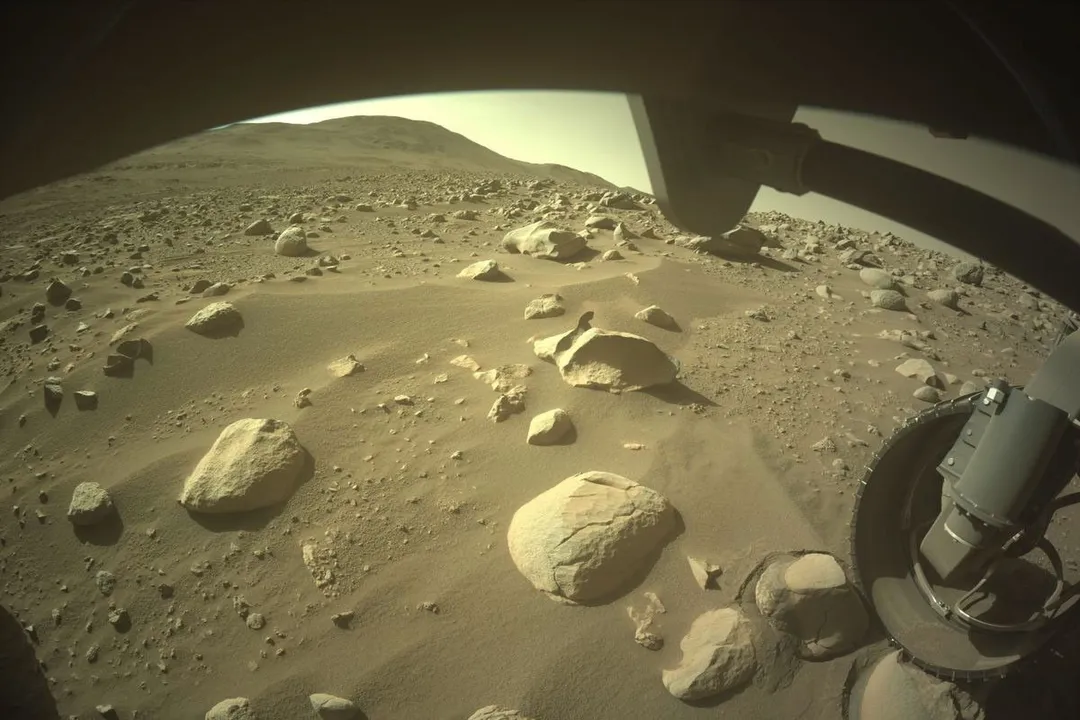
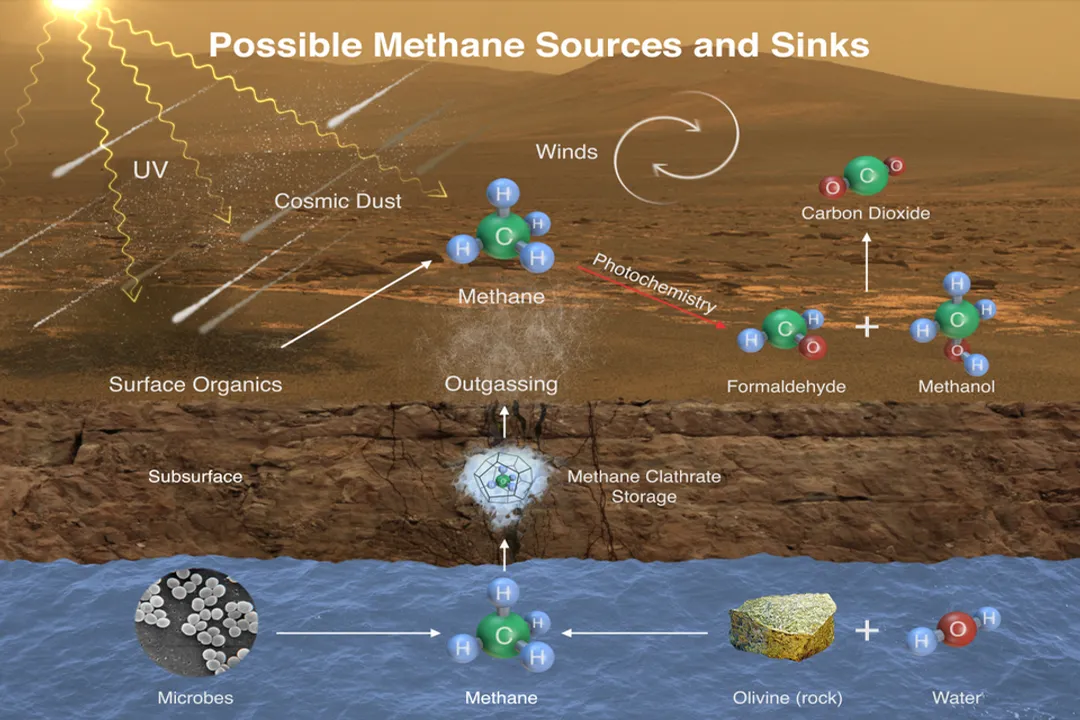
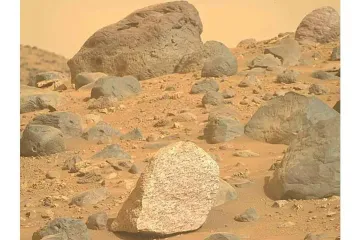
Today, the focus has shifted from searching for canals or civilizations to seeking definitive proof of past or present microbial life, predicated on the discovery that Mars once had liquid water. [3][9] Missions like the Curiosity and Perseverance rovers are actively seeking biosignatures—chemical or structural traces—that would indicate ancient microbial life existed when Mars was warmer and wetter billions of years ago. [3][9] The search is no longer about if life could exist, but where the evidence of past habitation might be preserved. [1]
The current scientific approach operates on a principle of extreme caution, demanding multiple lines of evidence before confirming extraterrestrial biology. [3] This rigorous standard is a direct reaction to the historical cycle of excitement and retraction seen during the canal era. [4]
To better illustrate this scientific shift, consider the differing requirements for evidence:
| Era | Primary Feature Sought | Nature of Evidence | Conclusion Threshold |
|---|---|---|---|
| Late 19th C. | Canals/Oceans | Telescopic Visual Observation | Low (Pattern Recognition) [4] |
| 1976 Viking | Microbial Metabolism | Direct Soil Experimentation | Medium/Contradictory [3][5] |
| Present Day | Organic Molecules/Biosignatures | In-situ Analysis (Rovers) | High (Multiple Lines of Proof) [3][9] |
This table highlights that the burden of proof for life on Mars has increased exponentially over time, moving from subjective interpretation of faint light and shadow to the highly objective analysis of chemistry and geology. [4]
# Enduring Inquiry
Despite the scientific consensus leaning toward a lifeless or long-dead Mars, the allure remains powerful. [8] The very fact that Mars, our closest planetary neighbor, shows so many signs of having once been temperate and wet suggests that life may have arisen there before disappearing or retreating to inaccessible niches. [3][9] This possibility ensures that the search continues, albeit with more sophisticated tools and a healthier dose of skepticism regarding quick, definitive answers. [1] The story of believing in life on Mars is really a story about human nature—the desire to find ourselves reflected in the cosmos—even as our technology slowly reveals the stark, cold realities of planetary evolution. [8]
Related Questions
#Citations
Life on Mars - Wikipedia
Why did people used to think that there was life on Mars - Reddit
Was There Life on Mars? - NASA Science
Seeing and Interpreting Martian Oceans and Canals
NASA may have unknowingly found and killed alien life on Mars 50 ...
Ancient Life on Mars??? - Lunar and Planetary Institute
Did people in the 19th Century legitimately think that there was Earth ...
Life on Mars? The Search for Signs Goes Back Centuries | HISTORY
Life on Mars: Your Questions Answered | The Planetary Society
One Scientist Believes We May Have Found Life On Mars 50 Years ...