What is the evidence for microbial life on Mars?
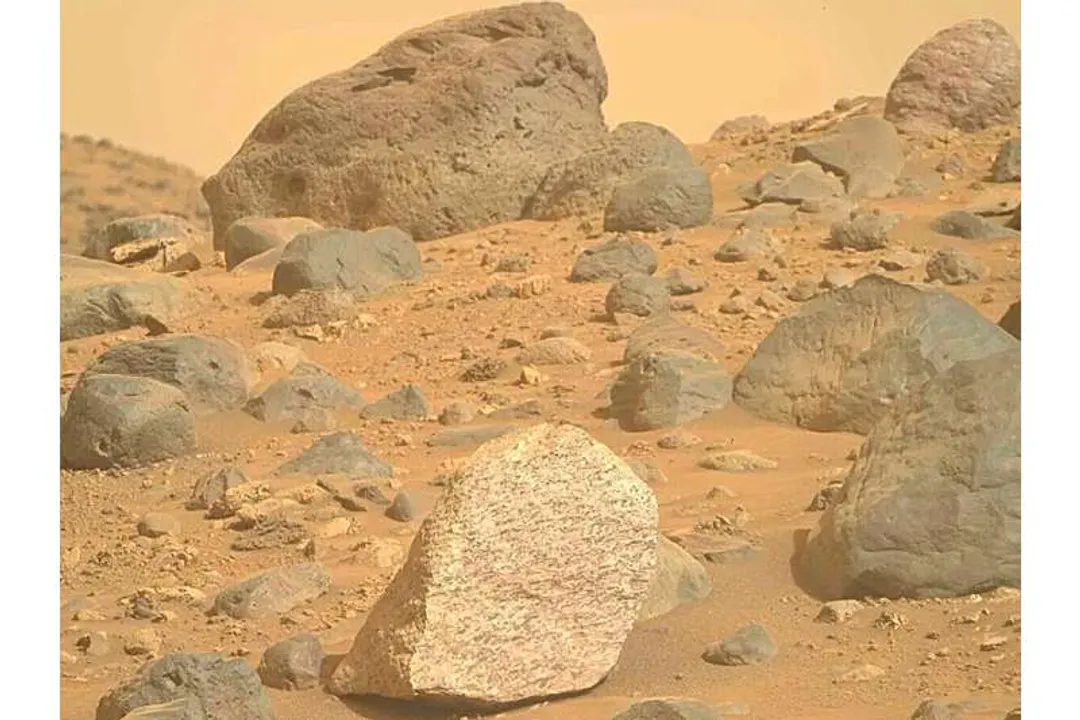
The search for life beyond Earth has perhaps never been more focused than it is now, directed squarely at the rusty plains and ancient riverbeds of Mars. Recent findings have significantly sharpened the debate, moving it from abstract possibility to concrete geological evidence suggestive of past microbial inhabitants. The core of this evidence revolves around chemical signatures—organic molecules—discovered within sedimentary rocks carved by long-vanished water, fueling the notion that the Red Planet once hosted environments capable of supporting life.
# Water History
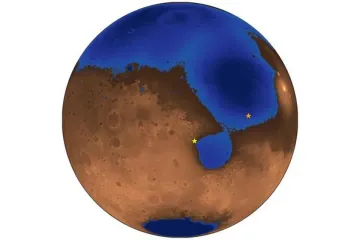
For decades, the primary motivation for sending rovers and orbiters to Mars has been the compelling geological record indicating that the planet was once warm and wet. Evidence points to standing bodies of water, such as the Jezero Crater basin, where the Perseverance rover is currently operating, which existed billions of years ago. This ancient history of liquid water is considered a prerequisite for life as we know it, suggesting that if life ever did gain a foothold on Mars, the necessary ingredients were present. The challenge now shifts from proving past habitability to detecting the actual remnants of that potential biology.
# Rover Findings
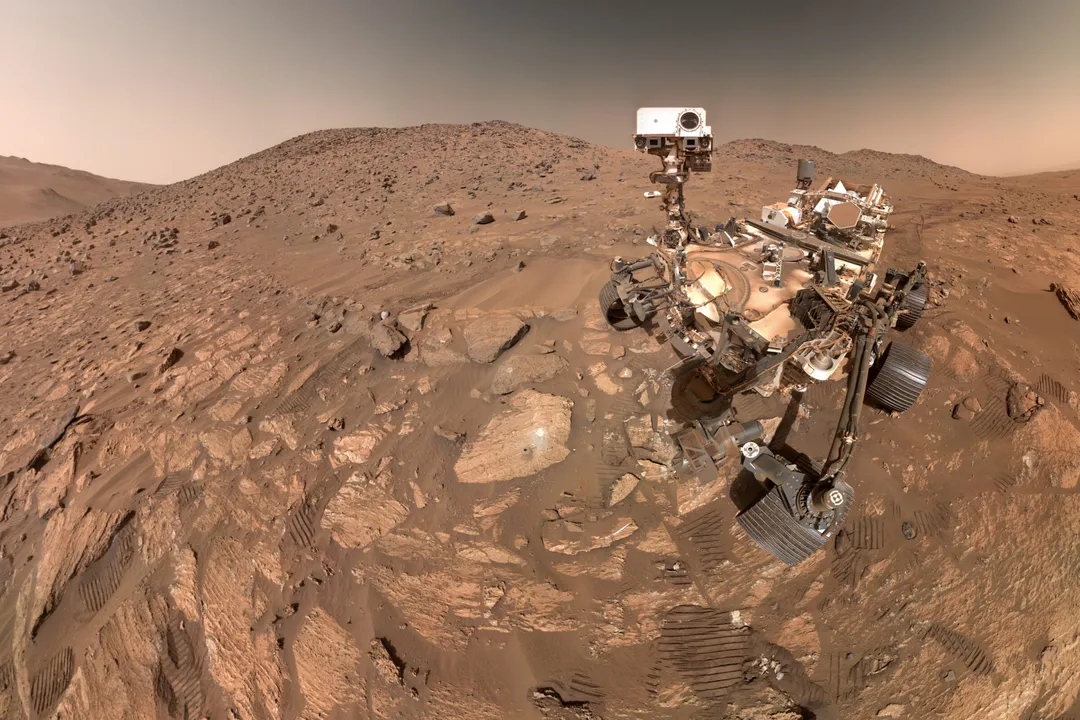
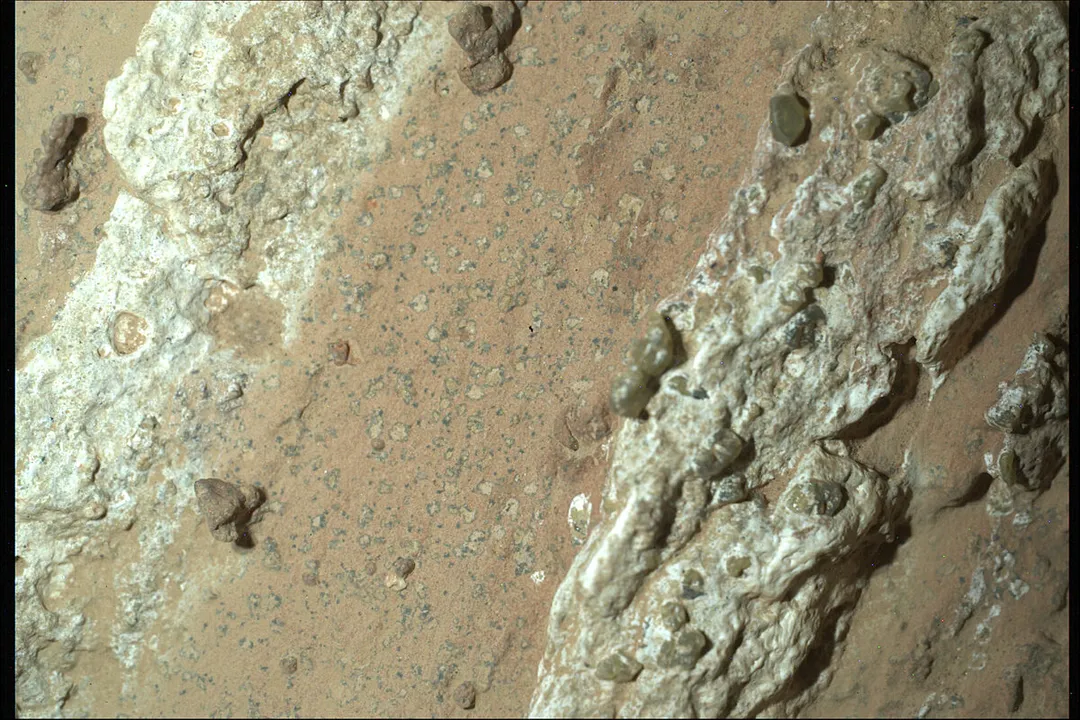
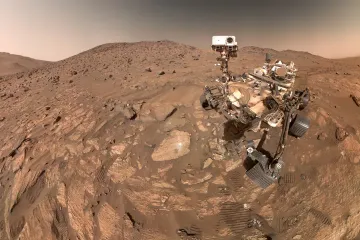
The most significant recent advancement comes from NASA’s Perseverance rover mission, which has been meticulously examining sedimentary rock layers in the Jezero Crater since its landing. This rover has successfully collected rock cores containing a variety of organic molecules, compounds containing carbon and hydrogen that are often associated with biological processes on Earth. Specifically, unusual compounds have been identified in these Martian rocks, which scientists suggest may be signs of ancient microbial life.
The significance of these findings is amplified by the context in which they were discovered. These organics were not simply blasted onto the surface by meteorites; they were found embedded within minerals deposited in an ancient lakebed environment—a perfect spot for microbial ecosystems to thrive and become fossilized. The rover has documented potential biosignatures within these samples, leading to announcements that mark a major milestone in astrobiology. This is not a definitive declaration of life, but rather the identification of promising chemical targets that demand further scrutiny.
It is helpful to consider this discovery alongside historical findings, such as the analysis of the Chelyabinsk meteorite. That meteorite, which landed on Earth, contained organic molecules suggesting similar complex chemistry can be generated in space or by non-biological processes. However, finding these compounds in situ within ancient Martian lake sediments gives the current Perseverance data a distinctly different weight, placing the chemistry directly within a palaeo-aquatic setting.
# Molecular Ambiguity
While the presence of organic molecules is exciting, it is crucial to maintain scientific skepticism because life is not the only process capable of creating them. Chemists readily point out that non-biological, or abiotic, processes can also generate these complex carbon-based structures. For instance, water-rock reactions driven by geological activity can produce methane and other organic compounds without any involvement from living cells.
The crucial task ahead is differentiating between biogenic origins (produced by life) and abiogenic origins (produced by chemistry/geology). Scientists look not just at what molecules are present, but the ratio of different forms of the same molecule. For example, on Earth, biological systems typically favor one mirror-image version—an isomer—of a given organic molecule over the other. If the Martian samples showed a strong preference for one isomer, that would serve as a powerful, though still not conclusive, argument for biology. Currently, the data presents a chemistry that could be biological, but that still strongly permits a purely geological explanation.
The current evidence, therefore, sits in a fascinating middle ground. It is stronger than just finding water, and stronger than just finding basic organics, because it links the organics to a specific, long-lived aquatic environment.
# Sample Return Crucial
The reason scientists cannot yet confirm life rests on the limitations of on-the-spot rover analysis. The current instruments, while advanced, cannot perform the detailed structural and isotopic analyses required to definitively rule out all non-biological explanations. This means that the proof of ancient Martian microbes, if it exists in these rocks, is currently locked away, waiting for the next phase of exploration: the Mars Sample Return campaign.
Sending the collected cores back to highly sophisticated laboratories on Earth is considered the gold standard for confirming biosignatures. Here, instruments far larger and more capable than those that can be sent to Mars can examine the samples for specific cellular structures, complex polymer arrangements, and isotopic fractionation that are the unmistakable fingerprints of metabolism. This reliance on Earth-based labs underscores a key principle in astrobiology: confirming extraterrestrial life requires applying the highest level of analytical rigor available to humanity.
One subtle but important analytical hurdle that Earth-based science must clear involves context preservation. While the rover collects excellent samples, the process of sealing and caching these cores, and their eventual return journey, introduces risks of terrestrial contamination. Therefore, when the samples arrive, the first task will be to identify the signatures that are unambiguously Martian and preserved within the rock matrix, distinguishing them from anything introduced during the return process. This makes the method of collection nearly as important as the result of the collection.
# Future Confirmation
If the analysis of the returned samples does confirm ancient, fossilized microbial life, the implications would be profound, changing our view of life's prevalence in the cosmos. While the discovery would focus on past biology, it would naturally shift attention to whether life managed to persist in subsurface niches on Mars today.
It is an interesting thought exercise to consider the immediate aftermath of such a confirmation. If the news broke that the Perseverance samples, once analyzed on Earth, contained incontrovertible evidence of fossilized microbial life from billions of years ago, the immediate response would likely be less about finding current life and more about understanding the origins and evolution of that extinct Martian biology. Scientists would immediately begin comparing its structure and biochemistry to the earliest life forms found in Earth's oldest rocks, searching for a common ancestor or an independent genesis event. An independent origin would suggest that life arises quite easily wherever the conditions allow, vastly increasing the probability of life existing throughout the galaxy.
The evidence for microbial life on Mars is currently a compelling potential derived from exciting chemical discoveries within an ancient aquatic environment. The scientific consensus remains cautious; we have found the potential markers of life, but we have not yet found the life itself. The next chapter in this scientific quest depends entirely on bringing those precious rock cores home.
#Videos
What We Just Found on Mars - YouTube
Related Questions
#Citations
NASA Says Mars Rover Discovered Potential Biosignature Last Year
Life on Mars - Wikipedia
Our best proof of life on Mars yet? A deep dive into Cheyava Falls
Unusual compounds in rocks on Mars may be sign of ancient ...
This is the best evidence yet for ancient life on Mars
What We Just Found on Mars - YouTube
Mars Perseverance rover data suggests presence of past microbial life
If we found microbial life on Mars that was guaranteed to have ...
This Rock May Hold Proof of Life on Mars - Scientific American