What is the evidence that there was water on Mars?

The question of water on Mars has transformed from a faint hope of ancient possibility to a confirmed, multifaceted reality spanning billions of years of planetary history. For decades, images sent back from orbit and surface missions depicted a cold, dusty desert, seemingly sterile and bone-dry. Now, the narrative has decisively shifted. Evidence gathered by orbiters, landers, and rovers paints a picture of a planet that once harbored surface liquids, still holds enormous reserves locked away, and perhaps even experiences temporary trickles of liquid brine today. [1][3][5] Understanding this evidence is not just an exercise in geology; it is the cornerstone of assessing Mars's potential for past or present life.
# Ancient Features
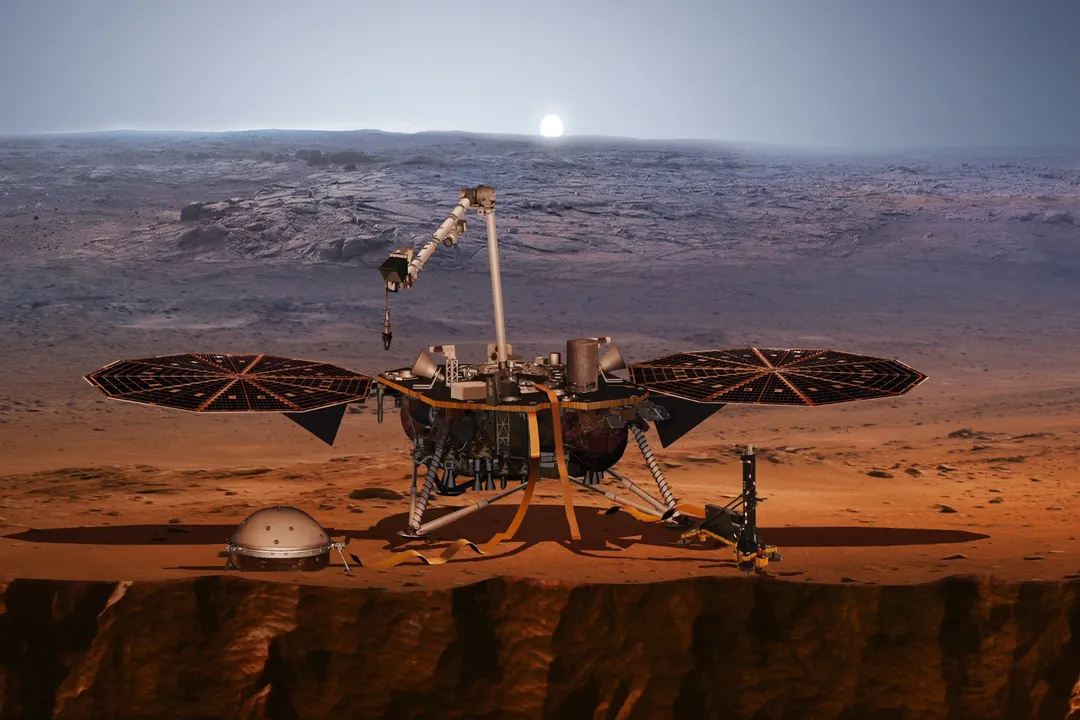
The most visually compelling evidence for water comes from the features etched into the Martian landscape, features eerily familiar to Earth-based geologists. [8] Orbiting spacecraft have mapped extensive networks of valleys, channels, and outflow tracts that look exactly like dried-up riverbeds and flood channels, suggesting cataclysmic water flows in the planet’s distant past. [3] These aren't just small cracks; some systems span hundreds of kilometers, indicative of massive volumes of liquid moving across the surface when the climate was warmer and the atmosphere thicker. [8]
Another strong indicator is the presence of specific minerals that only form in the persistent presence of liquid water. Rovers like Curiosity have drilled into sedimentary rocks in places like Gale Crater and found clay minerals and hydrated sulfates. [3] These chemical signatures are the fingerprints of prolonged interaction between rock and water, confirming that lakes or slow-moving water bodies once existed on the surface, accumulating sediments layer by layer, much like terrestrial lakebeds. [5] Furthermore, the exploration of Jezero Crater, the landing site for the Perseverance rover, revealed a remarkably preserved river delta—the classic fan-shaped deposit where a river once emptied into a larger body of water, likely a lake. [5] The complexity of these sedimentary structures suggests a dynamic hydrological system that persisted longer than some earlier models predicted. [5]
It is fascinating to consider the sheer scale of the ancient water cycle. When we look at the remnants of these features, we are essentially reading the planet’s history book, where the ink is made of dried mineral deposits. [8] The current low-pressure, frigid environment ensures that if liquid water were to appear on the surface today, it would either boil away instantly or freeze solid, yet the shapes on the ground tell a story of liquid stability over geological timescales.
# Vast Ice Stores
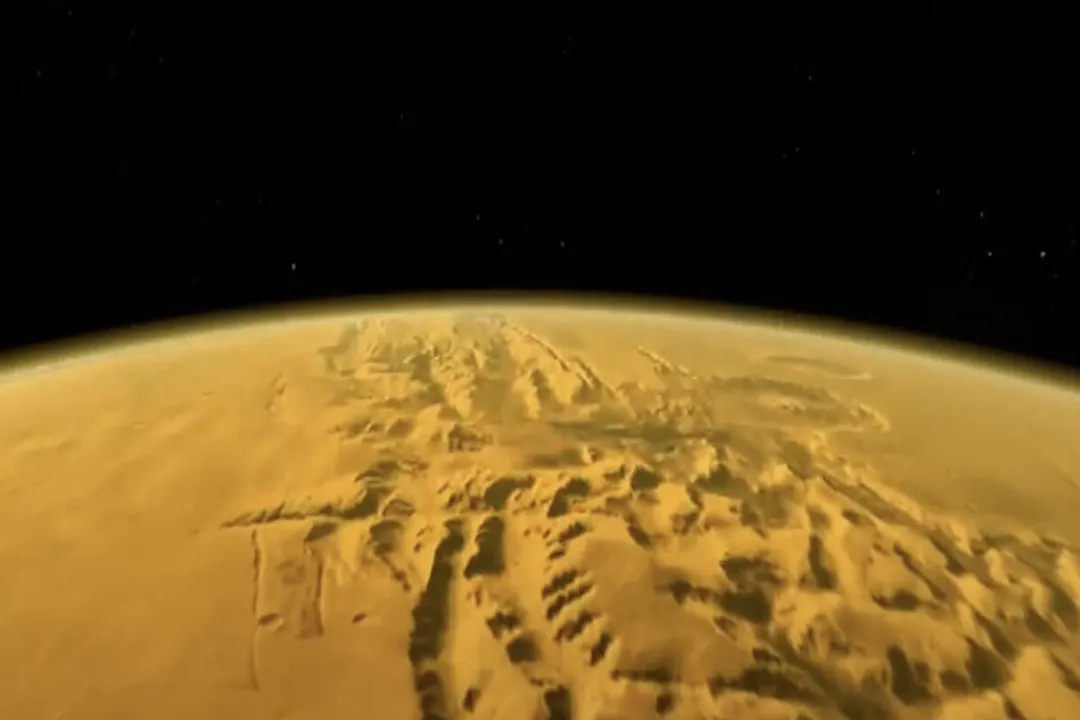
While the surface geology speaks of a wet past, the evidence for water in the present day is equally staggering, though much of it is hidden. Mars is not simply a planet that lost all its water; it has stored an immense amount of it, primarily in the form of water ice. [7]
The polar ice caps are the most obvious reservoir, holding substantial quantities of frozen water mixed with carbon dioxide ice. [7] More critically for resource potential, radar instruments orbiting the planet have detected thick layers of nearly pure water ice buried just beneath the dusty surface in the mid-latitudes. [9] These deposits are extensive enough that they represent a significant portion of the planet’s total water inventory. [9]
Recent data has pushed this concept even further, suggesting that the water situation is even more dramatic than previously understood. Scientists have used radar data, specifically from the Mars Reconnaissance Orbiter (MRO), to probe deep beneath the surface, particularly in the southern highlands. [2] The findings suggest that there are massive subsurface reservoirs of water, potentially locked in aquifers or hydrated minerals, that could rival the volume of liquid water found in some of Earth's large freshwater lakes. [2][9] If all this subsurface ice and bound water were melted, it could globally cover the planet with a layer of water several meters deep, though the extent of this hypothetical ocean is debatable due to depth and distribution. [2][4] This deep water, however, is generally too far down—potentially kilometers below the surface—to be easily accessed with current or near-future technology. [2] It is water that has been sequestered from the surface environment for eons, perhaps by tectonic activity or burial under volcanic flows. [4]
For context, imagine the Great Lakes system on Earth—a massive volume of liquid water. Some analyses suggest the volume of water identified in these deep Martian reservoirs could be comparable, or perhaps even greater, when factoring in the water bound up in hydrated minerals across the globe. [9]
# Modern Trickles

The search for liquid water today is the most exciting frontier, as liquid water is considered the essential prerequisite for life as we know it. [1] While permanent surface rivers are impossible under current atmospheric pressure, observations have identified phenomena that strongly suggest temporary, transient flows of very salty, liquid water. [1]
These features are known as Recurring Slope Lineae, or RSLs. [1] They appear as dark streaks or flows that grow, fade, and reappear on steep, shaded slopes during the warmer Martian seasons. [5][1] The best working hypothesis is that RSLs are formed by briny water—water saturated with salts called perchlorates. [1] These salts act as antifreeze, lowering the freezing point of the water enough that it can remain liquid for short periods, even in the extremely cold Martian environment. [1] The MRO mission has been instrumental in documenting these features, showing that liquid water, even if it's not pure H₂O, seems to be interacting with the modern Martian surface. [5] This means that water is not entirely static; it is cycling, albeit seasonally and in a highly saline state, just beneath the surface. [1]
# State and Chemistry
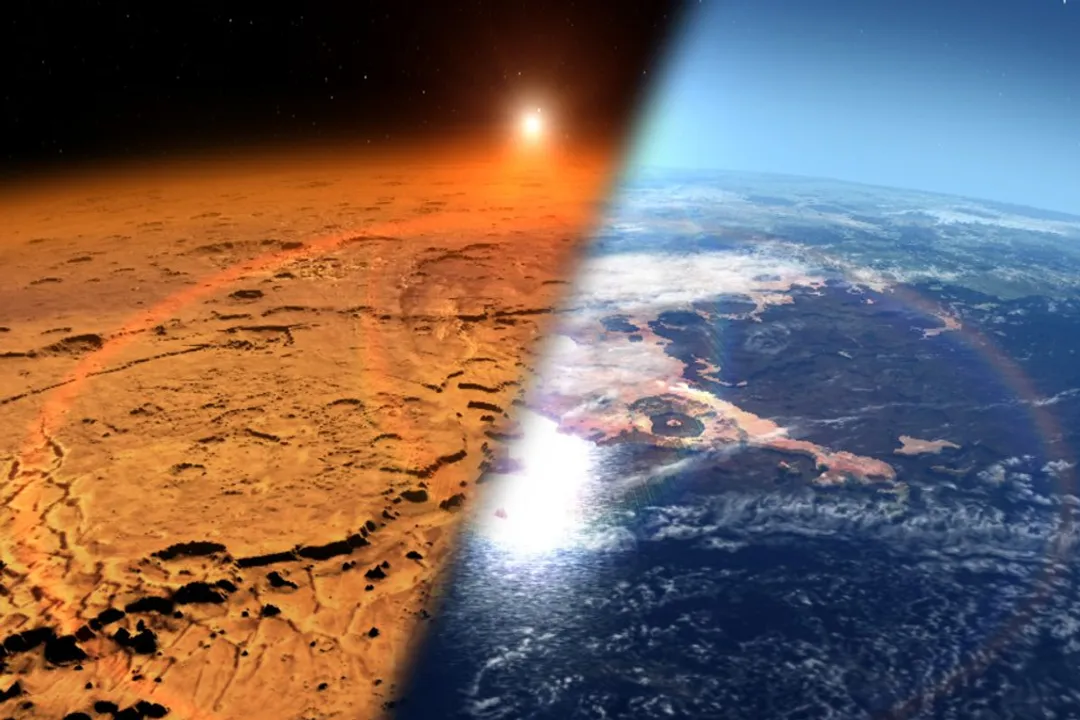
The state of water on Mars offers a fascinating comparison to its terrestrial counterpart. On Earth, water transitions easily between solid, liquid, and gas. On Mars, the conditions push water almost exclusively into the solid or vapor phase. [7] The atmospheric pressure is so low—less than one percent of Earth's—that liquid water is inherently unstable on the surface, boiling and freezing almost simultaneously in a process called desublimation. [3][7]
This chemical constraint profoundly influences where we look for evidence. The discovery of hydrated minerals confirms that the ancient environment supported liquid water long enough for chemical reactions to occur, fundamentally changing the rocks. [8] Conversely, the presence of RSLs implies that even if the water is salty, the local chemistry at those specific times and places allows for a momentary liquid state. [1] The salts themselves are a double-edged sword: they allow for liquidity but create an environment that is extremely hostile to most known terrestrial life forms due to the high osmotic stress. [1]
To illustrate the historical difference, consider the following comparison, derived from analyses of Martian surface data:
| Martian Era | Dominant Water State | Characteristic Environment | Evidence Type |
|---|---|---|---|
| Noachian/Early Hesperian | Stable Liquid, Abundant | Warmer, thicker atmosphere | Deltas, River Valleys, Clays [3][5] |
| Current Surface | Solid (Ice) or Transient Brine | Cold, near-vacuum | Polar Caps, Subsurface Ice, RSLs [1][7] |
| Deep Subsurface | Possible Liquid Brine/Bound Water | High pressure, shielded from cold | Radar signatures, mineral hydration [2][9] |
This table underscores that the water isn't simply "gone"; it has been partitioned into different reservoirs based on the changing planetary conditions. [3]
One way to interpret the current state is to realize that the sheer volume of water currently locked in ice far outweighs the likely amount that flowed freely on the ancient surface. The deep ice stores represent the vast majority of the planet's water budget, suggesting a colossal loss of atmosphere over time that prevented the liquid from remaining stable on the surface. While the ancient rivers were dramatic, the current subsurface ice fields represent a reservoir that could potentially support a future long-term human presence, provided extraction techniques improve. [9]
# Implications for Life
The confirmed existence of water in its various forms—past liquid, present ice, and temporary brine—is the primary driver for astrobiological interest in Mars. Life as we understand it requires liquid water. [6] The ancient, stable lake environments indicated by the deltas and clays in Jezero Crater are prime targets for searching for biosignatures from a time when Mars was far more Earth-like. [5][8] The rovers are actively collecting samples from these locations precisely because they represent the best chance of finding fossilized evidence of past microbial life. [3]
However, the deep subsurface offers an alternative, more contemporary habitat. If microbial life managed to adapt to Mars's harsh shift, it might have retreated underground where geothermal heat could sustain pockets of liquid water, shielded from the intense surface radiation. [4] The deep reservoirs detected by radar suggest that, even today, environments exist where liquid water could be present, even if it is extremely saline. [2] This necessitates a shift in exploration strategy; future missions may need to focus on drilling deep, rather than just scooping surface dust.
The data about modern, temporary flows is equally compelling. If those RSLs are indeed briny water, it means there is an active hydrological process occurring, however short-lived. [1] While direct life detection there is unlikely due to the high salt concentration and brief duration, it confirms that the processes needed to move water around are not entirely shut down. [5] This knowledge directly informs planetary protection protocols; if liquid water is accessible, the risk of forward-contamination from Earth missions must be managed with extreme care to avoid confusing native Martian biology with terrestrial hitchhikers. [6]
Thinking about the future exploration, this evidence compilation means mission architects must balance the need to investigate the easily accessible past against the need to probe the potentially habitable present. Finding evidence of ancient life in a dried-up riverbed is a triumph of paleontology, but confirming extant life would almost certainly require reaching the deeper, protected reserves where liquid water might still persist, however briney. [4][9] The evidence is strong enough now that the focus is shifting from if water existed to how we access and study the quantities that remain.
#Videos
Just in: NASA Has Found Oceans of Liquid Water on Mars...For Real
Related Questions
#Citations
NASA Confirms Evidence That Liquid Water Flows on Today's Mars
Scientists find oceans of water on Mars. It's just too deep to tap.
Water - Mars Education | Developing the Next Generation of Explorers
Scientists have discovered a reservoir of liquid water on Mars - Reddit
Just in: NASA Has Found Oceans of Liquid Water on Mars...For Real
Mars water: Liquid water reservoirs found under Martian crust - BBC
Geologists Discover Water Once Flowed on Mars | AMNH
Mars may host oceans' worth of water deep underground