Why do we think there is water on Mars?
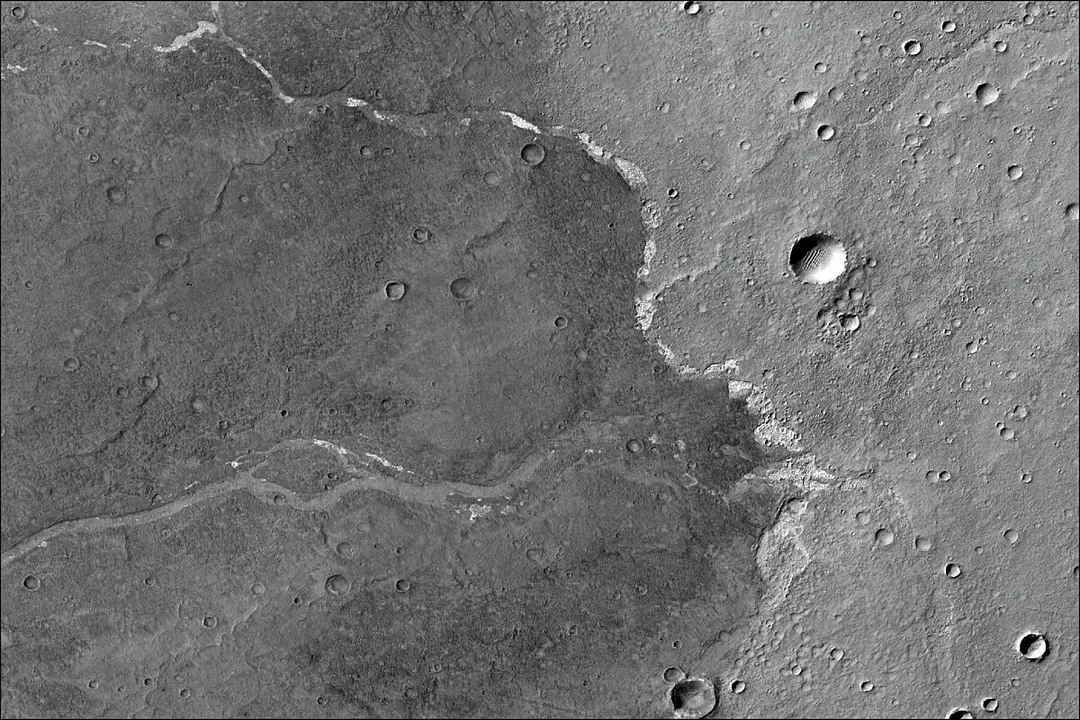
The compelling evidence that Mars once held substantial amounts of water, and might still harbor reserves today, stems from decades of orbital observation, remote sensing, and direct analysis by rovers and landers. We don't just think there is water on Mars; we have confirmed its presence in various states across the planet, from the permanent ice caps at the poles to suspected deep reservoirs beneath the surface. [1][3][8] The real question that drives current research is not if water existed, but rather where it is now, and what form it takes in the cold, thin atmosphere of the modern Red Planet.
# Current Water Form
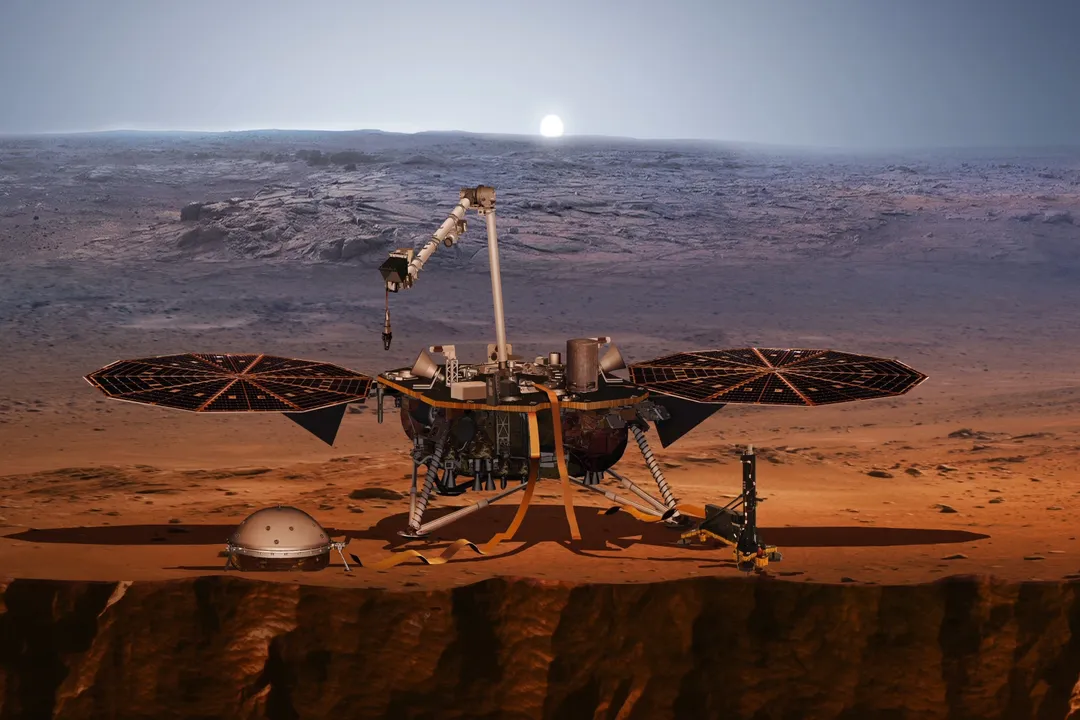
Today, water on Mars is predominantly locked up as ice or present as trace vapor in the atmosphere. [2][3] The most obvious reservoirs are the planet’s polar caps, which are comprised of layers of water ice mixed with frozen carbon dioxide, or dry ice. [1][8] These ice deposits are significant, but the sheer volume of water that once existed suggests much more is hidden away elsewhere.
Beyond the poles, considerable amounts of water ice exist just beneath the dusty surface in mid-to-high latitudes. [1][3][6] Orbital instruments, like radar that can penetrate the regolith, have detected subsurface ice deposits that are far more widespread than the surface ice fields. [8] For the early explorers, understanding these deposits is crucial; they represent the most accessible, non-briny water source should human missions ever require it for life support or propellant production. In fact, a comparison of the estimated volume of the ancient Martian ocean, sometimes theorized to cover much of the northern plains, against the volume of current polar caps suggests that a vast majority of the original water inventory must be stored below the surface, either as ice or chemically bound in minerals. [2][9]
# Ancient Oceans

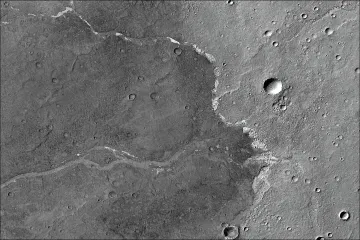
Geological features etched onto the Martian landscape provide the strongest historical evidence for a wetter past. [8] Images reveal features that bear striking resemblances to terrestrial formations created by flowing liquid water, such as dried-up river valleys, intricate delta structures, and vast outflow channels that suggest catastrophic flooding events. [2][8] These features indicate that Mars once had a much warmer and thicker atmosphere, allowing liquid water to persist on the surface long enough to carve these channels. [9]
Some models suggest that early Mars sustained an ocean, perhaps covering the northern lowlands to depths of up to a mile or more. [2][9] While definitive proof of a single, planet-spanning ocean remains elusive, the evidence points strongly toward the existence of surface lakes, seas, and active hydrological cycles billions of years ago. [8] The sheer scale implied by these ancient formations means that the volume of water involved was comparable to that found in Earth’s Arctic Ocean. [2] This ancient water was essential for the theoretical development of any past microbial life, which is why missions like Curiosity and Perseverance are focused on analyzing ancient lakebeds like Gale Crater and Jezero Crater, respectively. [3]
# Water Loss Mechanisms
The mystery intensifies when we consider the planet's current state: arid, cold, and possessing a very thin atmosphere. The transition from a water-rich world to a desert required the removal of most of that surface water. [4][9] Scientists have identified two primary pathways for this massive loss.
The first mechanism involves the atmosphere itself. As Mars lost its protective global magnetic field, solar winds were able to directly erode and strip away atmospheric gases, including water vapor, into space. [2][4] Furthermore, the intense ultraviolet radiation from the Sun can strike water molecules () high in the atmosphere, splitting them into their constituent parts: hydrogen () and oxygen (). [4] The light hydrogen atoms can then easily escape Mars’s weak gravitational pull and be lost to space. [4][9] Research continues to investigate the exact rates of this process, with some studies suggesting that massive impact events may have rapidly ejected significant atmospheric volumes, accelerating the stripping process. [7]
The second major sink is not loss to space, but retention on the planet. A substantial portion of the missing water volume is believed to be chemically bound or absorbed into the surface rocks and minerals—a process called hydration—as the planet cooled and dried. [2][9] While hydrogen atoms escaping to space account for one major fraction of the original inventory, the other significant portion is now locked up within the Martian crust itself. [4][9] If we were to somehow release all the water currently trapped within the crustal minerals, it would likely form a substantial global layer, perhaps several hundred feet deep if spread evenly, though this requires complex models to verify. [2] This highlights a counterintuitive point: the water didn't all vanish; much of it just changed chemical state, making it inaccessible to us today without significant geological processing. [9]
# Modern Liquid Flows
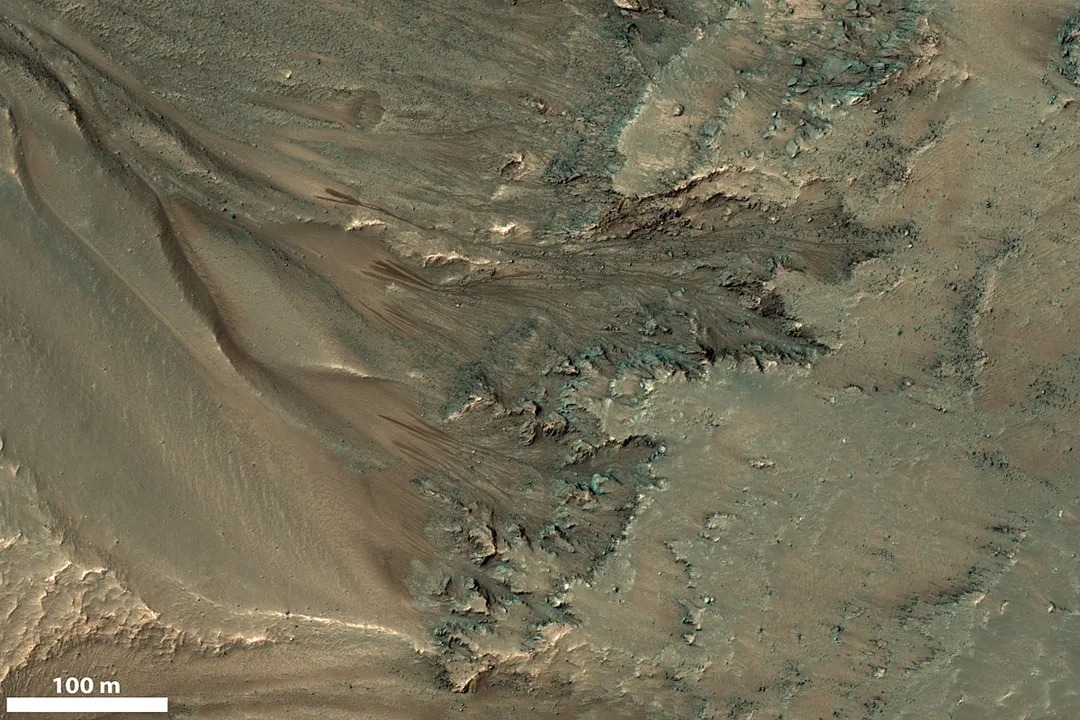
While the vast oceans are gone, liquid water has not completely vanished from the contemporary surface. NASA confirmed evidence that liquid water flows intermittently on Mars today. [10] This is not like a flowing river, but rather the appearance of dark streaks running down steep slopes, known as Recurring Slope Lineae (RSLs). [8][10]
These streaks appear seasonally when temperatures are slightly warmer, suggesting the presence of liquid water that vanishes when conditions become colder. [10] However, this liquid is not pure. Due to the extremely low atmospheric pressure and cold temperatures, pure water would immediately boil or freeze. [2] Therefore, the water flowing today must be a very salty brine, as the dissolved salts significantly lower the freezing point, allowing the water to remain liquid for longer periods. [8][10]
The challenge in studying these RSLs is understanding the exact chemistry and volume. The required salinity to keep the water liquid in these Martian conditions is quite high. [8] This leads to an interesting practical consideration for future explorers: while the RSLs confirm current liquid activity, the high concentration of perchlorates and other salts—necessary to depress the freezing point—would require significant, energy-intensive purification processes before that water could be considered safe for life support or electrolysis into rocket fuel. [2][3] The science confirms the flow, but the quality of that flow presents an immediate engineering hurdle.
# Deep Reservoirs
The search for accessible, non-briny water has led some scientists to propose an even more intriguing possibility: the existence of large, stable, subsurface oceans of liquid water, similar to those suspected on icy moons like Europa. [5] New modeling efforts suggest that beneath the polar layered deposits and perhaps elsewhere, trapped beneath thick insulating layers of ice and rock, significant bodies of liquid water could persist today. [5]
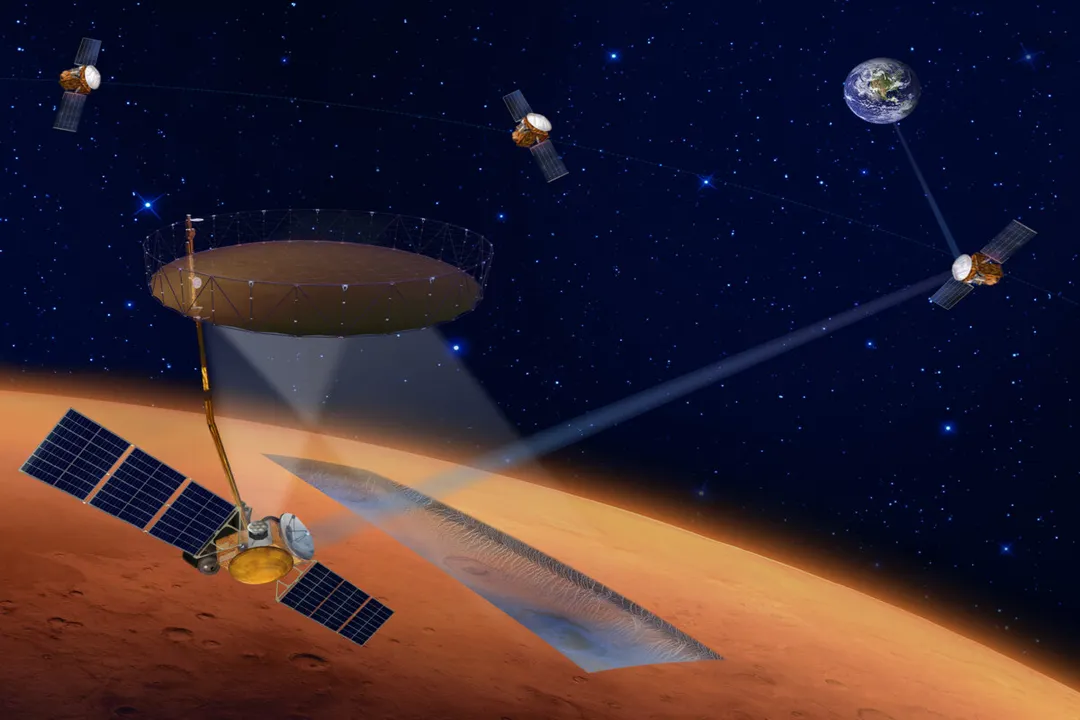
These potential oceans would exist at depths where internal geological heat can keep the water liquid, even though the surface temperatures are frigid. [5] Crucially, these deep reservoirs would likely be highly saline, acting as an isolated, subterranean hydrosphere. [5] If confirmed, these deep bodies would represent the largest remaining reservoir of liquid water on the planet, a massive storehouse protected from solar radiation and atmospheric escape for eons. [5] Differentiating between vast deposits of subsurface ice and actual liquid oceans requires advanced radar sounding, which is precisely what current and future orbiter missions aim to refine. [1][8]
The evidence for water on Mars, spanning billions of years, is multifaceted: clear geological signatures of ancient floods, the current presence of subsurface ice, and seasonal flows of highly saline brine today. [1][2][10] The focus has effectively shifted from proving its existence to understanding its distribution, phase, and history, painting a picture of a once-wet world undergoing a prolonged, gradual desiccation where much of the water simply retreated underground or became chemically bound into the planet’s crust. [4][9] The possibility of deep, persistent liquid reservoirs continues to fuel the drive to send sophisticated subsurface mapping instruments, promising a far more complete inventory of Martian water than we currently possess. [5][6]
Related Questions
#Citations
Why Do We Care About Water on Mars? - NASA Space Place
Water on Mars - Wikipedia
Water - Mars Education | Developing the Next Generation of Explorers
how did the water disappear on Mars? : r/askscience - Reddit
Scientists find oceans of water on Mars. It's just too deep to tap.
Is There Water on Mars? We Asked a NASA Scientist - Facebook
Mars Had Liquid Water On Its Surface.... (NPR News) - NCBI
Your guide to water on Mars | The Planetary Society
What is the reason for the lack of water on Mars? Did it ever have an ...
NASA Confirms Evidence That Liquid Water Flows on Today's Mars