How does Mars Rover send images to Earth?
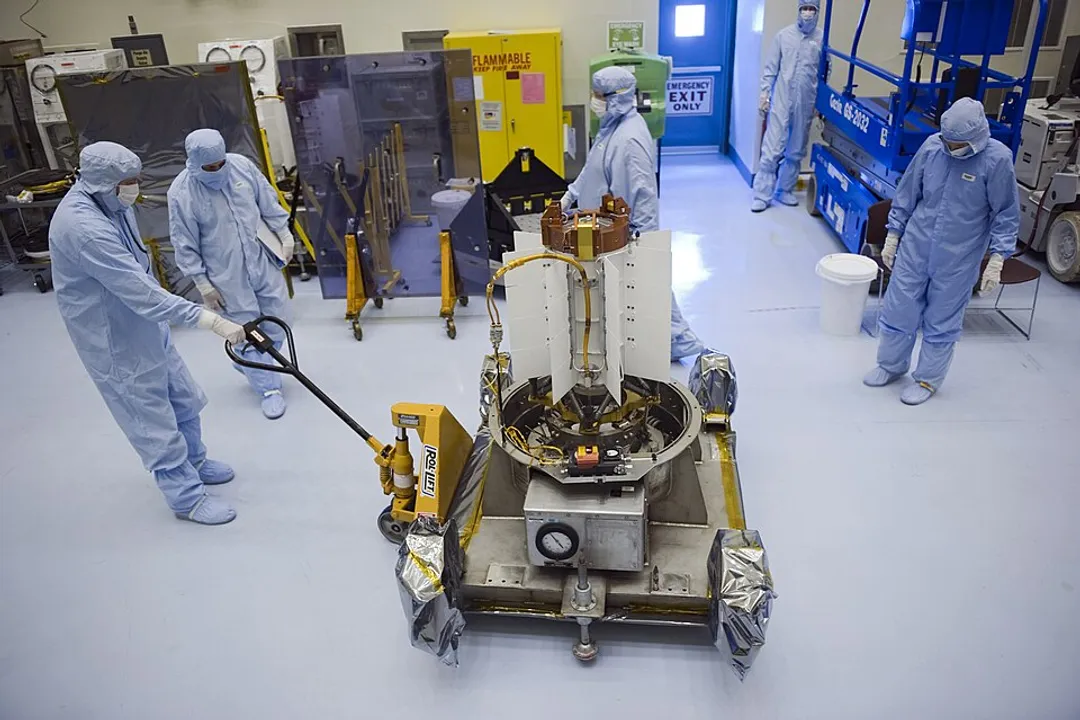
Sending breathtaking images from the dusty plains of Mars all the way back to Earth involves one of the most intricate communication setups ever devised. It’s not as simple as pointing a satellite dish and hitting "send." The sheer distance, coupled with the need to transmit high volumes of data like detailed photographs, necessitates a clever, multi-step approach managed from millions of miles away. [3][6]
The entire process relies on a sophisticated orbital relay network. While Mars rovers possess the capability to communicate directly with Earth, doing so for large data files, such as those from high-resolution cameras, is highly impractical due to the sheer power and antenna size required for such a long-distance broadcast. [2][7]
# Orbital Bridge
The primary mechanism for transferring image data back home involves using spacecraft already orbiting Mars as digital post offices. [2][3] These orbiters, like the Mars Reconnaissance Orbiter (MRO), Mars Odyssey, or ESA's Mars Express, are positioned perfectly to receive data from the surface and then immediately beam it toward Earth. [6][7]
The necessity of this relay system stems from basic physics and engineering limitations. A direct-to-Earth link would demand extremely high power output from the rover’s batteries, which are needed for driving, scientific instruments, and survival. By communicating locally with an orbiter, which is thousands of times closer than Earth, the rover conserves power and significantly increases the achievable data rate. [7] This orbital handover is the fundamental design choice that makes the frequent transmission of high-definition color and panoramic images feasible. [2]
# Local Uplink
The communication sequence begins on the rover itself. Mars assets, such as Curiosity, carry specialized communication hardware designed specifically for this handoff. [2] For relays, the rover typically uses its UHF antenna. [2][7] UHF (Ultra High Frequency) is excellent for short-range, high-data-rate bursts between the rover and a passing orbiter overhead. [2]
The rover doesn't just transmit data willy-nilly. It must first collect its scientific data, including the captured images, and store it onboard its computers. [2] The actual transmission to an orbiter is scheduled precisely. The rover must wait until an orbiter's planned pass aligns with its location on the Martian surface. [2] During this relatively brief window, the rover beams its stored files upward. The orbiter then receives, validates, and stores the data, often compressing or repackaging it slightly for the next leg of its journey. [3][6]
It is interesting to note the difference in communication style compared to what one might expect. If the rover were to use its high-gain antenna to attempt a direct transmission to Earth, the signal would be incredibly weak and require vast power—imagine trying to shout across a continent versus whispering to someone standing right next to you. The UHF link to the orbiter acts as that close proximity conversation, allowing the rover to offload megabytes of imagery efficiently before the orbiter moves out of range. [2][7] This scheduled transfer dictates the pace of operations; the rover can only send what it has stored when the orbital "mail truck" arrives.
# Earth Reception
Once the orbiter has successfully stored the data, the second, more powerful transmission occurs. The orbiter uses its own high-gain antennas to beam the collected information across interplanetary space towards Earth. [6] This downlink from Mars orbit to Earth typically utilizes higher frequencies, such as X-band or Ka-band, which are capable of carrying larger amounts of data over the immense void. [3][6]
On Earth, the data is not collected by just any antenna; it is received by NASA’s Deep Space Network (DSN). [3][6] The DSN is a worldwide network of massive radio antennas strategically positioned in three locations separated by about 120 degrees longitude: Goldstone in California, Madrid in Spain, and Canberra in Australia. [3][6]
This global placement is crucial. Since the Earth is rotating, having stations distributed across the globe ensures that at least one station always has a clear line of sight to Mars, allowing for near-continuous data reception, tracking, and command transmission. [3][6] When an orbiter in Mars orbit transmits an image package, one of these colossal dishes locks onto the faint signal, collects the bits and bytes, and begins the process of error checking and data reconstitution on Earth. [3] The final reconstructed image, perhaps a stunning vista from Gale Crater, is then distributed to scientists for analysis. [2]
# Speed Matters
The performance difference between the relay path and a hypothetical direct path is staggering. While a rover attempting a direct-to-Earth transmission might manage only a few bits per second, using the relay satellites allows for data rates that are orders of magnitude faster. [2][7]
For instance, the MRO, when acting as a relay, can transmit data down to Earth at rates reaching up to 6 megabits per second (Mbps). [2] This rate allows mission controllers to receive substantial amounts of telemetry and numerous images daily, keeping the mission on schedule. [2] The Curiosity rover, for example, can transmit up to 256 megabits of data per Sol (Martian day) when utilizing its relay assets effectively. [2]
If we consider the data volume, a single, full-resolution color image from a rover might easily exceed 10 megabytes. Trying to push that over a direct, low-bandwidth link would consume days of operational time. Using the MRO relay, that same image can be on its way to Earth in mere seconds once the orbital window opens, making high-cadence science possible. [2][7] This disparity underscores why the relay architecture is not just a convenience, but a necessity for modern, data-intensive Mars missions. [2]
# Signal Lag
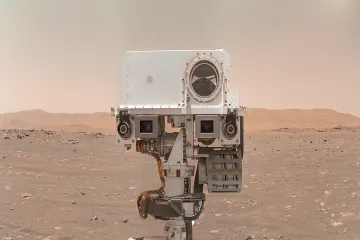
Regardless of the sophisticated hardware and orbital gymnastics employed, the distance between Earth and Mars imposes an unavoidable physical constraint: the speed of light delay. [3][6] Because Mars and Earth are constantly moving in their orbits, the distance between them varies significantly, ranging from about 33 million miles to over 250 million miles. [3]
This translates directly into a communication delay that can stretch up to 22 minutes one way. [3][6] This means that when ground controllers send a command to the rover—for example, "Move three meters forward and take a picture of that rock"—it takes up to 22 minutes for that command to reach the rover. Once the rover executes the command and takes the picture, it takes another 22 minutes (or less, depending on the distance at that moment) for the confirmation signal or the image data to travel back to the DSN dish. [3]
This significant latency means that real-time remote control is impossible. Every action taken by the rover must be pre-planned, sequenced, and uploaded as a block of instructions. [6] The operational day is structured around sending these large command sequences, waiting for the signal to arrive, and then waiting again for confirmation that the sequence was received and executed correctly, often hours later. [3] While this delay affects all commands, it makes the high-volume data transfer of imagery particularly important to schedule efficiently during those brief, powerful downlink windows provided by the relay orbiters. [2][3]
#Videos
How Mars rover Curiosity communicates with Earth - YouTube
Related Questions
#Citations
ELI5: How does the Mars Rover send data(photos) from Mars to Earth?
Communicating with Curiosity - NASA Science
Mars to Earth: How to send HD video between planets - BBC News
Earth to Mars: How NASA Keeps Curiosity Connected (Mars Report)
How does the Curiosity Rover send photographs back to Earth?
A Complete Guide On Mars Rover and the Earth - Starscapes
What connection do Mars rovers use to send data to Earth?
How Mars rover Curiosity communicates with Earth - YouTube
Curiosity (rover) - Wikipedia