Did humans find water on Mars?
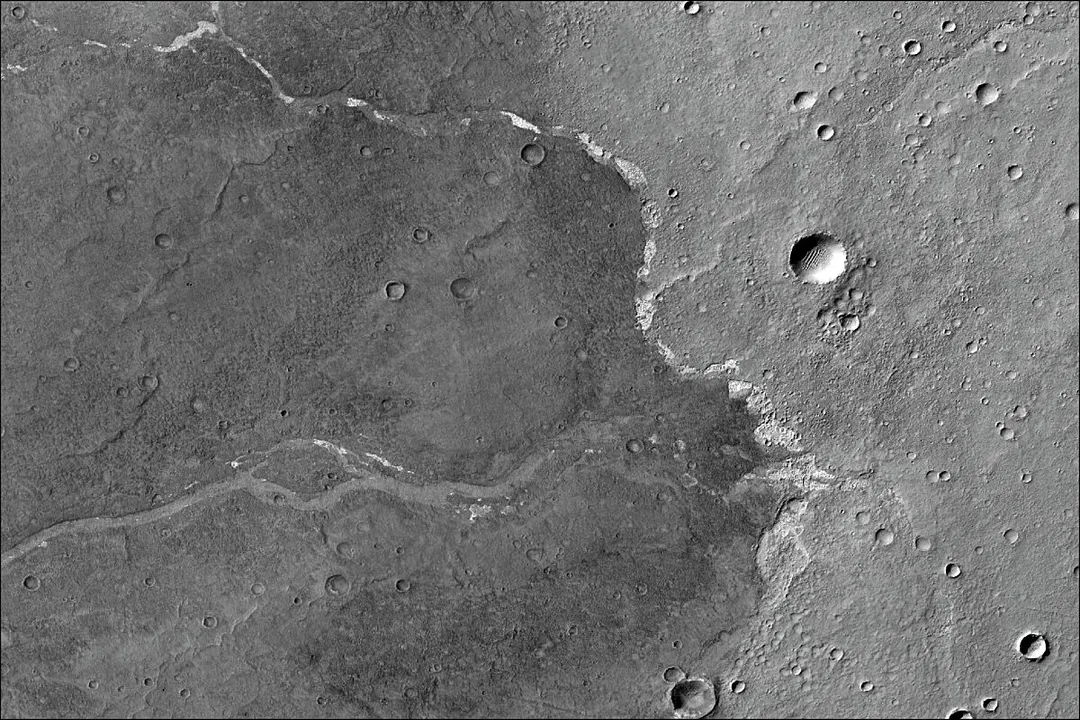
The discovery of water on Mars is not a single moment captured in a photograph, but rather an unfolding narrative pieced together over decades by robotic explorers, orbital surveys, and geological analysis. The simple answer to whether humans have found water on the Red Planet is a resounding yes, but the details reveal a world far more complex than a simple frozen desert. What we have confirmed is water in nearly every state imaginable—ancient rivers, vast subsurface ice sheets, atmospheric vapor, and even fleeting evidence of salty liquid trickling down sunlit slopes today.
This ongoing revelation shifts our understanding of the planet from a purely dead world to one that once harbored conditions favorable for life, and perhaps still maintains small, isolated niches where water persists in liquid form. The evidence is layered, separated into what the planet was and what it is right now.
# Ancient Rivers
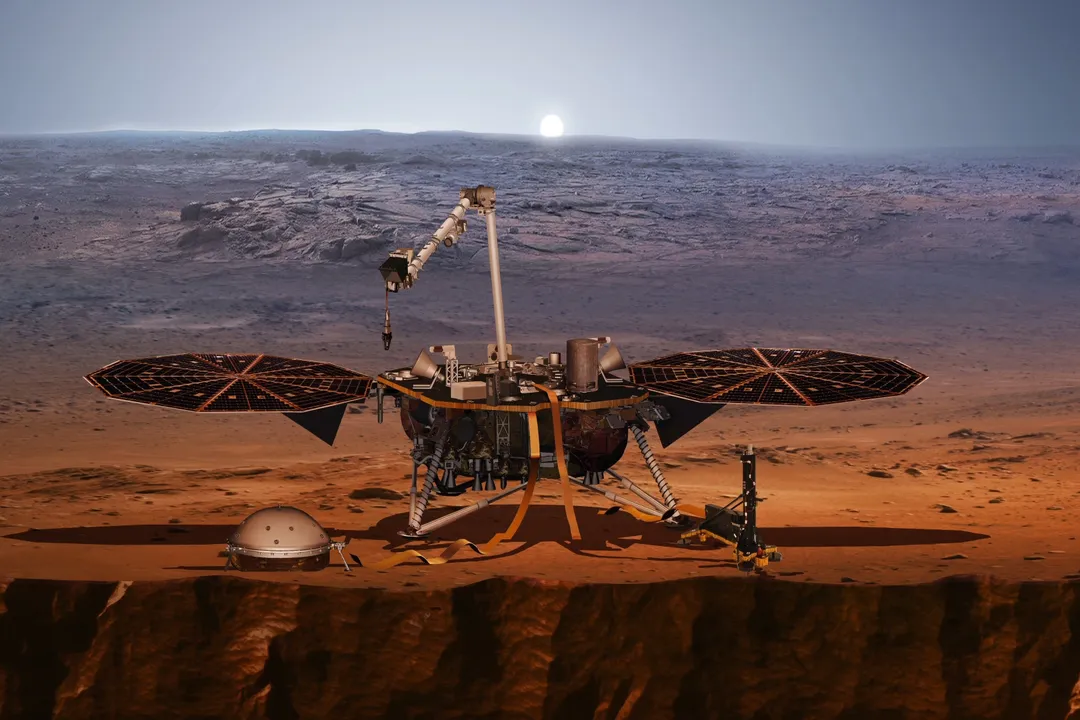
Billions of years ago, Mars was a fundamentally different place. Geological evidence powerfully suggests that liquid water flowed across its surface in massive quantities. Orbiters have mapped extensive valley networks, deltas, and features strongly resembling dried-up riverbeds and ancient lake bottoms. These formations, visible to instruments both from orbit and on the ground, are the clearest indication of a warmer, thicker early Martian atmosphere capable of supporting standing bodies of water.
Furthermore, the detection of specific hydrated minerals serves as chemical proof. Minerals like clays and sulfates only form in the sustained presence of liquid water. When rovers analyze Martian soil and rock, identifying these compounds is akin to finding ancient seashells on a distant mountain range—it locks in the history of a wetter past. This period of abundant surface water is estimated to have occurred roughly three to four billion years ago, before the planet lost most of its atmosphere and froze over.
# Vast Ice
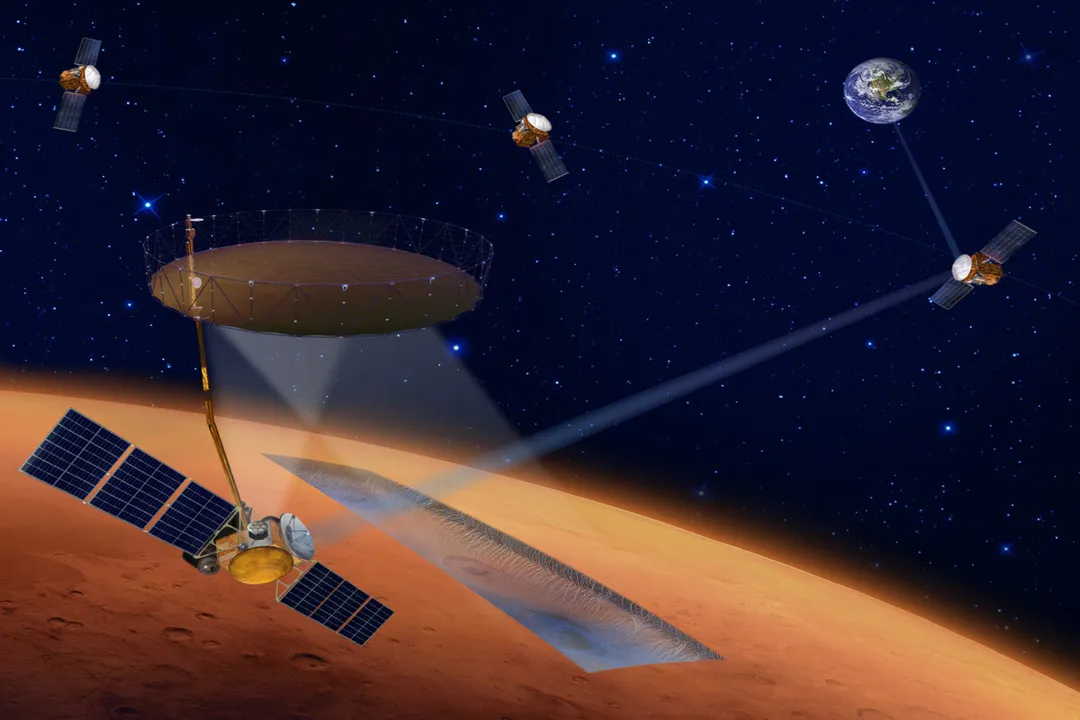
While the surface water disappeared, the water itself did not. Today, the vast majority of Martian water is locked away as ice. This frozen resource is concentrated in two primary areas: the prominent polar ice caps, which are a mix of water ice and frozen carbon dioxide, and extensive sheets buried beneath the surface soil across the mid-to-high latitudes.
These buried reservoirs represent an enormous volume of frozen H₂O. Scientific models and radar soundings have inferred significant layers of ice just meters beneath the dusty regolith. While the surface temperature rarely rises above freezing, and the atmosphere is too thin to maintain liquid water for long, this subsurface ice provides a clear, accessible reservoir of water if humanity ever establishes a permanent base on Mars. Comparing the total volume of this trapped ice to the estimated ancient surface oceans suggests that the water lost to space might be less than once thought; much of it was simply redistributed and frozen.
# Current Flows
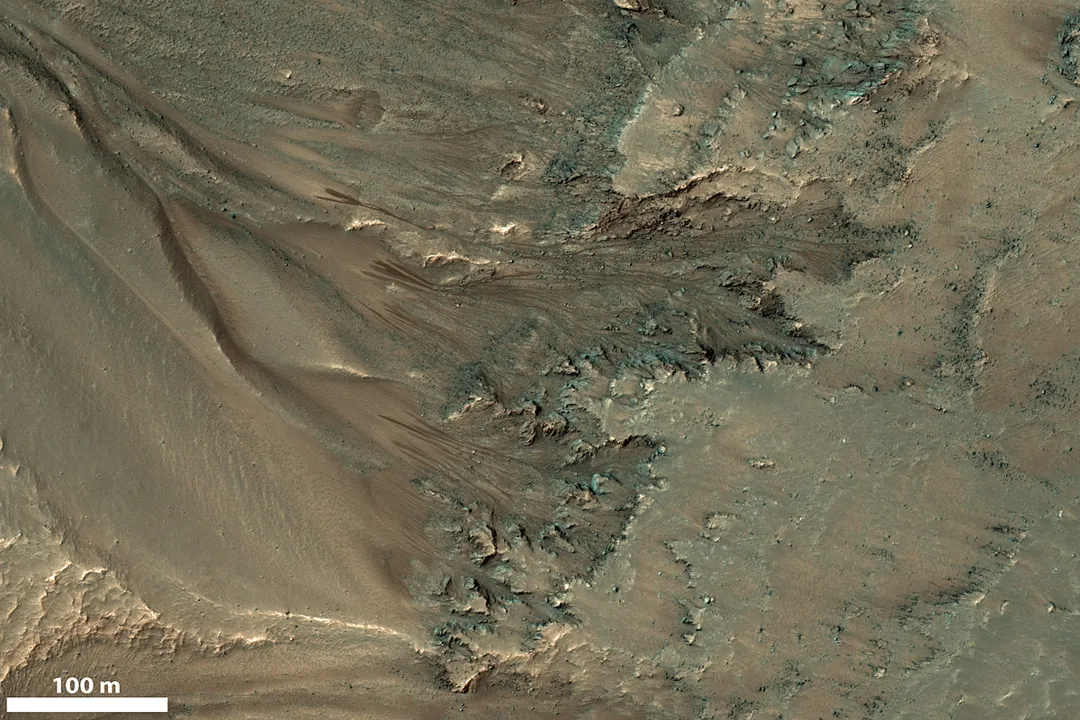
The most compelling, and scientifically debated, evidence involves water activity in the modern era. NASA confirmed in 2015 that evidence strongly pointed to liquid water flowing on Mars today, albeit intermittently. This evidence comes primarily from Recurring Slope Lineae (RSLs)—dark streaks that appear seasonally on Martian slopes and fade when conditions change.
However, this is not the life-sustaining rain or rivers we know on Earth. Due to the extreme cold and low atmospheric pressure, pure liquid water cannot exist stably on the surface; it would either freeze solid or boil away instantly. Therefore, the RSLs are believed to be flows of brine—water heavily saturated with salts. These salts act as antifreeze, allowing the water to remain liquid at much lower temperatures.
The presence of these flowing streaks demonstrates that the hydrological cycle, in a very limited, salty sense, has not entirely ceased. They represent the planet actively cycling small amounts of moisture, likely pulled from the atmosphere or shallow subsurface, down the slopes during warmer periods.
# Salty Science
The salts responsible for these modern flows—chiefly perchlorates—are a chemical double-edged sword for future exploration. On one hand, they are the reason we see any liquid activity at all, as they lower the freezing point of water significantly. On the other hand, perchlorates are toxic to humans and complicate resource extraction efforts.
Any attempt to melt the Martian ice or harvest water vapor will inevitably encounter these salts. Consider the practical implications for a future habitat: collecting water from a subsurface reservoir might require energy-intensive separation processes to purify the brine before it can be used for drinking, growing food, or making rocket propellant. The very mechanism that proves liquid water exists today is the same mechanism that makes that water difficult to use without advanced purification technology.
| Water State | Location | Stability | Relevance |
|---|---|---|---|
| Liquid (Brine) | RSLs, shallow surface | Transient/Seasonal | Evidence of current activity |
| Solid (Ice) | Polar caps, subsurface | Permanent | Largest accessible reservoir |
| Vapor | Atmosphere | Trace amounts | Involved in current cycling |
| Liquid (Ancient) | Rivers, lakes | Sustained | Proof of warmer past climate |
# Deep Reservoirs
Beyond the surface evidence, the search has gone deeper, revealing potential stable liquid water environments far below the freezing, salty surface layer. Radar data from orbiters has identified features beneath the south polar ice cap that strongly suggest the presence of liquid water reservoirs, potentially kept warm by geothermal heating or highly concentrated dissolved salts.
These potential deep bodies of water are separated from the harsh surface environment by kilometers of ice and rock. If these reservoirs exist, they represent the most promising environments for extant—currently living—Martian microbial life, as they would offer stable temperatures and protection from surface radiation. The scale of these potential deep oceans is staggering; some analyses suggest these deposits hold more water than the ice currently visible on the surface.
The discovery of water on Mars has evolved from mapping dry channels to confirming the current existence of transient liquid flows and hypothesizing about vast, hidden seas. Every probe, from Viking to Perseverance, has contributed a piece to this picture, confirming that water is not an anomaly but a fundamental part of the planet's geological and atmospheric structure, both past and present.
#Videos
Astronomers Found Oceans of Water on Mars - YouTube
Related Questions
#Citations
NASA Confirms Evidence That Liquid Water Flows on Today's Mars
Scientists find oceans of water on Mars. It's just too deep to tap.
Water on Mars: How We Know It Existed and How We Believe It ...
Astronomers Found Oceans of Water on Mars - YouTube
Water - Mars Education | Developing the Next Generation of Explorers
Mars water: Liquid water reservoirs found under Martian crust - BBC
Bucknell Answers: Water on Mars
Geologists Discover Water Once Flowed on Mars | AMNH
Your guide to water on Mars | The Planetary Society