What higher frequencies do orbiters typically use for the downlink transmission toward Earth?
Answer
X-band or Ka-band
Once an orbiter has received and stored the data from the surface assets, it initiates the second stage of the journey: the transmission across interplanetary space toward Earth. This second leg of the journey requires significantly higher bandwidth capabilities to cross the vast distances effectively. To achieve this, the orbiters utilize higher frequency bands, specifically mentioning X-band or Ka-band capabilities. These higher frequencies are chosen because they possess the necessary characteristics to carry larger volumes of data across the immense void separating Mars and Earth, facilitating the high data rates needed for modern missions.
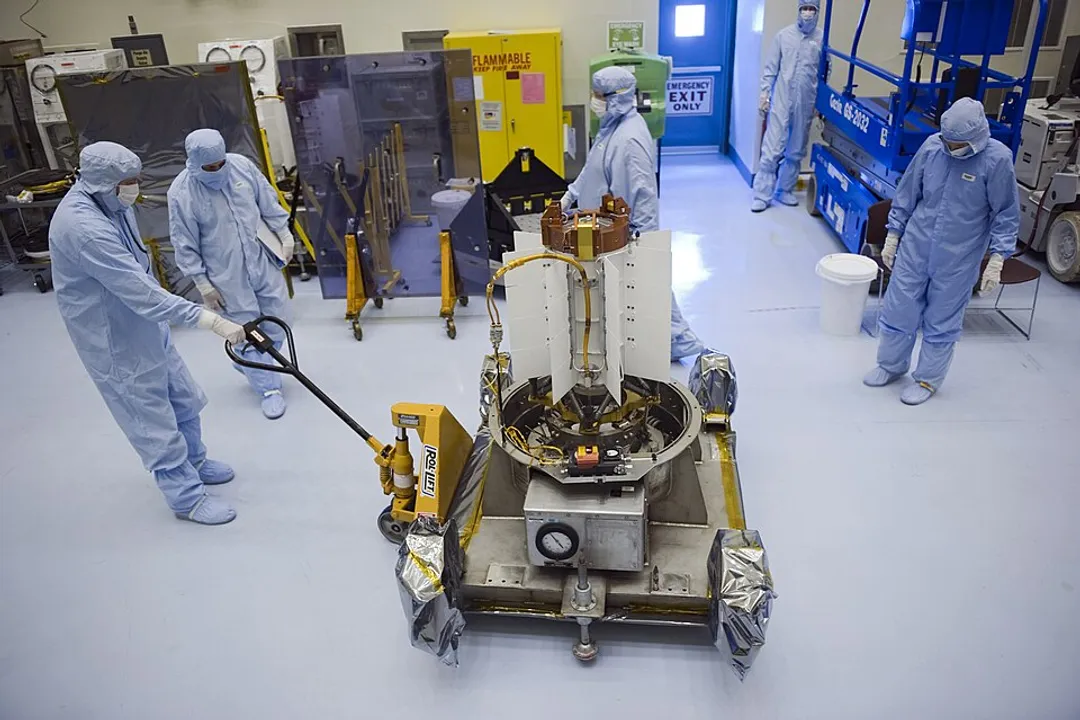
#Videos
How Mars rover Curiosity communicates with Earth - YouTube
Related Questions
Why do Mars rovers avoid direct-to-Earth links for large data files?What specific antenna does a Mars rover typically use for the local uplink to a passing orbiter?What higher frequencies do orbiters typically use for the downlink transmission toward Earth?Which facility receives data transmitted by orbiters across interplanetary space?What is the strategic purpose of separating the DSN stations (Goldstone, Madrid, Canberra)?What is the maximum data transmission rate the MRO achieves when relaying data down to Earth?What operational constraint does the speed of light delay impose on rover control?What is the maximum one-way communication delay time between Earth and Mars?What is the maximum amount of data *Curiosity* can transmit per Sol when utilizing its relay assets effectively?After the rover beams data to an orbiter, what action does the orbiter perform next?How does the UHF link to the orbiter compare functionally to a direct high-gain antenna transmission to Earth?