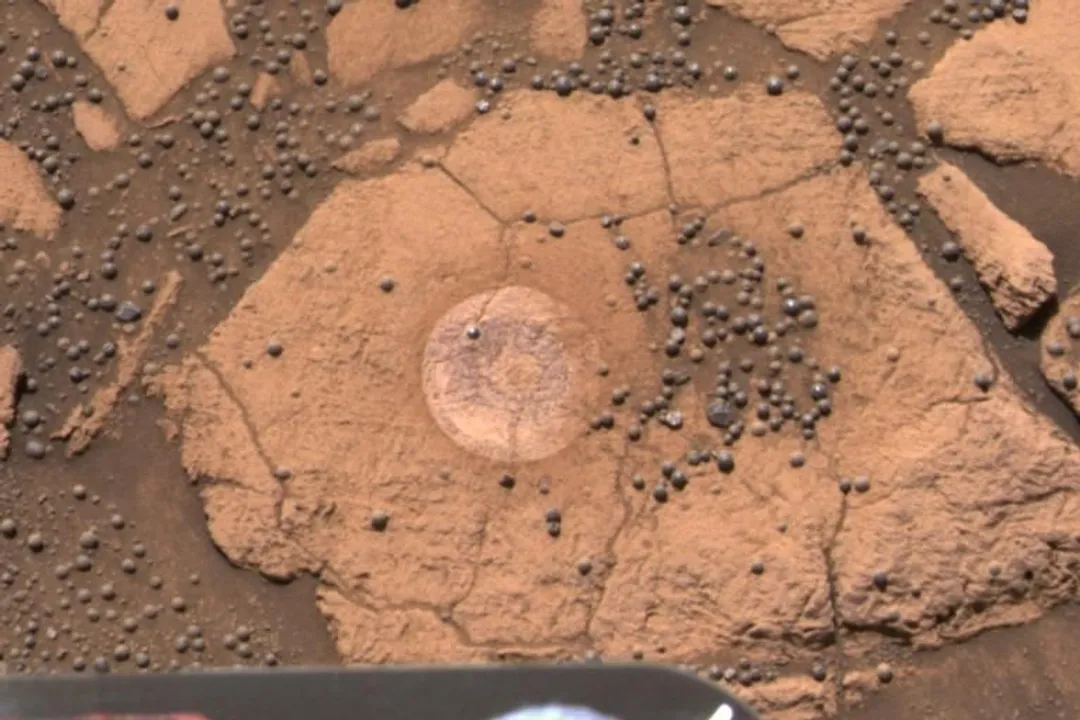
What specific surface feature at Meridiani Planum prompted Opportunity's initial high-value inspection?
Small, bluish-gray spherules dubbed “blueberries.”
Opportunity was directed to Meridiani Planum because spectral data indicated a high concentration of hematite, a mineral often associated with water interaction on Earth. The most visible and immediate manifestation of this mineral signature on the surface were tiny, spherical formations scientists named “blueberries.” These spherules were suspected to be concretions—hardened masses formed when mineral-rich water seeps through existing rock and precipitates minerals around a central point. Opportunity's initial imperative was to investigate these surface deposits directly where it landed, using close-up inspection to confirm their composition and formation mechanism, which provided immediate, high-value evidence of past water activity.