What was the purpose of Spirit and Opportunity?
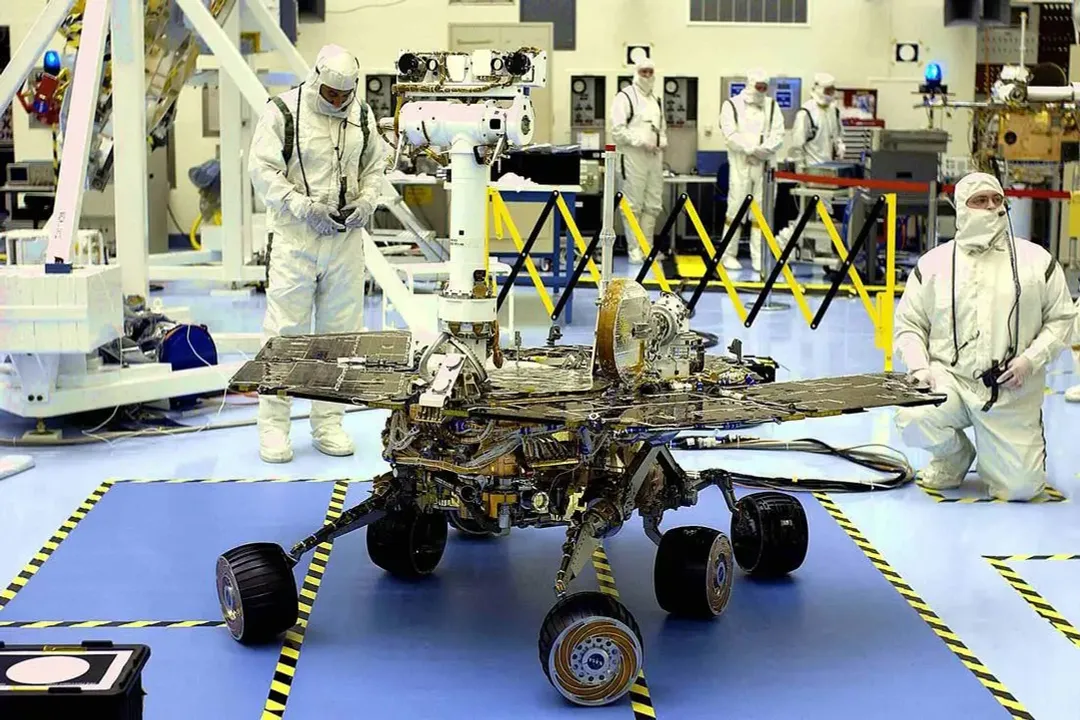
The Mars Exploration Rovers, Spirit and Opportunity, were twin robotic geologists sent to the Red Planet with a singular, driving purpose: to seek definitive proof that Mars once harbored liquid water. [1][2][3][6] Launched in the summer of 2003, [5][9] these mobile laboratories were tasked with exploring different landing sites to assess the planet's watery past and determine if conditions existed that could have supported life. [1][6] They were not just simple rovers; they represented a significant step up in capability and complexity over their predecessors, like Sojourner. [9]
This dual-rover concept was a strategic investment in planetary science. [3] The decision to send two nearly identical machines, MER-A (Spirit) and MER-B (Opportunity), managed the inherent risk of deep-space missions; if one failed upon landing, the other could still achieve the primary objectives. [3][5][9] They landed successfully in January 2004, [5] commencing their work on opposite sides of the globe, which allowed for invaluable comparative studies. [1]
# Mission Genesis
The general goal was rooted in years of orbital data suggesting ancient river deltas and water features on Mars. Spirit landed in Gusev Crater, believed to be the site of an ancient lake bed, while Opportunity touched down on the plains of Meridiani Planum. [1][2] The comparative aspect of the twin mission is often downplayed; landing them in geologically distinct regions meant scientists weren't just looking for water evidence, but evaluating whether water activity was a localized or planet-wide phenomenon in Mars's past. This dual perspective vastly strengthened any conclusions drawn about the planet's ancient hydrology. [1][6]
# Primary Goals
The mission mandate was clear: the rovers needed to act as field geologists, exploring the surface to find and characterize rocks and soils that held clues about past water activity. [1][2][3] They had a precise list of scientific tasks. One major objective was to identify and examine the composition of rocks and soil, looking specifically for mineralogical signatures that could only have formed in the presence of liquid water. [1][6] They were equipped to survey the landing site's environment and climate history, both past and present. [2] To perform this detailed analysis, each rover carried a suite of instruments, including cameras and the Rock Abrasion Tool (RAT), designed to grind away the weathered outer layer of rocks to access pristine interior material for spectroscopic analysis. [1] The plan was to operate for only 90 Martian sols, or about three Earth months. [1][5][7]
# Water Evidence
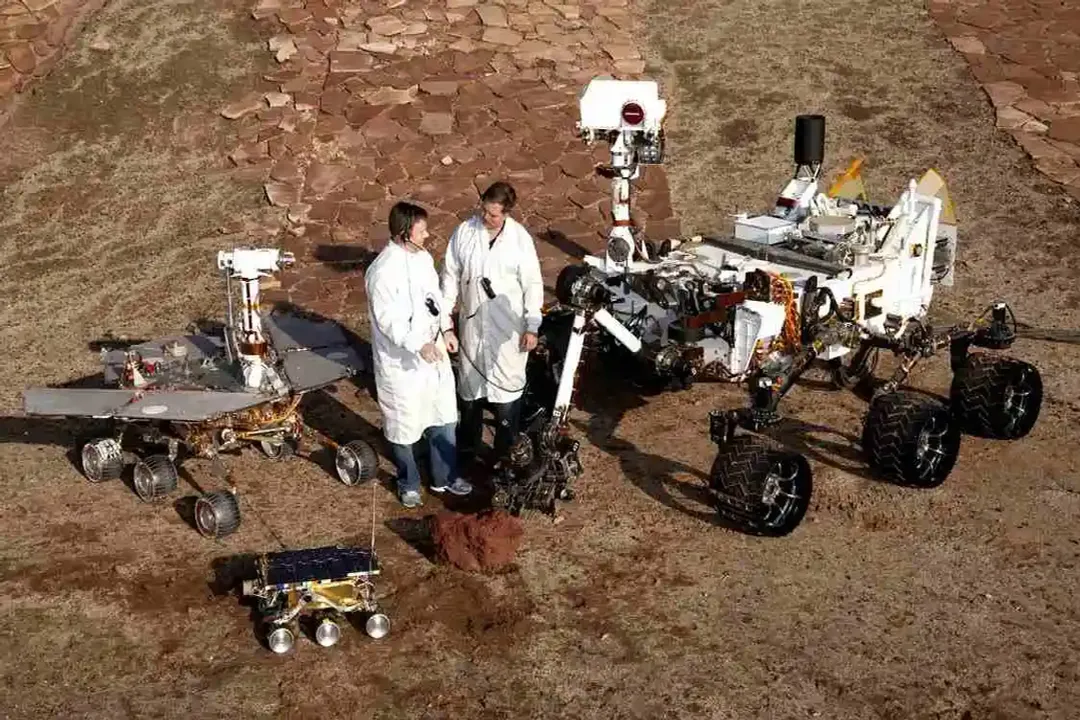
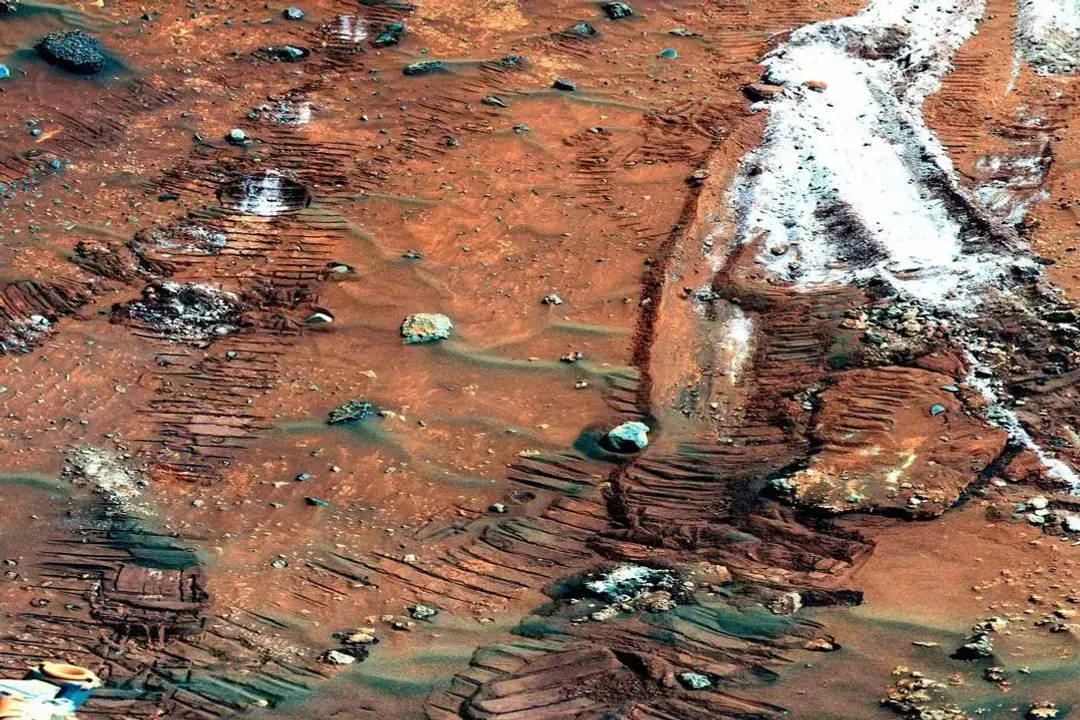
What the rovers found turned the primary goal into a resounding success that far surpassed those conservative expectations. [6][8] Spirit, operating in the vast Gusev Crater, found evidence indicating that water had flowed there long ago, possibly associated with hydrothermal activity, suggesting a warm, wet environment at some point in the crater's history. [1]
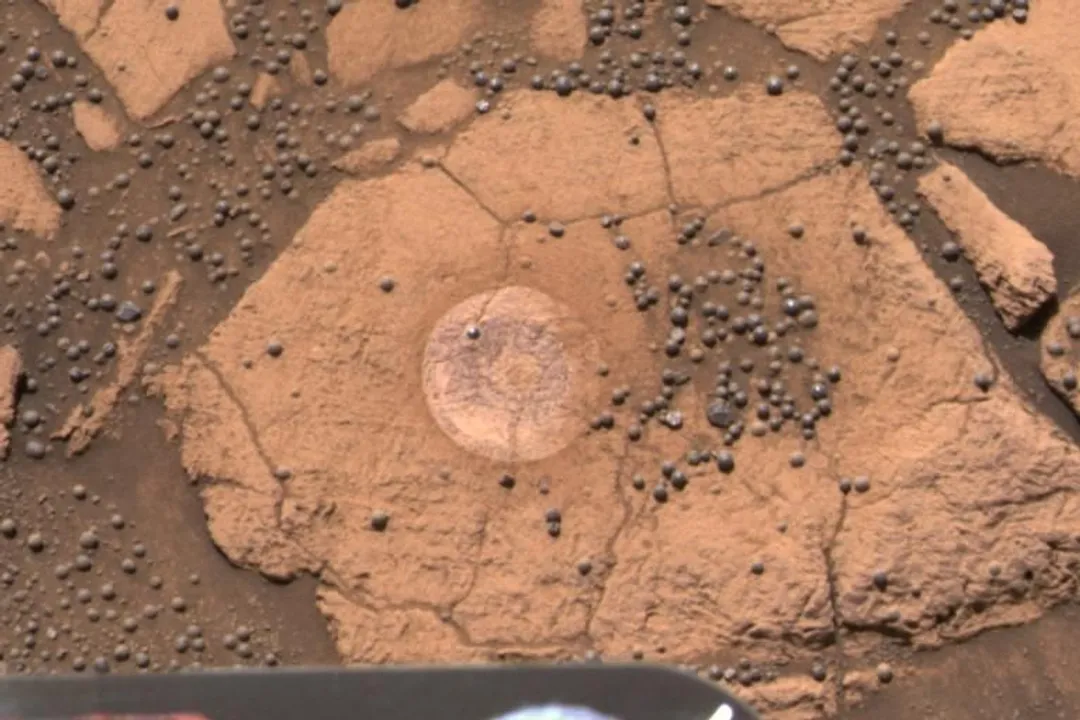
Opportunity’s findings were perhaps even more immediately compelling for the general public. [6] Near its landing site, Opportunity discovered an abundance of hematite concretions, affectionately nicknamed "blueberries". [3] On Earth, these small, iron-rich spheres are almost always formed within water. [3] Even more telling was the discovery of layered sedimentary rock structures, which strongly suggested deposition by flowing water or even ancient wave action, like a beach or streambed. [6][9] Opportunity also identified minerals like jarosite, which requires acidic water to form, painting a picture of a complex, though perhaps not necessarily life-supporting, aqueous past. [1]
# Longevity Records
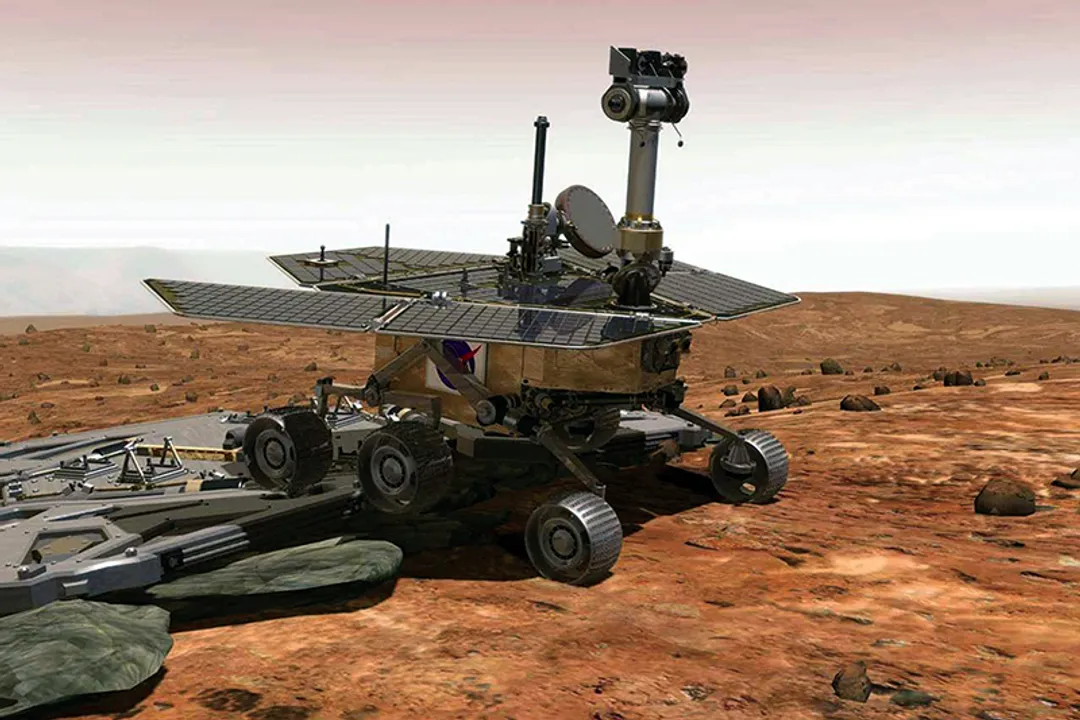
The planned 90-sol mission was an extremely cautious estimate, largely dictated by the power source: solar panels susceptible to dust accumulation and the general wear and tear of a harsh environment. [7] Against this backdrop, the rovers became legendary for their endurance. [8]
Spirit operated for more than six Earth years, driving a total distance of over 4.8 miles (7.7 kilometers) before it became permanently stuck in soft soil in 2009. [1][6] Opportunity, however, became the undisputed champion of Martian longevity. [6] It continued operating for almost 15 years, far outlasting its twin and its design specifications. [1][6] Opportunity finally sent its last signal in June 2018, having traveled an astonishing distance of more than 28 miles (45 kilometers). [1][6] This extended operational period transformed the initial survey into a vast, long-term geological field study. [8]
# Lasting Impact
The scientific return from Spirit and Opportunity fundamentally altered humanity's perception of Mars. [9] Before their landing, the evidence for past water was largely suggestive, based on orbital imagery that showed features resembling dry riverbeds. [9] These rovers provided concrete, in-situ geological confirmation that liquid water persisted on the surface of ancient Mars for long enough periods to create stable mineralogy. [6] They proved that ancient Mars possessed environments capable of supporting microbial life, shifting the question from if water existed to how long it existed and how life might have evolved within it. [6]
The engineering lessons were just as important as the geological ones. The fact that these rovers survived so long, despite being designed conservatively for a short run, validated a fundamental design philosophy prioritizing mechanical robustness and simplicity. This hard-won experience directly informed the construction and operational planning for heavier, more complex rovers that followed, like Curiosity and Perseverance. [1][8] The data set they collected continues to serve as the geological and environmental baseline against which all modern Mars exploration efforts are compared. [8] Their legacy lies not just in finding the evidence, but in establishing the very foundation for answering whether life ever took hold on another world. [6]
Related Questions
#Citations
Mars Exploration Rovers: Spirit and Opportunity - NASA Science
The Mars Rovers: Spirit and Opportunity | NASA Space Place
Mars Exploration Rover - Wikipedia
20 years ago this month, NASA's Spirit and Opportunity rovers ...
20 years ago: Spirit and Opportunity rovers launched for Mars
Happy 20th, Spirit and Opportunity! How the Mars rovers expanded ...
Mars Exploration Rovers Update: Spirit… - The Planetary Society
Mars Rovers Spirit, Opportunity Exceeded Expectations
Mars Exploration Rover | Facts, Spirit, & Opportunity - Britannica