What are some interesting facts about Spirit and Opportunity?
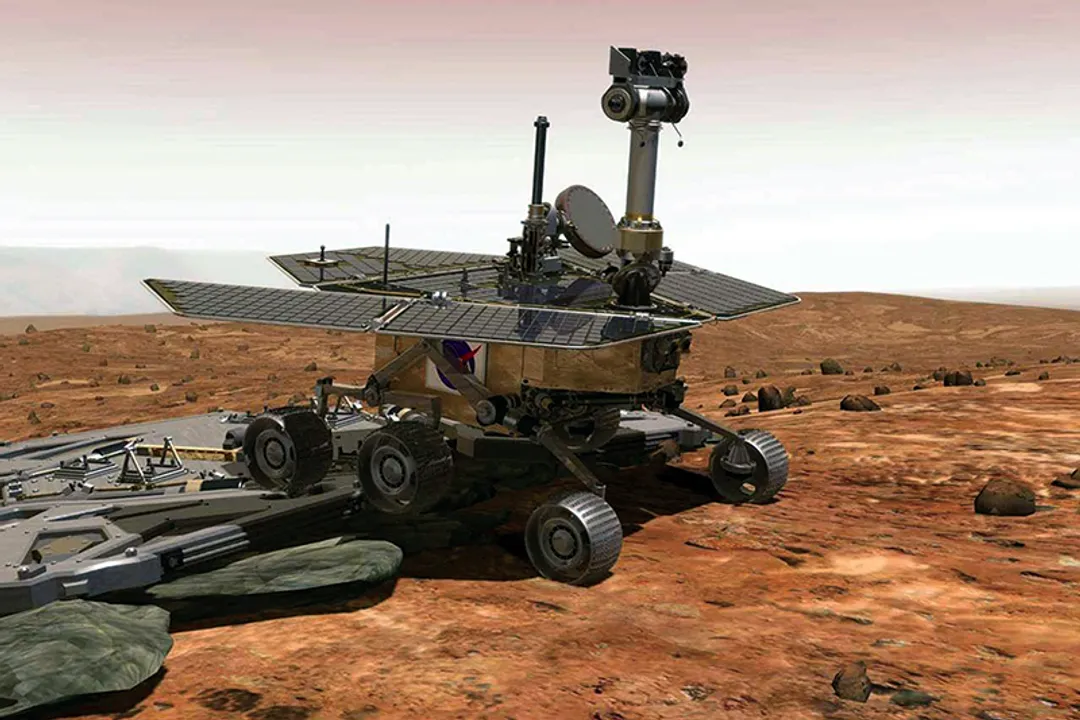
The twin Martian explorers, Spirit and Opportunity, launched within weeks of each other in the summer of 2003, embarking on what was intended to be a ninety-sol mission for each robot, a relatively brief stint on the Red Planet. [6][3] Their primary objective was deceptively simple: to find geological evidence that water once existed on Mars. [3][7] What followed was one of the most successful robotic planetary exploration programs ever conceived, turning two six-wheeled geologists into interstellar marathon runners whose lifespans stretched years beyond their warranty. [8] The initial excitement surrounding their landing in January 2004 soon gave way to sustained awe as both rovers began to send back data that reshaped our understanding of the fourth planet from the Sun. [5][6]
# Launch Pairing
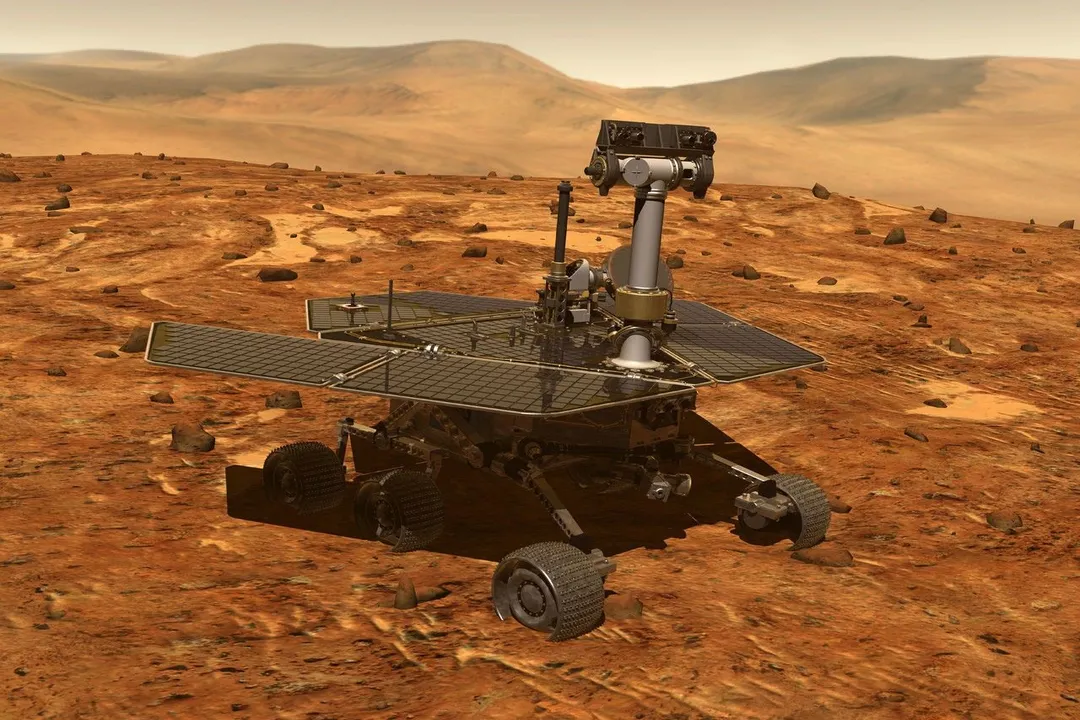
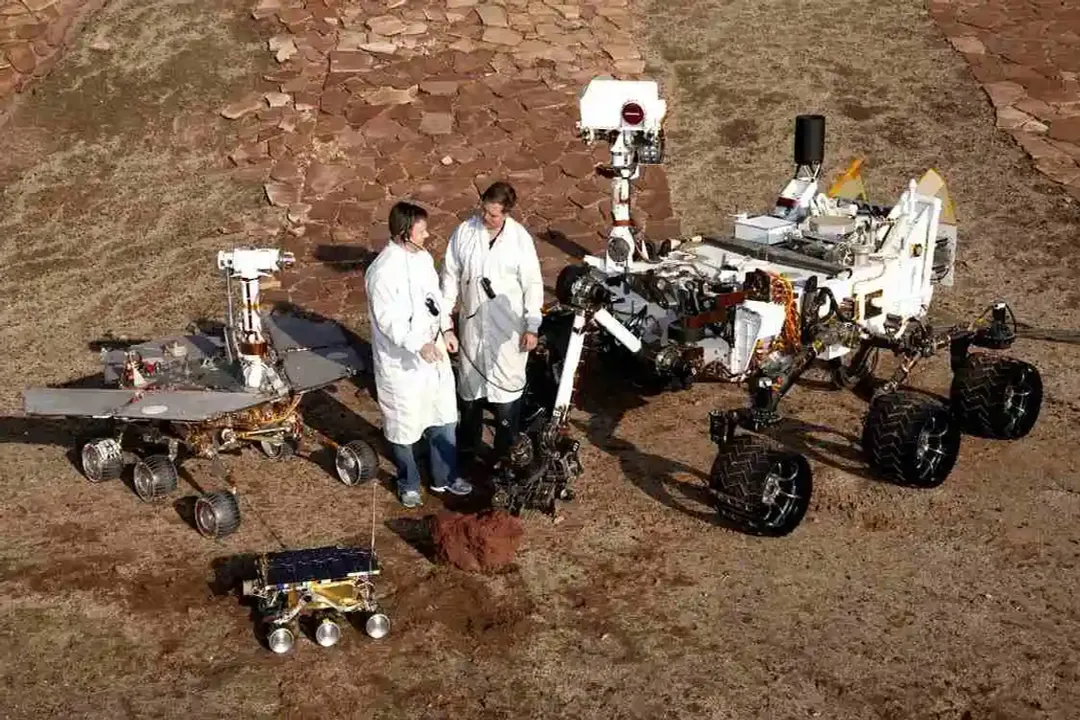
The Mars Exploration Rover (MER) mission deployed a pair of nearly identical spacecraft, designed as siblings to increase the probability of success and gather diverse data across different landing sites. [3] Spirit (MER-A) lifted off first, departing Earth on June 10, 2003, followed by Opportunity (MER-B) on July 7, 2003. [6] This dual launch strategy meant that if one rover failed during transit or landing, the other could still carry out the primary scientific goals. [3] They were designed not just to explore, but to survive, featuring rocker-bogie suspension systems that allowed them to traverse surprisingly rough terrain, far more challenging than what initial simulations might have predicted. [4]
# Rover Specifications
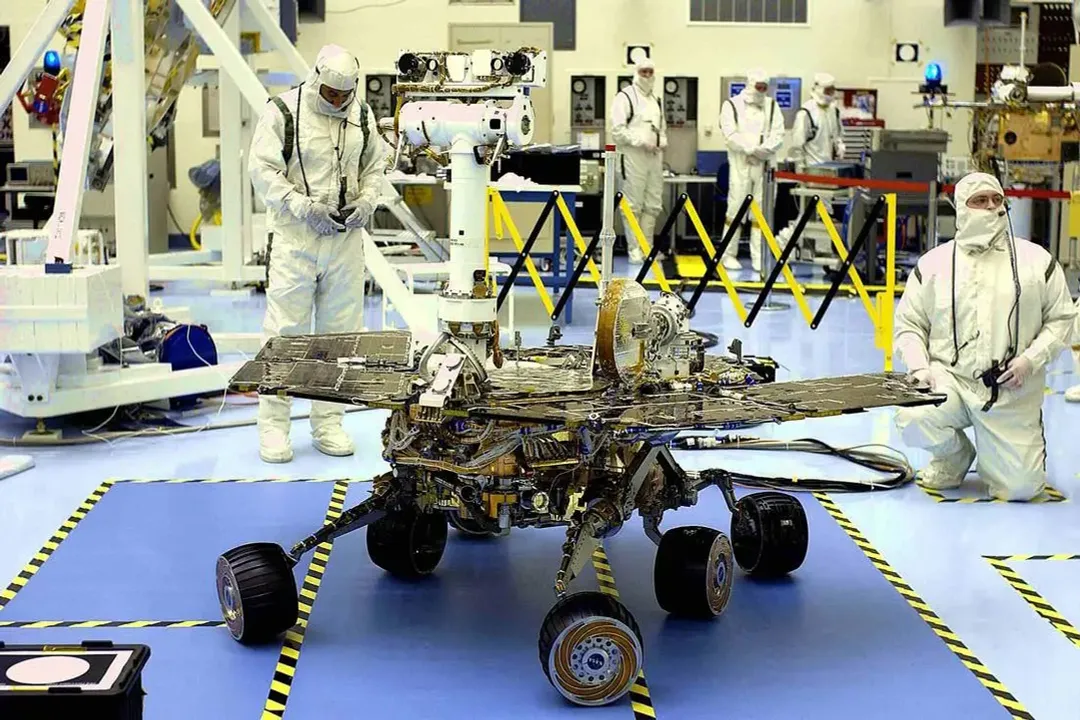
While often spoken of as identical twins, slight variations in their construction, instrument calibration, and especially their final resting places—one landing in Gusev Crater, the other in Meridiani Planum—meant their experiences diverged quickly. [9] Both rovers stood about 1.5 meters tall, weighed around 185 kilograms (408 pounds) at launch, and were powered by solar arrays. [4][7] They carried a suite of instruments, including a Panoramic Camera (Pancam) for color imaging, a Miniature Thermal Emission Spectrometer (Mini-TES) to determine mineral composition from a distance, and a Mössbauer Spectrometer for analyzing iron-bearing minerals. [7]
To appreciate their roles, it helps to see the basic comparison of their mission parameters:
| Feature | Spirit (MER-A) | Opportunity (MER-B) |
|---|---|---|
| Landing Site | Gusev Crater | Meridiani Planum |
| Nominal Mission | 90 Sols | 90 Sols |
| Primary Discovery Focus | Evidence of past water activity in crater floor/rim | Hematite "blueberries" indicating aqueous past |
| Final Operational Year | 2010 | 2018 |
| Total Distance Traveled | 7.73 km (4.8 miles) | 45.16 km (28.06 miles) |
This side-by-side view underscores that while both achieved their primary goals, Opportunity became the clear distance champion, effectively treating its 90-sol mission as a multi-year endurance test. [8][9]
# Spirit's Troublesome Trek

Spirit touched down successfully inside Gusev Crater, an area believed to be an ancient lakebed. [3] Its initial exploration revealed that the crater floor was mostly covered in volcanic rock, seemingly dashing the hopes for clear sedimentary layers right away. [1] However, Spirit showed tenacity. It managed to drive onto the rim of Columbia Hills, where it found evidence of past hot springs activity, possibly involving water, a finding that dramatically expanded the scope of what scientists thought was possible on ancient Mars. [1][7]
The rover’s most significant challenge, and eventual undoing, occurred in Martian year 2009. Spirit became stuck in soft soil, or "sand trap," at a location later named Troy. [1] Despite months of careful maneuvering by mission control, Spirit’s six wheels spun fruitlessly, burying the rover's solar panels deeper into the Martian dust. [1][7] As the Martian winter approached, the reduced sunlight combined with the inability to orient the panels optimally led to the rover losing power. The last communication from Spirit was received on March 22, 2010. [1] While the engineering team kept trying to contact it, Spirit was officially declared lost in May 2011, having operated for over 6 years and 2 months, far exceeding its planned 90-day lifespan. [7][1]
# Opportunity's Record Run
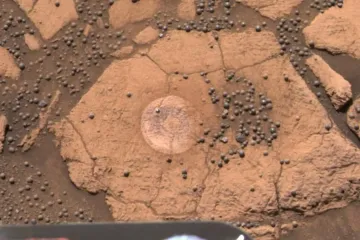
Opportunity’s landing site in Meridiani Planum proved immediately more fruitful in terms of the key evidence sought: hematite concretions, often called "blueberries". [3] These small, spherical mineral formations are known on Earth to form in the presence of liquid water. [3][9] Opportunity’s first major finding was the confirmation that these spherules were indeed hematite, solid proof that water once flowed or pooled in that region. [8]
The rover's longevity was staggering. Designed for 90 sols, Opportunity kept going through multiple Martian years, demonstrating superior solar energy collection compared to Spirit, partly due to its landing location and perhaps superior dust clearing during wind events. [8] For years, mission controllers navigated it across plains and up the slopes of the large Endurance Crater and later Victoria Crater, investigating geological layers. [3]
Perhaps the most impressive feat of Opportunity was its survival and subsequent traverse to Mount Sharp (not to be confused with the one Curiosity explored, though the principle of ascending a stratified mound remained). [8] In 2018, a massive, planet-encircling dust storm engulfed Mars, blocking out nearly all sunlight for weeks. [5] This event was the end for Opportunity. On June 12, 2018, the team sent its last commanded transmission, hoping for a response when the skies cleared. [5] When silence persisted long after the dust settled, NASA officially declared the mission over in February 2019. [8] Opportunity had operated for nearly 15 years and set an unofficial, yet widely celebrated, record for distance traveled by any off-world vehicle: over 28 miles (45.16 kilometers). [8][9]
# Scientific Payoffs
The success of the MER mission wasn't just about surviving; it was about discovery. The presence of minerals that form only in water—like jarosite, hematite, and sulfates—was a recurring theme in the data returned from both rovers. [3] Spirit found evidence suggesting that past water activity at Gusev Crater was related to hot, acidic spring systems, differing from Opportunity's environment. [1] Opportunity's exploration of Meridiani Planum provided strong, sustained evidence for widespread liquid water on the surface billions of years ago. [3]
Imagine the sheer volume of data collected. If we consider the primary mission window of 90 sols for each rover, Spirit operated for approximately 2,208 sols, and Opportunity for 5,352 sols. [1][8] That means Spirit operated for roughly 24.5 times its planned life, and Opportunity for nearly 60 times its planned life. [7] This massive extension of operational time fundamentally changed the scientific return. If a mission is budgeted for three months, the data collected in years 3, 5, or 10 effectively comes at near-zero marginal cost relative to the initial investment, providing an almost unbelievable return on investment for planetary science. [8] This situation highlights a subtle but crucial lesson for future rover development: building in slightly more margin for power generation and mechanical simplicity might yield exponential returns in scientific uptime that far outstrip the initial build costs.
# A Human Connection
The sustained presence of these machines on Mars created an unexpected bond with the public and the scientists who operated them. [5] When Spirit went quiet, the reaction was not just a professional acknowledgment of mission failure but a genuine sense of loss for a persistent explorer. [1] The 20th anniversary of their launch in 2023 brought a wave of nostalgia, reminding people that these rovers were the first long-term Martian inhabitants since the Viking landers decades prior. [5] They set a precedent for persistence, showing that engineering designed to last just long enough to meet goals can often far surpass those initial benchmarks if the Martian environment cooperates, even temporarily. [8] The ability of the team to adapt the mission goals—from searching for initial signs of water to conducting long-term atmospheric and terrain studies—demonstrates a flexibility inherent in ground control that matched the rovers' mechanical durability. [7][3]
Related Questions
#Citations
NASA's Spirit Rover: Everything you need to know - Space
Mars Exploration Rovers Update: Spirit and… - The Planetary Society
Mars Exploration Rover | Facts, Spirit, & Opportunity - Britannica
Spirit & Opportunity - ROBOTS: Your Guide to the World of Robotics
20 years ago this month, NASA's Spirit and Opportunity rovers ...
20 years ago: Spirit and Opportunity rovers launched for Mars
Spirit - NASA Science
Mars Rovers Spirit, Opportunity Exceeded Expectations
What are the differences between the Spirit and Opportunity Rovers ...