Could the Opportunity rover talk?
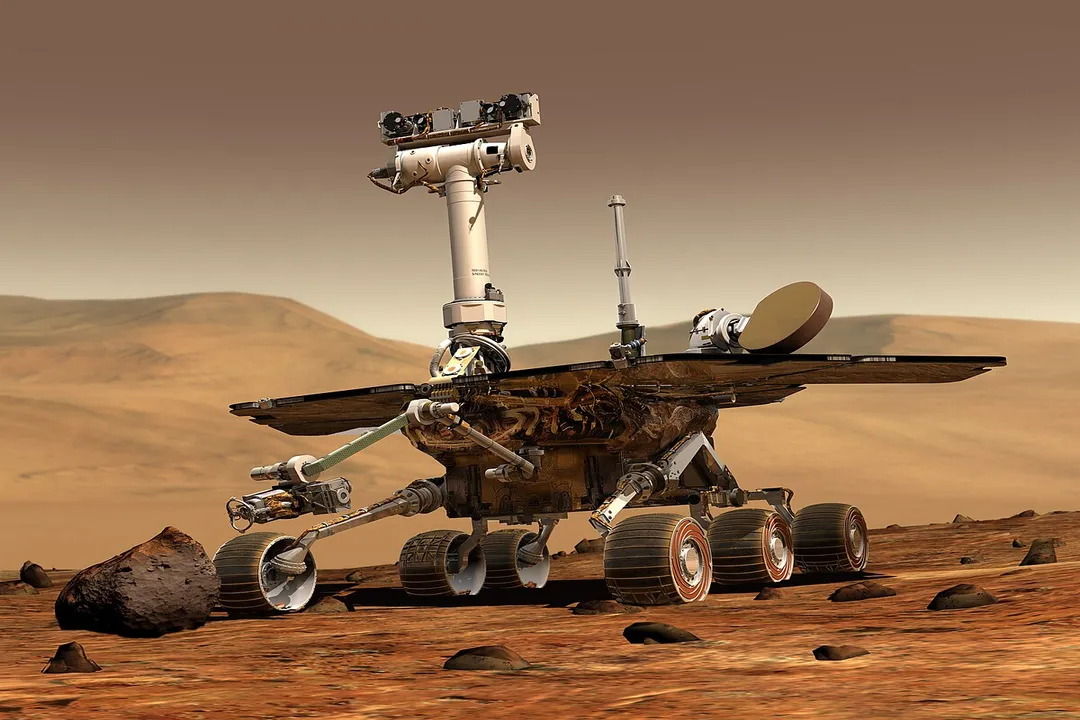
The perception that Opportunity, the enduring Mars Exploration Rover, could hold a conversation or express feelings in fluent sentences is a testament to the dedication of the teams managing it and the very human tendency to anthropomorphize complex machines. When the public hears a status update or a poignant sign-off associated with the rover, they are not hearing the vehicle process human language; rather, they are experiencing a carefully curated communication stream orchestrated millions of miles away on Earth. The reality of Mars communication is far more technical, relying on complex radio links and pre-scripted audio cues rather than true artificial intelligence capable of spontaneous speech.
# Command Structure
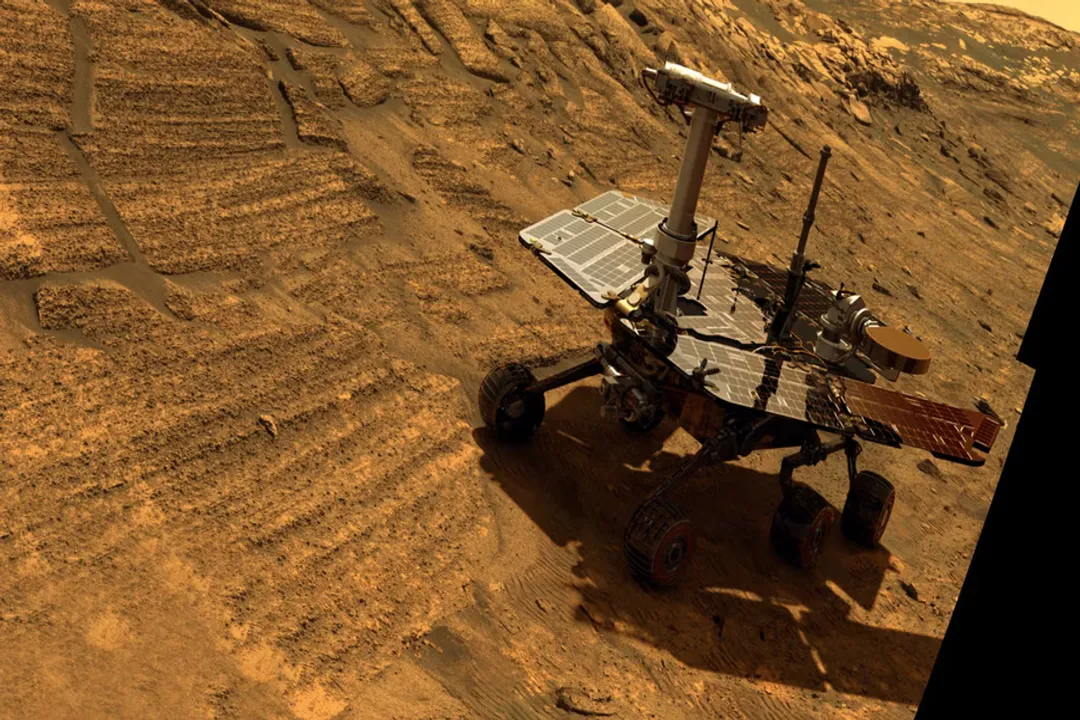
The Opportunity rover, which landed on Mars in January 2004 as part of the Mars Exploration Rover (MER) mission, was fundamentally a sophisticated robot executing commands. It did not possess the capability for conversational AI or genuine emotional expression, despite public-facing reports that might suggest otherwise. Its operational existence was governed by pre-loaded sequences of instructions sent from mission control.
The process worked in one direction: ground controllers on Earth formulated a list of tasks—drive a certain distance, use an instrument, take a picture—and transmitted these commands to the rover. The rover would then follow these directives autonomously or semi-autonomously, collecting scientific data and telemetry. This data, detailing battery levels, system health, and scientific observations, was packed up and sent back across space to waiting dishes on Earth.
The delay inherent in this interplanetary link is a crucial factor distinguishing this process from a real-time conversation. Even at the speed of light, the travel time for a signal between Earth and Mars varies significantly depending on the planets' orbital positions, ranging from about 4 to 24 minutes one way. This significant lag means that any "dialogue" is spread over at least eight minutes, precluding any possibility of back-and-forth chat. To put that communication latency into context with Earthly experience, consider that the time it takes to send one simple command like "wake up" could be longer than the time it takes for a person to read a short paragraph or pour a cup of coffee. The rover's operational timeline is thus dictated by long-range planning, not immediate reaction.
# The Voice of Mars

The impression that Opportunity could "talk well" stems from the release of audio files that accompany telemetry reports or public announcements. These famous phrases—such as the poignant declaration, "My battery is low and it's getting dark"—are not the rover generating speech based on its internal state. Instead, these are pre-recorded soundbites, often human voices or stylized robotic sounds, that the mission teams choose to play through ground stations when relaying information about the rover's status or end-of-mission sentiment.
This practice serves two key purposes. First, it gives the public, who follow these missions closely, a more relatable way to digest complex technical data about the robot’s condition. Second, it offers a form of narrative closure or status update that resonates emotionally, even though the robot itself is purely executing code. JPL, for example, has made various audio files available related to the rovers, showcasing these sound effects used in mission updates. These audio clips are essentially digital storytelling tools, attaching a voice to the data stream.
# Deep Space Communication
The backbone of this entire system, whether sending commands or receiving data for a poignant audio cue to be played, is NASA's Deep Space Network (DSN). This global array of giant radio antennas, situated in strategic locations like California, Spain, and Australia, maintains the continuous link to spacecraft traveling far from Earth.
The DSN acts as the indispensable intermediary. When mission control at the Jet Propulsion Laboratory (JPL) needed to communicate with Opportunity, the signal traveled to one of the massive DSN dishes. From there, the signal was beamed toward Mars, where the rover’s antenna received the command. When Opportunity transmitted data back, the faint radio waves traveled billions of miles back to the waiting DSN antennas to be captured and decoded. Without the sheer power and sensitivity of the DSN, the mission would have effectively gone silent the moment Opportunity drove out of line-of-sight of Earth, making the DSN the true voice carrier, not the rover itself.
# Mission Endings
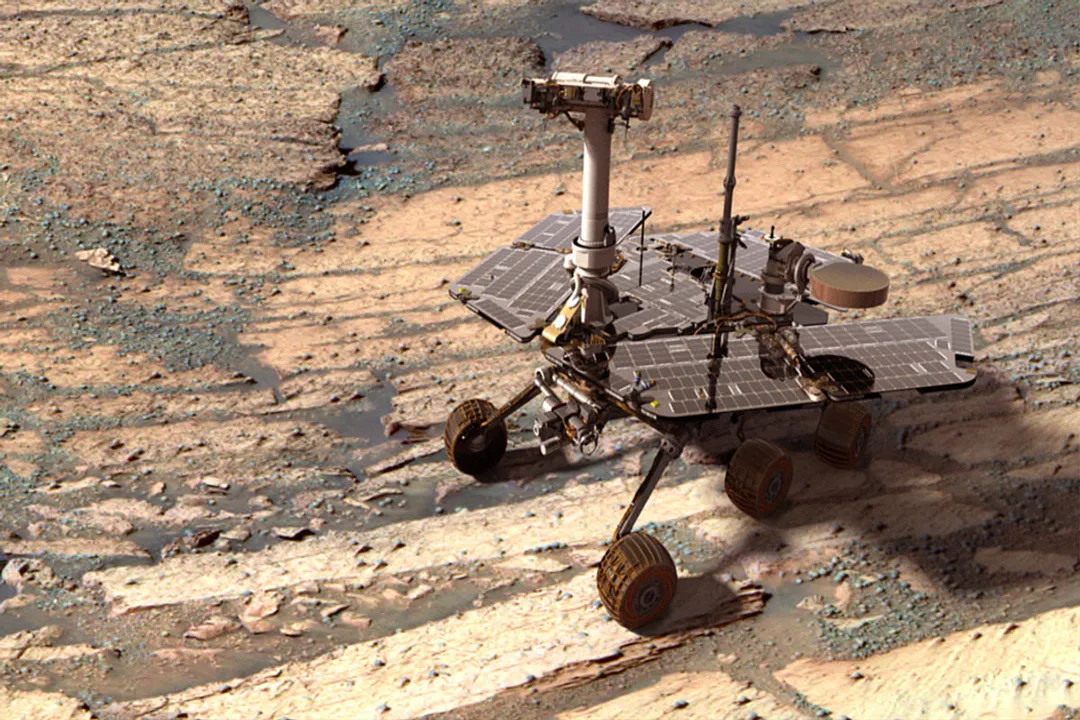
Opportunity's mission was legendary, far exceeding its planned 90-sol (Martian day) surface lifespan. Its final period was marked by a severe dust storm that engulfed the planet in June 2018. This storm choked the rover's solar panels, preventing them from recharging its batteries.
The last communication received from Opportunity was essentially a signal indicating it had entered a precautionary hibernation mode because its power reserves were critically low and the Martian night was approaching—a time when power demands are high and solar collection is impossible. The much-publicized "final words" were an audio recording overlaid onto this telemetry report, marking the transition to silence. Though numerous attempts were made by the team to re-establish contact over the following months, the rover never woke up from this storm-induced sleep.
The fact that the rover's final real message was a data packet indicating low power and darkness, which was then translated by humans into an emotionally resonant sentence, clearly illustrates the distance between machine telemetry and human language. This distinction is important for appreciating both the engineering feat of the rover and the dedication of the people who gave its mission a final, understandable voice.
#Videos
Opportunity's Last Message: Why did it go silent on Mars? - YouTube
The Truth Behind Opportunity's Last Message and It's Final Days On ...
Related Questions
#Citations
Why can mars rovers talk to us? : r/NoStupidQuestions - Reddit
How can NASA's rovers communicate in fluent sentences so ... - Quora
Opportunity's Last Message: Why did it go silent on Mars? - YouTube
False alarm: Here's why people thought Opportunity phoned home ...
Mars Rovers 'Talk' Via Audio Files
The Final Words NASA's Opportunity rover was part of the Mars ...
Opportunity (rover) - Wikipedia
The Time I Thought a Mars Rover Spoke To Me On a Barstool